Artwork
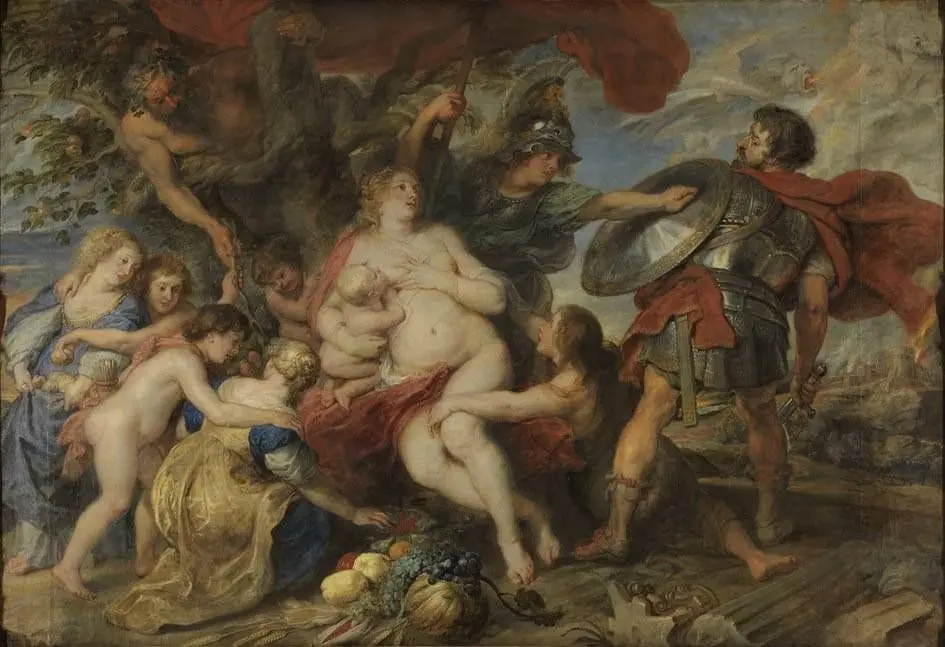
Hercules and Minerva Expelling Mars
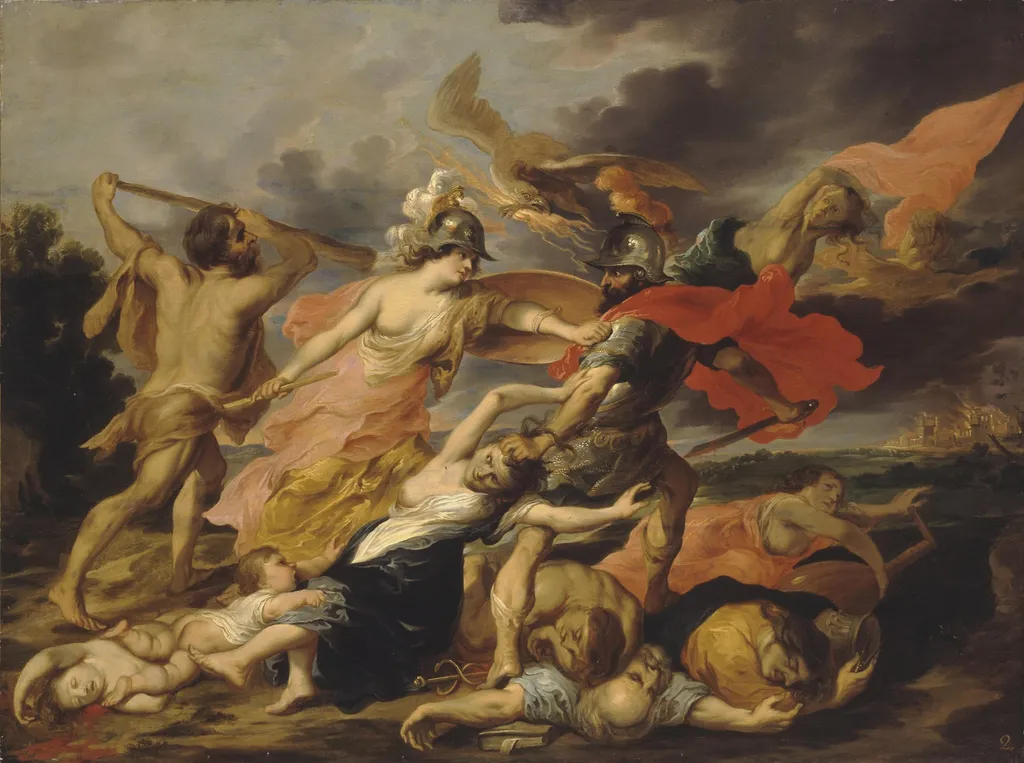
Hercules and Minerva Expelling Mars is an oil painting by the Flemish Baroque painting artist Victor Wolfvoet. It dates from 1640 and is held in the collection of the Hermitage Museum.
About this work
Overview
Executed in the Flemish Baroque tradition, the composition captures a moment of violent expulsion, with dynamic figures and dramatic tension.
Painted in 1640 by Victor Wolfvoet the Younger, this oil-on-canvas work illustrates a mythological confrontation between the gods Hercules and Minerva and the god of war, Mars. Executed in the Flemish Baroque tradition, the composition captures a moment of violent expulsion, with dynamic figures and dramatic tension. Wolfvoet, active as both artist and dealer in Antwerp, aligned his style with the grand narrative approach of his contemporaries.
Subject & Meaning
The scene depicts Hercules and Minerva, symbols of strength and wisdom, forcibly removing Mars, the embodiment of war, from a sacred space. Their intervention signifies the triumph of reason and civic order over chaos and aggression. The fallen and wounded figures around them underscore the devastation of conflict, reinforcing the allegory that peace, guided by virtue, must prevail over unchecked violence.
Technique & Style
Wolfvoet employed rich oil pigments to render textured fabrics, metallic armor, and atmospheric depth. His figures are muscular and gestural, echoing Rubens’ influence in their sculptural volume and energetic poses. The background cityscape, partially obscured by clouds, recedes into muted tones, heightening the foreground drama. Brushwork is fluid yet controlled, balancing movement with compositional clarity.
History & Provenance
Created during Wolfvoet’s mature period in Antwerp, the painting entered the State Hermitage Museum’s collection in the 18th or 19th century, likely through imperial acquisitions of European art. Its presence in St. Petersburg reflects the Russian court’s interest in Flemish Baroque allegories during the Enlightenment. No significant alterations or reattributions are recorded in its documented history.
Context
Painted during the Thirty Years’ War, the work resonated with contemporary anxieties about violence and governance. Flemish artists often turned to classical myth to comment on political instability, using divine figures as proxies for moral authority. Wolfvoet’s choice of subject aligns with broader trends in Northern Europe, where mythological narratives served as vehicles for civic and philosophical reflection.
Legacy
Though Wolfvoet is less known today than Rubens or Van Dyck, this painting exemplifies the skilled synthesis of myth and moral allegory characteristic of mid-17th-century Flemish painting. It remains a testament to the era’s visual language of power and restraint, preserved in one of Europe’s most significant public collections as a quiet but forceful statement on the cost of war.
Own this work as a print
Artist & collection
Artist
Victor Wolfvoet (II) or Victor Wolfvoet the Younger (1612 – 1652), was a Flemish art dealer and painter of history and allegorical paintings. His artistic output was heavily influenced by Peter Paul Rubens.

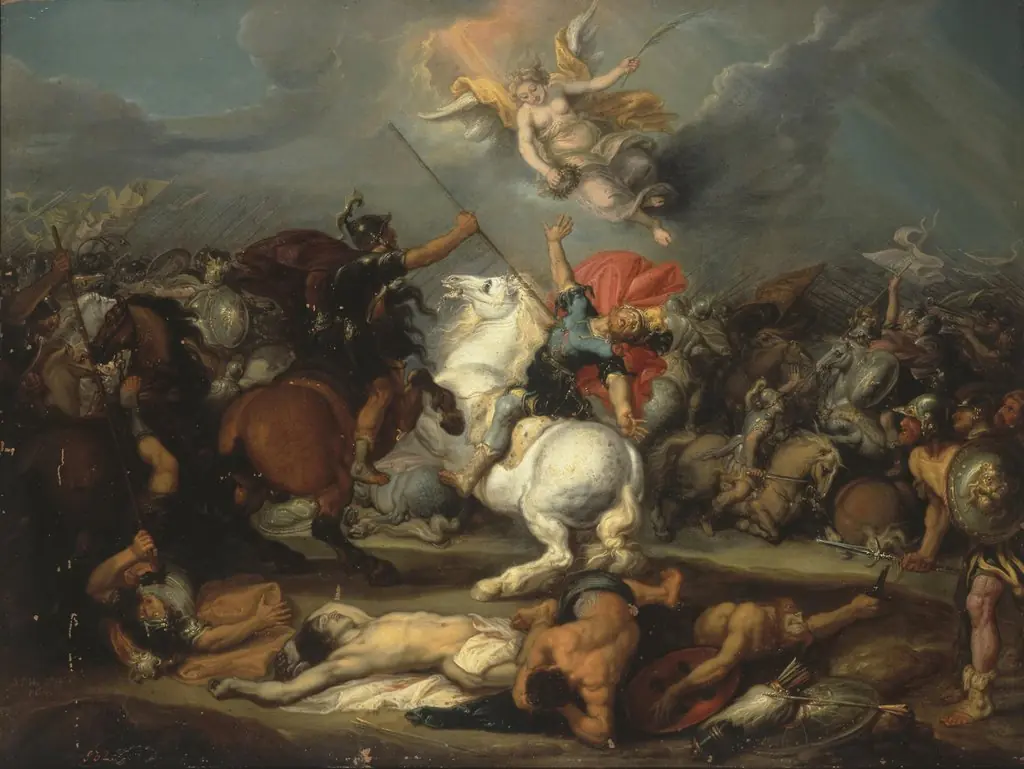 Death of Decius Mus
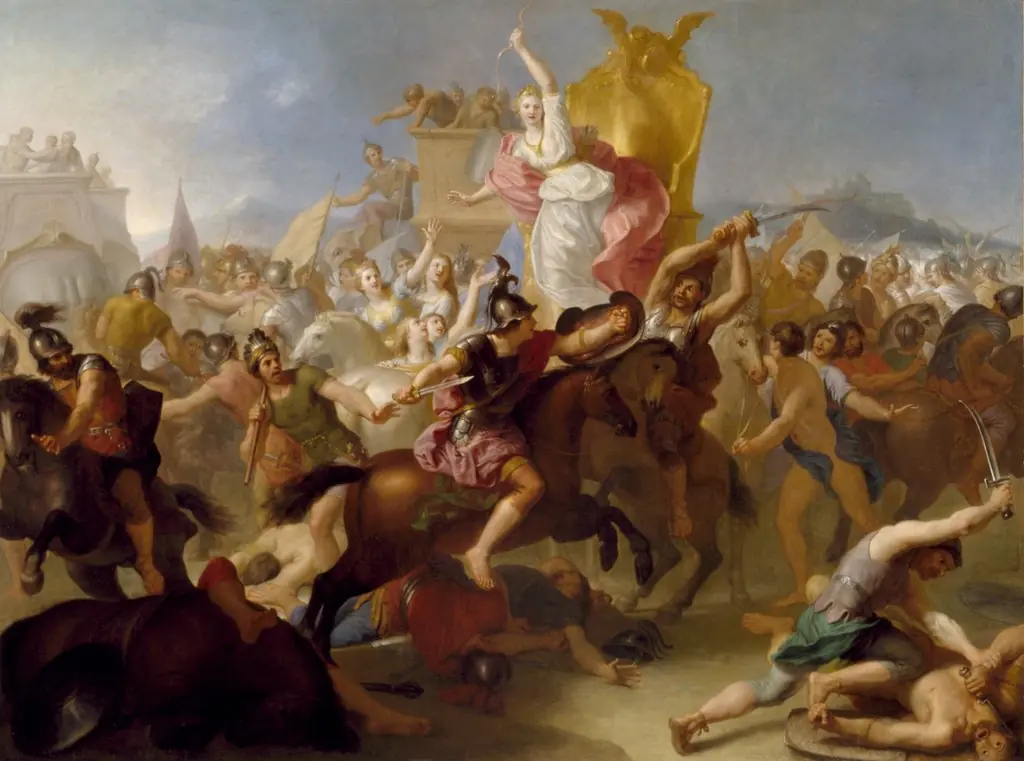 Armida Fighting the Christians
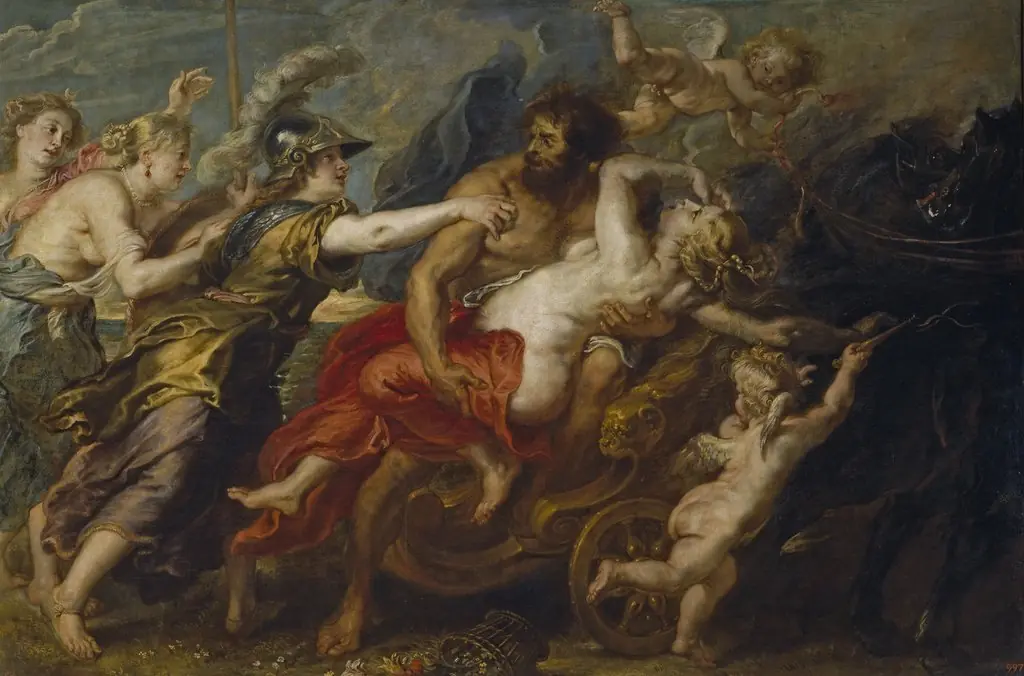 The Rape of Proserpine
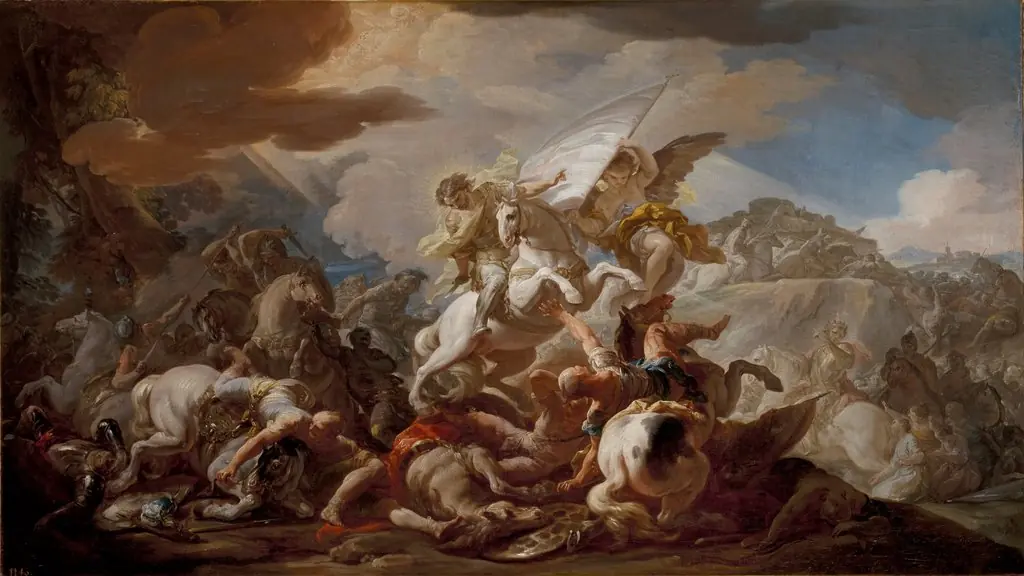 Battle of Clavijo
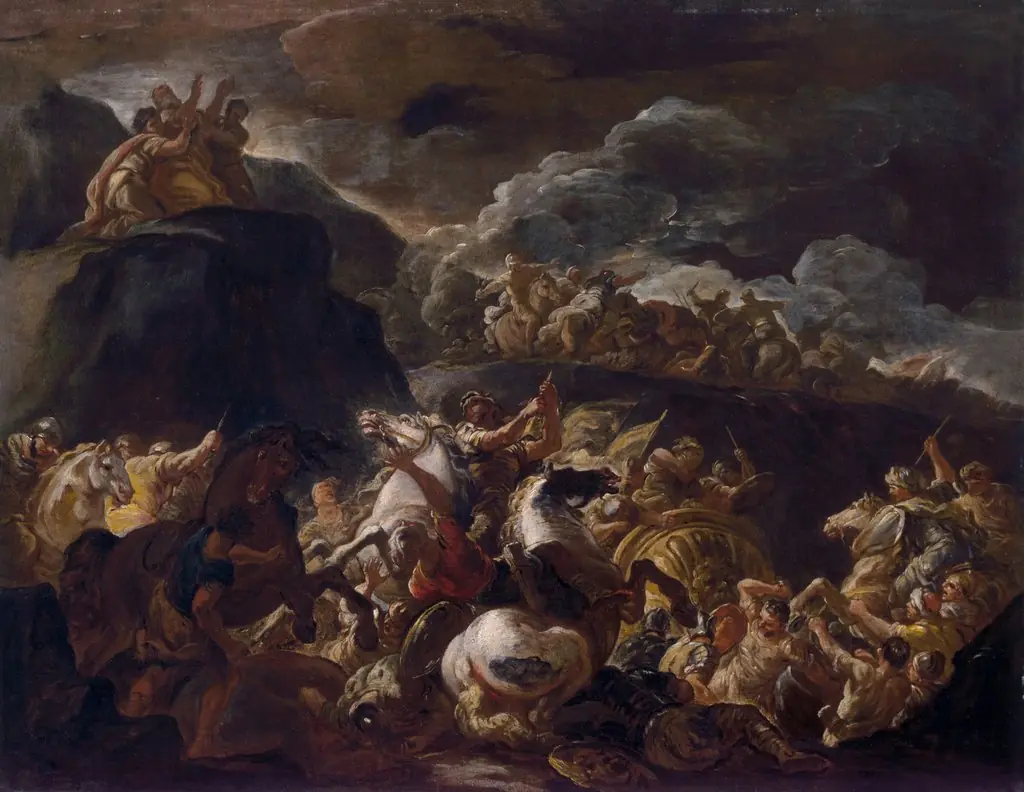 The Battle of Israel and Amalek
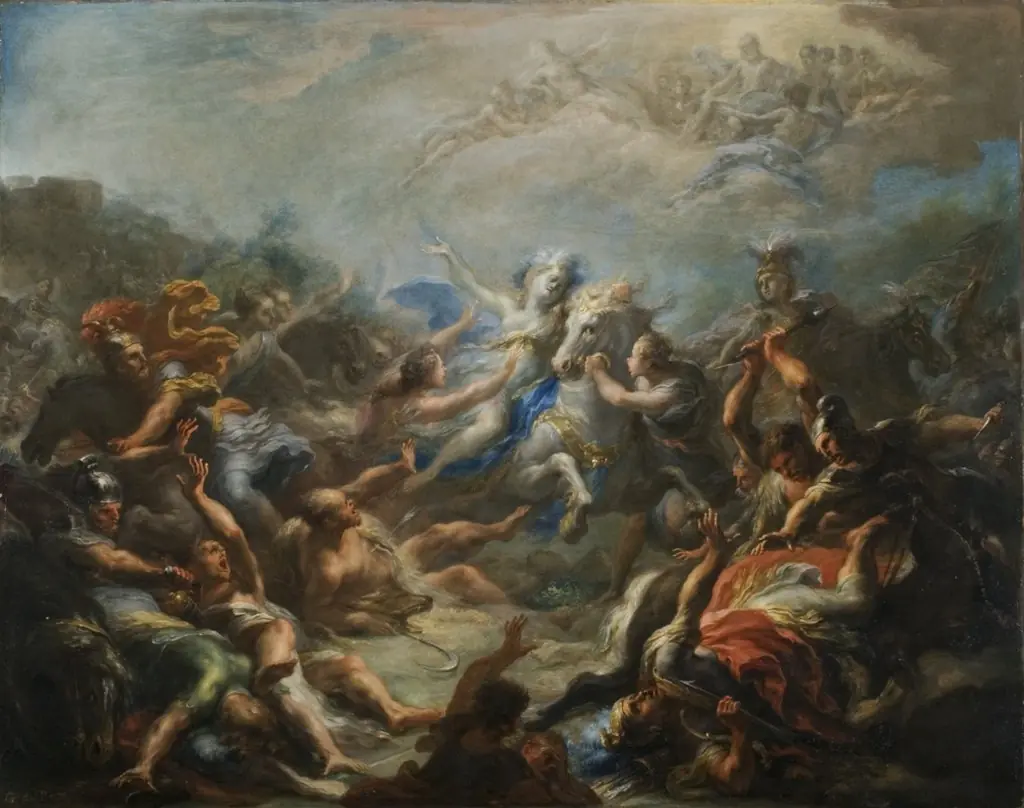 Camillia at War from Virgil's Aeneid
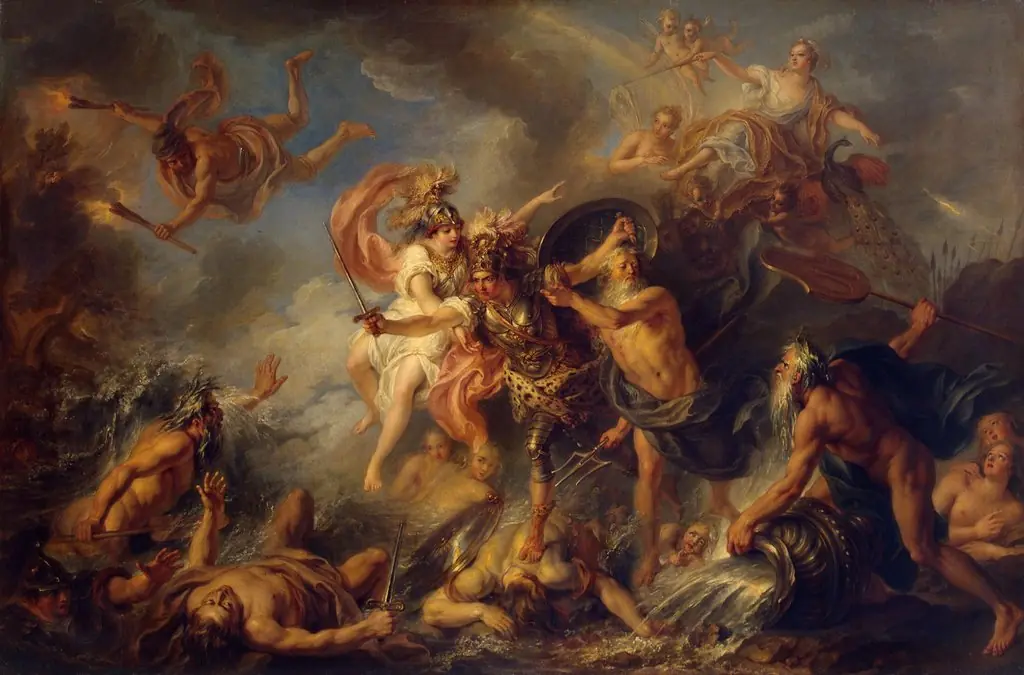 Fury of Achilles
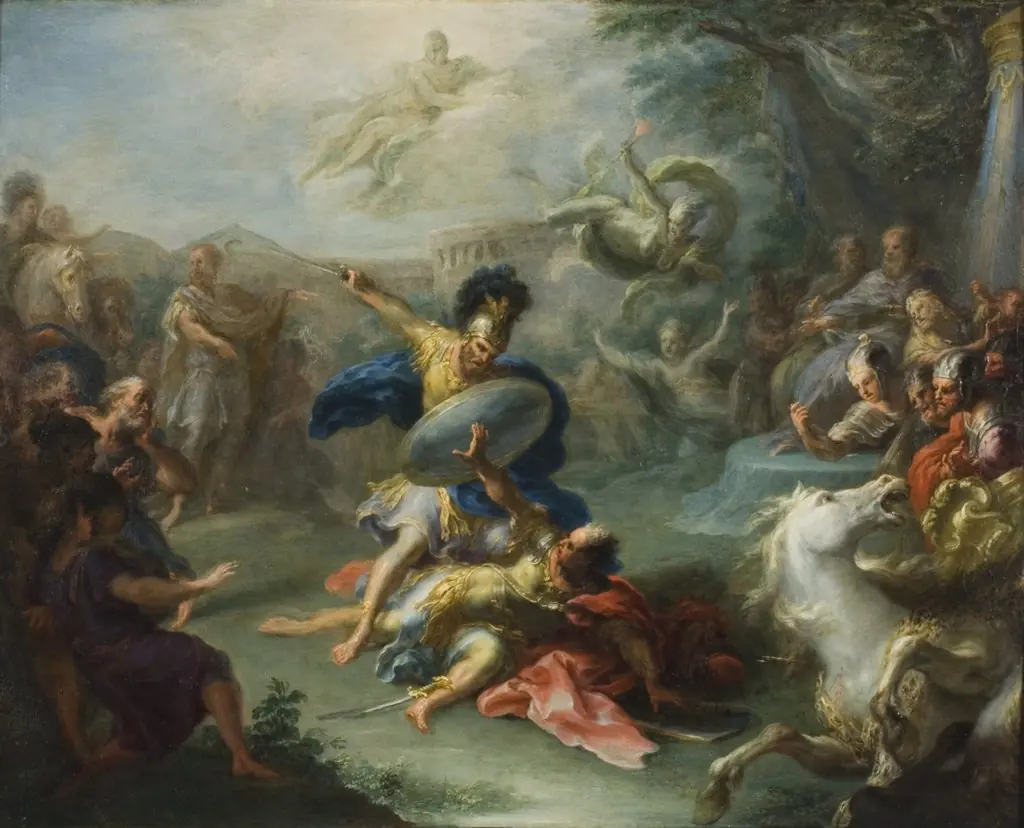 The Fight between Aeneas and King Turnus, from Virgil’s Aeneid
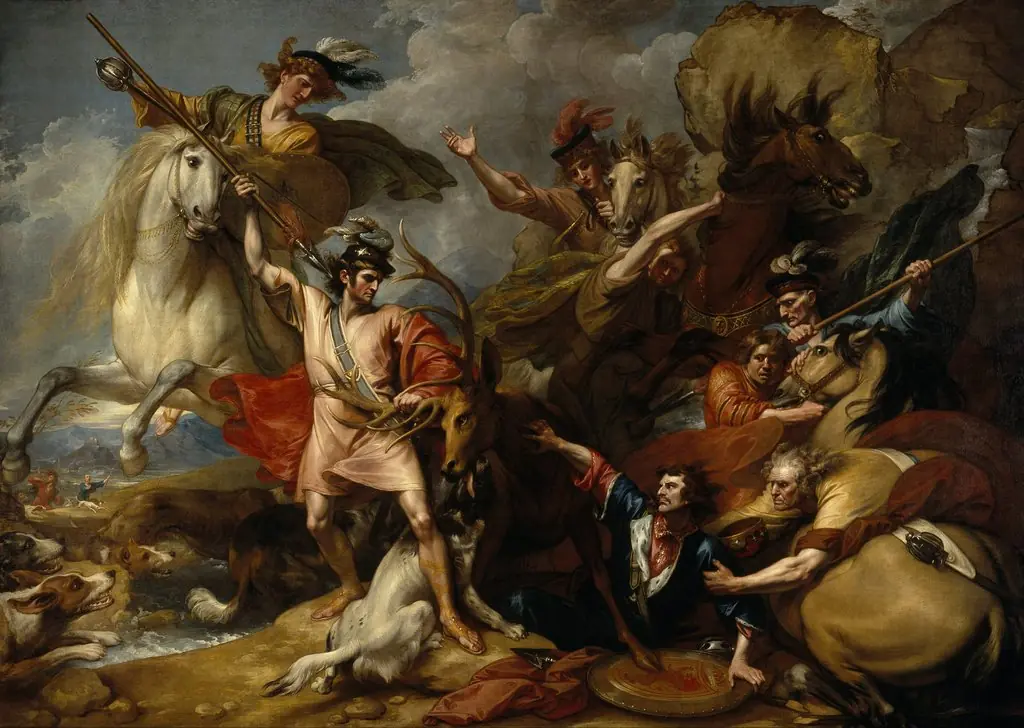 Alexander III of Scotland Rescued from the Fury of a Stag by the Intrepidity of Colin Fitzgerald
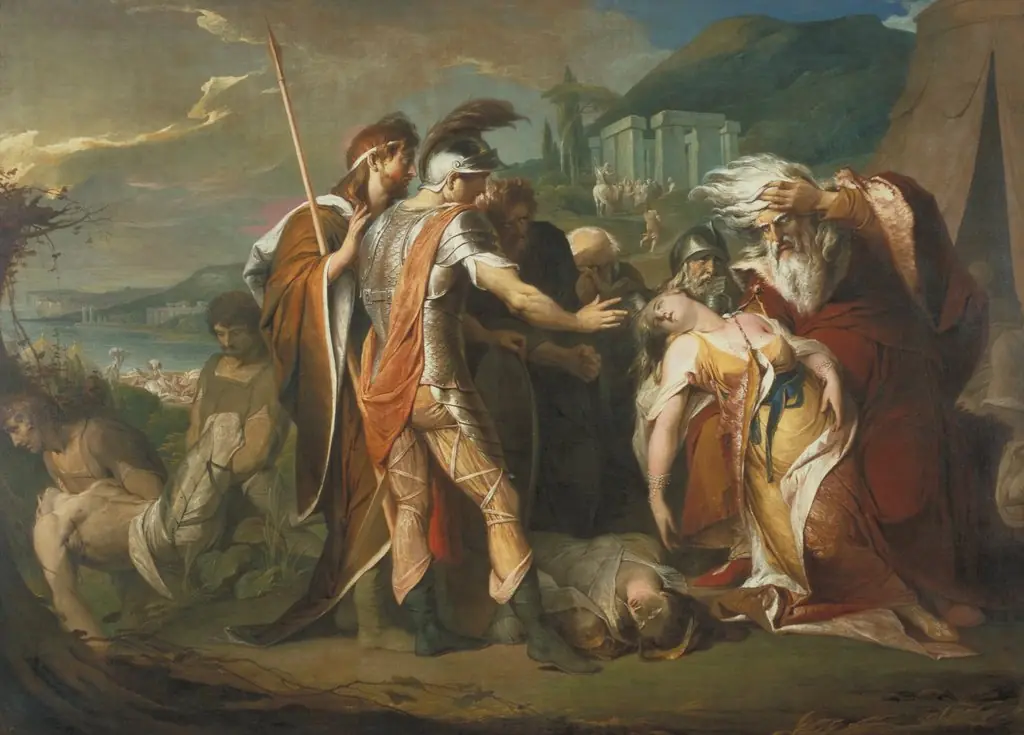 King Lear Weeping over the Dead Body of Cordelia
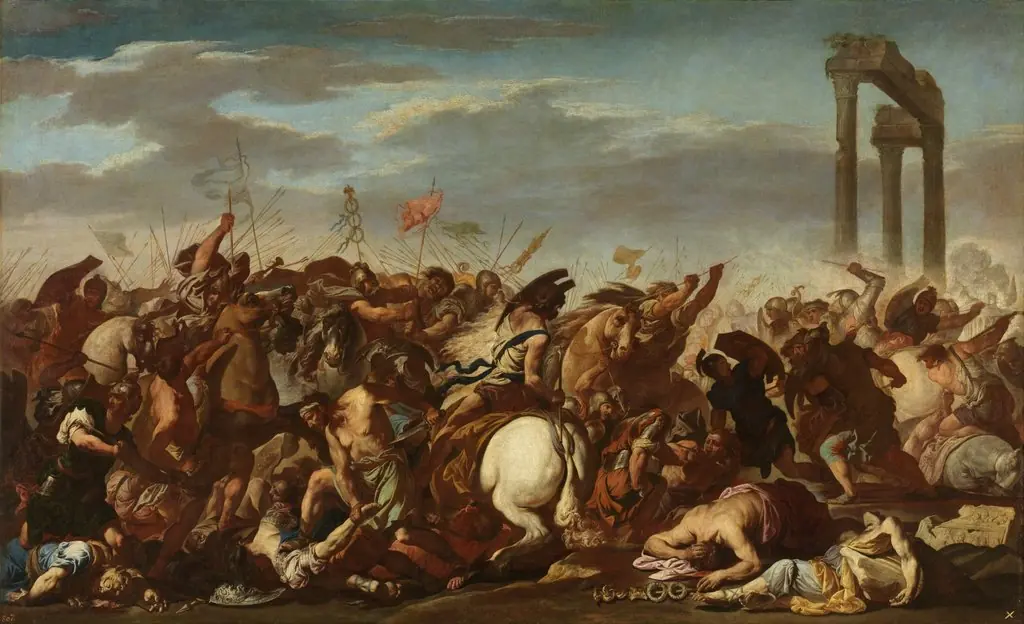 Batalla
 Minerva protects Fertility from Mars