Artwork
Batalla
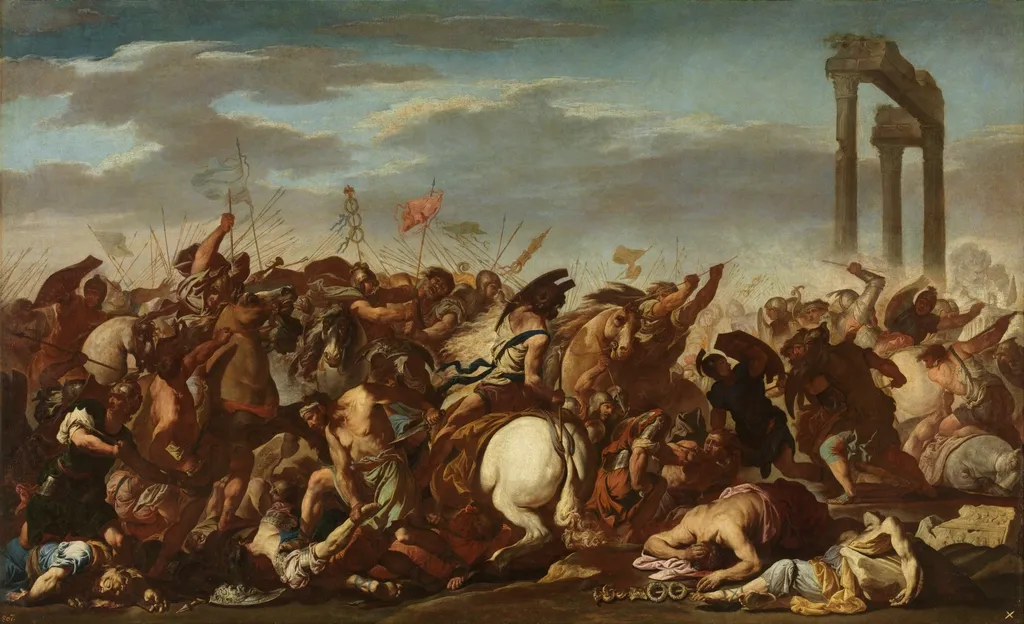
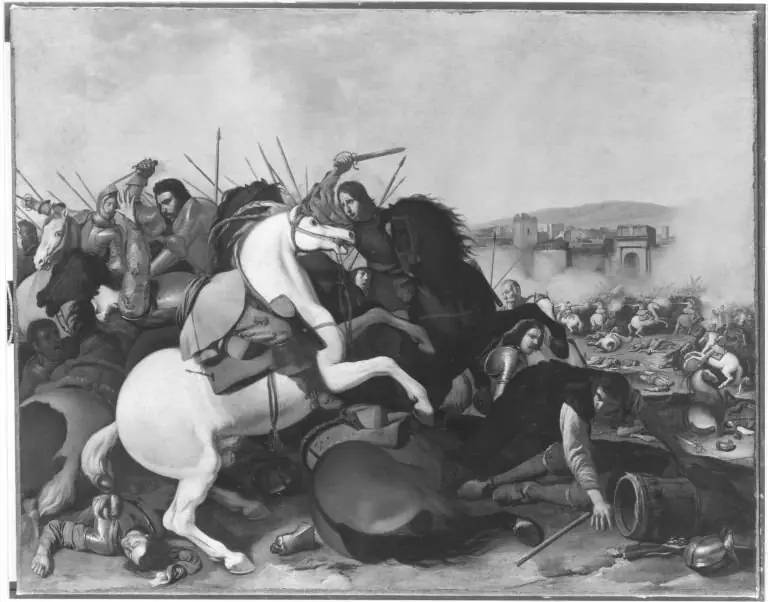
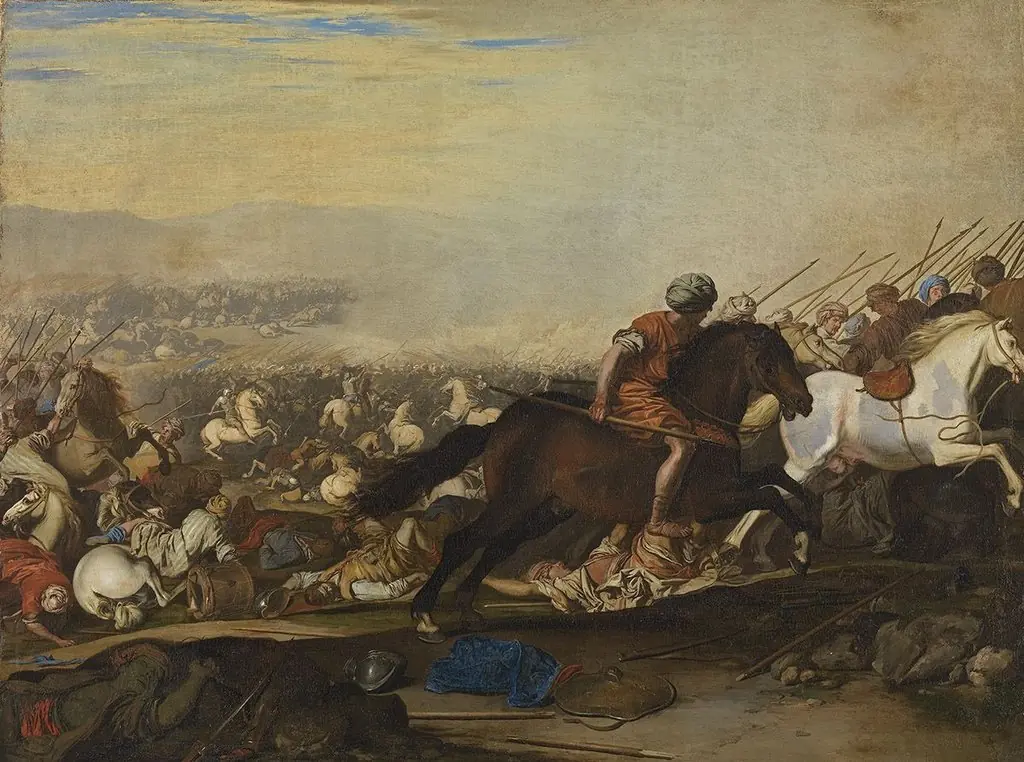
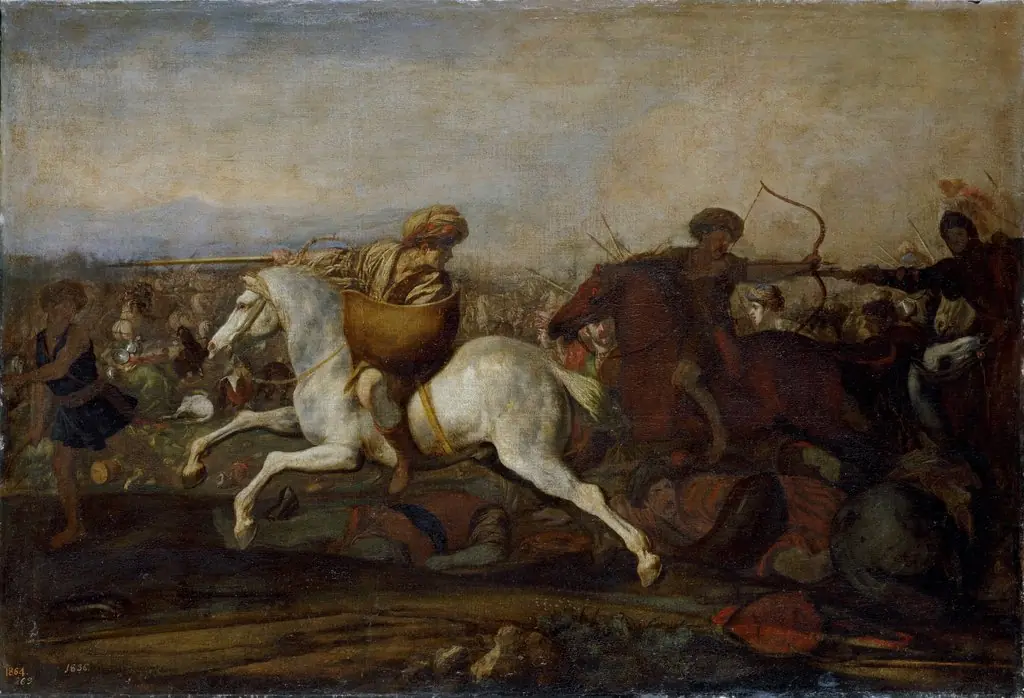
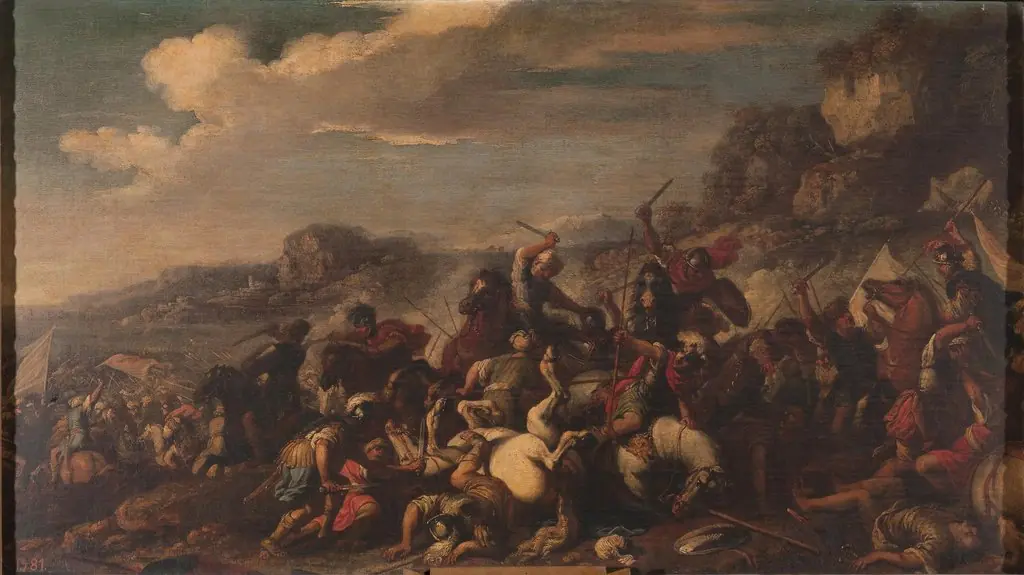
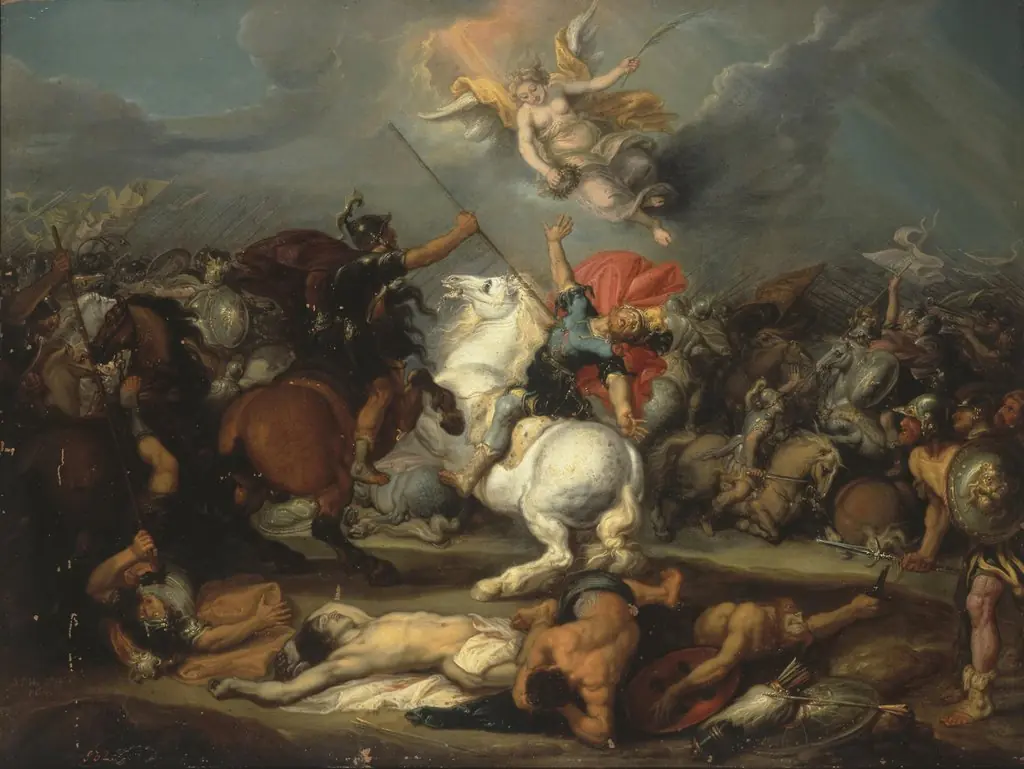
Batalla is an oil painting by the Early Baroque Italian artist Aniello Falcone. It dates from 1601 and is held in the collection of the Museo del Prado.
About this work
Overview
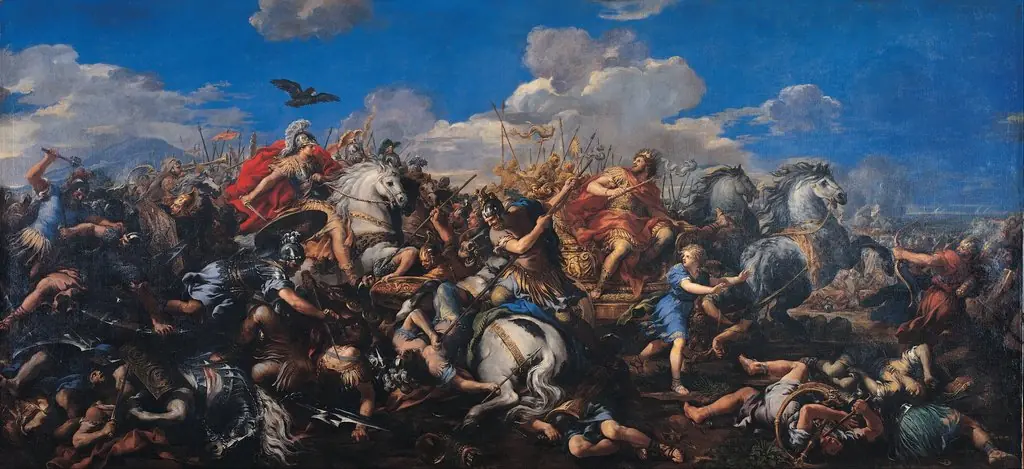
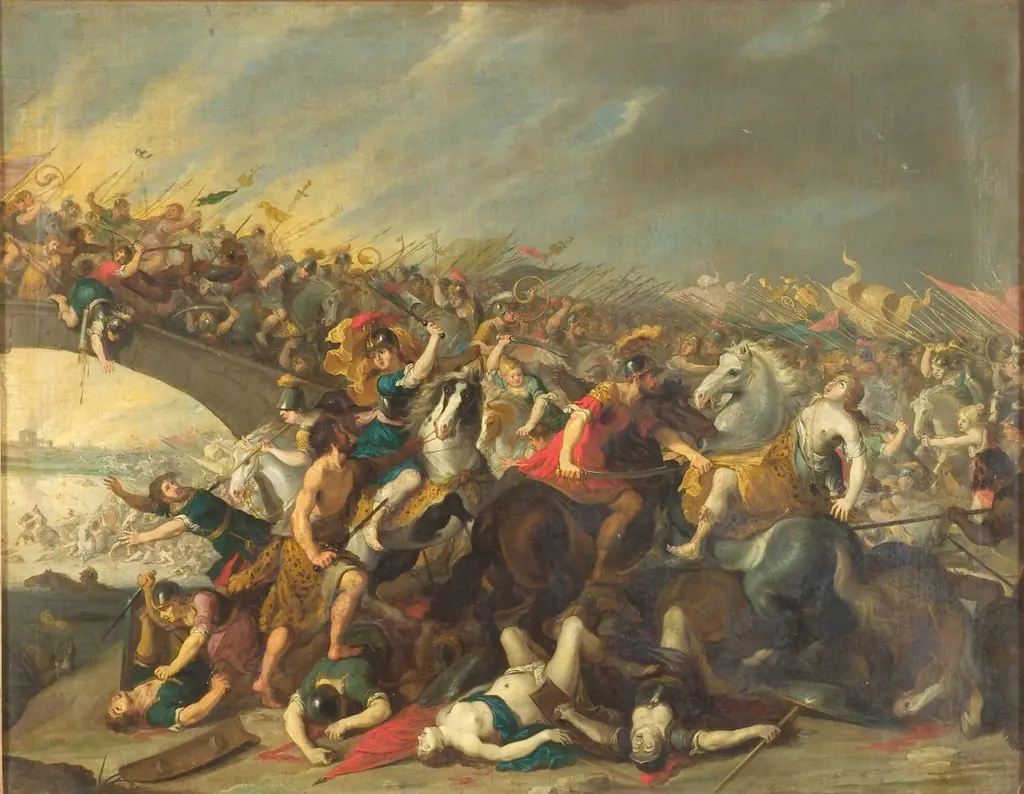
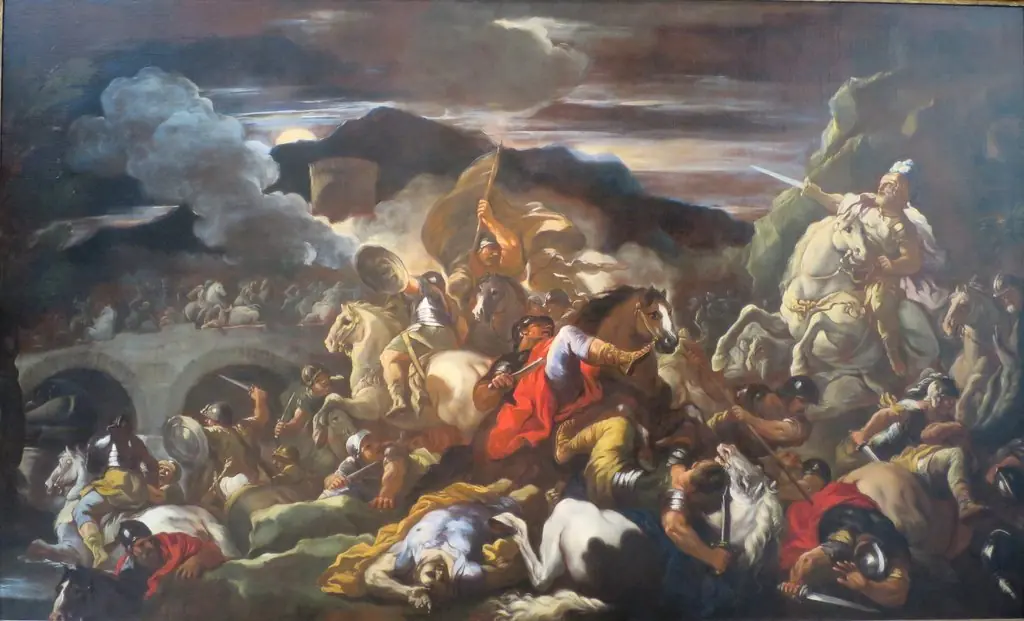
Painted in 1601 by Aniello Falcone, *Batalla* is an oil-on-canvas work from the early Baroque period in Naples. Falcone, known for his dynamic depictions of warfare, rendered this scene with a focus on movement and disorder. The painting is part of the Museo del Prado’s collection, where it stands as an early example of Italian battle imagery outside the dominant Roman and Venetian traditions.
Subject & Meaning
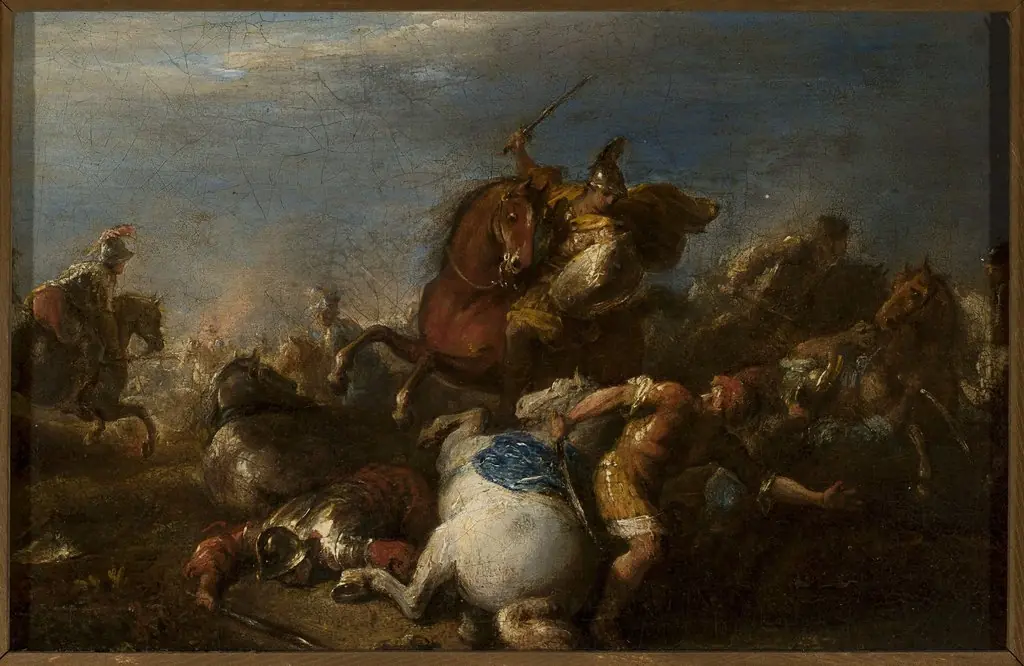
The scene captures a violent skirmish among soldiers and horses, with fallen figures, raised weapons, and fluttering banners suggesting intense combat.
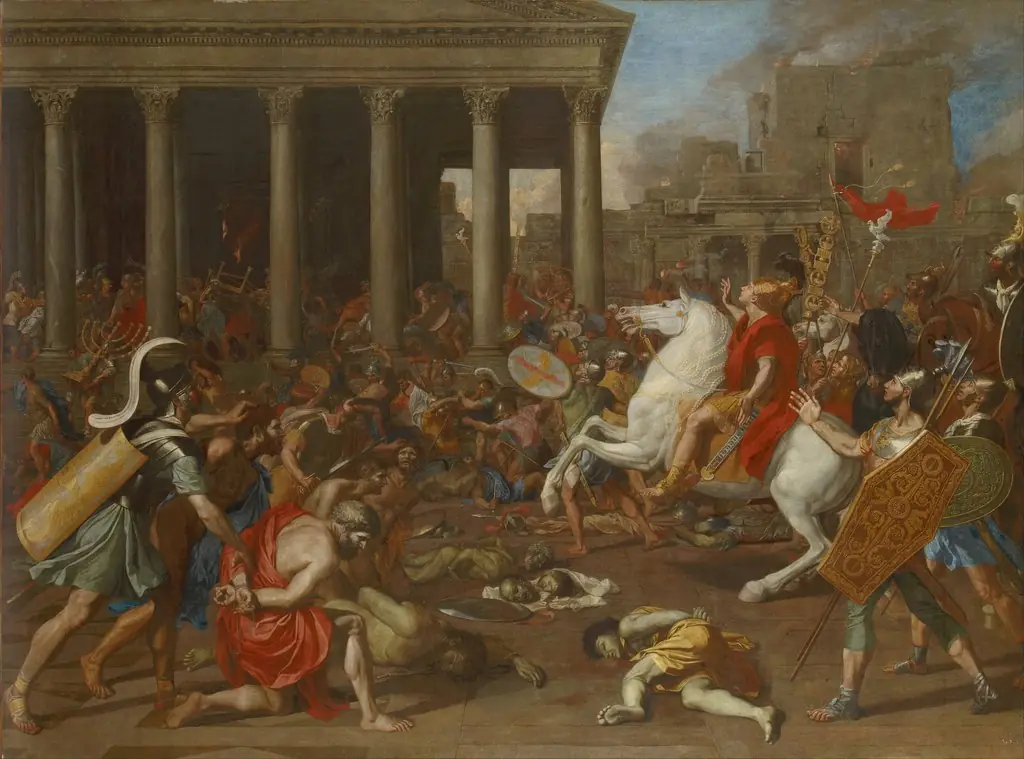
The scene captures a violent skirmish among soldiers and horses, with fallen figures, raised weapons, and fluttering banners suggesting intense combat. A distant tower and fragmented architecture imply a besieged landscape. No clear narrative or hero emerges; instead, the painting emphasizes the chaos and human cost of conflict, reflecting a shift toward unidealized representations of war in early 17th-century Naples.
Technique & Style
Falcone employed visible, energetic brushwork to convey motion and texture, particularly in the drapery and animal forms. Earth tones dominate the palette, accented by muted blues and whites in uniforms and sky. Light is distributed unevenly, creating pockets of contrast that heighten the sense of disarray. While not fully developed chiaroscuro, the painting shows an awareness of dramatic lighting to guide the viewer’s eye through the turmoil.
History & Provenance
Commissioned during Falcone’s formative years, *Batalla* reflects the influence of Flemish battle paintings circulating in southern Italy. It entered the Spanish royal collection in the 17th century, likely through Naples’ ties to the Habsburgs, and was later transferred to the Museo del Prado. Its survival and inclusion in royal holdings suggest it was valued for its realism and scale, even if not widely exhibited.
Context
In early 1600s Naples, artists like Falcone responded to the region’s political instability and military activity by turning to battle scenes as subjects. Unlike the grand allegories of Rome, these works emphasized immediacy and visceral impact. Falcone’s focus on unglorified violence aligned with broader trends in southern Italian art, where local conditions fostered a more grounded, less idealized aesthetic.
Legacy
*Batalla* helped establish Falcone’s reputation as a specialist in military subjects, influencing later Neapolitan painters who adopted similar compositions. Though not widely reproduced, the painting remains a key example of how regional Italian artists adapted northern European models to depict local realities of war. Its presence in the Prado underscores the cross-cultural exchange between Spanish and Neapolitan artistic circles in the Baroque era.
Artist & collection
Artist
Aniello Falcone or Ancillo Falcone (15 November 1600 – 1656) was an Italian Baroque painter, active in Naples and noted for his painted depictions of battle scenes.