Artwork
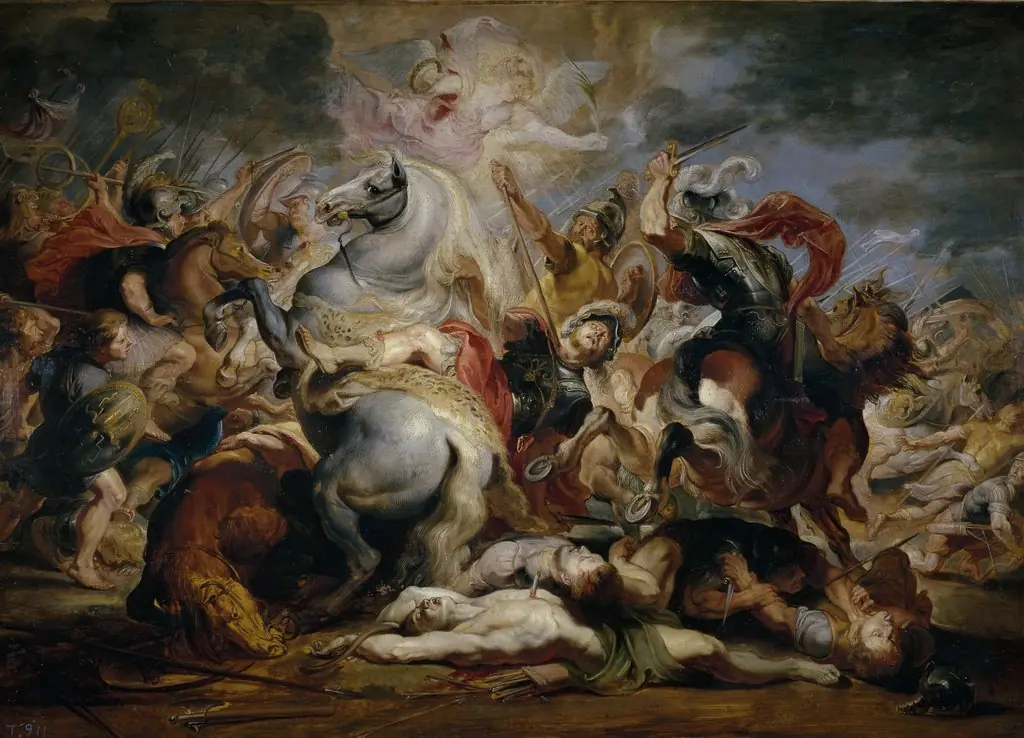
Death of Decius Mus
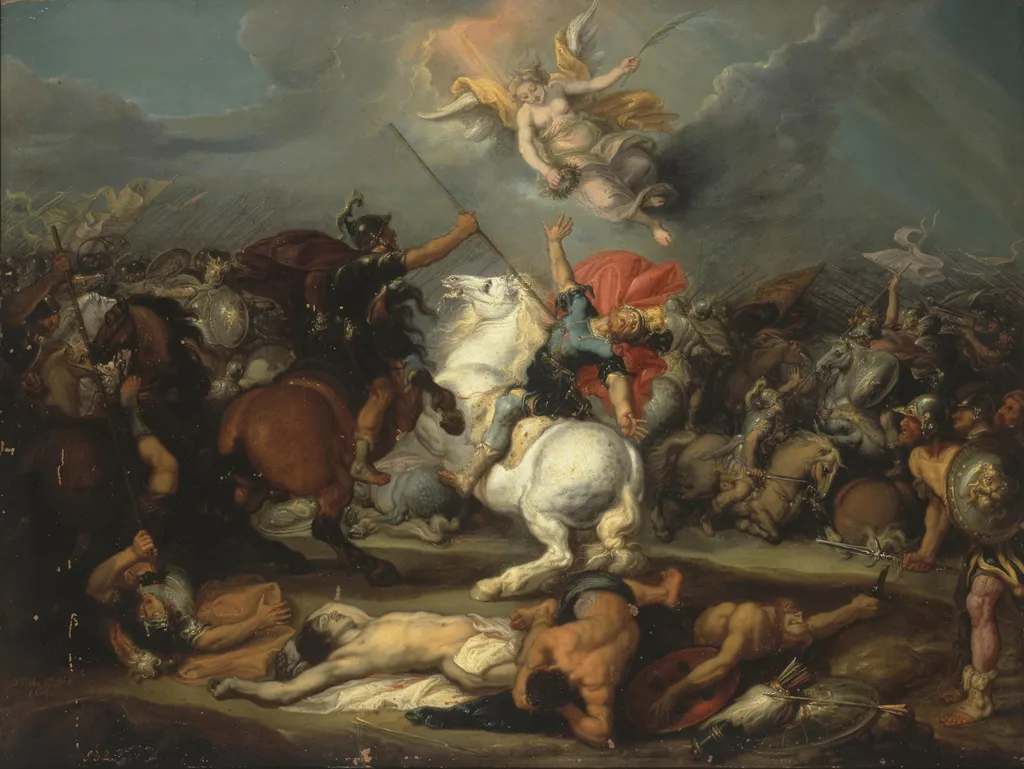
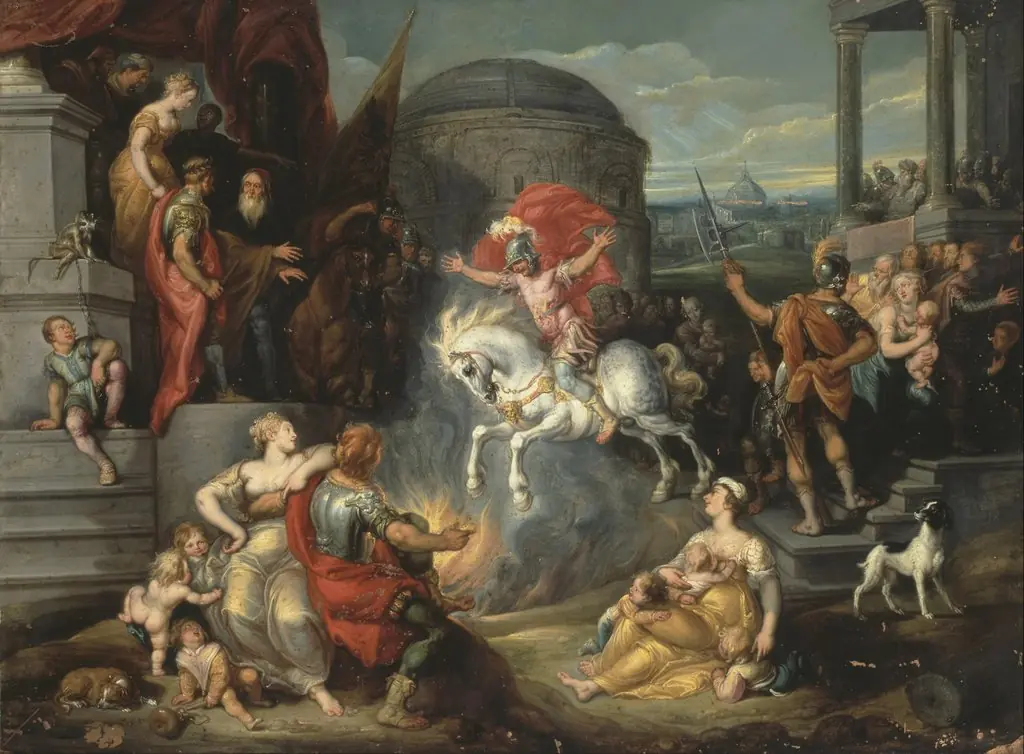
Death of Decius Mus is an oil painting by the Flemish Baroque painting artist Simon de Vos. It dates from 1641 and is held in the collection of the Hermitage Museum.
About this work
Overview
Created in 1641, this copper painting by the Flemish artist Simon de Vos captures a turbulent episode from Roman history. The composition centers on the fatal moment of the consul Decius Mus, surrounded by a dense crowd of combatants and horses, all rendered with vivid colour and intricate detail. The work now belongs to the State Hermitage Museum’s collection.
Subject & Meaning
The scene portrays the legendary self‑sacrifice of Decius Mus during a battle, a narrative that emphasizes heroic martyrdom. A figure in a red cloak tumbles from a white horse, while another on a brown horse raises a spear toward a winged female figure bearing a sword and shield, suggesting divine intervention or fate overseeing the clash.
Technique & Style
Executed on copper, the painting benefits from the metal’s smooth surface, allowing de Vos to achieve fine brushwork and luminous colour contrasts typical of Flemish Baroque. The composition reflects the influence of Rubens and van Dyck, with dynamic movement, dramatic lighting, and a crowded, theatrical arrangement of figures.
History & Provenance
Simon de Vos, originally known for intimate genre scenes, turned to larger historical subjects in the 1630s, and this work exemplifies that shift. After remaining in private hands for centuries, the canvas entered the State Hermitage Museum, where it is displayed as part of the museum’s European painting holdings.
Own this work as a print
Artist & collection
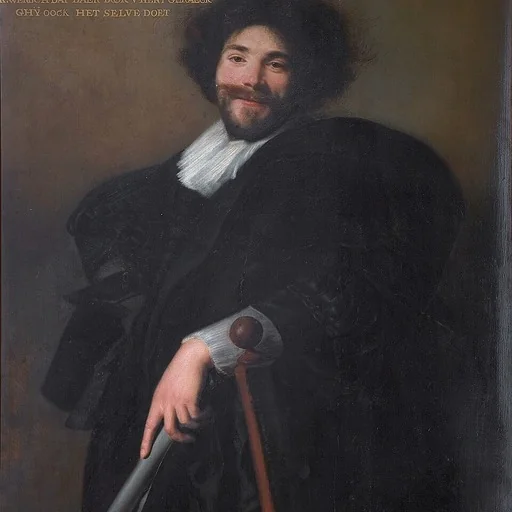
Artist
Simon de Vos (20 October 1603 – 15 October 1676) was a Flemish painter, draughtsman and art collector.

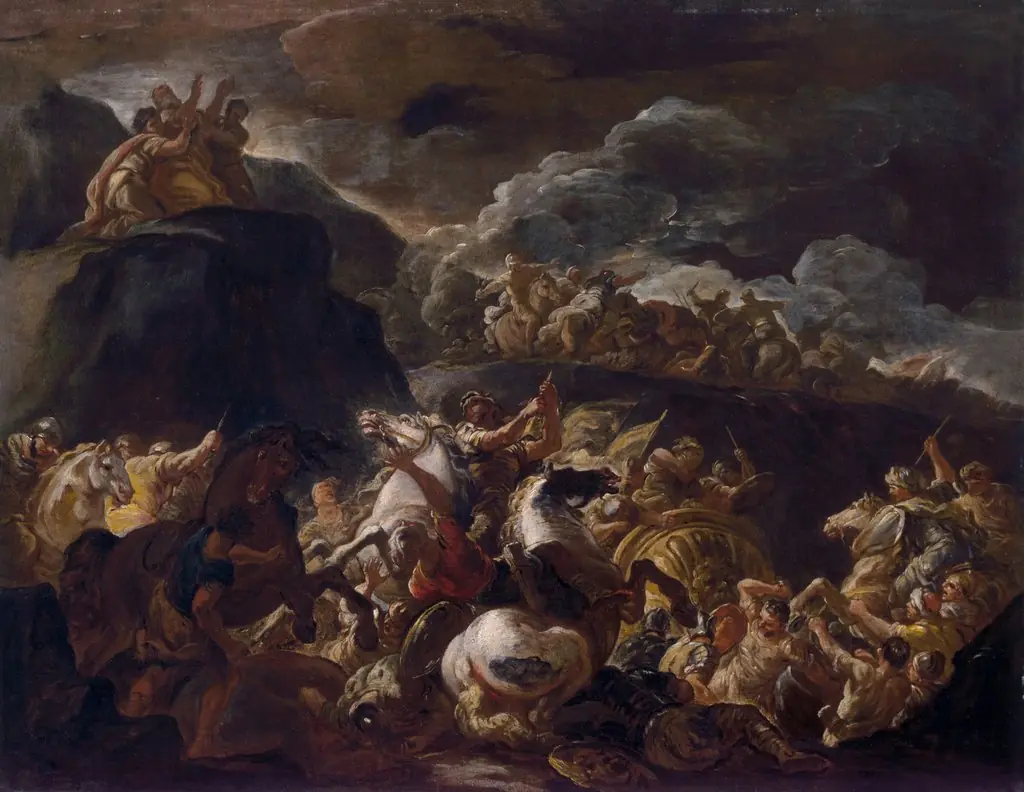 The Battle of Israel and Amalek
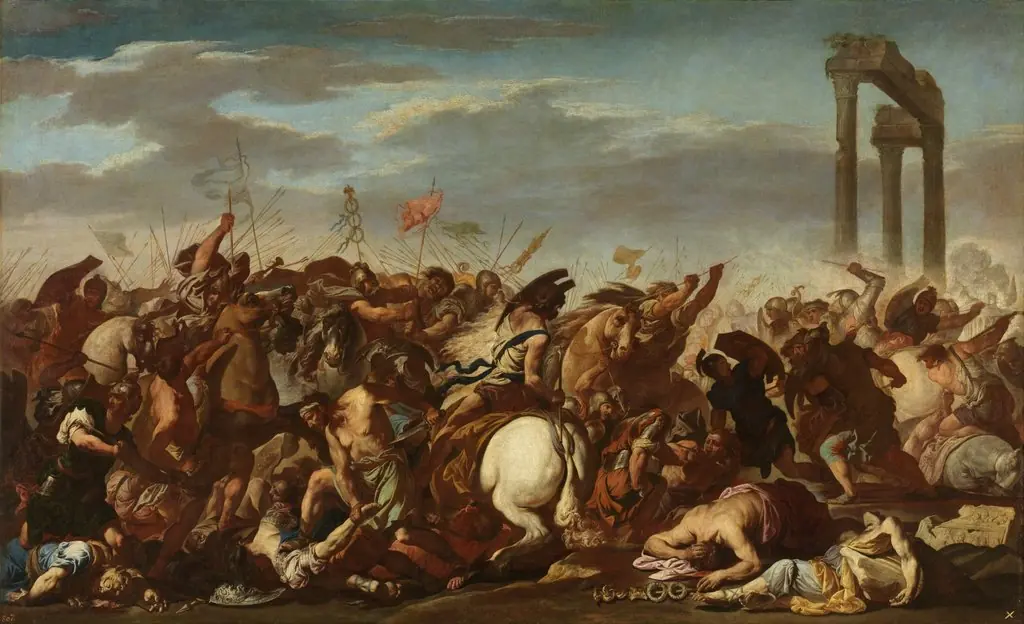 Batalla
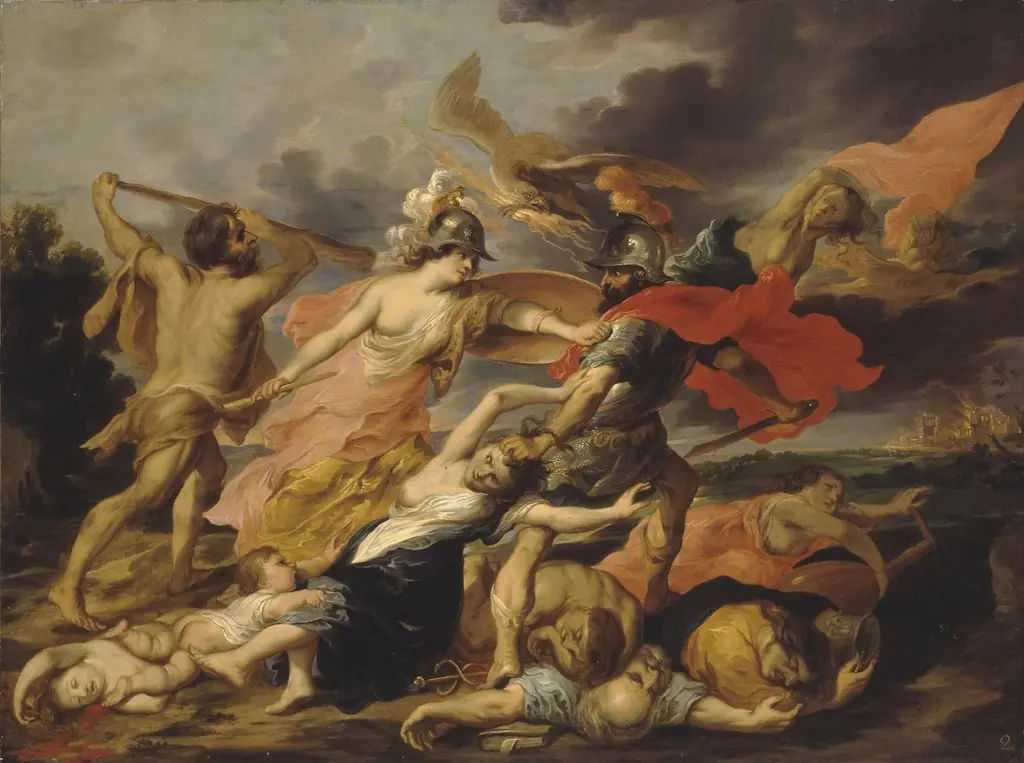 Hercules and Minerva Expelling Mars
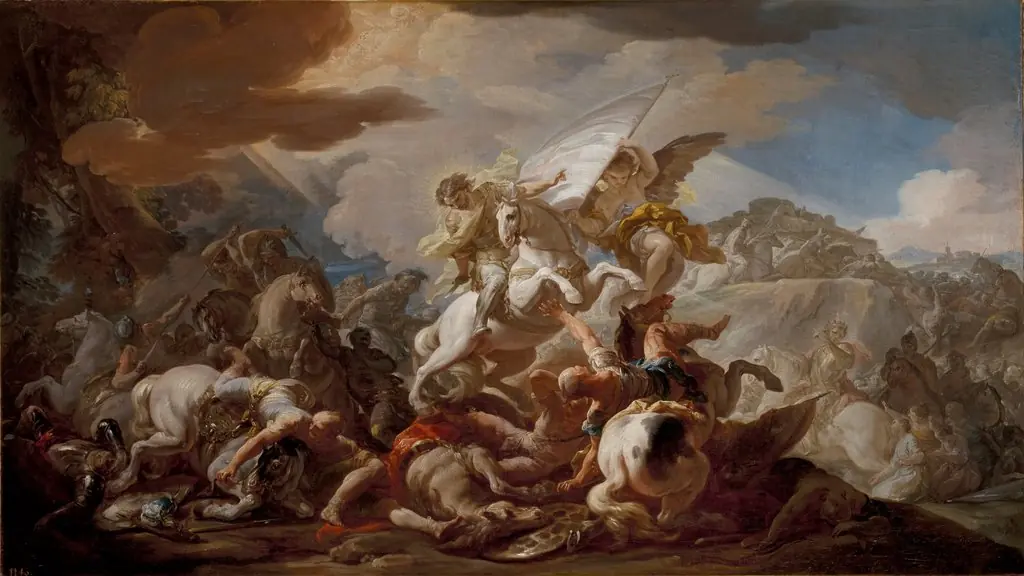 Battle of Clavijo
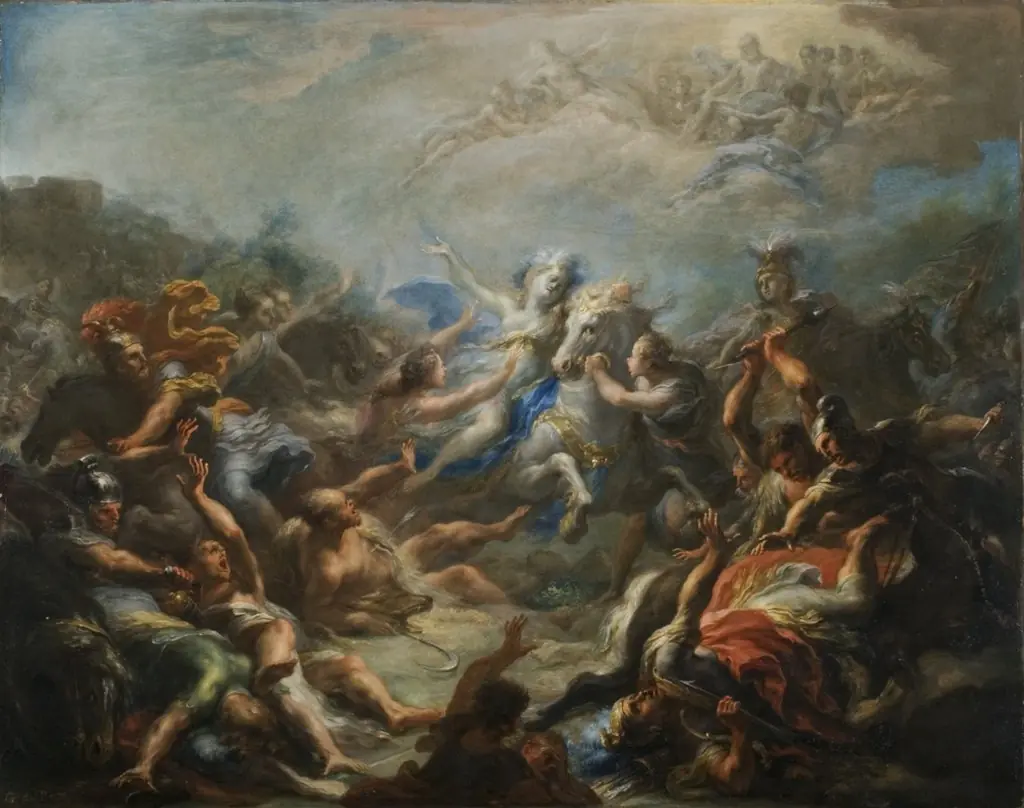 Camillia at War from Virgil's Aeneid
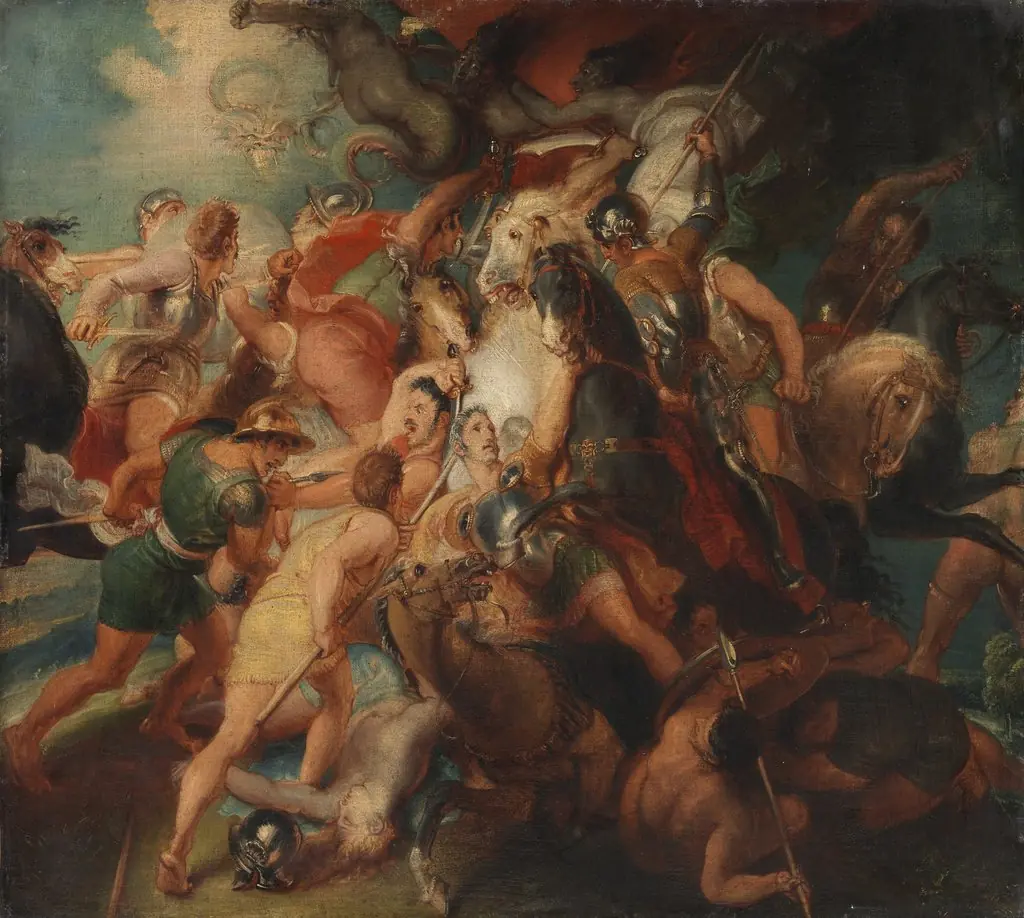 The Horrors of War, Sketch for Burghley House Mural
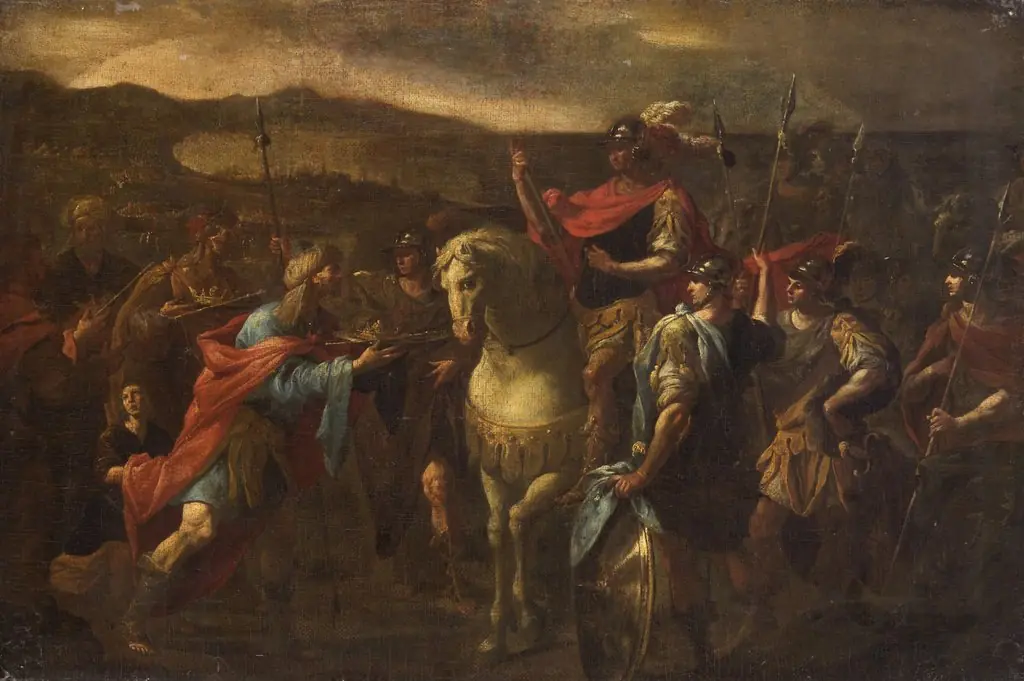 Indische Könige huldigen Alexander dem Großen
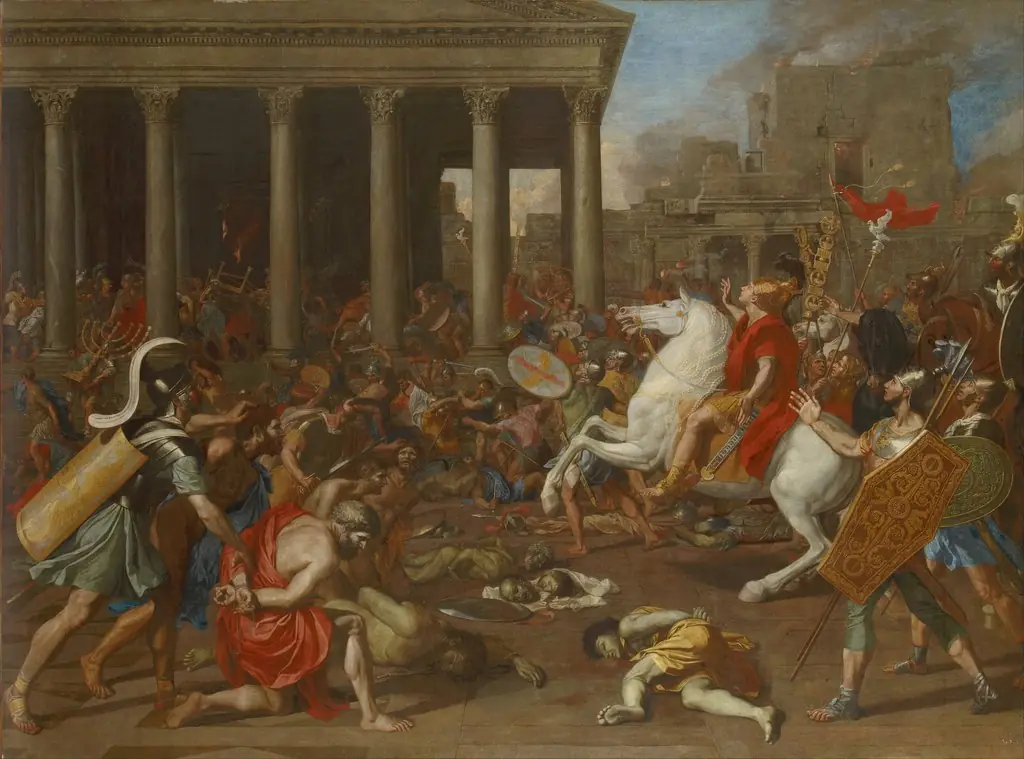 The Conquest of Jerusalem by Emperor Titus
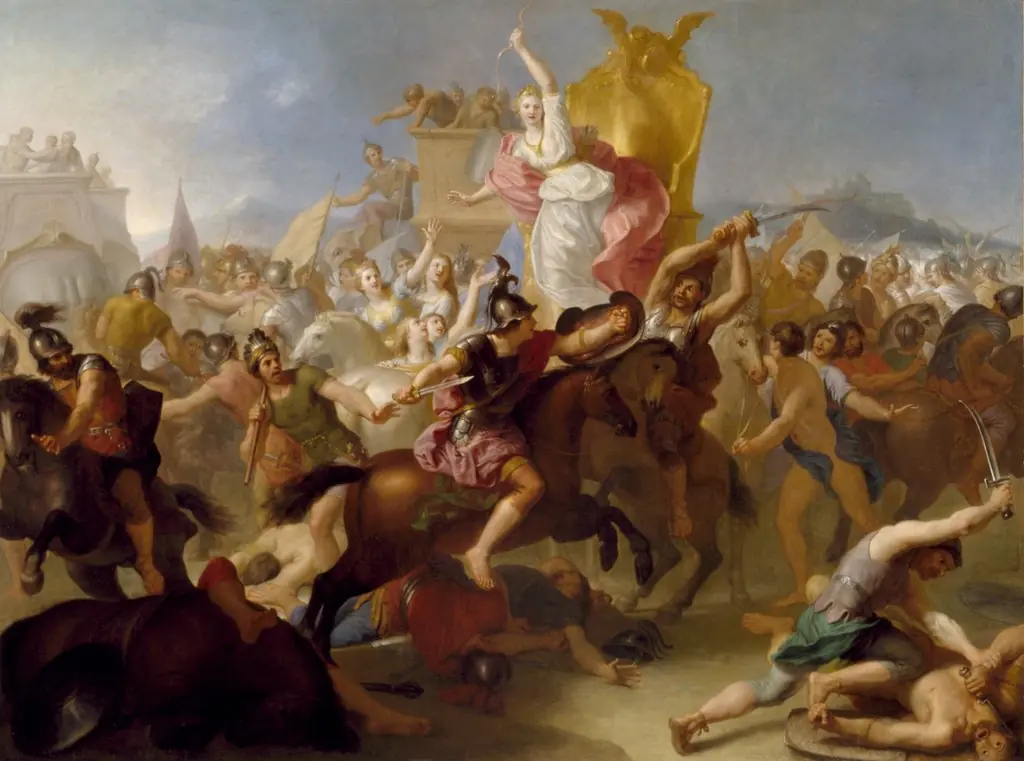 Armida Fighting the Christians
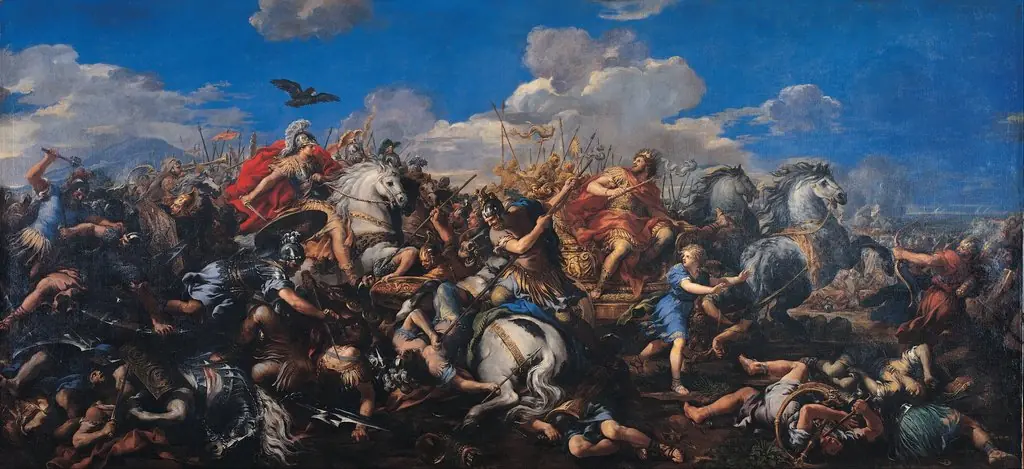 Battle of Alexander versus Darius
 Battle Between the Lapiths and Centaurs
 The Death of the Consul Decius