Artwork
A Stone Bridge and the Fortified Entrance to a Town
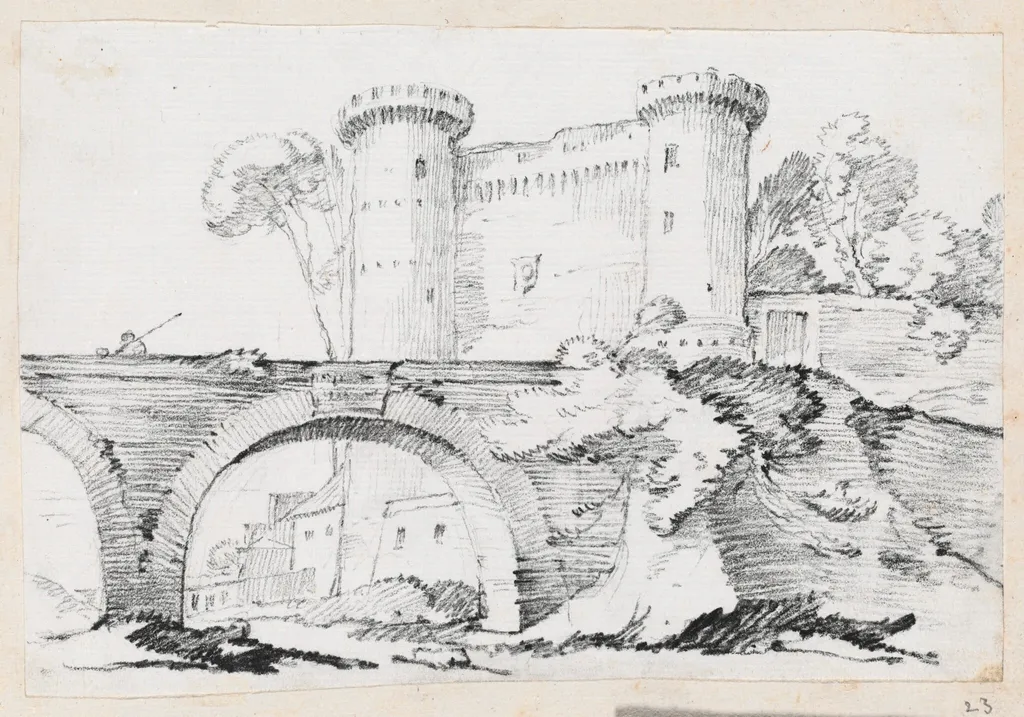
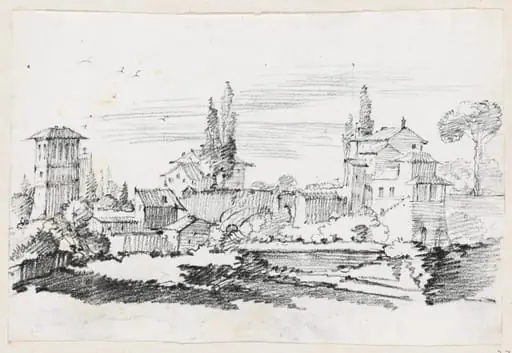
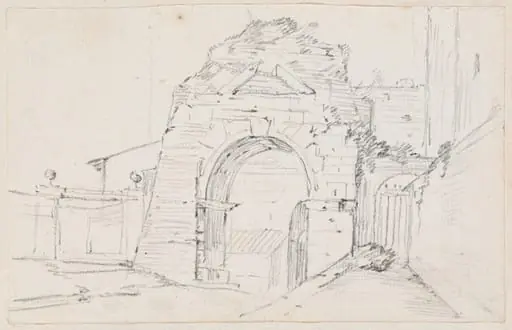
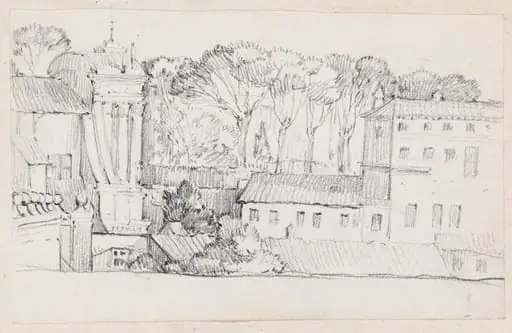
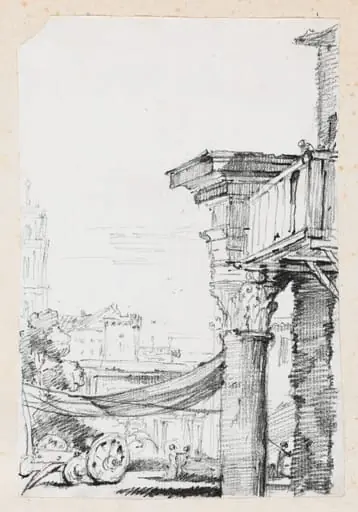
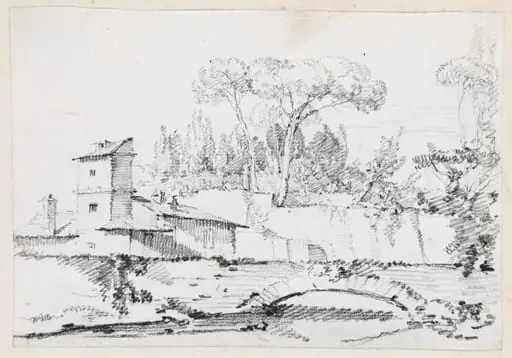
A Stone Bridge and the Fortified Entrance to a Town is a graphite drawing by the Baroque artist Joseph-Marie Vien. It dates from 1747 and is held in the collection of the National Gallery of Art.
About this work
This drawing is called A Stone Bridge and the Fortified Entrance to a Town.
It was made with graphite on laid paper.
The artist, Joseph-Marie Vien, created it between 1744 and 1750, which is interesting because it shows he was active during a time when art styles were changing.
You can learn more about this style by looking into the movement: Baroque.
Overview
Joseph-Marie Vien’s drawing *A Stone Bridge and the Fortified Entrance to a Town* was executed in 1747 with graphite on laid paper. The work presents a carefully rendered architectural scene, showing a stone bridge that leads to a fortified gateway of a town. It belongs to the early period of Vien’s artistic development, prior to his later appointment as Premier peintre du Roi.
Subject & Meaning
The composition focuses on a utilitarian yet picturesque setting: a sturdy stone bridge spans a waterway and guides the viewer’s eye toward a massive, crenellated entrance that guards a town. The juxtaposition of civil engineering and military architecture reflects eighteenth‑century interests in the relationship between infrastructure and urban defense, offering a study of how travel and protection intersected in the built environment.
Technique & Style
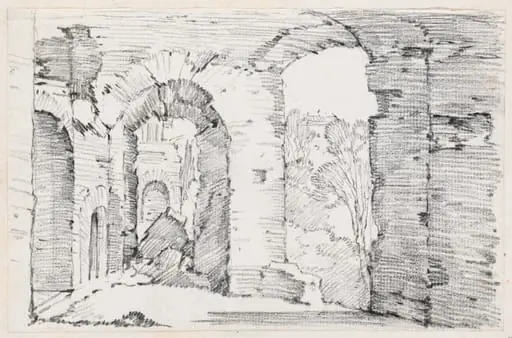
Rendered in graphite on laid paper, Vien employs precise, linear strokes to delineate the bridge’s arches and the fortress’s battlements.
Rendered in graphite on laid paper, Vien employs precise, linear strokes to delineate the bridge’s arches and the fortress’s battlements. The drawing’s tonal modulation relies on varied pressure, creating depth through subtle shading rather than hatching. This restrained handling aligns with the late Baroque emphasis on clarity of form, while anticipating the neoclassical interest in architectural drawing as a scholarly exercise.
Context
Created during a transitional moment in French art, the drawing sits at the tail end of the Baroque period, when dramatic compositions were giving way to a more measured classicism. Vien, who would later become the king’s premier painter (1789‑1791), was then exploring academic drawing practices that emphasized accurate observation of architectural subjects, a skill valued by the Académie Royale.
History & Provenance
The work is documented as dating between 1744 and 1750, with the most specific attribution to 1747. While the original collector’s identity is not recorded, the drawing has been cited in scholarly catalogues of Vien’s early oeuvre, confirming its authenticity and its place among his preparatory studies of architectural motifs.
Artist & collection
Artist
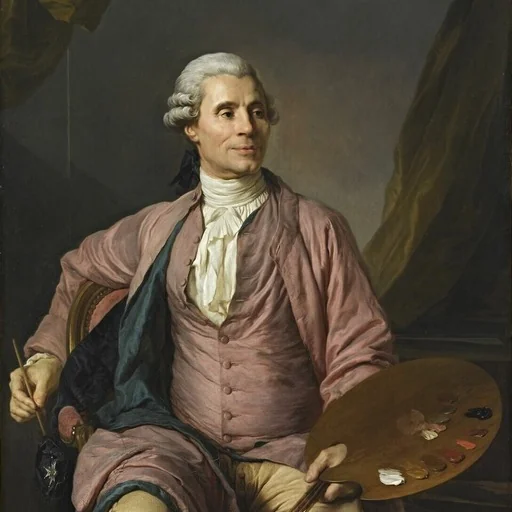
Joseph-Marie Vien (18 June 1716 – 27 March 1809) was a French painter. He was the last holder of the post of Premier peintre du Roi, serving from 1789 to 1791, before it was abolished during the French Revolution.