Artwork
Tabriz
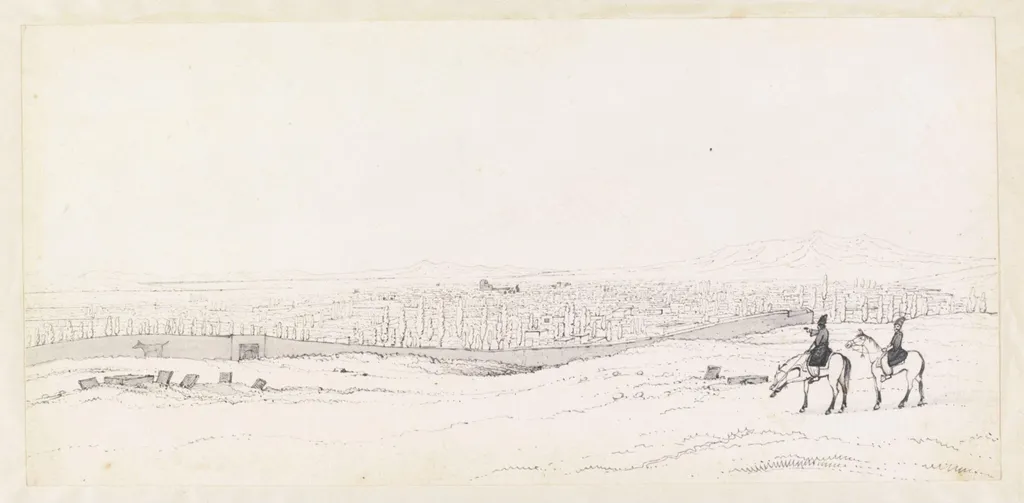
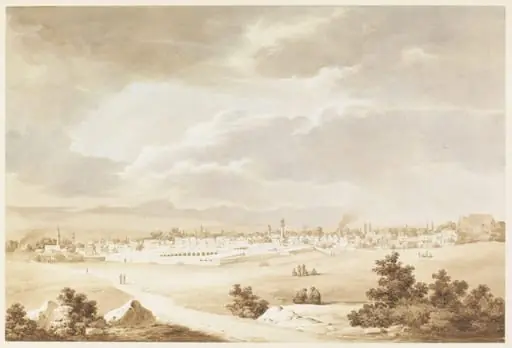
Tabriz is a watercolor work on paper by the Orientalist artist Godfrey Thomas Vigne. It dates from 1833 and is held in the collection of the Victoria and Albert Museum.
About this work
Overview
Godfrey Thomas Vigne’s watercolour titled *Tabriz* presents a panoramic view of the Iranian city, rendered from his observations during an 1840s expedition.
Godfrey Thomas Vigne’s watercolour titled *Tabriz* presents a panoramic view of the Iranian city, rendered from his observations during an 1840s expedition. The composition balances a distant urban skyline against a foreground populated by two riders on horseback, scattered structures, and low walls, all set beneath a muted mountain backdrop. The overall tone is tranquil, emphasizing the landscape’s quiet expanse.
Subject & Meaning
The work records Vigne’s encounter with Tabriz, offering a visual supplement to his written travel narratives. By positioning the city at a distance, the artist underscores its role as a landmark within a broader natural setting, suggesting a harmonious relationship between human settlement and the surrounding terrain.
Technique & Style
Executed in watercolor, the piece relies on fine linear detailing to delineate architecture and topography. A restrained palette of browns, grays, and subdued earth tones creates atmospheric depth, while delicate washes convey the softness of distant mountains. The meticulous line work and calm coloration reflect a documentary approach rather than overt romantic dramatization.
History & Provenance
First published in Vigne’s 1842 travel account, the image later appeared in an 1839 article for *The Journal of the Royal Geographical Society of London* and in his two‑volume *Travels in Kashmir*. The original watercolor entered the museum’s collection in 1971, acquired from Vigne’s great‑nephew, Henry D’Olier Vigne, as part of the broader Searight Archive holdings.
Context
Created during a period of heightened European interest in Central Asian geography, the drawing served both artistic and scientific purposes. Vigne’s documentation contributed to contemporary knowledge of Persia’s urban centers, aligning with the era’s emphasis on empirical observation and the mapping of previously little‑known regions.
Artist & collection


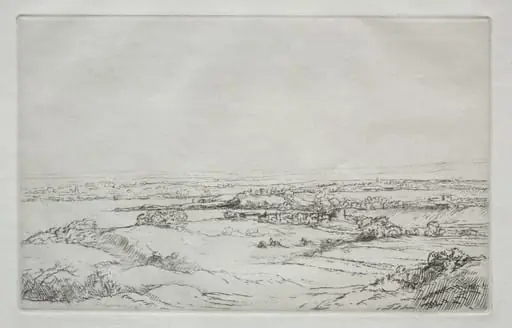 The Meadow near the Lake (La Plaine Près Du Lac)
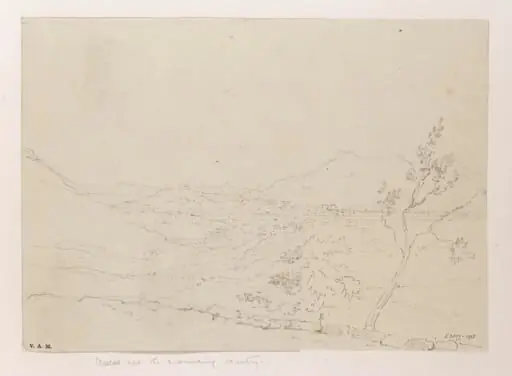 Macau, looking south-west along the peninsula
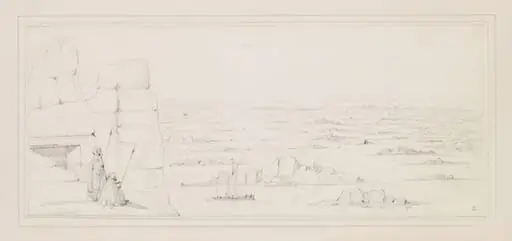 Cataracts of Nubia - Looking North
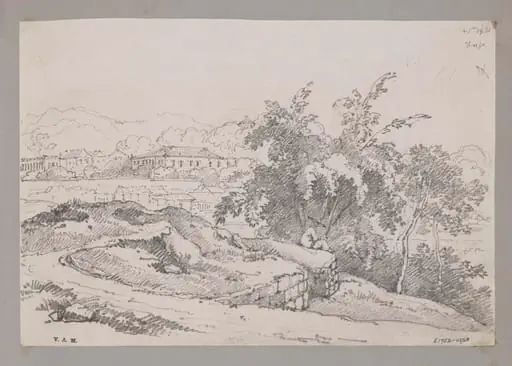 The Casa, Macao, in the gardens of which is Camoens' Cave (the residence of Lady Pereira), Macao
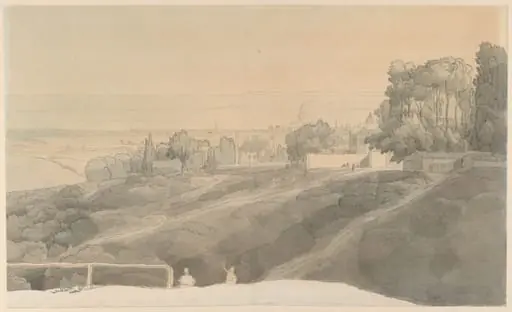 Hampstead Heath, Evening Light
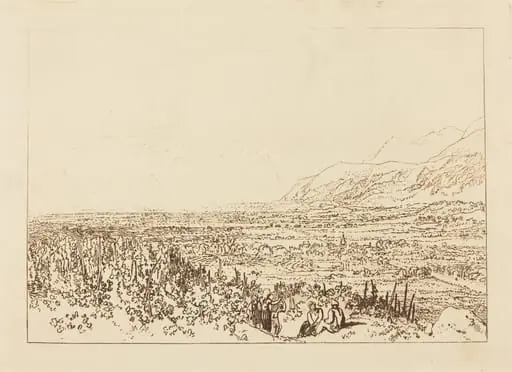 Chain of Alps from Grenoble to Chamberi
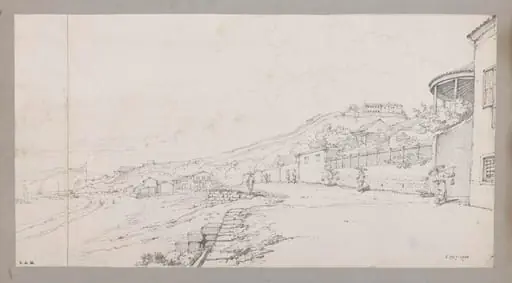 Part of Macao Bay, looking west
 Castel Sant'Angelo from the Northwest
 Landscape with hills in the background
 Siloam from under S.E. Corner of Wall Jerusalem
 Landscape
 Tarsus