Artwork
Ithaca Grecian Islands
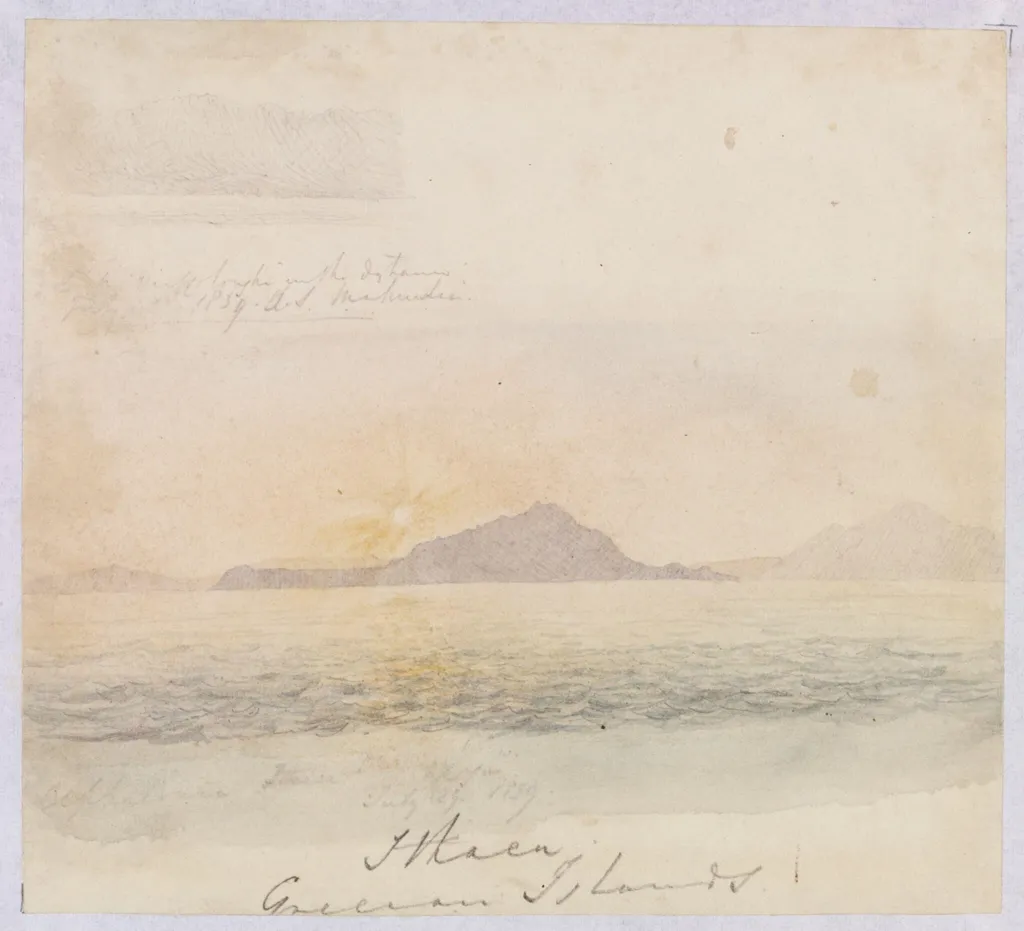
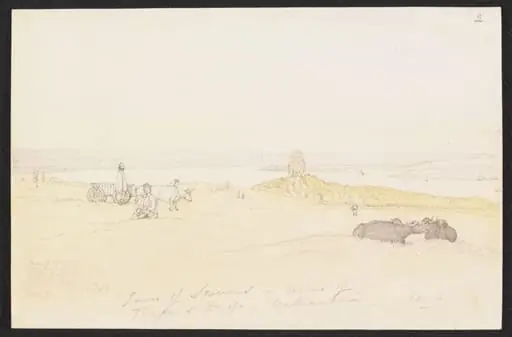
Ithaca Grecian Islands is a watercolor work on paper by the Orientalist artist Godfrey Thomas Vigne. It dates from 1839 and is held in the collection of the Victoria and Albert Museum.
About this work
Overview
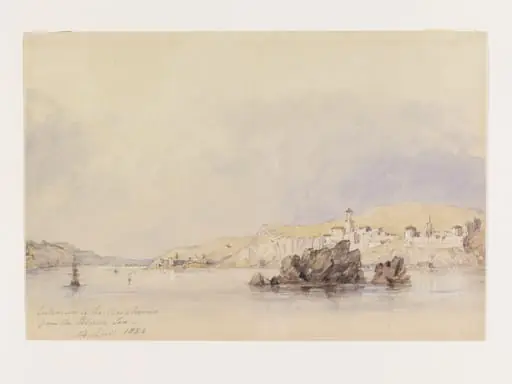
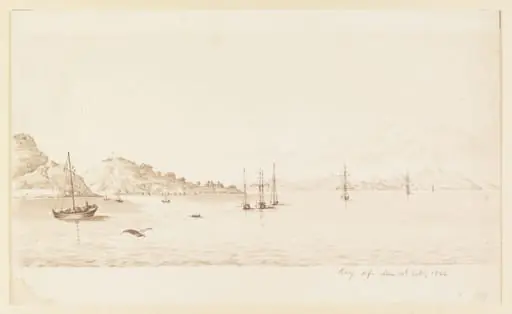
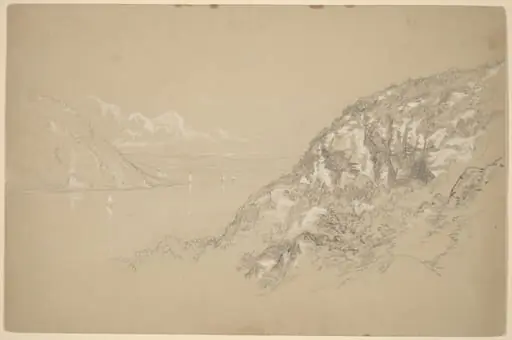
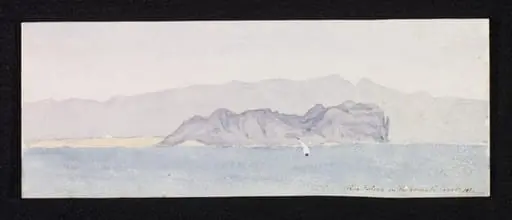
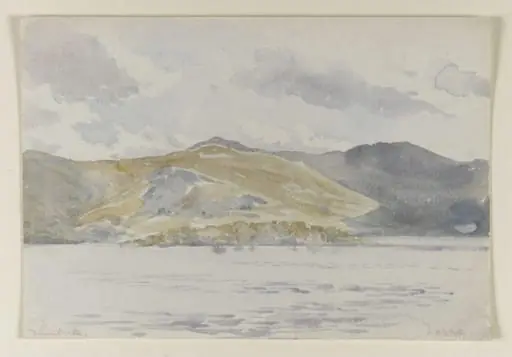
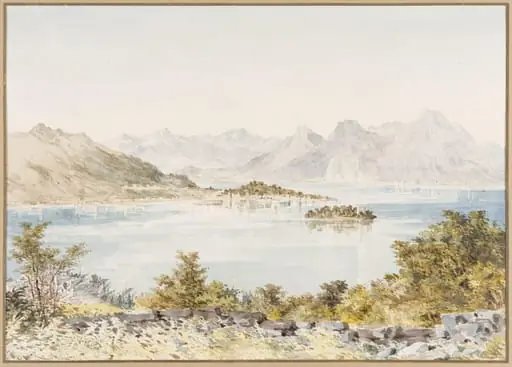
Created in 1839 during Godfrey Thomas Vigne’s journey from India to England, this watercolour captures a view of the Greek island of Ithaca. Executed en route, the work reflects the artist’s practice of recording landscapes encountered during extended travel. Its modest scale and informal handling suggest it was made as a personal record rather than a finished exhibition piece.
Subject & Meaning
Ithaca, mythologically linked to Odysseus, is rendered without narrative emphasis; instead, the focus lies in the quiet observation of light and form.
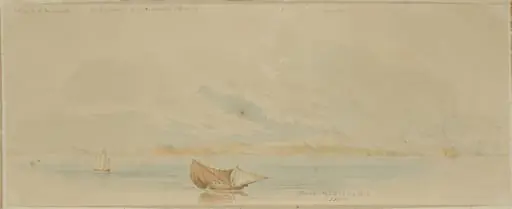
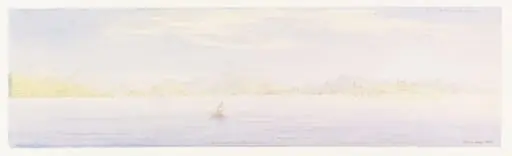
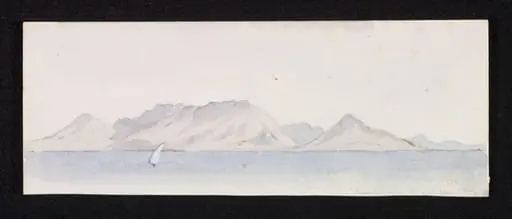
The scene depicts a distant, rocky island rising from calm waters, with a hazy horizon suggesting the Mediterranean’s quiet atmosphere. Ithaca, mythologically linked to Odysseus, is rendered without narrative emphasis; instead, the focus lies in the quiet observation of light and form. The title anchors the image in a real location, reinforcing its role as a topographical note rather than an idealized composition.
Technique & Style
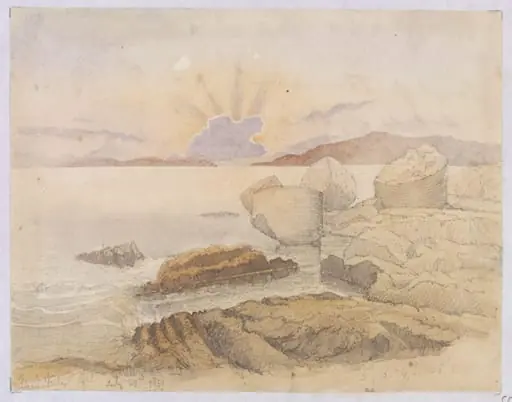
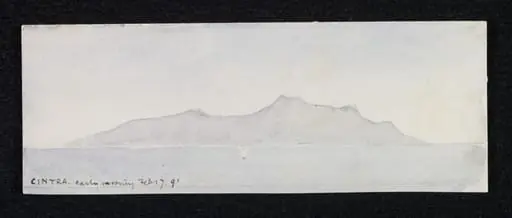
Vigne employed loose, fluid washes to suggest the sea and sky, using minimal detail and muted tones—soft blues, greys, and faint ochre—to convey atmospheric depth. The watercolour’s transparency allows the paper’s texture to contribute to the effect, while the sketchy outlines imply rapid execution. This method reflects the spontaneity of travel sketching, prioritizing immediacy over polish.
History & Provenance
The work remained within the Vigne family until 1971, when it was acquired from Henry D'Olier Vigne, the artist’s great-nephew. It was part of a broader collection of the artist’s travel studies, preserved across generations. Its entry into institutional hands preserved a personal archive of 19th-century British travelers’ encounters with the Mediterranean world.
Context
Vigne’s journey coincided with a period when British travelers increasingly documented foreign landscapes as part of cultural and scientific curiosity. Watercolour was a favored medium for such expeditions due to its portability. His sketches, including this one, align with a broader tradition of amateur topographical art produced during imperial-era travel.
Legacy
Though not widely exhibited, the work contributes to a body of lesser-known travel sketches that offer insight into 19th-century visual documentation practices. Its preservation reflects the value placed on personal records of place, complementing more formal artistic output of the era. It remains a quiet testament to the act of seeing during long-distance travel.
Artist & collection