Artwork
Plane Tree (Chenar) Shemaroon near Tehran Persia
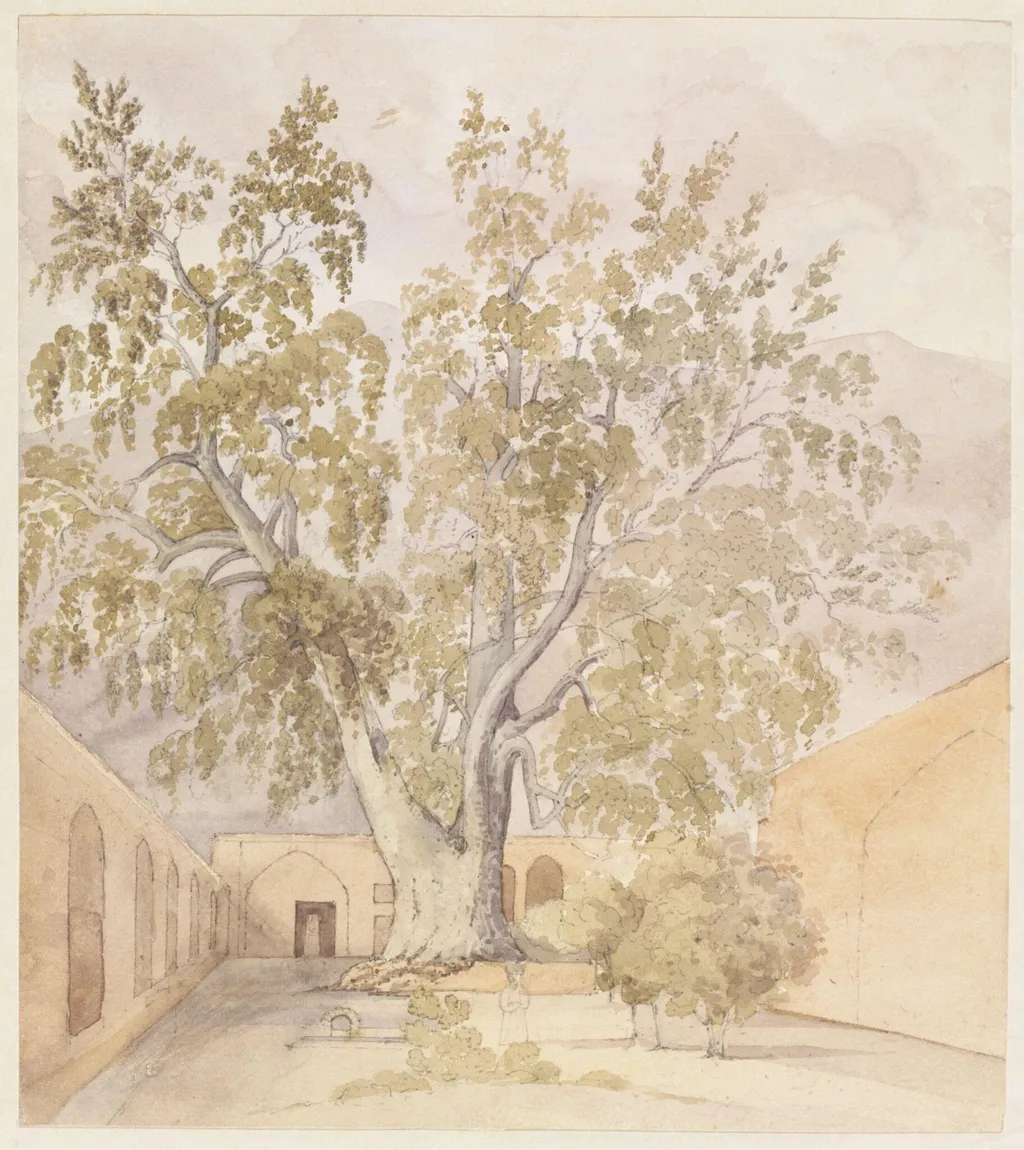
Plane Tree (Chenar) Shemaroon near Tehran Persia is a watercolor work on paper by the Orientalist artist Godfrey Thomas Vigne. It dates from 1833 and is held in the collection of the Victoria and Albert Museum.
About this work
Overview
Painted in 1833 by Godfrey Thomas Vigne, this watercolour captures a solitary plane tree in Shemiran, a northern suburb of Tehran. The work is part of a broader series of topographical studies Vigne produced during his travels in Persia. Executed in delicate washes, it reflects the artist’s interest in documenting architectural and natural landmarks encountered on his journeys through the region.
Subject & Meaning
The tree, known locally as a chenar, stands in a walled courtyard, its massive trunk and expansive canopy dominating the composition. In Persian culture, plane trees often symbolize endurance and communal gathering spaces. Here, the tree’s presence suggests a quiet sanctuary, possibly linked to the seasonal retreats of foreign diplomats who favored Shemiran’s cooler climate during summer months.
Technique & Style
Vigne employed transparent watercolour washes to render the tree’s textured bark and layered foliage with subtle gradations.
Vigne employed transparent watercolour washes to render the tree’s textured bark and layered foliage with subtle gradations. Soft, controlled brushwork defines the leaves’ movement and the distant arches of the wall, while the pale blue sky remains unobtrusive, enhancing the scene’s stillness. The absence of figures or overt narrative directs focus to the tree’s quiet grandeur and the harmony of its surroundings.
History & Provenance
Created during Vigne’s travels in Persia, the work remained in his family until 1971, when it was acquired from his great-nephew. Vigne documented his experiences in published accounts, including his 1839 article in the Journal of the Royal Geographical Society, which contextualizes this image as part of a systematic effort to record Persian landscapes and cultural sites for European audiences.
Context
In the early 19th century, European travelers and diplomats increasingly visited Persia, drawn by its strategic position and cultural heritage. Shemiran, favored by British legations for its summer retreats, became a documented site of cross-cultural exchange. Vigne’s watercolour aligns with this trend, offering a quiet, observational record rather than a romanticized view of the East.
Legacy
Though not widely exhibited, the watercolour endures as a precise example of early Victorian topographical art in Persia. Its restrained aesthetic and attention to botanical detail distinguish it from more dramatic Orientalist works of the period. It contributes to a modest but valuable archive of visual records made by travelers seeking to document the natural and built environments of 19th-century Iran.
Artist & collection


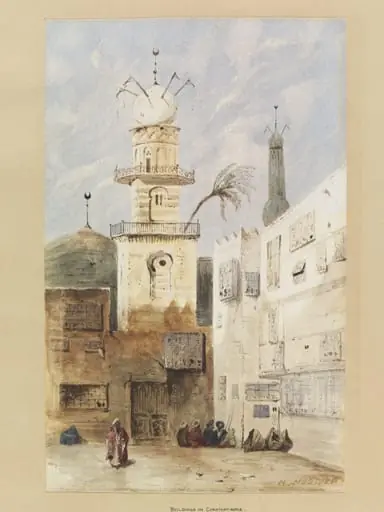 Mosque, possibly in North Africa
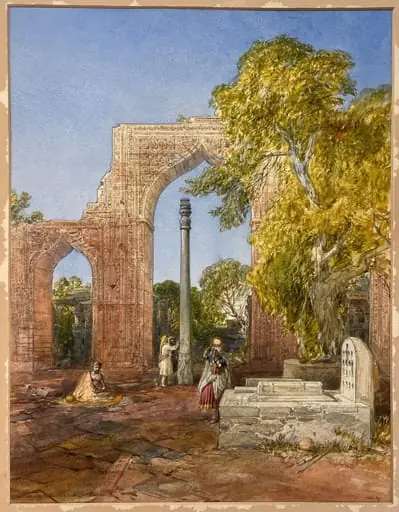 Iron Laht at the Kootub, Old Delhi
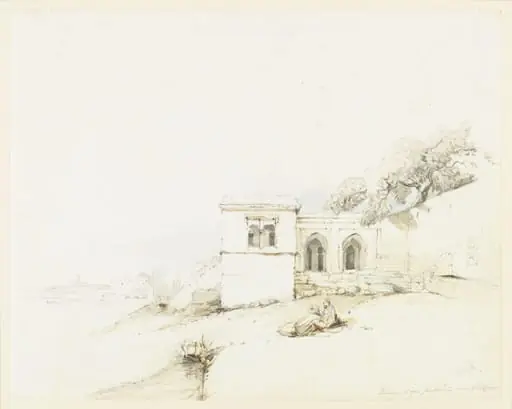 Ruines dune fontaine près dAlger
![Ruins of the Palace at Madura [The Palace of Tirumulla Nayak], by Thomas Daniell](https://artifactworldgallery.com/img/thomas-daniell--ruins-of-the-palace-at-madura-the-palace-of-tirumulla-nayak--7010c7fb1f671f0f-w320.webp) Ruins of the Palace at Madura [The Palace of Tirumulla Nayak]
Ruins of the Palace at Madura [The Palace of Tirumulla Nayak] Fountain At Constantinople
 Penshurst Park
 Mahatta
 Cairo: Palace of the Cadi
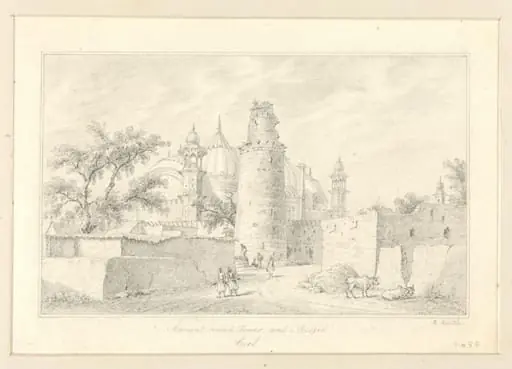 Ancient round tower and Musjid, Coel.
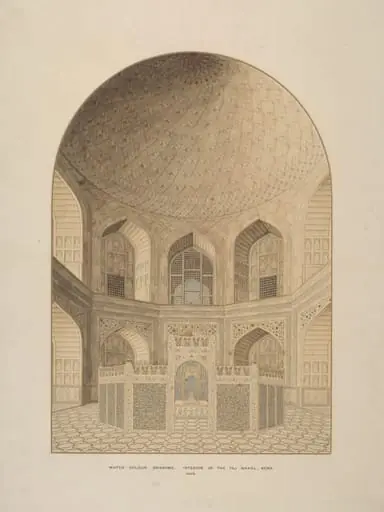 Interior of the Tomb Chamber, Taj Mahal, Agra
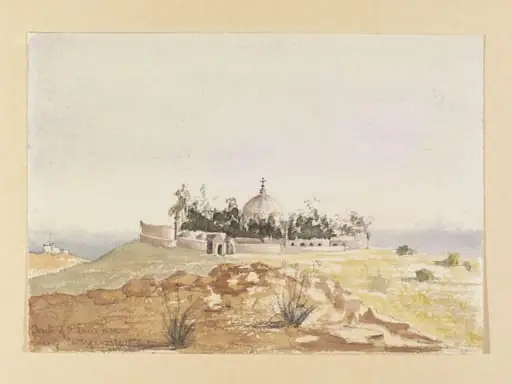 Tomb of St. Louis on the ruins of Carthage
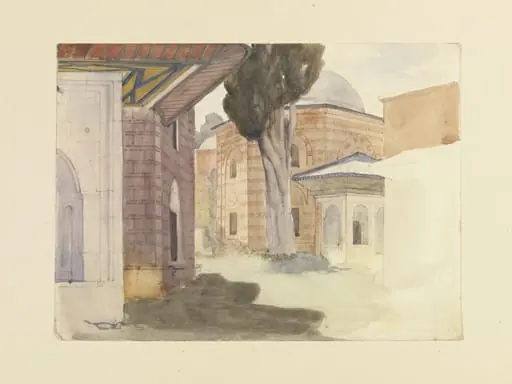 Türbes in the Royal Cemetery of the Muradiye (Murad II), Bursa