Artwork
The Bodies of Saints Peter and Paul
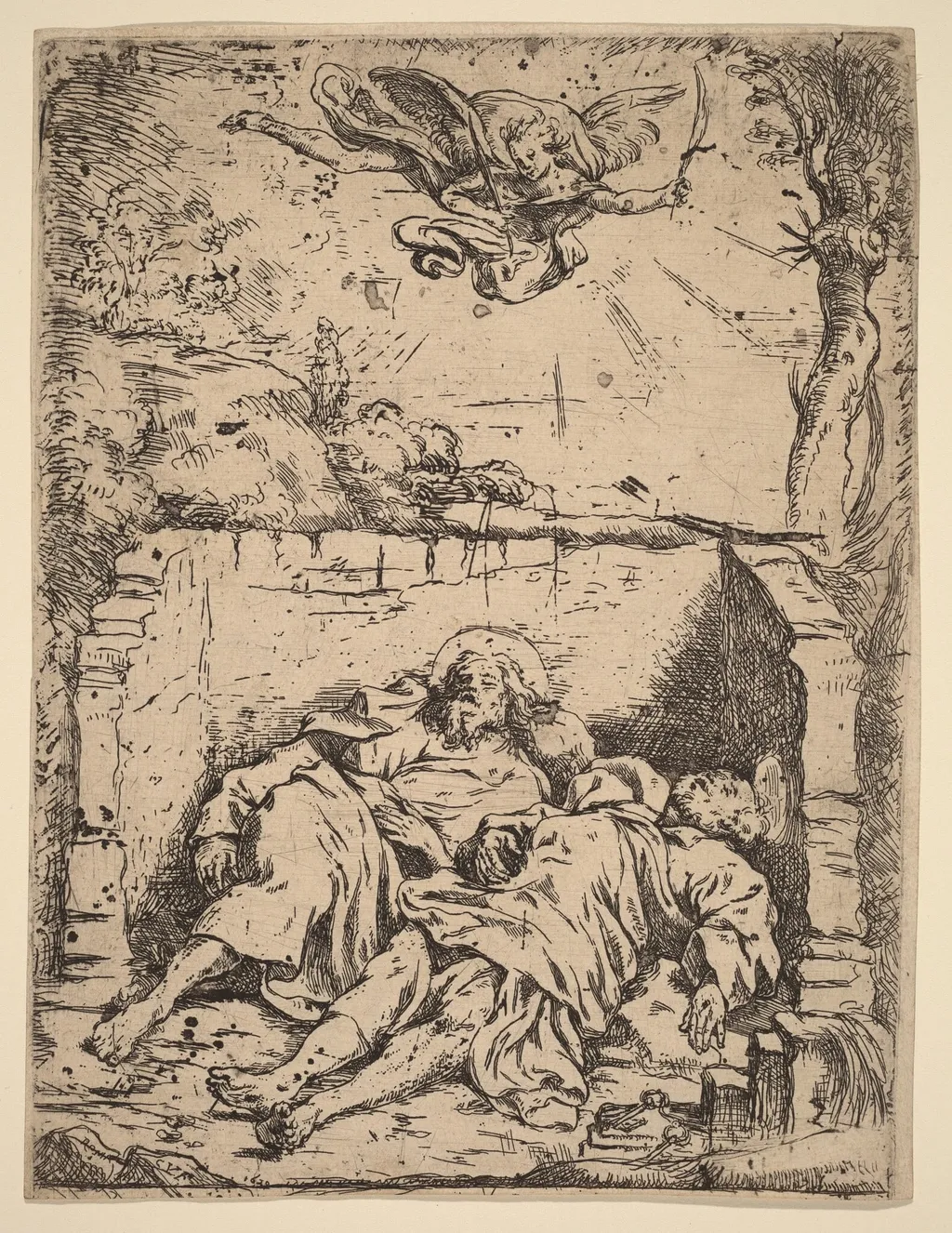
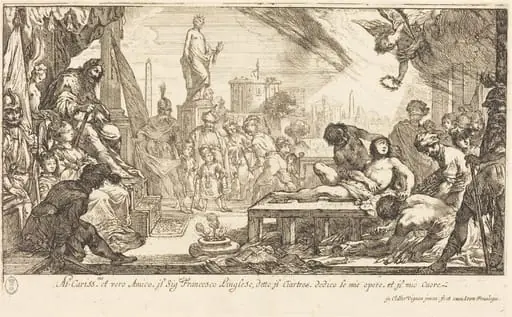
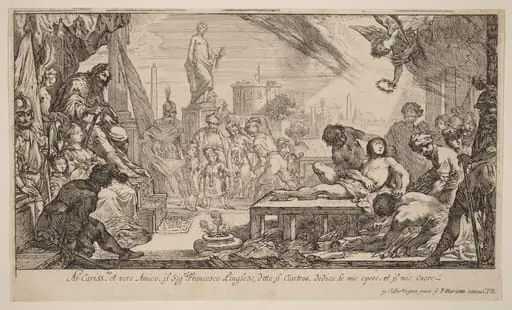
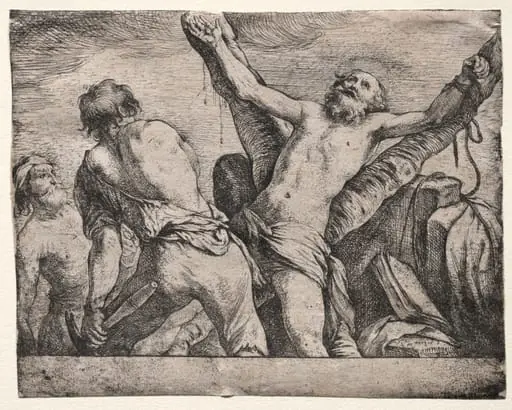
The Bodies of Saints Peter and Paul is an ink print by the Baroque artist Claude Vignon. It dates from 1620 and is held in the collection of the National Gallery of Art.
About this work
Overview
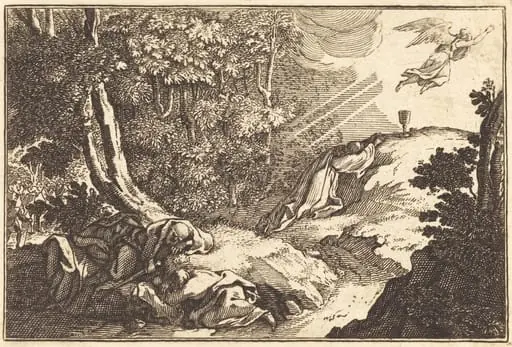
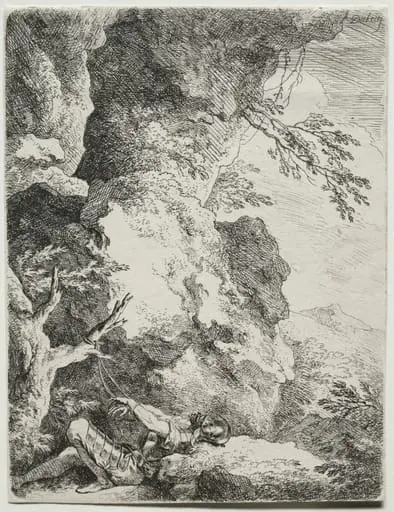
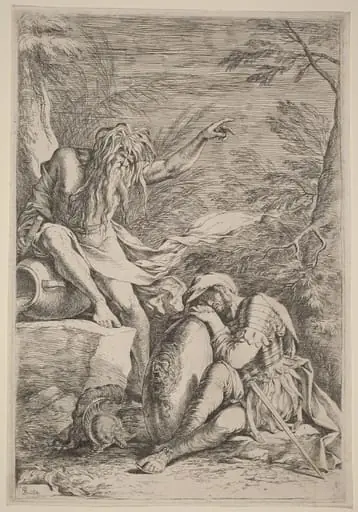
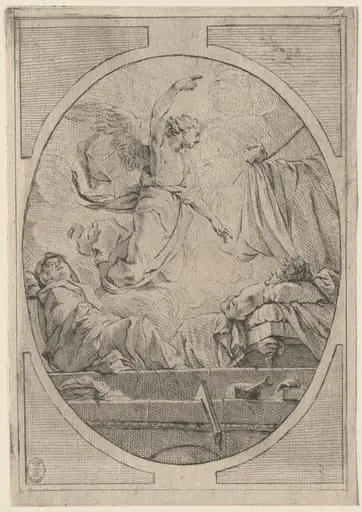
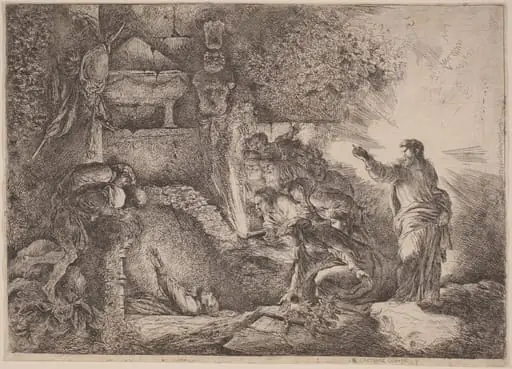
Created in 1620 by the French artist Claude Vignon, this etching depicts the bodies of Saints Peter and Paul reclining beneath a hovering angelic figure.
Created in 1620 by the French artist Claude Vignon, this etching depicts the bodies of Saints Peter and Paul reclining beneath a hovering angelic figure. Executed on laid paper using the etching technique, the work belongs to a series of religious prints produced during Vignon’s early career. Its monochrome palette and dense composition reflect the artist’s engagement with Northern and Italian print traditions, emphasizing emotional gravity over decorative flourish.
Subject & Meaning
The scene portrays the moment after the martyrdom of the two apostles, their lifeless forms draped in heavy folds, lying side by side. Above them, a winged figure holds a laurel wreath, symbolizing victory over death. The surrounding landscape—trees, rocks, and a distant structure—anchors the event in a tangible, earthly space, suggesting divine presence within the natural world rather than in idealized heaven.
Technique & Style
Vignon employed direct etching on a metal plate, using a needle to incise lines that were then inked and transferred to paper. The resulting marks are irregular and urgent, with cross-hatching and uneven strokes creating texture and depth. This expressive approach, influenced by Caravaggisti and Northern Mannerists, prioritizes emotional intensity over polished finish, aligning the print with the dramatic sensibilities of early 17th-century religious imagery.
History & Provenance
The print was made during Vignon’s formative years, shortly after his return from Italy, where he absorbed the chiaroscuro and naturalism of Caravaggio’s followers. Though few early impressions survive, the work appears in several 17th-century French collections. Its survival in institutional holdings suggests it was valued for its devotional resonance and technical experimentation rather than commercial appeal.
Context
In early 17th-century France, religious prints served both private devotion and artistic education. Vignon’s etching responds to the Counter-Reformation’s emphasis on martyrdom and sacred realism, while also reflecting the growing interest in printmaking as a medium for personal expression. His fusion of Italian dramatic lighting with French linear energy positioned him as a bridge between continental styles.
Legacy
Though not widely reproduced in later centuries, this etching remains a key example of Vignon’s graphic work and his role in adapting Italian Baroque modes to French print culture. Its raw, tactile quality influenced a generation of French etchers who sought emotional authenticity over decorative refinement, contributing to the evolution of religious printmaking in Northern Europe.
Artist & collection

Artist
Claude Vignon (19 May 1593 – 10 May 1670) was a French painter, printmaker and illustrator who worked in a wide range of genres.

![The Entombment [recto], by John Baptist Jackson](https://artifactworldgallery.com/img/john-baptist-jackson--the-entombment-recto--a6e32e731f5b1bab-w320.webp)