Artwork
Rue de Rivoli and Pavillon Marsan
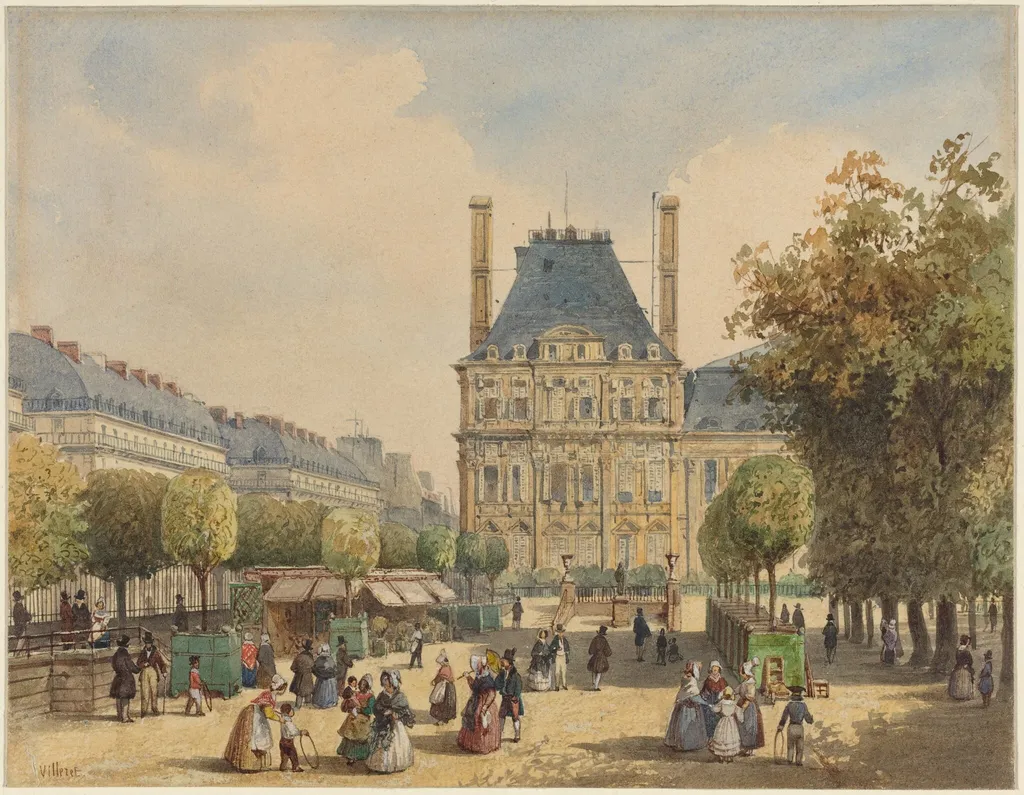
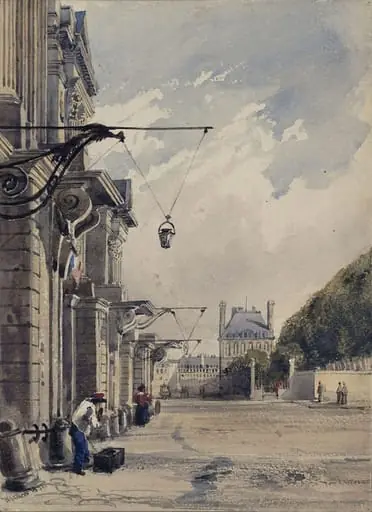
Rue de Rivoli and Pavillon Marsan is a graphite drawing by the Romanticist artist François Etienne Villeret. It dates from 1833 and is held in the collection of the National Gallery of Art. Created in 1833, this drawing by François Étienne Villeret depicts the Rue de Rivoli and the Pavillon Marsan in Paris.
About this work
Overview
Created in 1833, this drawing by François Étienne Villeret depicts the Rue de Rivoli and the Pavillon Marsan in Paris. Executed in watercolor over graphite on wove paper, it belongs to the category of topographical drawings, capturing a specific urban scene with precision and quiet observation rather than dramatic flair.
Subject & Meaning
The work presents a view of the Rue de Rivoli, a newly developed thoroughfare, alongside the Pavillon Marsan, part of the Louvre’s northern wing. It documents the transformation of Paris under early 19th-century urban planning, reflecting a moment when historical architecture coexisted with modernizing infrastructure, without overt commentary or idealization.
Technique & Style
Villeret employed graphite for precise linear structure, then layered translucent watercolor to suggest light, texture, and atmospheric depth. The approach is restrained, favoring clarity over expressive brushwork. Details like architectural moldings and tree shadows are rendered with careful observation, aligning with the documentary aims of topographical drawing in this period.
History & Provenance
The drawing was produced during Villeret’s active years as a draftsman documenting Parisian architecture. Its survival suggests it may have been part of a private collection or institutional archive, though specific ownership records prior to its current location remain undocumented in available sources.
Context
In the 1830s, Paris was undergoing significant restructuring under King Louis-Philippe. The Rue de Rivoli’s extension and the Pavillon Marsan’s preservation exemplify the era’s tension between modernization and heritage. Villeret’s work contributes to a broader visual record of these changes, made by artists and surveyors commissioned or inspired by civic transformation.
Legacy
Though not widely exhibited, the drawing holds value as a primary visual source for historians studying early 19th-century Parisian urban development. It exemplifies the role of skilled draftsmen in preserving architectural detail before photography became commonplace, offering a quiet but enduring record of the city’s evolving fabric.
Own this work as a print
Artist & collection


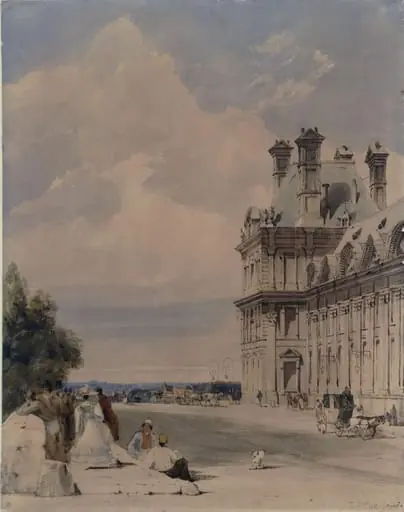 View Near the Pont Royal with the Pavillon de Flore, Tuileries
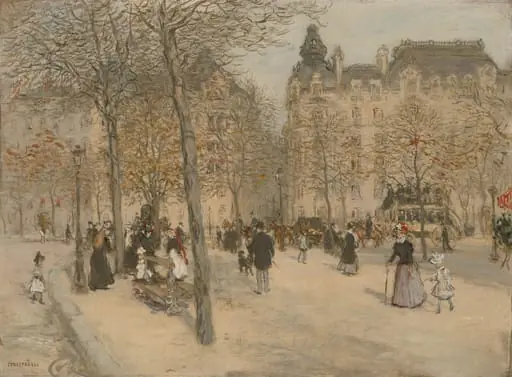 Square in Paris
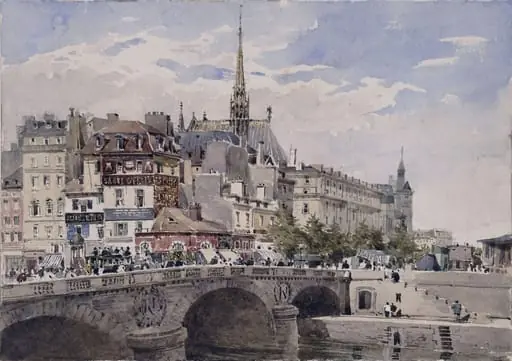 Sainte Chapelle, Palais de Juste, Paris,
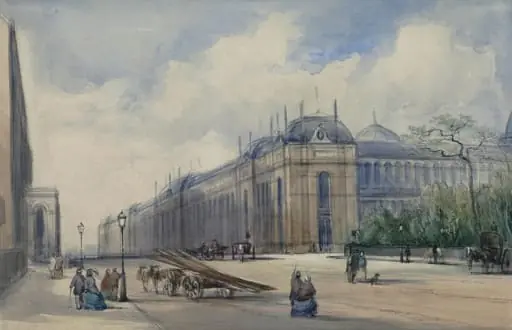 South-east aspect of the 1862 Exhibition Building
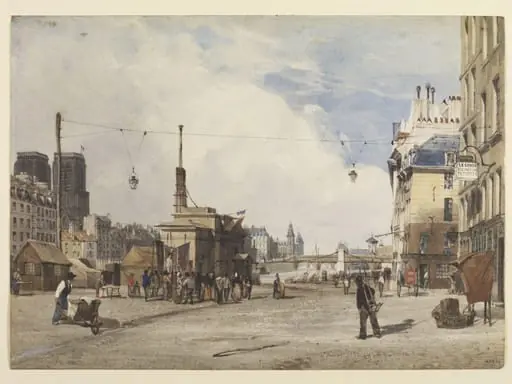 Quai de la Greve, Paris
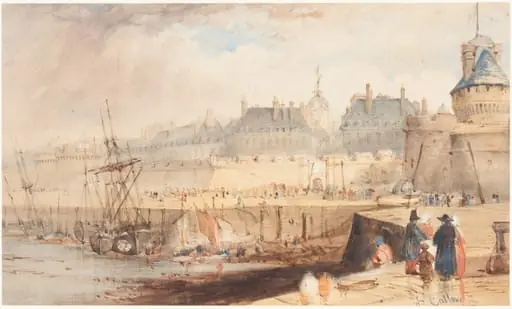 The Harbor of St. Malo at Low Tide
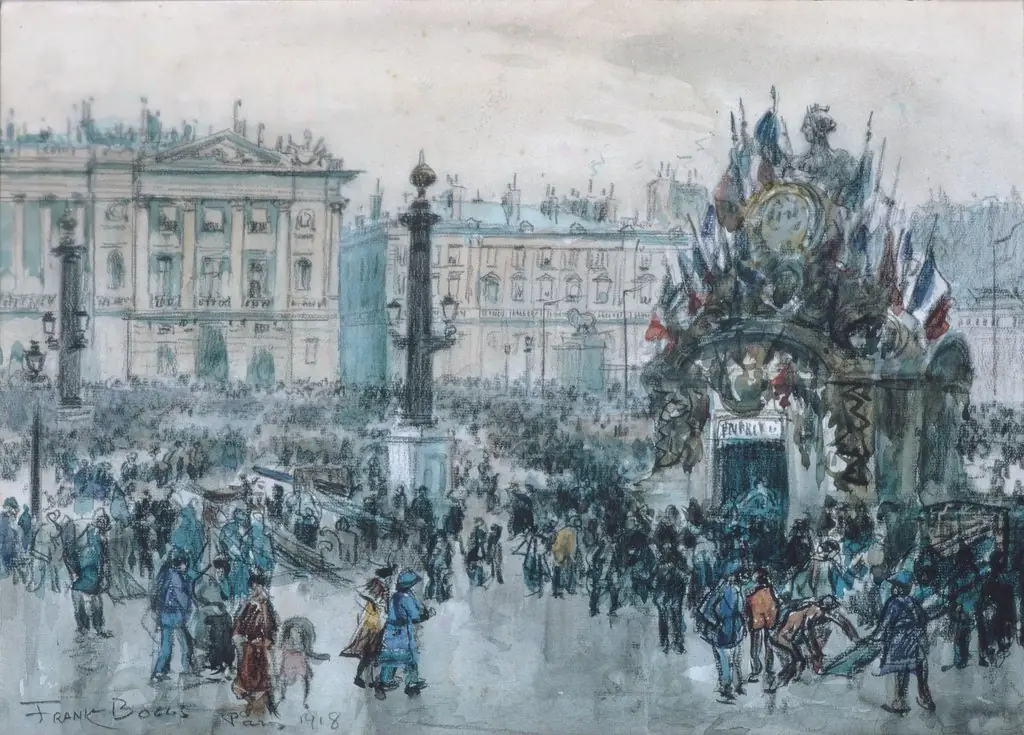 Armistice Day, Paris
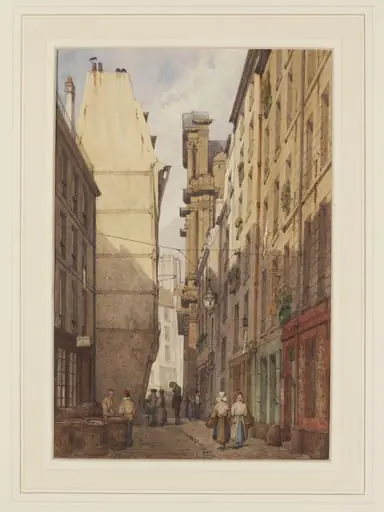 The Church of St Gervais, Paris
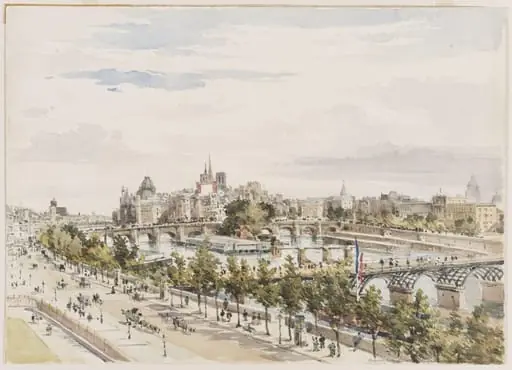 Paris, from the Window of the Salle D'Apollon in the Louvre
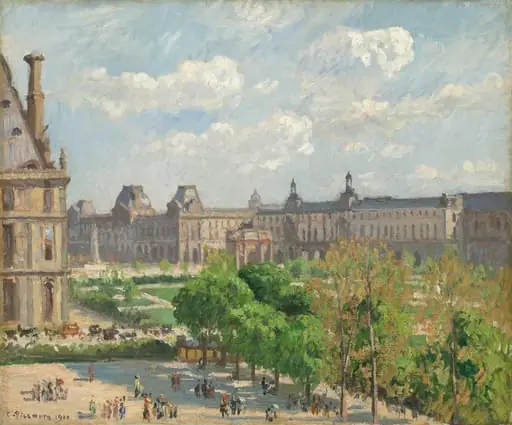 Place du Carrousel, Paris
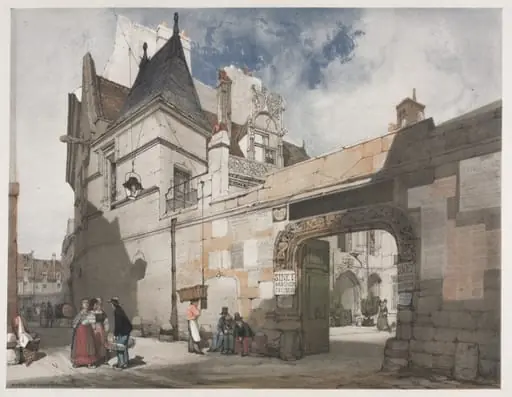 Picturesque Architecture in Paris, Ghent, Antwerp, Rouen: Hôtel de Cluny, Paris
 The Rue de Rivoli, near the Tuileries, Paris