Artwork
The Rue de Rivoli, near the Tuileries, Paris
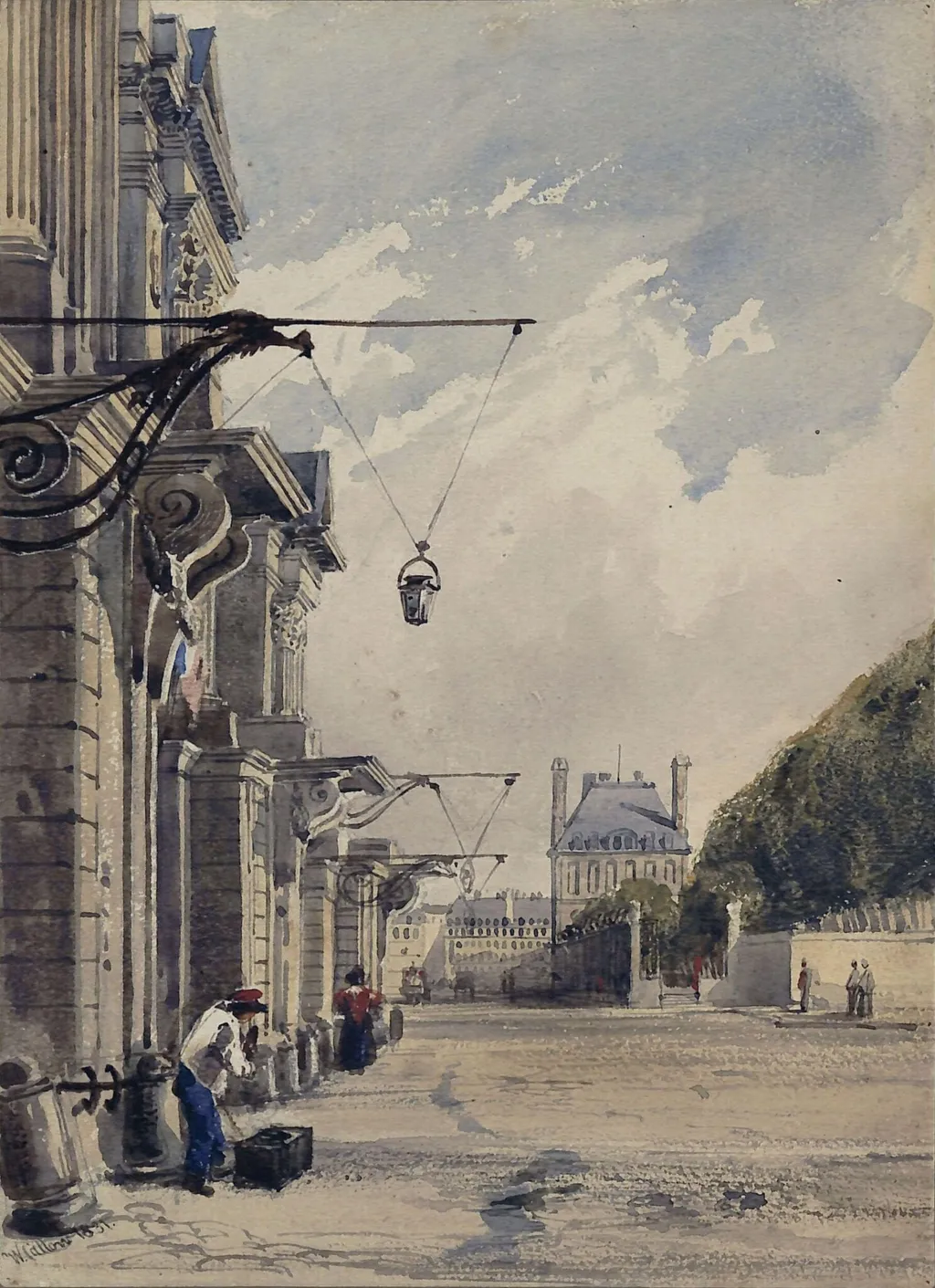
The Rue de Rivoli, near the Tuileries, Paris is a watercolor work on paper by the Romanticist artist William Callow. It dates from 1831 and is held in the collection of the Victoria and Albert Museum.
About this work
Overview
William Callow created this watercolour in 1831, capturing a quiet stretch of the Rue de Rivoli adjacent to the Tuileries Garden in Paris. The work is signed and dated by the artist, confirming its origin and timing. Rendered in delicate washes, the scene conveys a tranquil urban moment, free of bustling activity, with attention paid to the subtle interplay of light and architectural form.
Subject & Meaning
A lone figure in the foreground engages in quiet labor, while distant pedestrians suggest the presence of life without disrupting the stillness.
The composition focuses on a quiet, nearly deserted street flanked by two distinct buildings—one large and imposing on the left, the other smaller and more modest on the right. A lone figure in the foreground engages in quiet labor, while distant pedestrians suggest the presence of life without disrupting the stillness. The absence of crowds emphasizes solitude and contemplation, aligning with Romantic sensibilities that valued introspection over spectacle.
Technique & Style
Callow employed soft, translucent watercolour washes to evoke a hazy, atmospheric effect. Gentle brushwork and muted tones—pale ochres, greys, and blues—create depth without sharp definition. Light is rendered diffusely, casting subtle shadows that model the facades and suggest time of day. The technique avoids detail in favor of mood, prioritizing emotional resonance over topographical precision.
History & Provenance
Created during Callow’s early travels in France, the work reflects his engagement with French urban landscapes in the 1830s. It was likely made as a personal study or preparatory sketch, later preserved as a finished piece. The signature and date indicate the artist’s intention to mark it as a record of his observations, though its early ownership history remains undocumented.
Context
In 1831, Paris was undergoing transformation under Louis-Philippe’s reign, with urban planning initiatives beginning to reshape its streets. The Rue de Rivoli, though still incomplete, was emerging as a symbol of modernization. Callow’s depiction, however, ignores progress, instead focusing on the quiet, lingering character of the neighborhood before full redevelopment.
Legacy
Callow’s watercolour stands as a quiet testament to early 19th-century British artists’ interest in French urban scenes. It contributes to a broader corpus of topographical watercolours that valued atmosphere over monumentality. Though not widely exhibited in his time, it remains a representative example of Romantic-era landscape observation, valued for its restraint and sensitivity to light.
Artist & collection

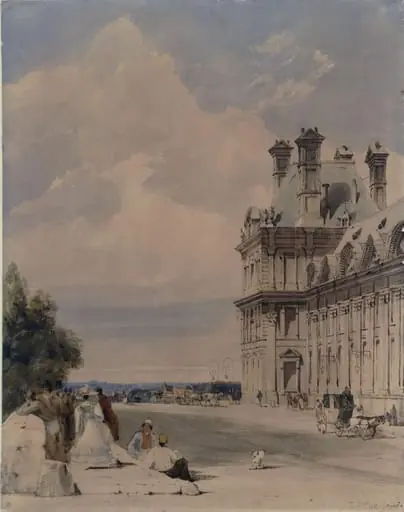 View Near the Pont Royal with the Pavillon de Flore, Tuileries
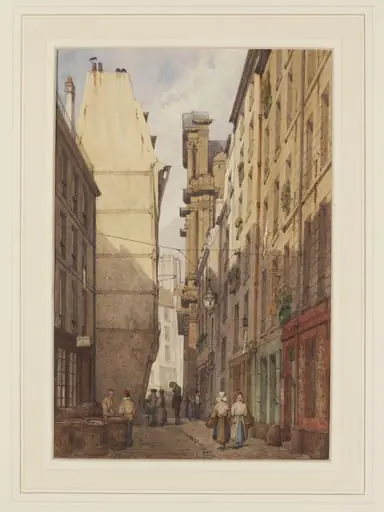 The Church of St Gervais, Paris
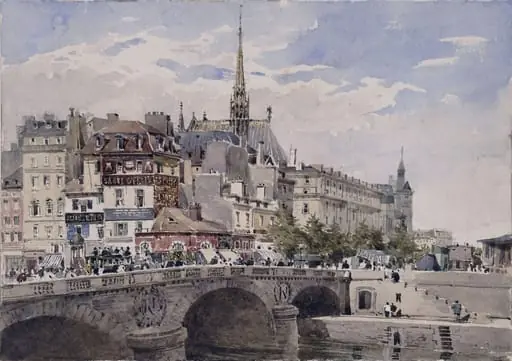 Sainte Chapelle, Palais de Juste, Paris,
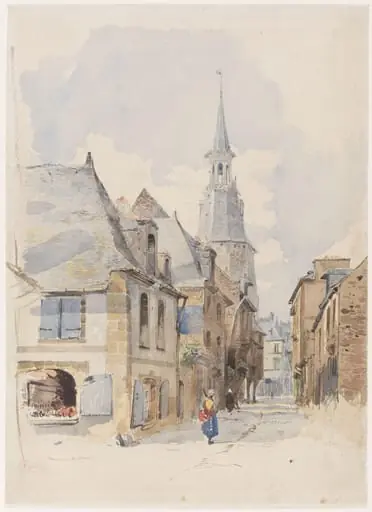 Street in Dinan
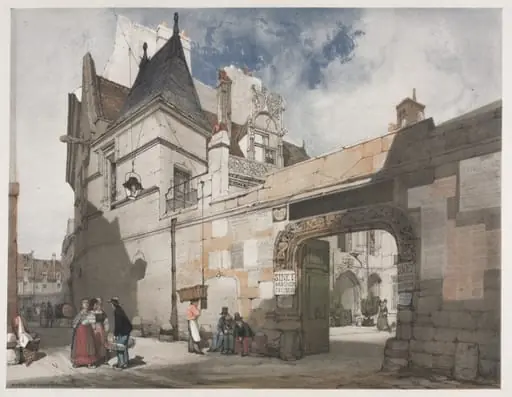 Picturesque Architecture in Paris, Ghent, Antwerp, Rouen: Hôtel de Cluny, Paris
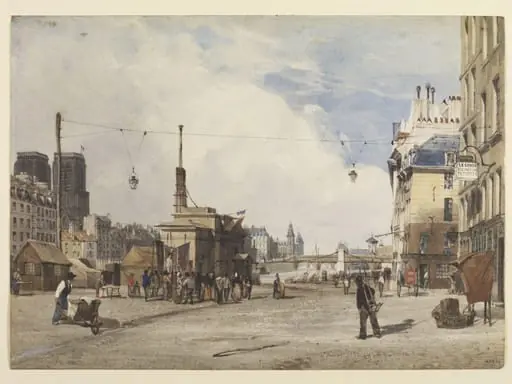 Quai de la Greve, Paris
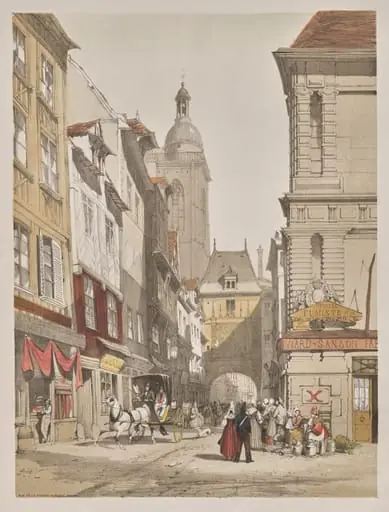 Picturesque Architecture in Paris, Ghent, Antwerp, Rouen: Rue de la Crosse Horlogue, Rouen, France
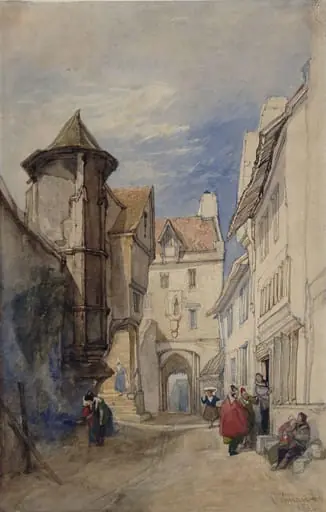 A Gateway in a Norman Town
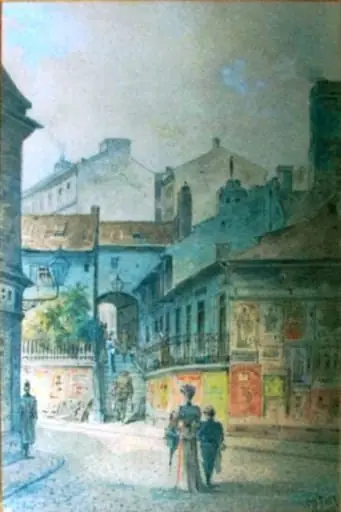 Peisaj citadin cu figuri
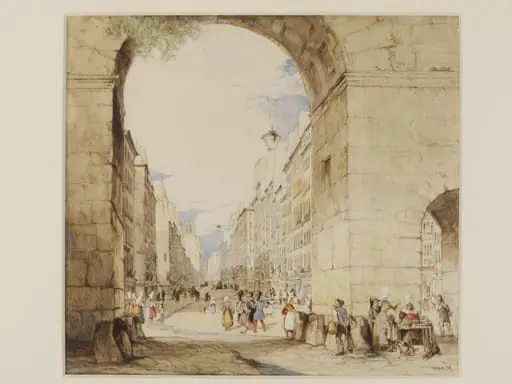 Porte de St. Martin, Paris