Artwork
A Gipsy Encampment at Filaret outside Bucharest
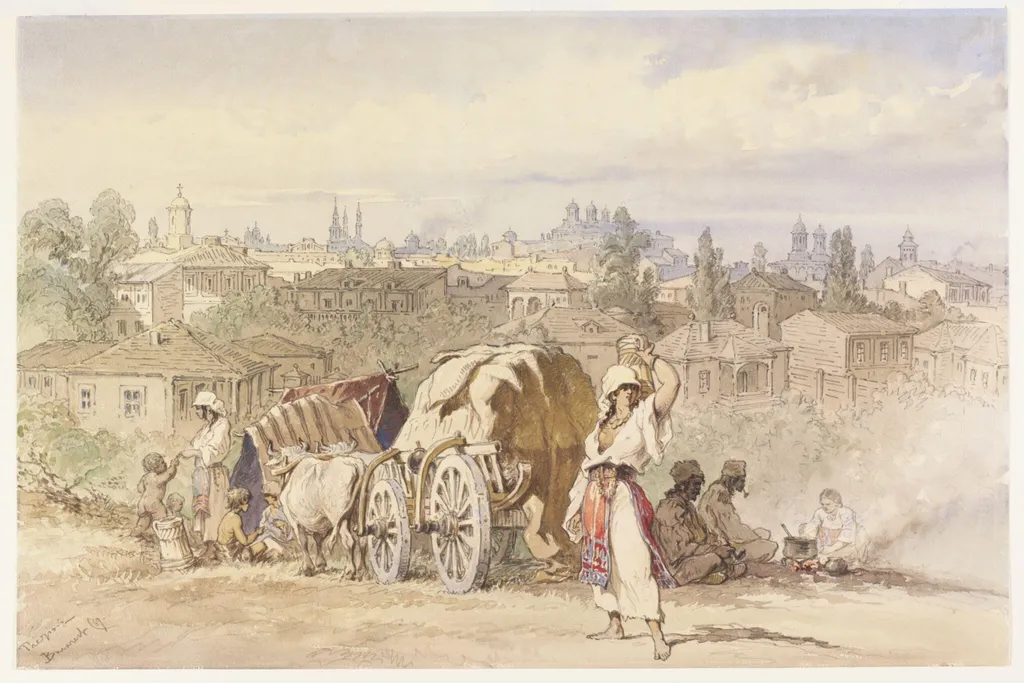
A Gipsy Encampment at Filaret outside Bucharest is a watercolor work on paper by the Impressionist artist Aloysius Rosarius Amadeus Raymondus Andreas Preziosi. It dates from 1869 and is held in the collection of the Victoria and Albert Museum.
About this work
Here’s a fresh try that meets all the rules: This watercolour shows a busy gipsy camp near Bucharest in 1869.
Here’s a fresh try that meets all the rules:
This watercolour shows a busy gipsy camp near Bucharest in 1869. It mixes quick brushwork with sharp details of daily life. The artist caught a girl’s wooden water-pot in the foreground, perfect in its turned shape.
Preziosi visited twice in 1868 and 1869, making loads of drawings. Most stayed in Romania, but this lively sheet traveled instead to London.
Next, look up the artist himself: Preziosi, Aloysius Rosarius Amadeus Raymondus Andreas (5th Count Preziosi).
Overview
This watercolour, created during Aloysius Preziosi’s second visit to Bucharest in 1869, captures a transient moment in a Romani encampment just outside the city. Executed with swift, fluid brushwork, it balances spontaneity with precise observation. Though rendered rapidly, the composition holds a wealth of detail, reflecting Preziosi’s commitment to documenting everyday life in the region during a period of political consolidation.
Subject & Meaning
The scene centers on a Romani family’s encampment, highlighting their mobile lifestyle through the distinctive design of their wagon—its unique axle and spring mechanism rendered with careful attention. In the foreground, a young girl carries a hand-turned wooden water-pot, its form unusually sculpted. These elements suggest not mere ethnographic record, but a quiet emphasis on self-sufficiency and material culture within a marginalized community.
Technique & Style
Preziosi employed watercolour with a loose, atmospheric touch for the background, allowing washes to suggest sky and terrain, while foreground figures and objects are defined with sharper, more controlled lines. The contrast between fluid backgrounds and detailed foreground elements creates depth without heavy modeling. His technique prioritizes immediacy, capturing fleeting gestures and textures without idealization or embellishment.
History & Provenance
Preziosi produced hundreds of drawings during his 1868 and 1869 trips to Romania, most of which remain in Romanian collections, notably at the National Museum of Art of Romania. This particular watercolour, however, left the country early in its history and eventually entered a private collection in London. Its migration reflects broader patterns of European interest in Eastern European ethnographic subjects during the late 19th century.
Context
In the late 1860s, the Principalities of Wallachia and Moldavia had recently unified under a single administration, sparking renewed interest in regional identity. Preziosi, an Italian nobleman with ties to the region, responded to this cultural moment by documenting Romani communities, whose presence was both visible and socially distinct. His work contributed to a growing visual archive of Romanian folk life, though often viewed through an outsider’s lens.
Legacy
Preziosi’s watercolours, including this one, remain among the most detailed visual records of Romani life in 19th-century Romania. While not widely exhibited outside Romania, they serve as important references for historians studying marginal communities and the development of ethnographic art. His approach—observational yet unromanticized—offers a rare glimpse into daily rhythms outside urban centers during a time of national transformation.
Own this work as a print
Artist & collection
Artist
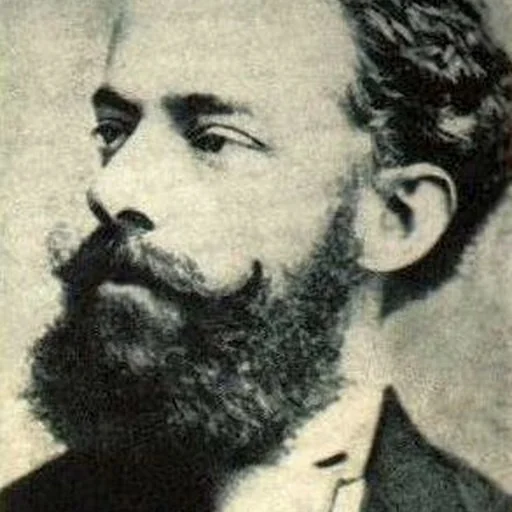
Aloysius Rosarius Amadeus Raymondus Andreas Preziosi
Amedeo Preziosi (2 December 1816 – 27 September 1882) was a Maltese painter and traveler known for his watercolours and prints of Constantinople, the Balkans, Ottoman Empire, and Romania.

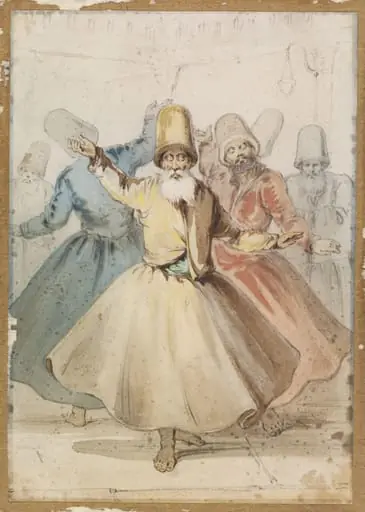
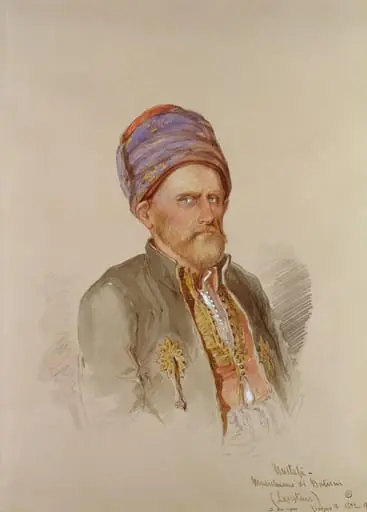
![Portrait of Trehem[?]Walid 'Abdullah, an Arab from Iraq, by Aloysius Rosarius Amadeus Raymondus Andreas Preziosi](https://artifactworldgallery.com/img/aloysius-rosarius-amadeus-raymondus-andreas-preziosi--portrait-of-trehem-walid-abdullah-an-arab-from-iraq--2476a3692d0929a5-w320.webp)
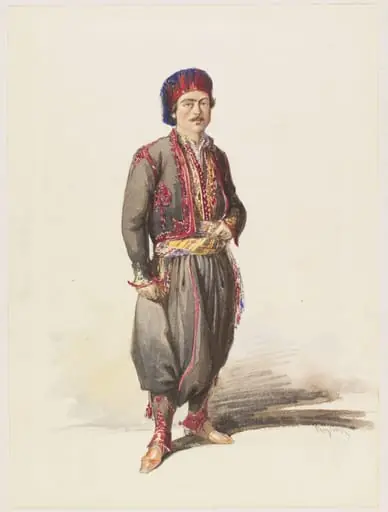
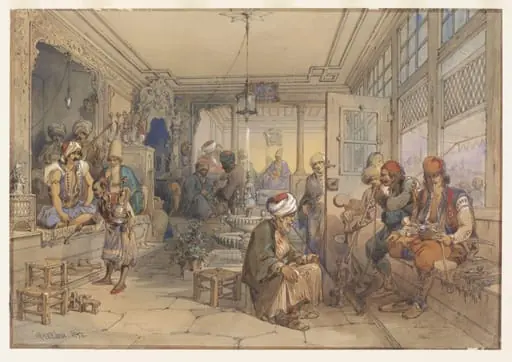
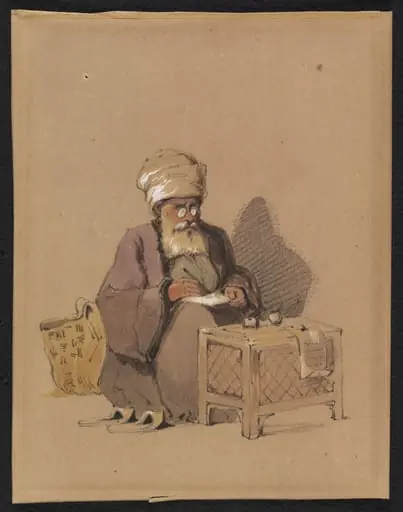
![A Seller of Milk-puddings [Mahallebi], by Aloysius Rosarius Amadeus Raymondus Andreas Preziosi](https://artifactworldgallery.com/img/aloysius-rosarius-amadeus-raymondus-andreas-preziosi--a-seller-of-milk-puddings-mahallebi--3da9fd2db017402d-w320.webp)
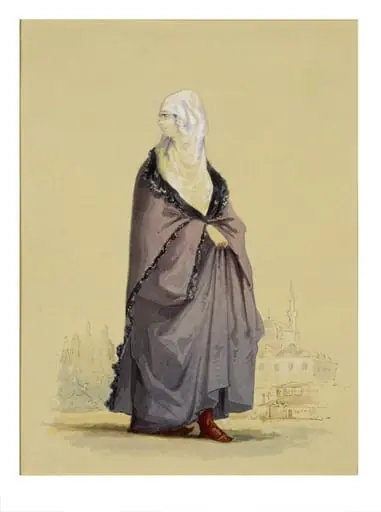
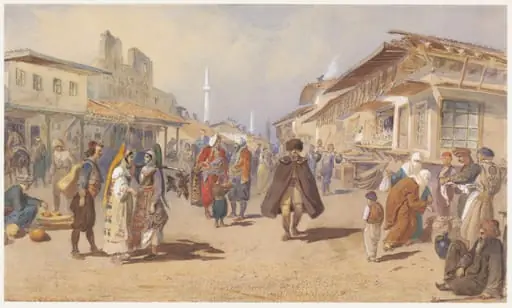 Vue de Belgrad la ruine du Prince Eugene
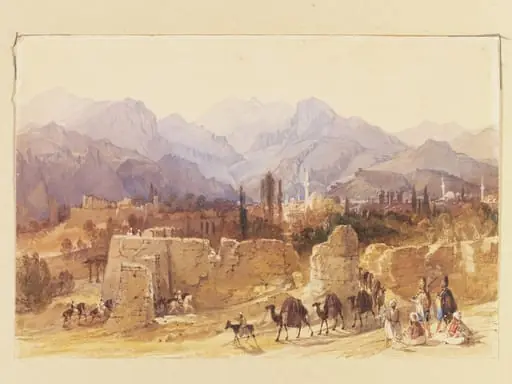 Philadelphia
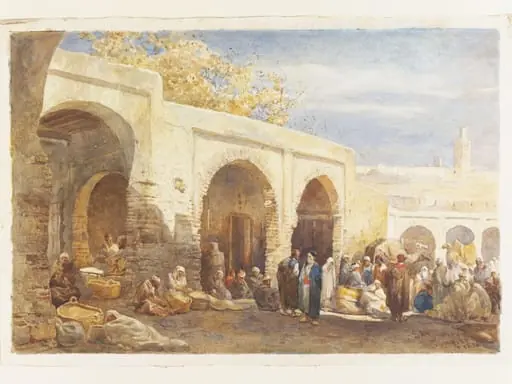 The Corn Market, Tangier
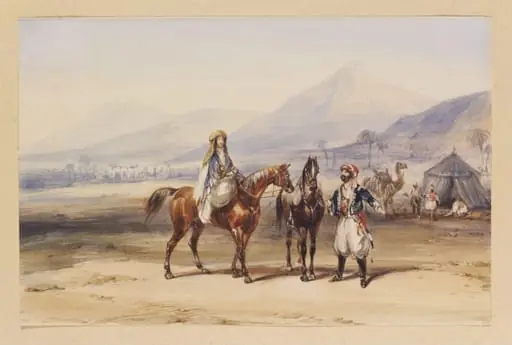 Syrian Travel
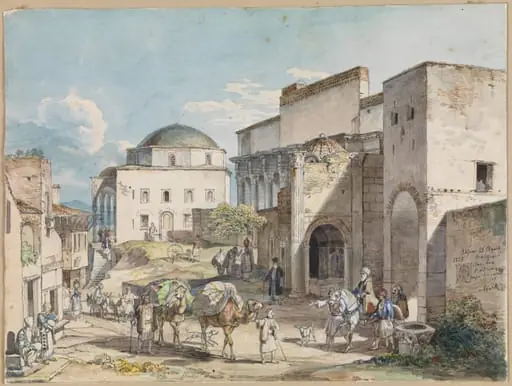 Gadeparti i Athen. Med Hadji Hazekis' palads og Tzistarakis Moskeen
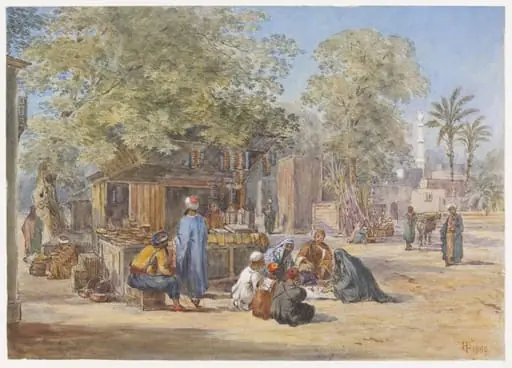 Egyptian Village Scene
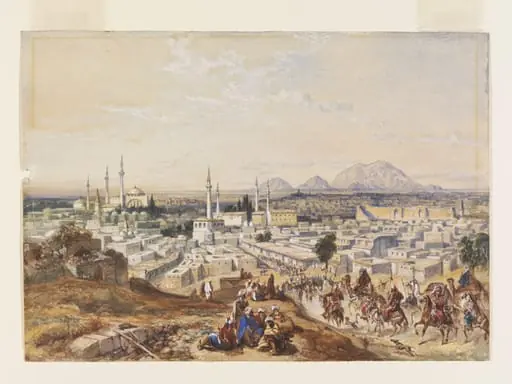 Iconium, Asia Minor
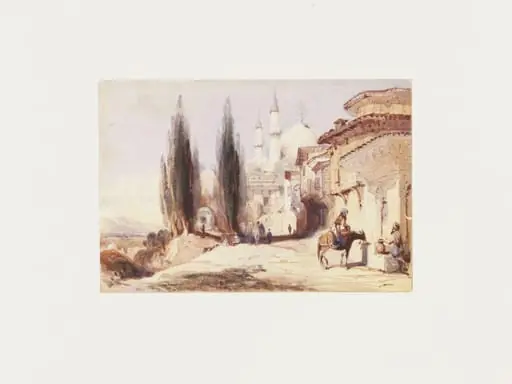 Bursa, the Mosque of Emir Sultan
 Shah Hamadan's Mosque
 Pera
Pera Picturesque Sketches in Spain: Gate of the Vivarrambla, Granada