Artwork
A Woman with a Spade, Seen From Behind
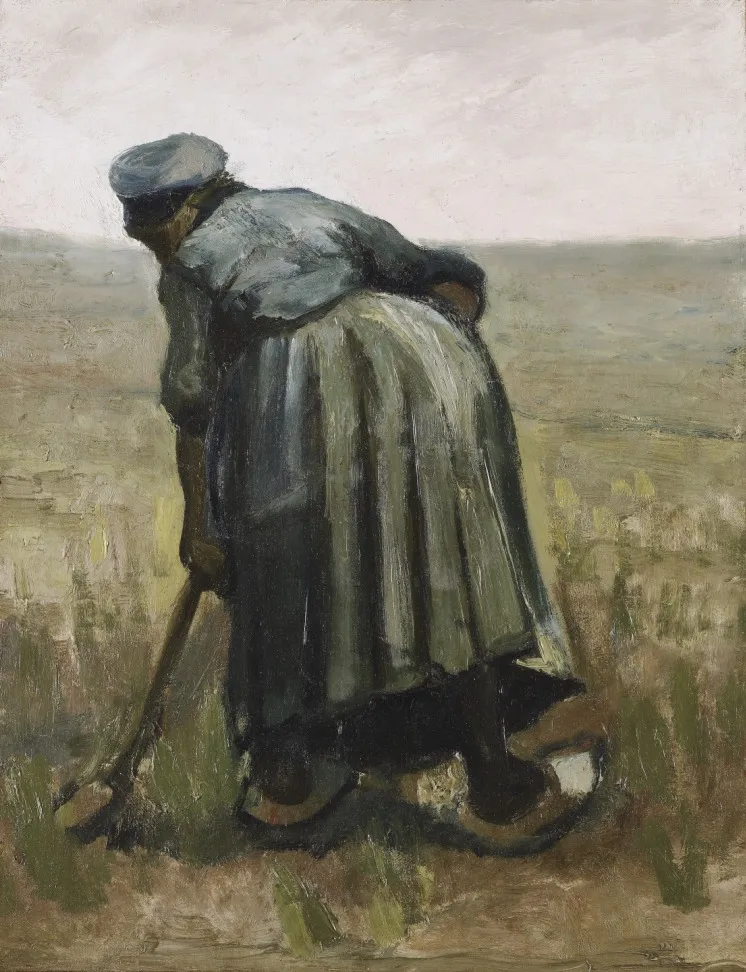
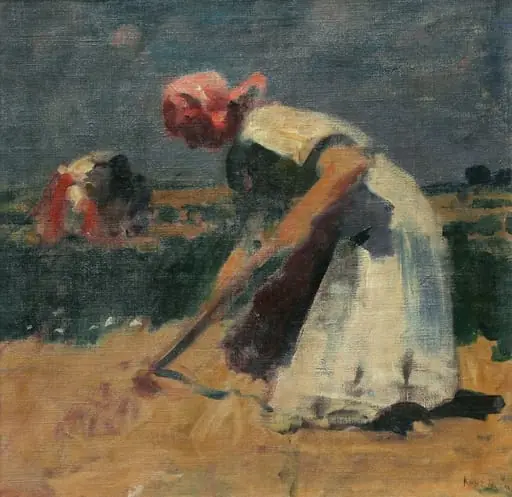
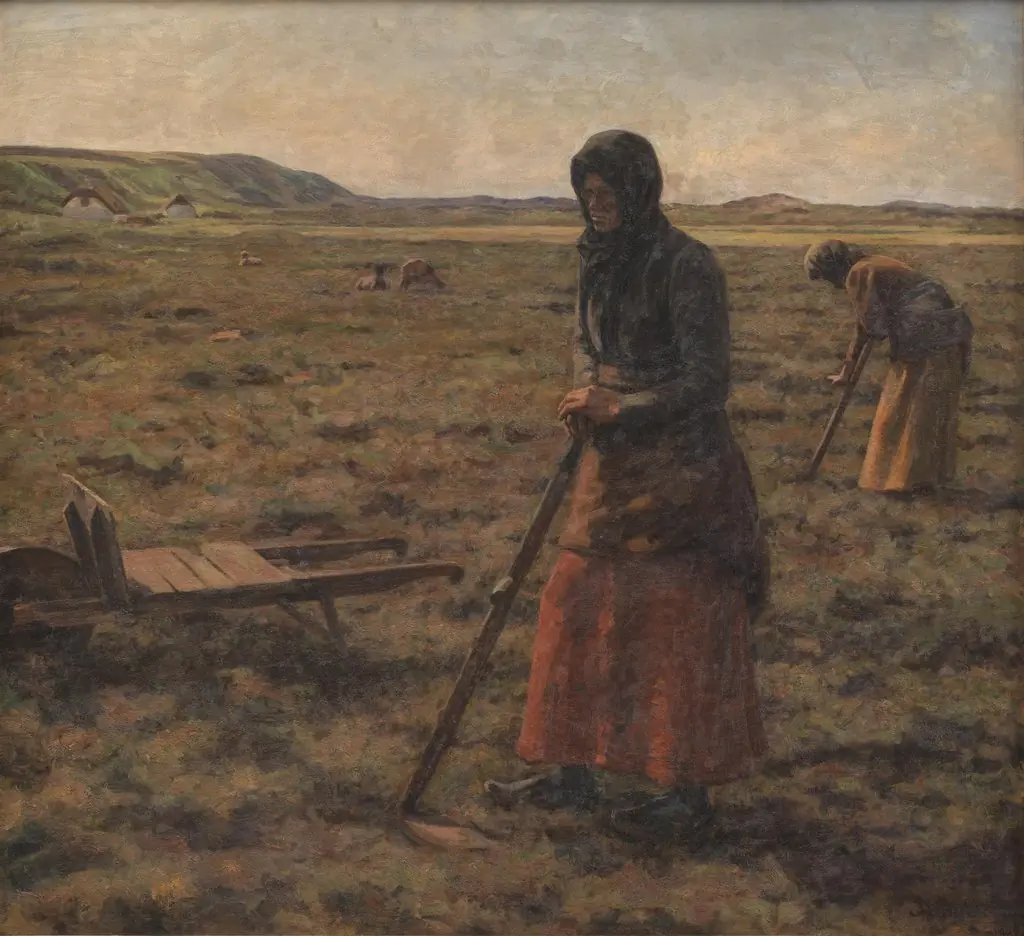
A Woman with a Spade, Seen From Behind is an oil painting by the Realist artist Vincent van Gogh. It dates from 1885 and is held in the collection of the Art Gallery of Ontario.
About this work
Overview
Its muted palette and restrained brushwork reflect van Gogh’s early focus on peasant life, preceding his later, more vibrant style.
Painted in 1885, this oil work by Vincent van Gogh portrays a rural laborer engaged in fieldwork, viewed from behind. The figure stands in a modest landscape, tools in hand, surrounded by earth and sparse vegetation. The composition emphasizes quiet endurance rather than narrative drama. Its muted palette and restrained brushwork reflect van Gogh’s early focus on peasant life, preceding his later, more vibrant style.
Subject & Meaning
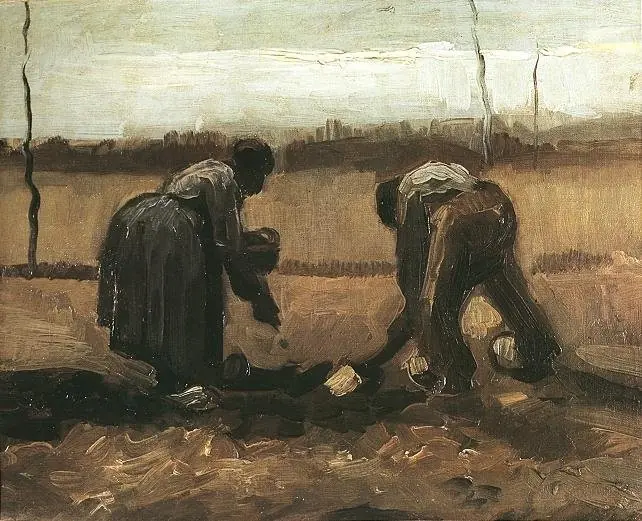
The woman, dressed in dark, practical clothing and a wide-brimmed hat, is depicted in the act of digging. Her posture conveys physical exertion and anonymity, underscoring the dignity of manual labor. Van Gogh, influenced by social realism, sought to honor the quiet resilience of agricultural workers. The absence of facial features shifts focus to the body’s effort and the rhythm of work, avoiding sentimentality.
Technique & Style
Van Gogh employs a restrained palette of earth tones—olive greens, browns, and grays—to evoke the somber atmosphere of rural labor. Subtle contrasts between shadow and light model the figure’s form, suggesting chiaroscuro without theatricality. Brushstrokes are deliberate but not yet expressive; they build texture in the soil and fabric with a tactile, almost sculptural quality, grounding the scene in physical reality.
History & Provenance
Created during van Gogh’s Nuenen period, this painting was part of his series documenting local farmers and weavers. It remained in private hands until acquired by the Art Gallery of Ontario in the 20th century. Its provenance reflects the slow recognition of van Gogh’s early works, which were overshadowed by his later, more colorful output until scholarly interest revived their significance.
Context
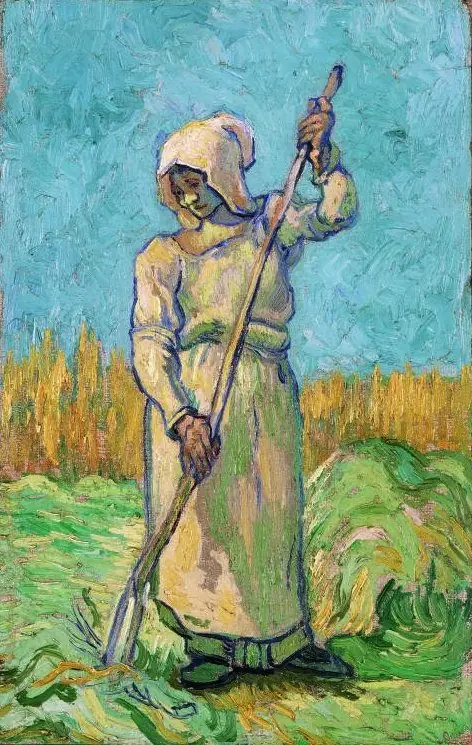
In the mid-1880s, van Gogh was deeply influenced by Jean-François Millet and the Dutch realist tradition, turning his attention to the lives of laborers. This work emerged amid his efforts to depict rural existence with empathy and truth, before his move to Paris and exposure to Impressionism. The painting aligns with broader 19th-century movements seeking to elevate the dignity of the working class through art.
Legacy
Though less known than his later works, this painting is a key example of van Gogh’s formative years, revealing his commitment to portraying labor with solemnity and precision. It informs understanding of his artistic evolution, showing how his early focus on human endurance laid the groundwork for his later emotional intensity. Scholars regard it as a quiet but essential step in his development.
Artist & collection
Artist
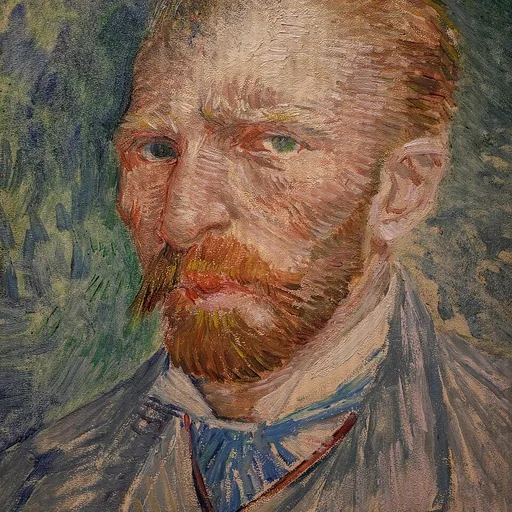
Vincent Willem van Gogh was a Dutch Post-Impressionist painter who is among the most famous and influential figures in the history of Western art.