Artwork
Santa Inés
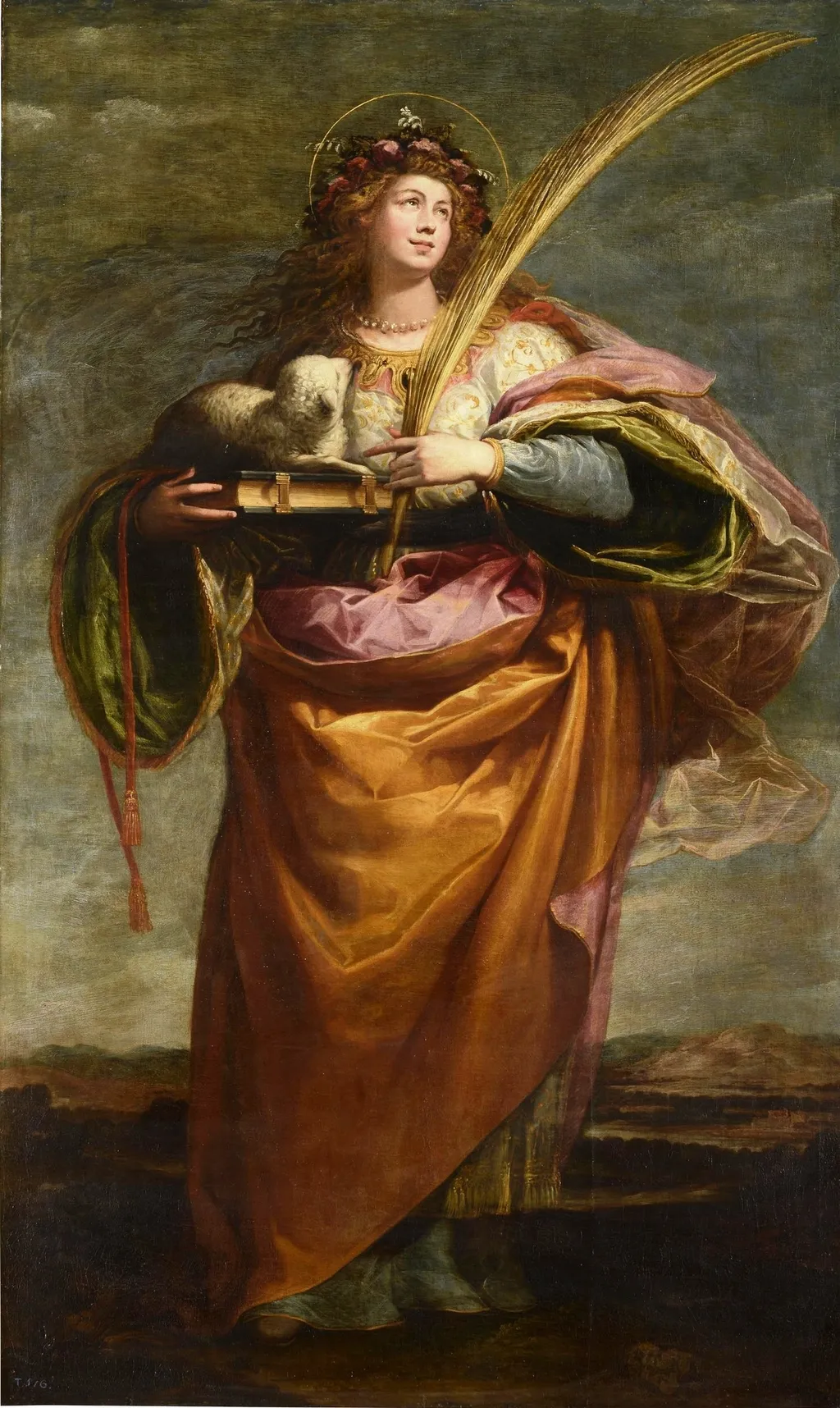
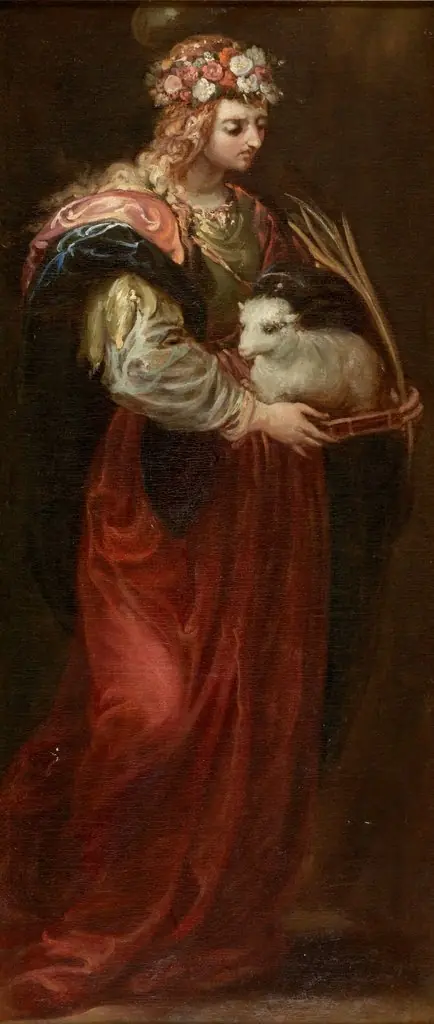
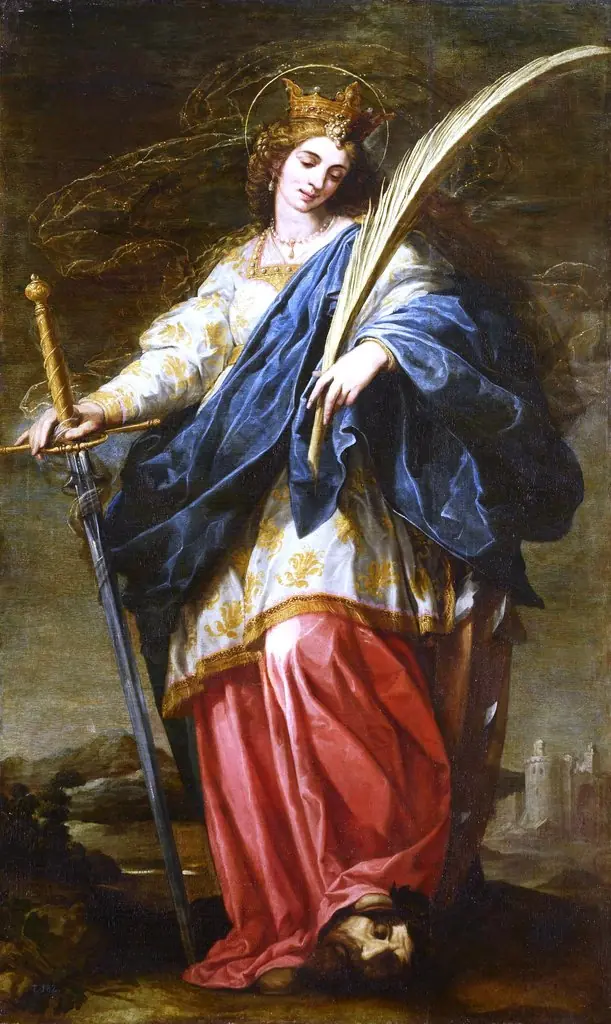
Santa Inés is an oil painting by the Early Baroque Italian artist Vincenzo Carducci. It dates from 1637 and is held in the collection of the Museo del Prado.
About this work
Overview
Created in 1637 by Vincenzo Carducci, an Italian-born artist who spent much of his career in Spain, this oil painting portrays a solitary female figure. The work is part of the early Baroque tradition and is presently housed in the Museo del Prado's collection.
Subject & Meaning
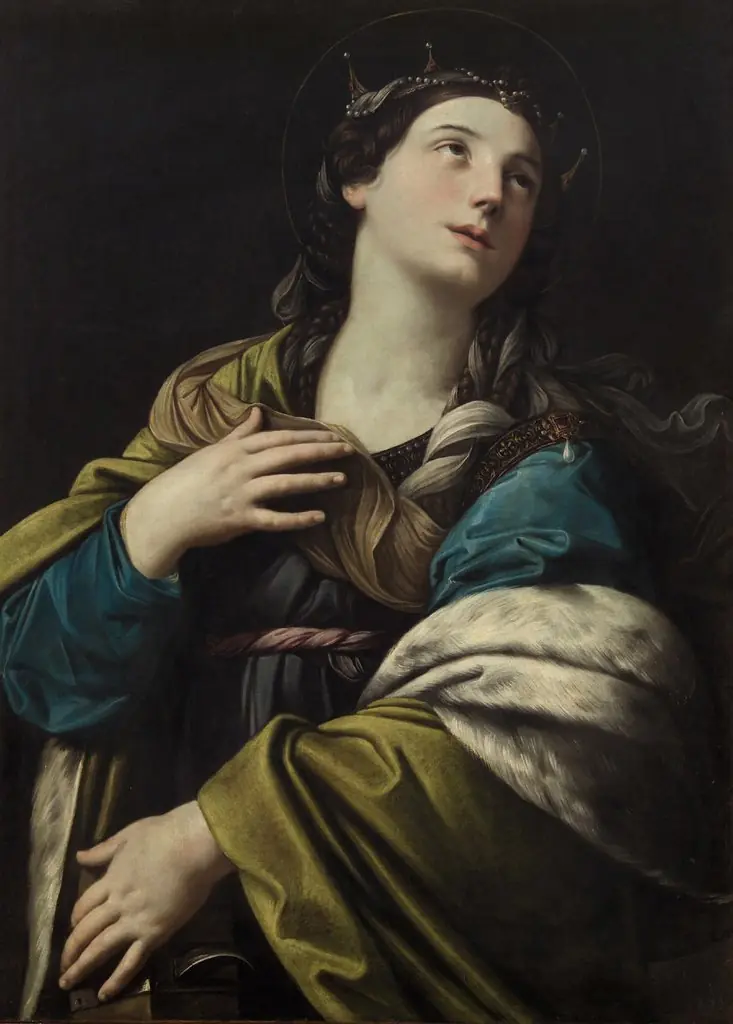
The central figure is a woman holding a book in one hand and a sheaf of wheat in the other, symbols traditionally linked to Saint Agnes. A lamb rests atop the book, reinforcing the saint's association with purity and martyrdom, while her calm expression suggests contemplative devotion.
Technique & Style
Carducci employs a chiaroscuro effect, using a gentle illumination to isolate the saint's face from a darker backdrop. Warm, saturated tones dominate her orange‑brown robe and the golden wheat, while the subtle glow highlights the gold necklace and flower crown, creating a sense of three‑dimensionality.
History & Provenance
Painted during the early Baroque period, the piece reflects Carducci's synthesis of Italian artistic principles with Spanish religious sensibilities. After remaining in private or ecclesiastical hands for centuries, the painting entered the Museo del Prado, where it is displayed among other 17th‑century works.
Context
In the 1630s, religious imagery served both devotional and didactic purposes within Catholic Spain. Carducci's depiction of Saint Agnes aligns with Counter‑Reformation goals, presenting saints as approachable intercessors. The work thus exemplifies the period's blend of spiritual narrative and emerging Baroque visual drama.
Own this work as a print
Artist & collection
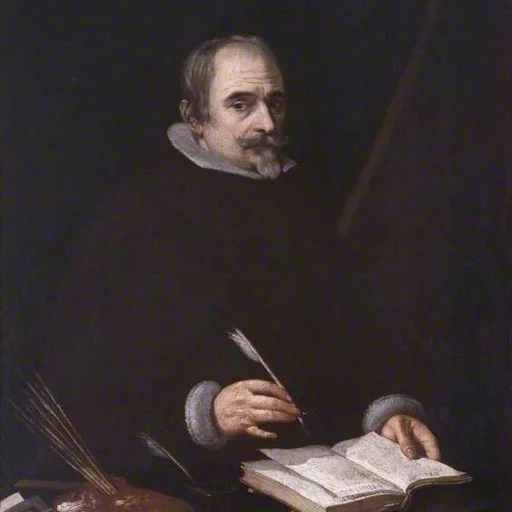
Artist
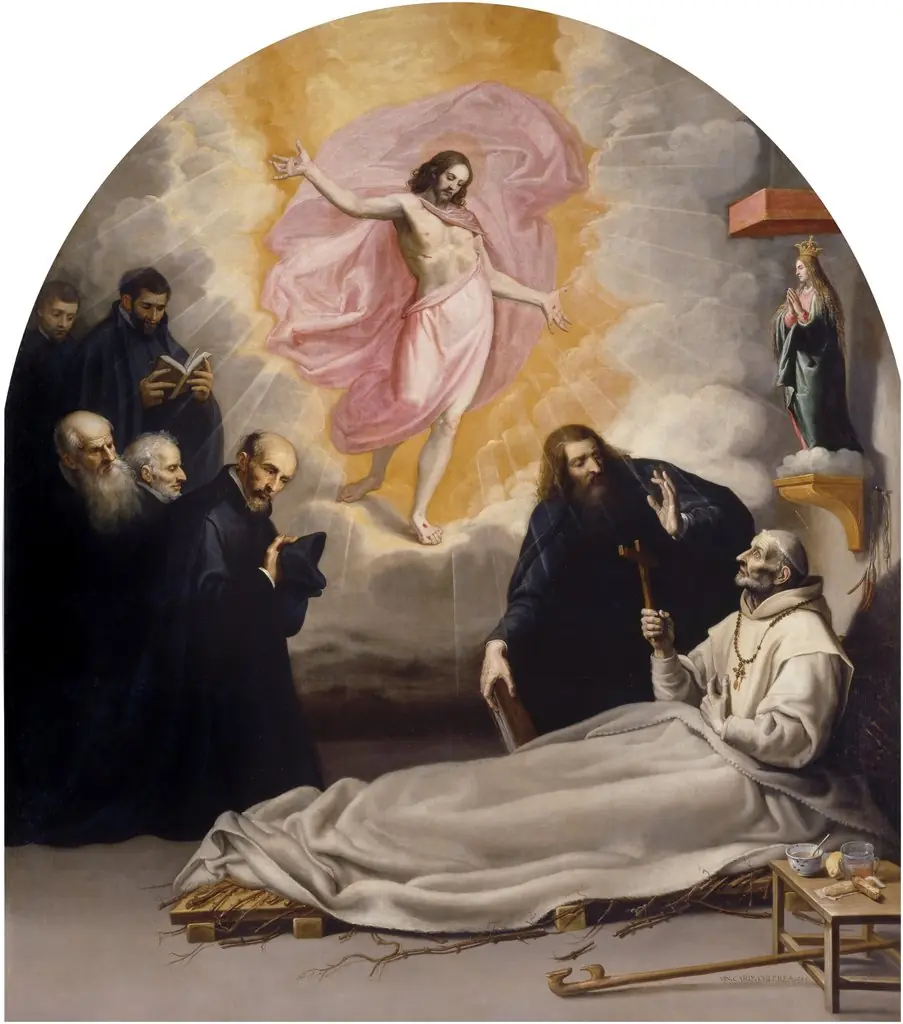
Vincenzio Carduccio (in Spanish, sometimes Vicencio or Vicente Carducho; 1576 or 1578–1638) was an Italian painter who spent his career in Spain.