Artwork
Santa Catalina
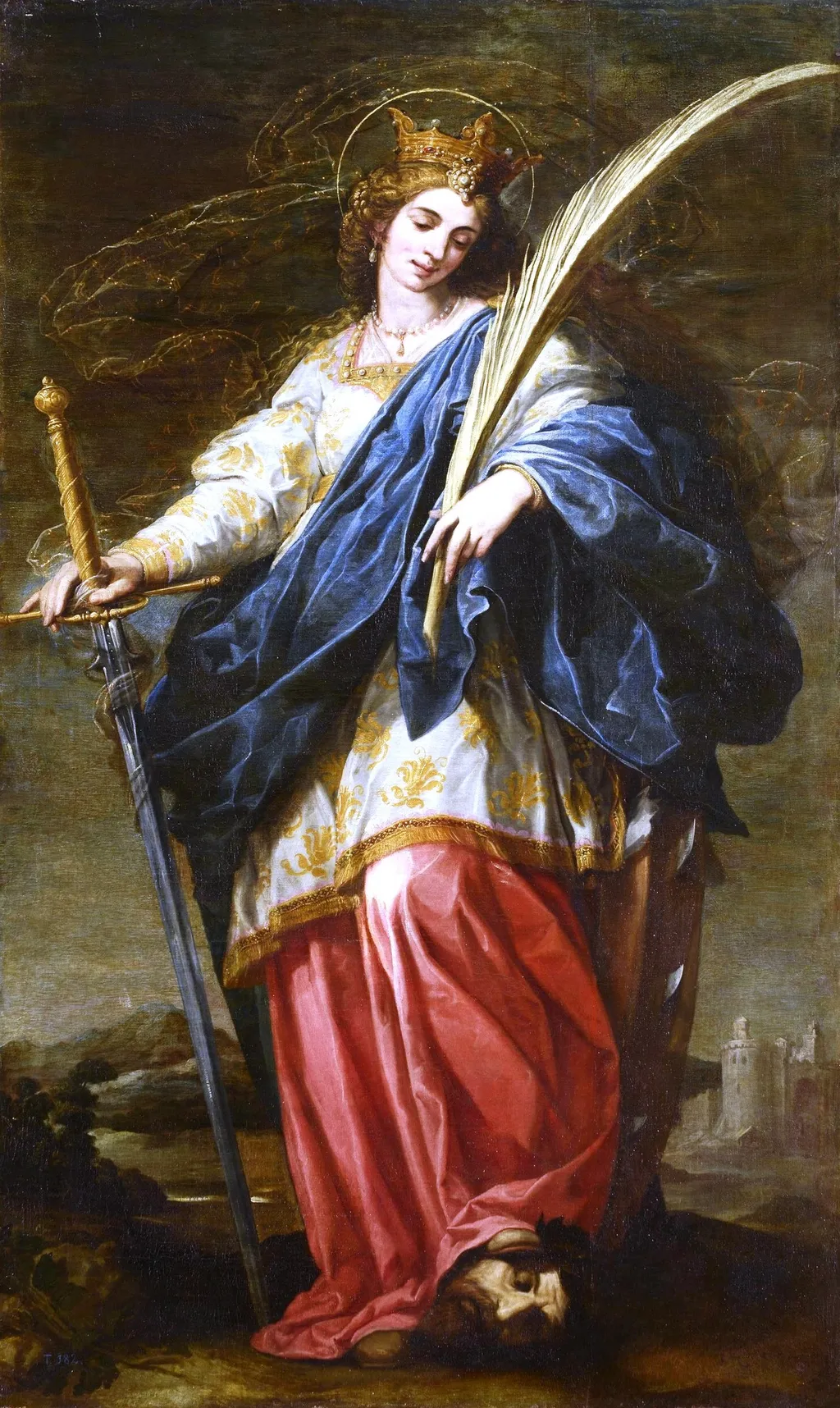
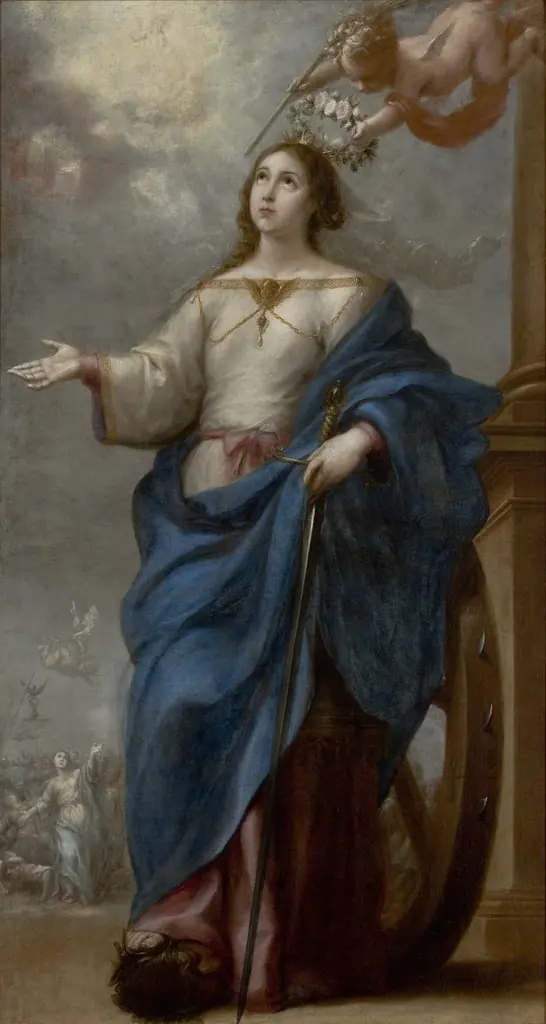
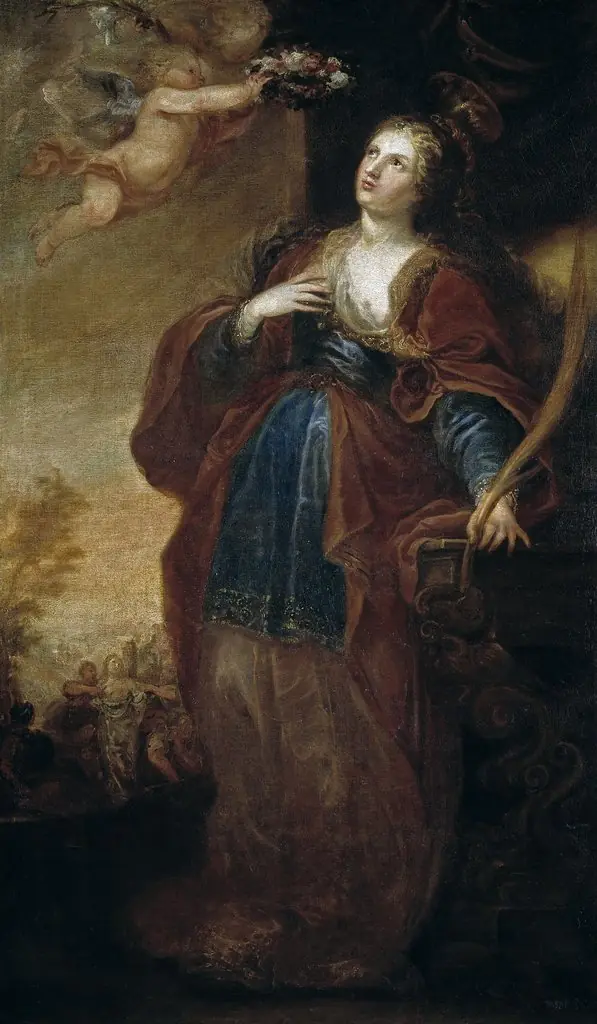
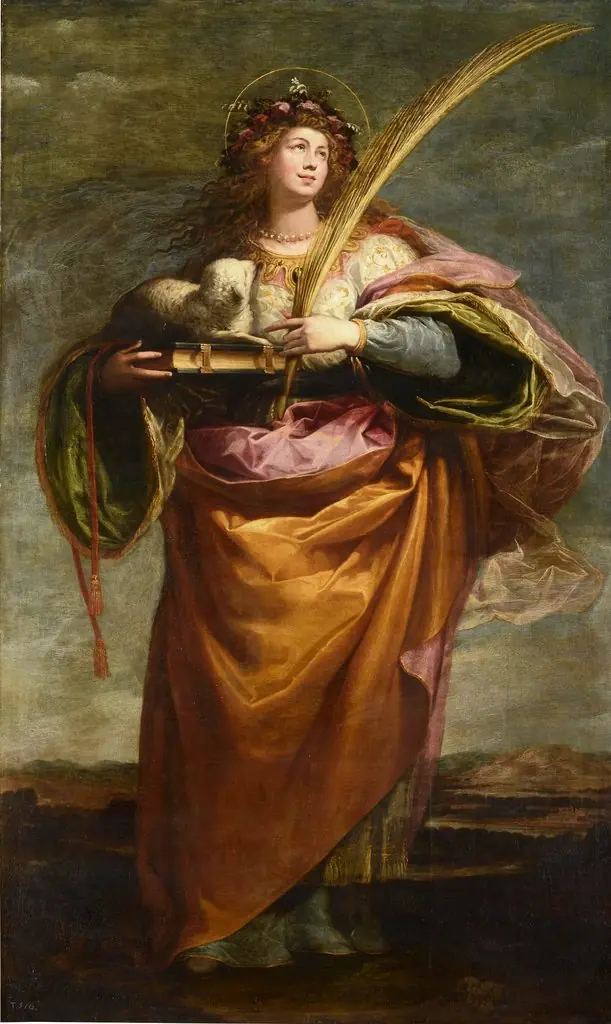
Santa Catalina is an oil painting by the Early Baroque Italian artist Vincenzo Carducci. It dates from 1637 and is held in the collection of the Museo del Prado.
About this work
Overview
Santa Catalina is a 1637 oil painting by Vincenzo Carducci, an Italian artist active in Spain, classified under the early Baroque Italian movement with a religious theme.
Subject & Meaning
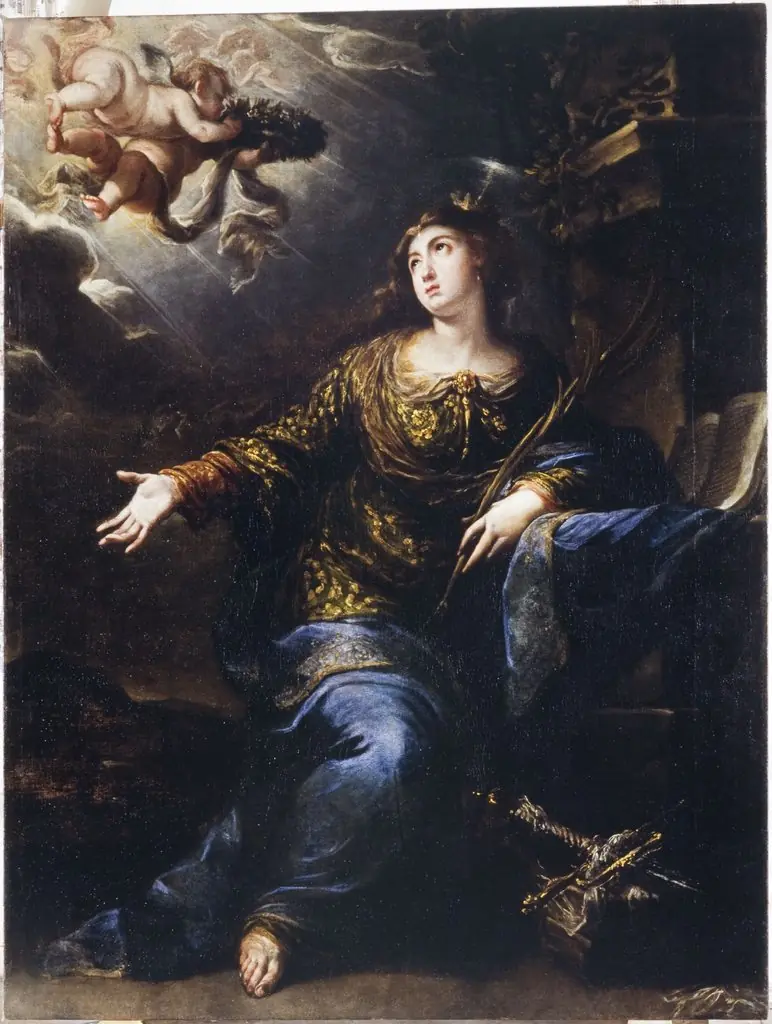
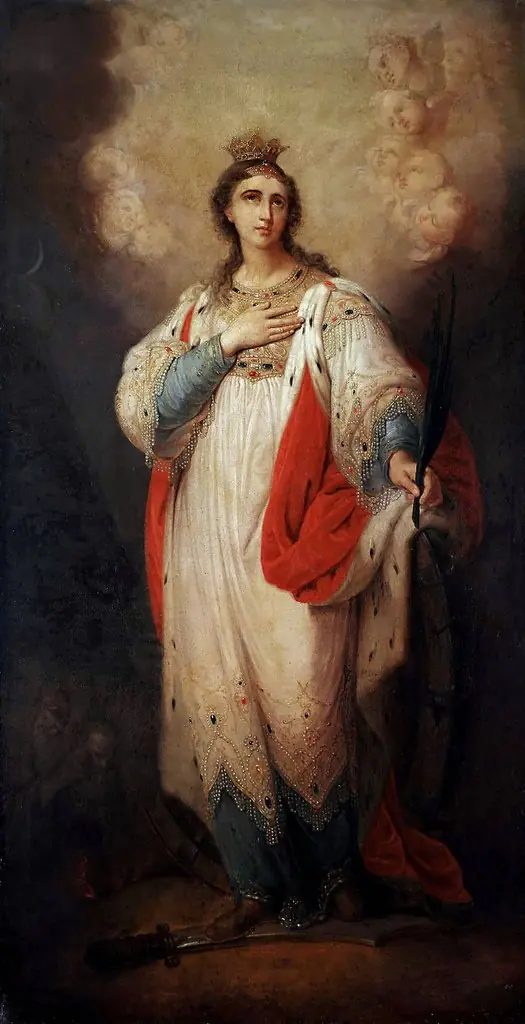
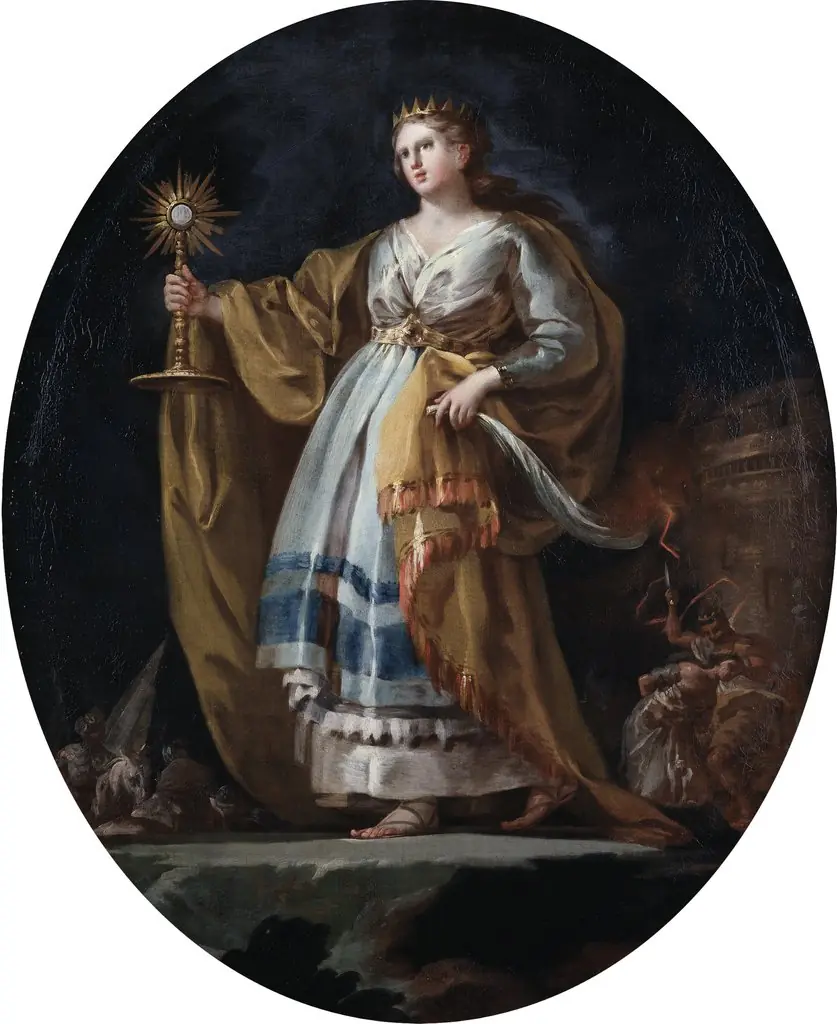
The painting portrays a woman, identified as Saint Catherine, dressed in regal attire (white and gold robe, blue shawl, gold crown) and holding symbols of martyrdom (sword) and virtue (palm frond). Her pose, with feet on a severed head, alludes to triumph over adversity, a common motif in depictions of saints.
Technique & Style
Carducci employed chiaroscuro to create dramatic contrast, highlighting the subject against a dark background with subtle landscape hints. Intricate details, such as gold embroidery on the robe and ornate sword hilt, showcase the artist's attention to decorative elements.
History & Provenance
Created in 1637, Santa Catalina is part of the Museo del Prado's collection, reflecting the museum's holdings of early Baroque European art.
Context
As an early Baroque piece, Santa Catalina reflects the period's emphasis on emotional intensity and dramatic lighting, common in religious artworks of the time, particularly those influenced by Italian artists in Spain.
Legacy
While specific influence or notable exhibitions of Santa Catalina are not highlighted in available information, it contributes to the broader understanding of early Baroque religious art and the work of Italian painters in 17th-century Spain.
Own this work as a print
Artist & collection
Artist
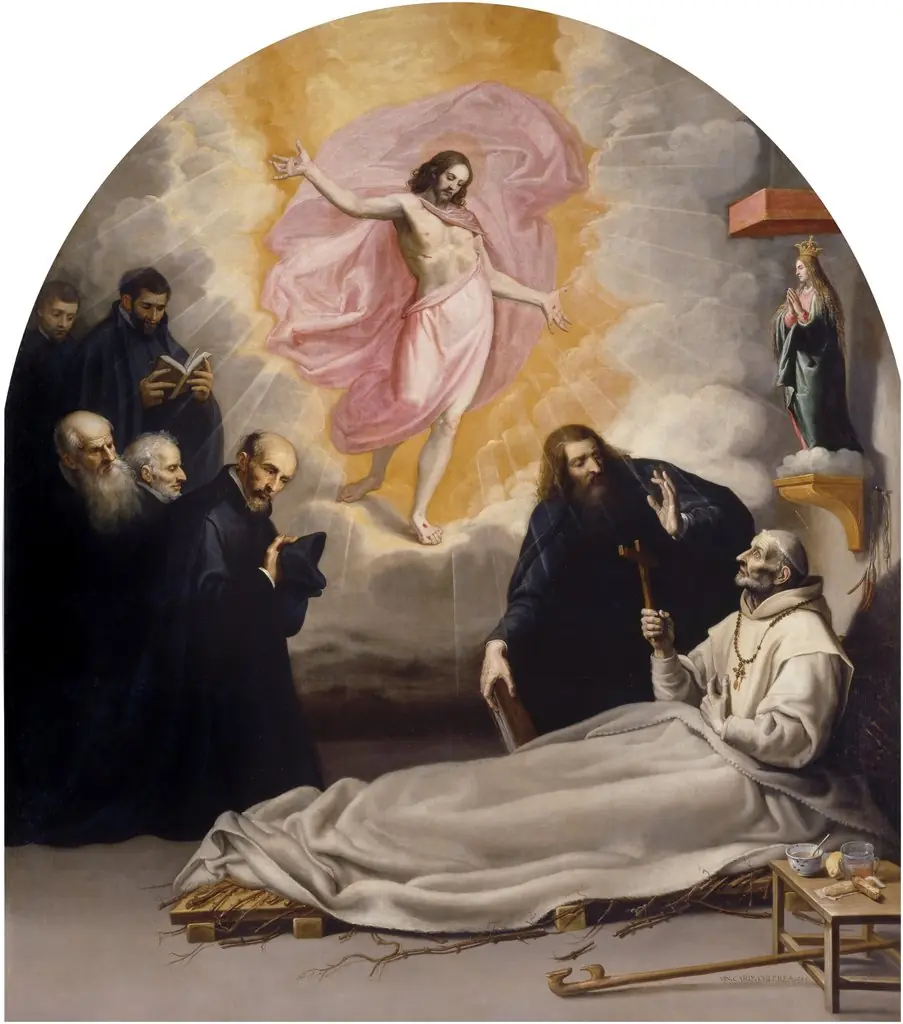
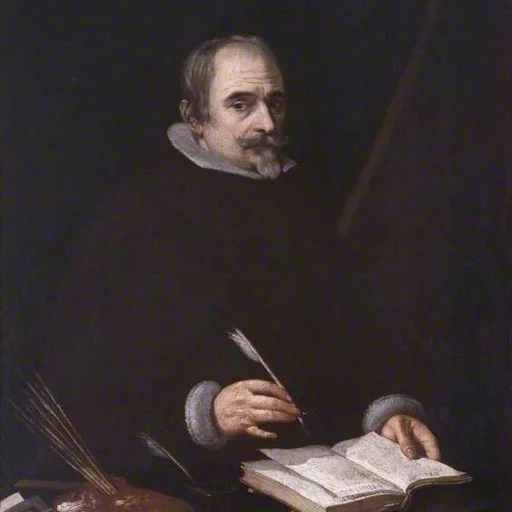
Vincenzio Carduccio (in Spanish, sometimes Vicencio or Vicente Carducho; 1576 or 1578–1638) was an Italian painter who spent his career in Spain.