Artwork
Saint Bruno and His Six Companions Withdraw from Active Life
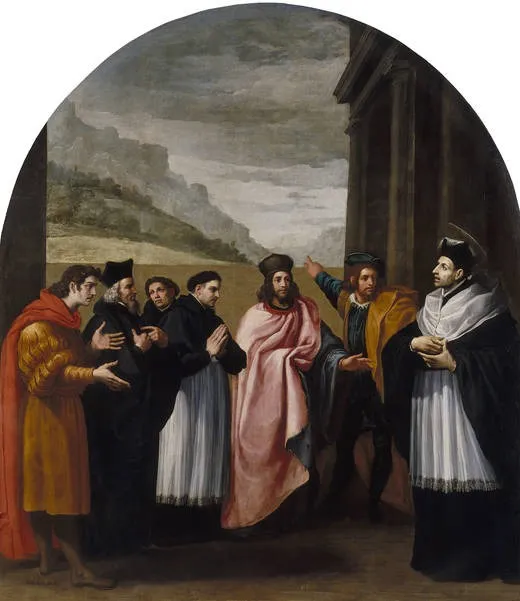
Saint Bruno and His Six Companions Withdraw from Active Life is an oil painting by the Early Baroque Italian artist Vincenzo Carducci. It dates from 1626 and is held in the collection of the Museo del Prado.
About this work
Overview
Created in 1626 by Vincenzo Carducci, an Italian-born painter active in Spain, this oil on canvas presents a religious tableau typical of the early Baroque period. The work is part of the Museo del Prado’s collection and portrays Saint Bruno together with six companions as they turn away from worldly duties.
Subject & Meaning
The composition shows seven figures gathered in a doorway; Saint Bruno, distinguished by a vivid pink habit, raises his right hand in a gestural command. The surrounding men, clad in dark garments with white collars or hoods, appear engaged in a solemn exchange, suggesting the moment of renunciation and communal commitment to a contemplative life.
Technique & Style
Carducci employs pronounced chiaroscuro, allowing light to illuminate the faces of the central figures while casting the periphery into shadow. The contrast heightens the sense of drama and focus, a hallmark of early Baroque visual language, and the cloudy sky and distant hill in the background provide a muted, atmospheric setting.
History & Provenance
Born between 1576 and 1578, Carducci spent the majority of his artistic career in Spain, where he produced this piece among other commissions. The painting entered the Prado’s holdings as part of the museum’s acquisition of Baroque works, reflecting the institution’s emphasis on Spanish-Italian artistic exchanges of the 17th century.
Artist & collection
Artist
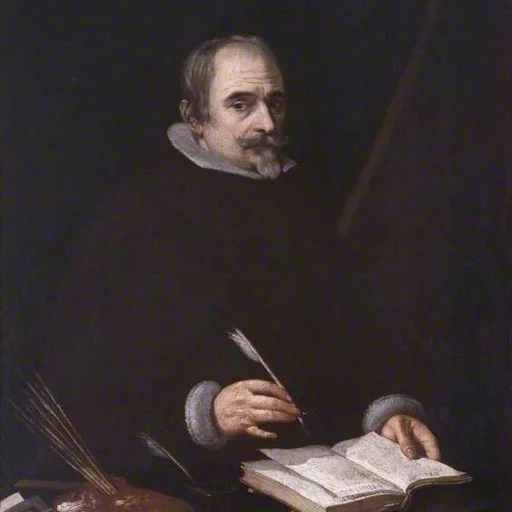
Vincenzio Carduccio (in Spanish, sometimes Vicencio or Vicente Carducho; 1576 or 1578–1638) was an Italian painter who spent his career in Spain.

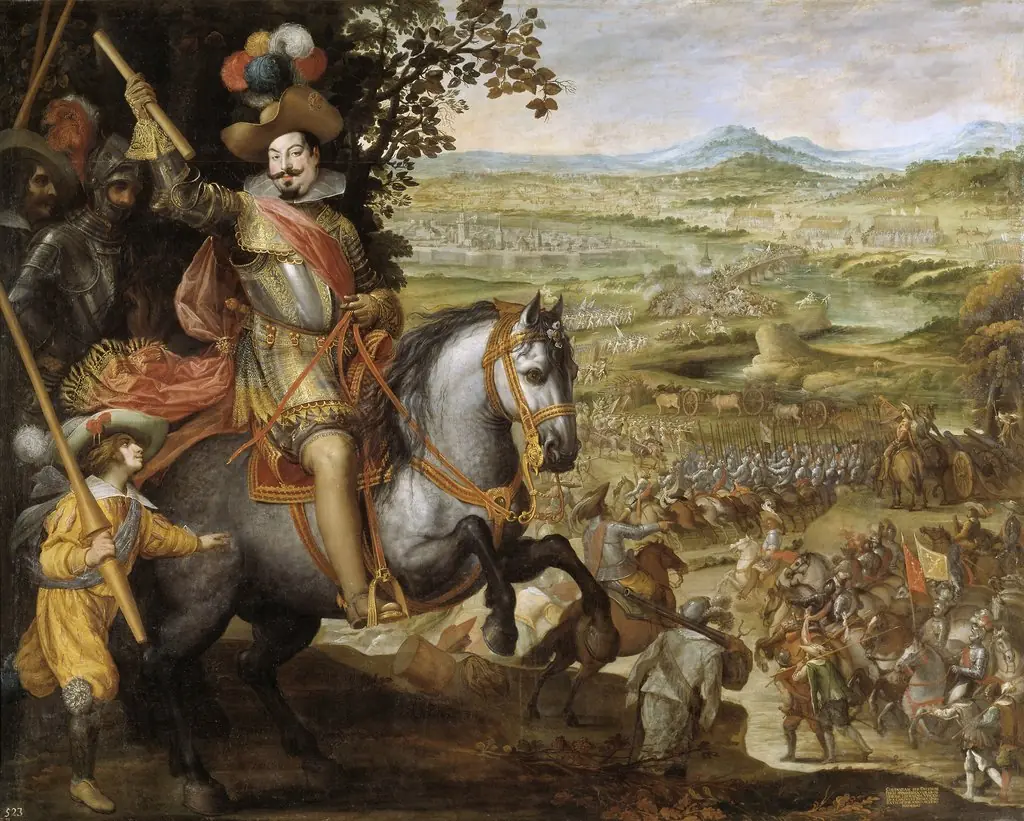
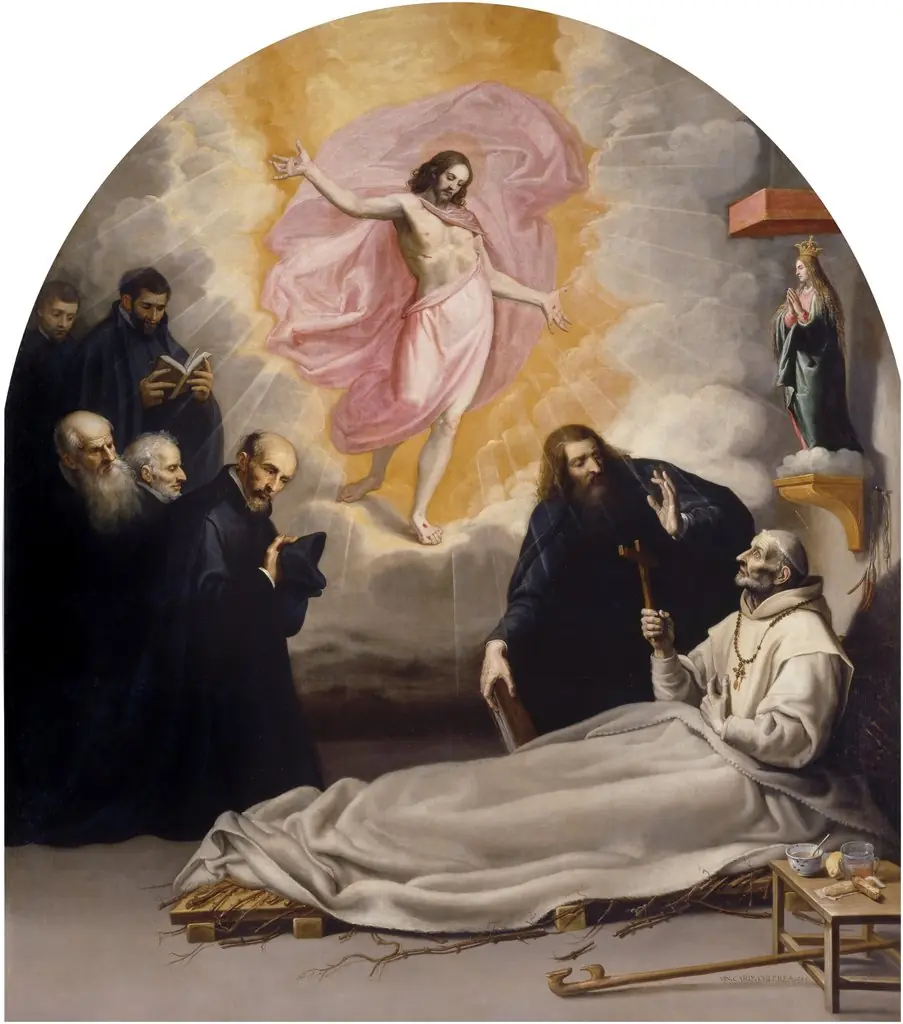
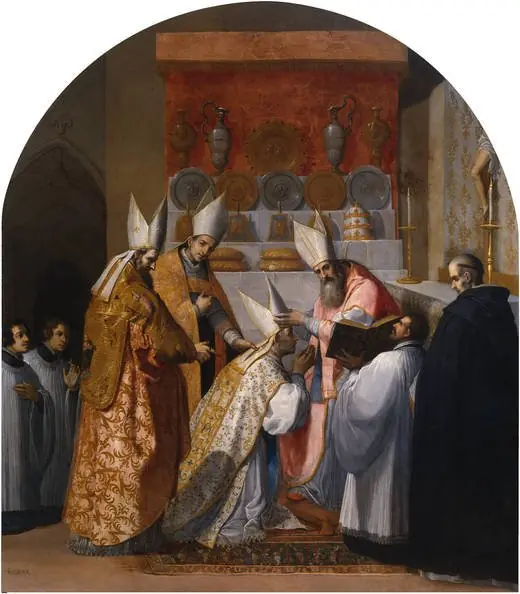
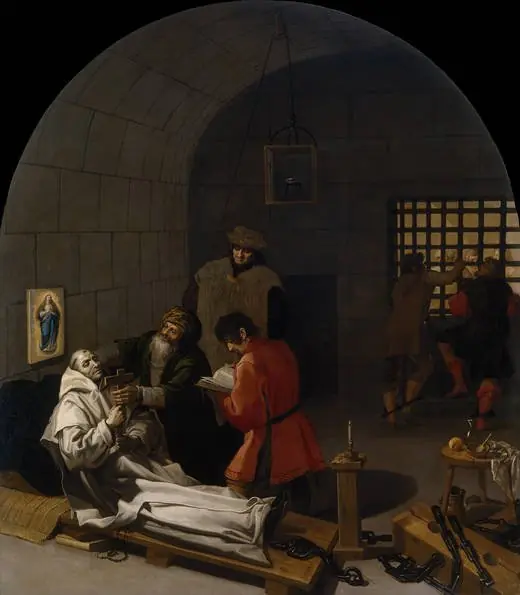
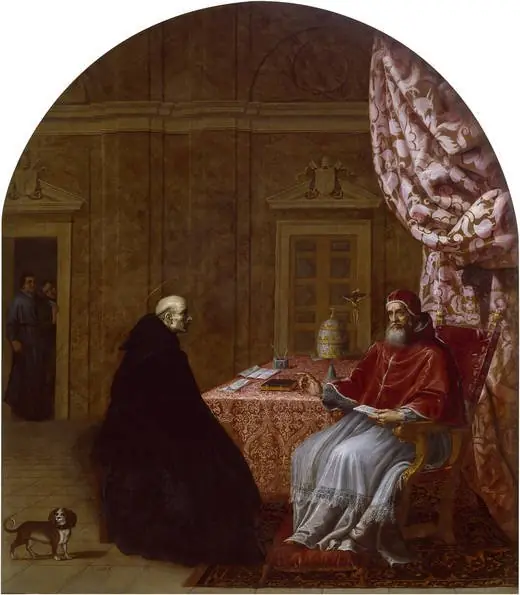
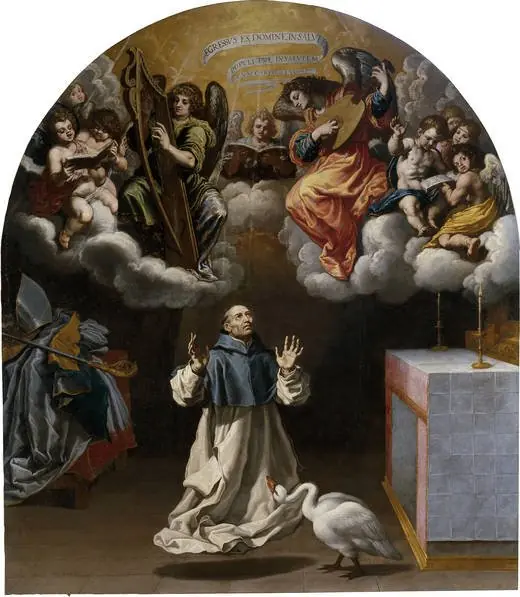
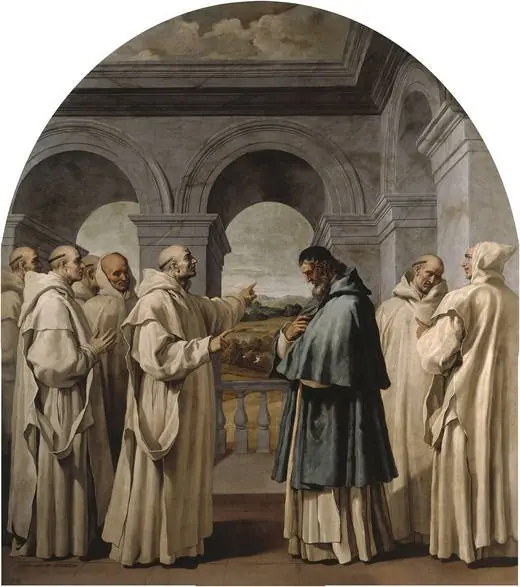 Saint Bruno Bids Farewell to Saint Hugo
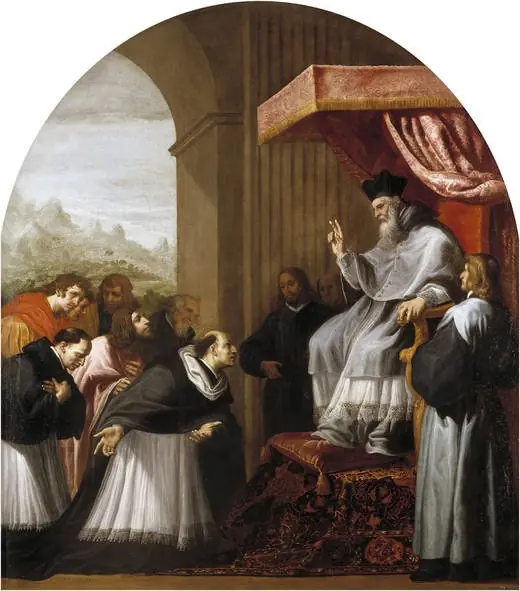 Saint Bruno and his Six Companions Visit Saint Hugo
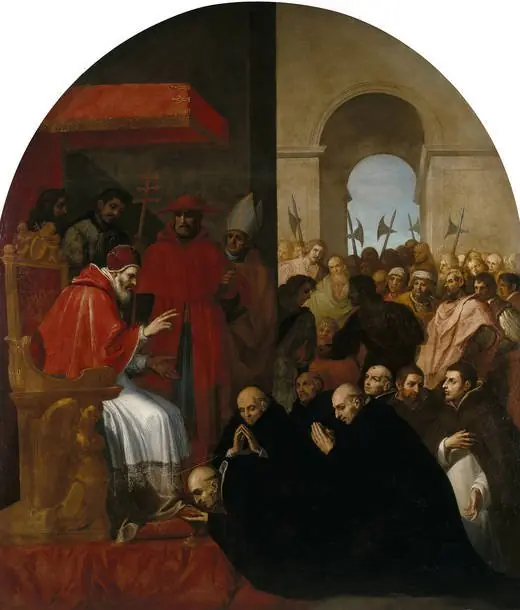 Saint Bruno and his Companions before Urban II
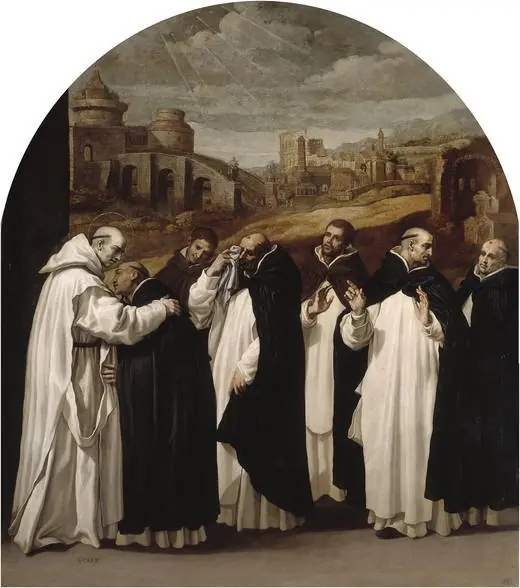 Saint Bruno Bids Farewell to his Companions in Rome
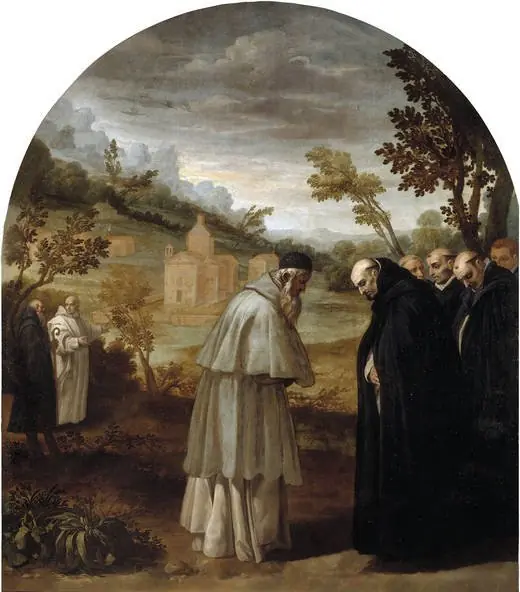 Saint Bruno Bids Farewell to Saint Hugo Before his Trip to Rome
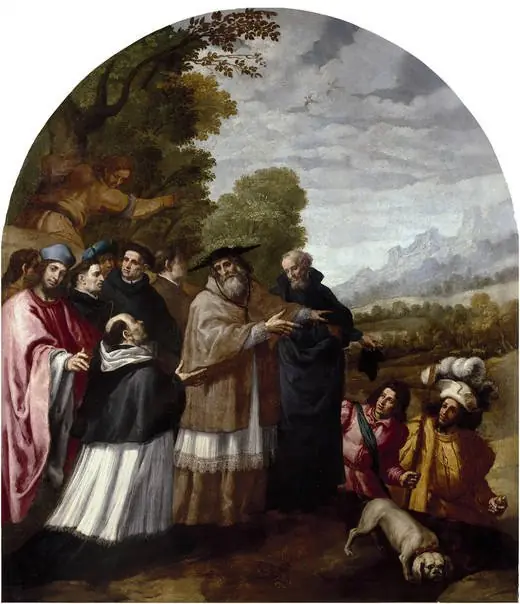 Saint Hugo Accompanies Saint Bruno and His Six Companions to the Chartreuse Highlands