Artwork
Saint Bruno Bids Farewell to his Companions in Rome
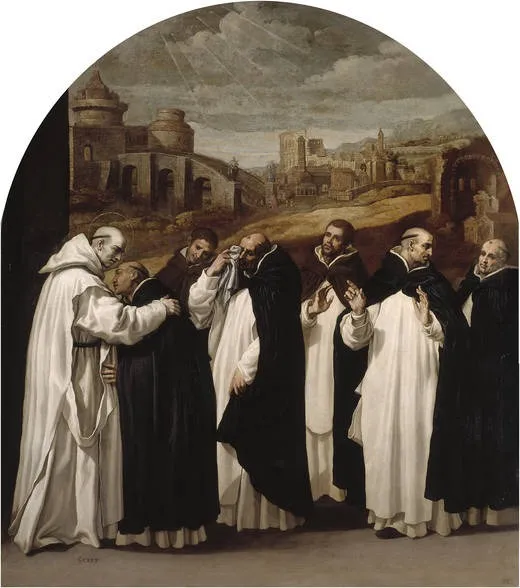
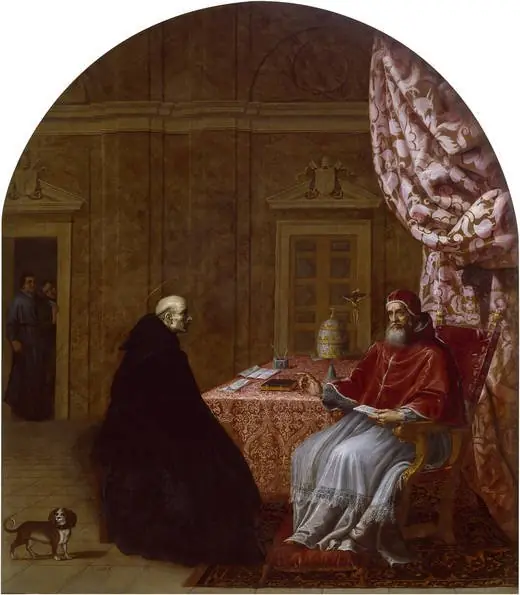
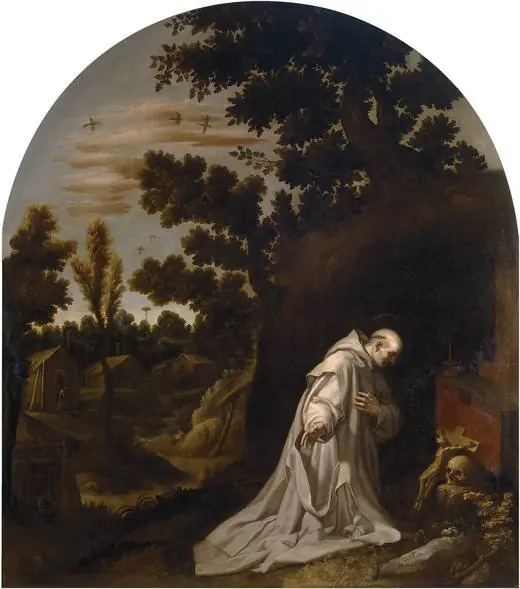
Saint Bruno Bids Farewell to his Companions in Rome is an oil painting by the Early Baroque Italian artist Vincenzo Carducci. It dates from 1626 and is held in the collection of the Museo del Prado. Completed in 1626, this oil on canvas portrays a moment from the life of Saint Bruno, the founder of the Carthusian order.
About this work
Overview
The central figure raises a modest object, suggesting a text or decree, while a cloudy sky with shafts of light frames the scene.
Completed in 1626, this oil on canvas portrays a moment from the life of Saint Bruno, the founder of the Carthusian order. A small group of robed figures stands before a distant urban landscape, their garments ranging from dark to light tones. The central figure raises a modest object, suggesting a text or decree, while a cloudy sky with shafts of light frames the scene. The work is part of the Museo del Prado’s collection.
Subject & Meaning
The composition captures Saint Bruno’s departure from his companions in Rome, a narrative episode that emphasizes his commitment to a solitary, contemplative life. The raised object likely represents a written rule or blessing, underscoring the spiritual authority he imparts before embracing asceticism. The surrounding figures, attentive yet restrained, convey the solemnity of the farewell.
Technique & Style
Executed in the early Baroque idiom, the painting employs chiaroscuro to model the figures against the muted cityscape, creating depth and a sense of drama. Carducci’s handling of oil allows for subtle gradations of tone, particularly in the cloudy atmosphere where diffused light penetrates the gloom, highlighting the central figure’s gesture.
History & Provenance
Vincenzo Carducci, an Italian-born artist who spent most of his career in Spain, produced the work during his mature period. After its creation, the painting entered the Spanish royal collections before being transferred to the Museo del Prado, where it remains on display as part of the museum’s Baroque holdings.
Context
The piece reflects the Counter‑Reformation’s emphasis on clear, didactic religious imagery, aligning with the Carthusian order’s ideals of withdrawal and contemplation. Carducci’s Italian training combined with his Spanish patronage resulted in a work that bridges Italian Baroque dynamism with the more restrained devotional tone favored in Spanish ecclesiastical art of the early 17th century.
Artist & collection
Artist
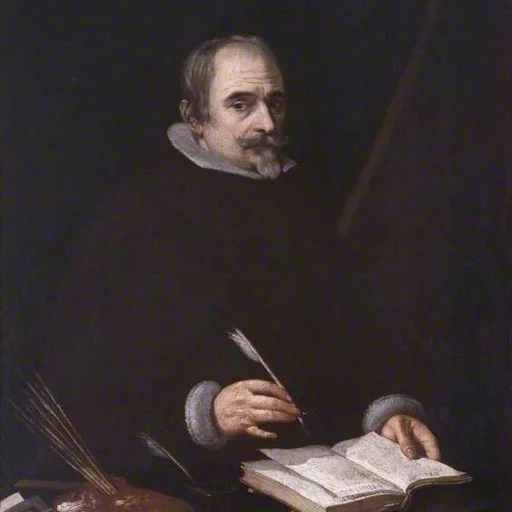
Vincenzio Carduccio (in Spanish, sometimes Vicencio or Vicente Carducho; 1576 or 1578–1638) was an Italian painter who spent his career in Spain.

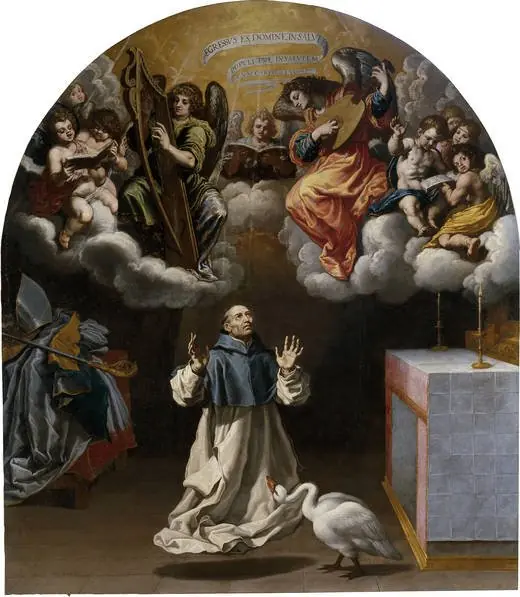
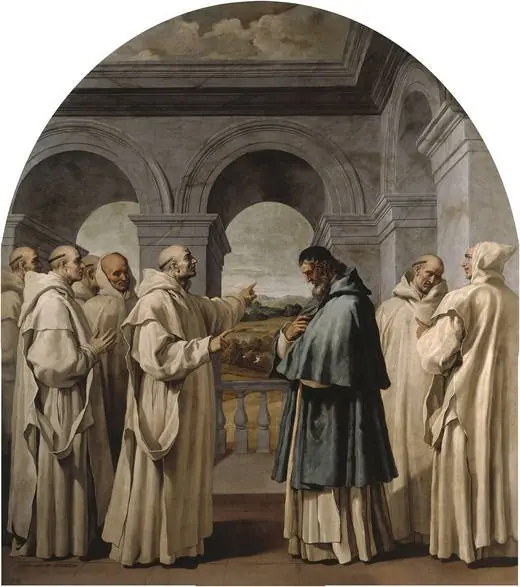 Saint Bruno Bids Farewell to Saint Hugo
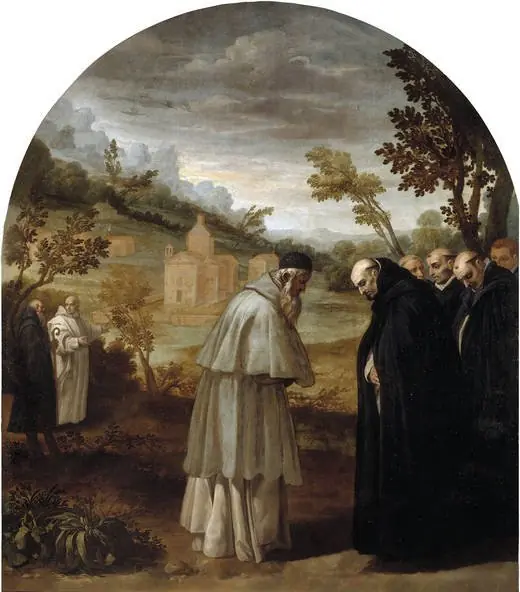 Saint Bruno Bids Farewell to Saint Hugo Before his Trip to Rome
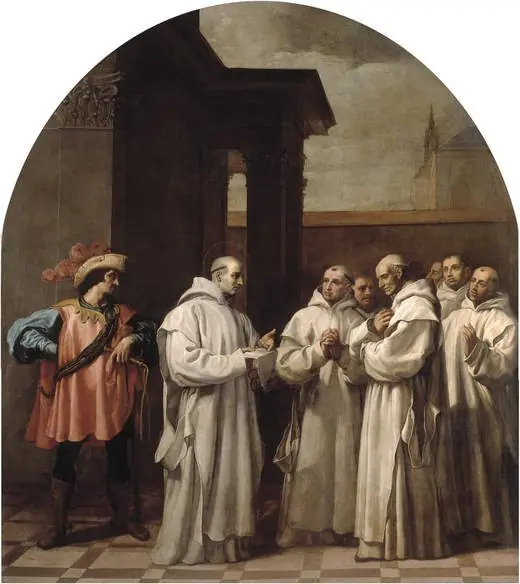 Pope Urban II Calls Saint Bruno to Rome
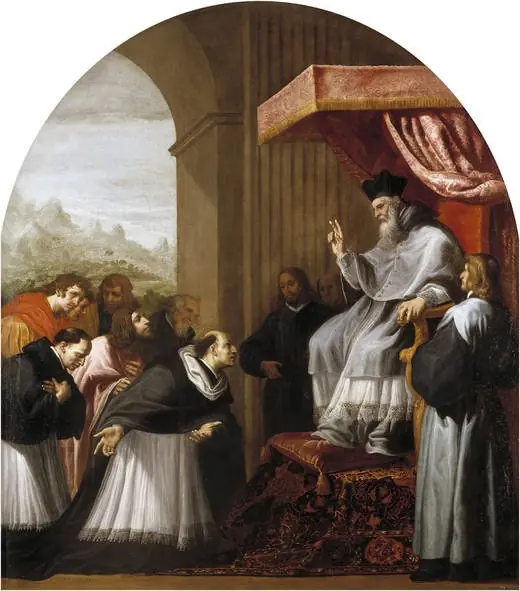 Saint Bruno and his Six Companions Visit Saint Hugo
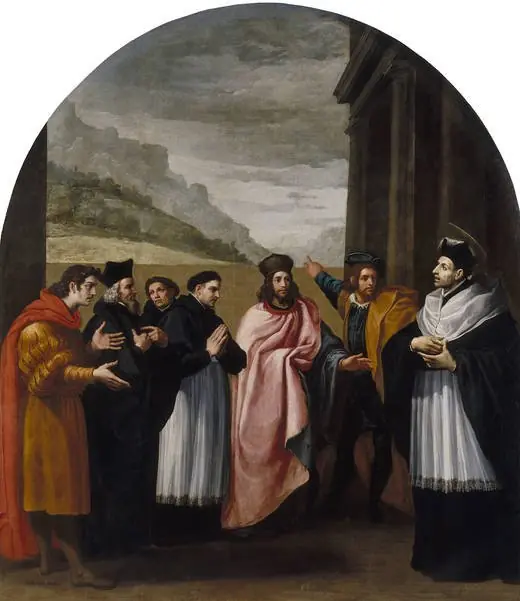 Saint Bruno and His Six Companions Withdraw from Active Life
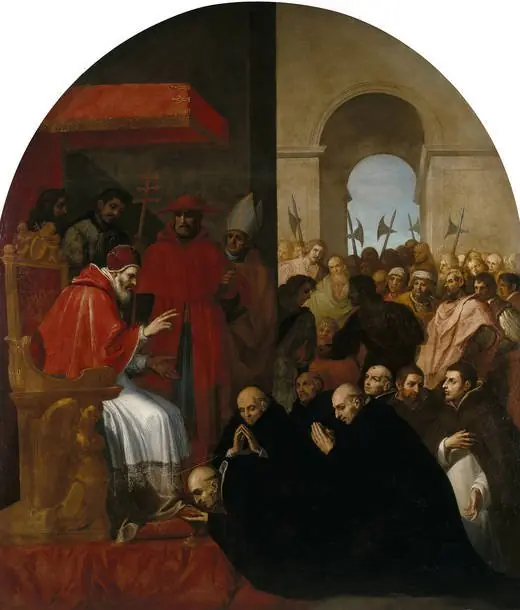 Saint Bruno and his Companions before Urban II
 Saint Bruno Prays in La Torre Calabria