Artwork
Possibly ornate lorikeet, Tricholglossus ornatus
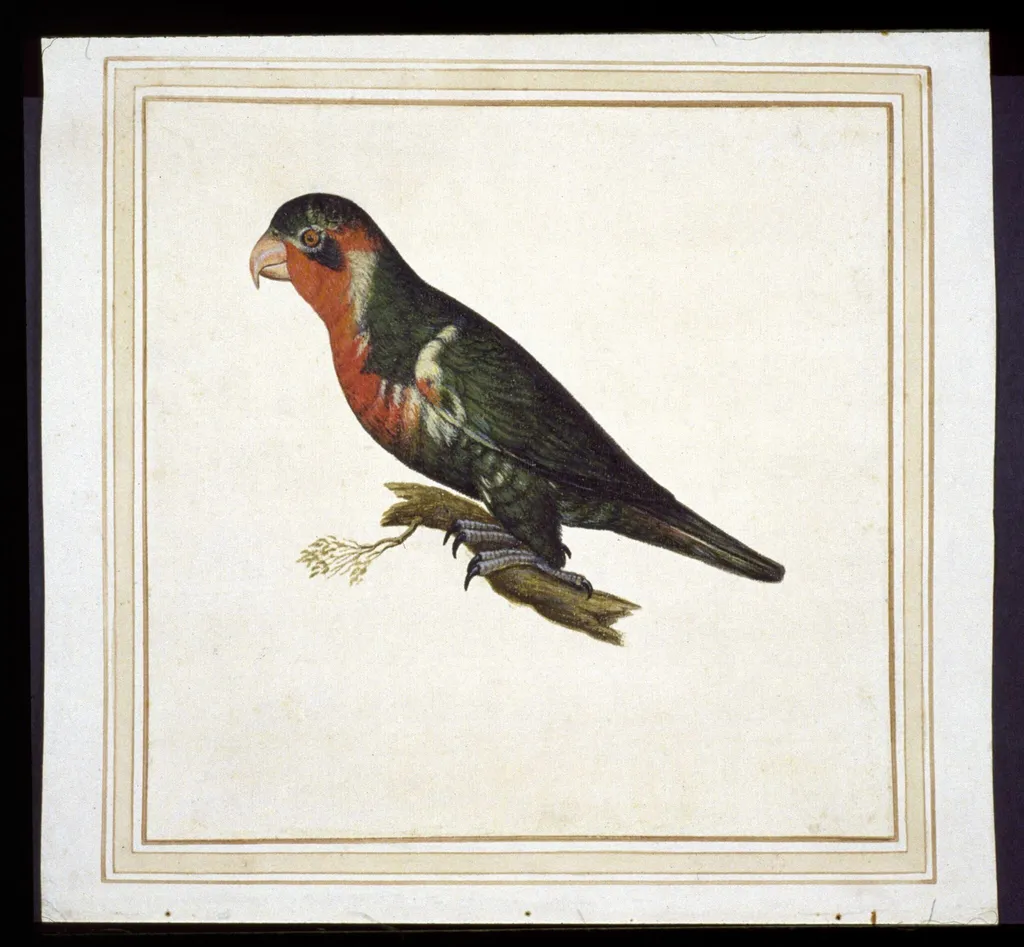
Possibly ornate lorikeet, Tricholglossus ornatus is a watercolor work on paper by Vincenzo Leonardi. It dates from 1650 and is held in the collection of the Victoria and Albert Museum.
About this work
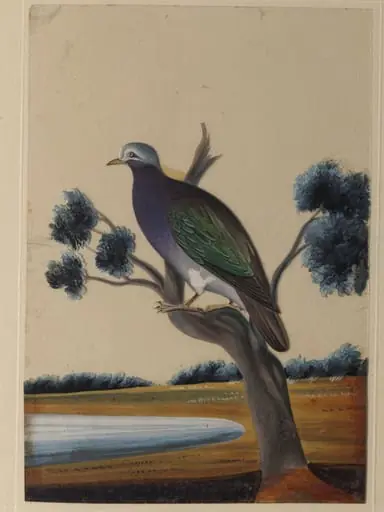
This painting shows a bird, possibly an ornate lorikeet.
It was created in the early 17th century by Vincenzo Leonardi.
The bird was drawn with watercolour, a medium that allows for soft, blended colours.
The drawing is part of a collection that was meant to be a visual encyclopaedia of the natural world.
Look up the Victoria and Albert Museum to learn more about this and other artworks.
Overview
This watercolour drawing, created in the early 1600s, belongs to the Paper Museum, a vast visual archive compiled by the Italian antiquarian Cassiano dal Pozzo.
This watercolour drawing, created in the early 1600s, belongs to the Paper Museum, a vast visual archive compiled by the Italian antiquarian Cassiano dal Pozzo. Intended as a systematic record of natural history, the collection included detailed depictions of flora and fauna, many executed by skilled artists under his patronage. The work is attributed to Vincenzo Leonardi, one of the principal illustrators in his circle.
Subject & Meaning
The subject is a bird likely identified as the Ornate Lorikeet, a species native to Australasia. Its depiction reflects an early modern effort to classify and document unfamiliar wildlife encountered through global exploration. The image serves not as artistic expression but as scientific observation, capturing plumage and form with precision to support scholarly study rather than aesthetic display.
Technique & Style
Executed in watercolour, the drawing employs translucent layers to render the bird’s vibrant feathers with subtle gradations of hue. Fine linework defines structure without heavy outlines, allowing naturalistic blending that mimics the softness of plumage. The technique prioritizes accuracy over ornamentation, aligning with the collection’s empirical goals and the limitations of pre-photographic documentation.
History & Provenance
The drawing was part of Cassiano dal Pozzo’s uncompleted visual encyclopedia, assembled between 1610 and 1657. Though never published, the collection survived through private hands and later entered institutional care. It is now held by the Victoria and Albert Museum, where it remains a key artifact of early scientific illustration and the Renaissance impulse to systematize knowledge through imagery.
Context
In early 17th-century Europe, natural history was shifting from myth-based accounts to observation-driven study. Dal Pozzo’s project paralleled contemporary endeavors like those of the Accademia dei Lincei, emphasizing direct visual evidence. This drawing reflects a moment when art served science, with illustrators acting as intermediaries between distant specimens and European scholars seeking to map the natural world.
Legacy
Though unpublished in its time, the Paper Museum became a foundational resource for later naturalists and historians. Its watercolours, including this one, offer rare visual records of species and artistic practices from a period before standardized scientific illustration. Today, such works are valued as historical documents that bridge art, science, and the early globalization of knowledge.
Artist & collection
Artist
Vincenzo Leonardi was the kind of guy who kept a lorikeet on his shoulder while he painted.

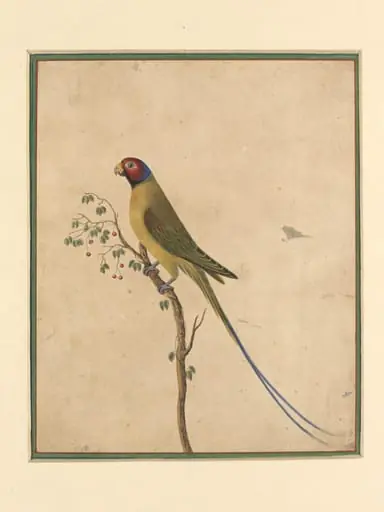 A parakeet
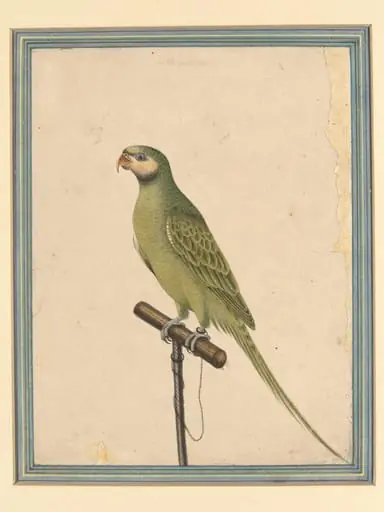 A parrot
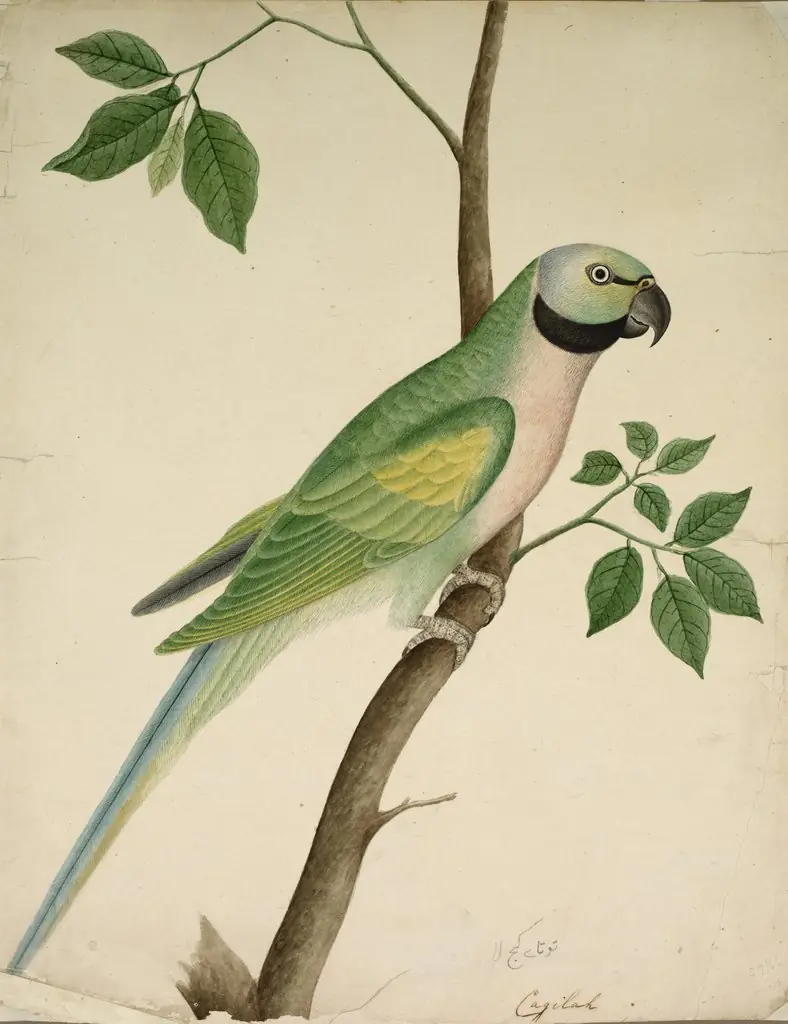 Green Parrot
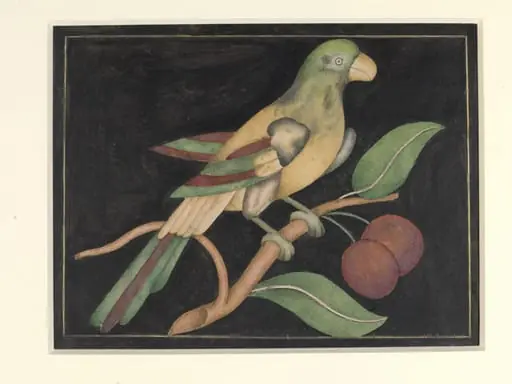 Detail of pietra dura work from the Diwan-i Am, Delhi Palace and Fort
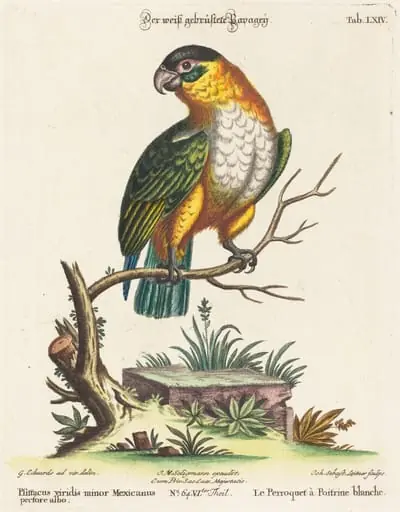 Psittacus viridis minor Mexicanus
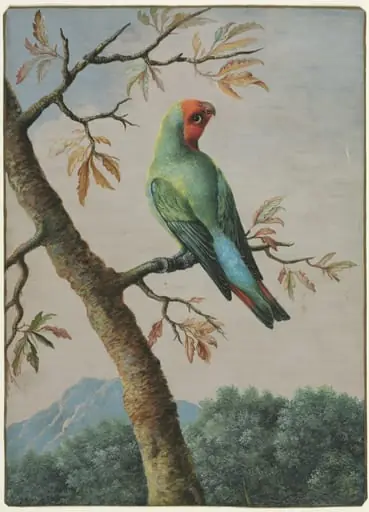 Bird Study: Rosy Faced Love Bird
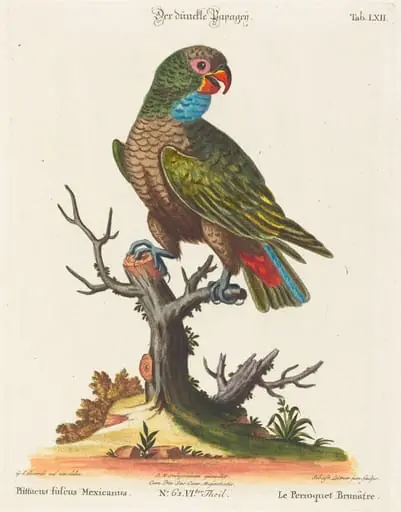 Parrot (Le Perroquet Brunatre. Pfittacus Fulcus Mexicanus)
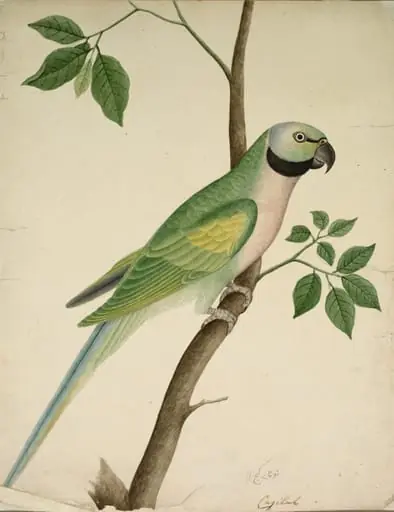 Green Parrot
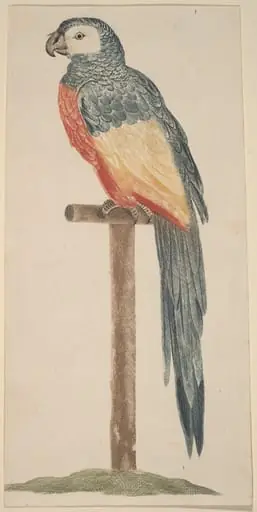 Parrot (Ara)
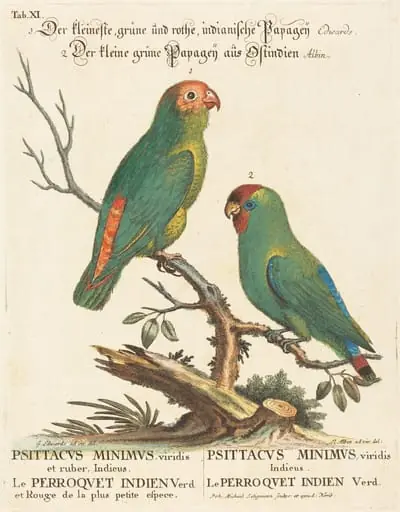 Parrot (Le Perroquet Indien. Psittacus Minimus)
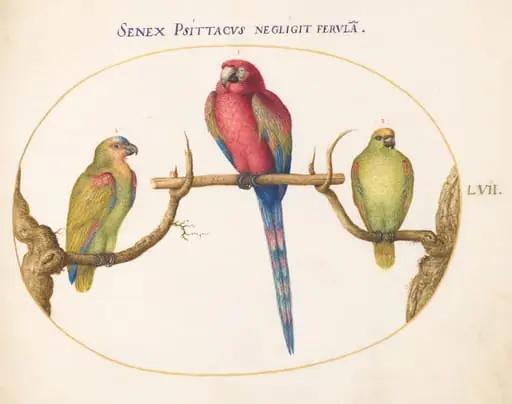 Plate 57: Scarlet Macaw with Two Smaller Green Parrots
 One of nine drawings of birds.