Artwork
Parrot (Le Perroquet Indien. Psittacus Minimus)
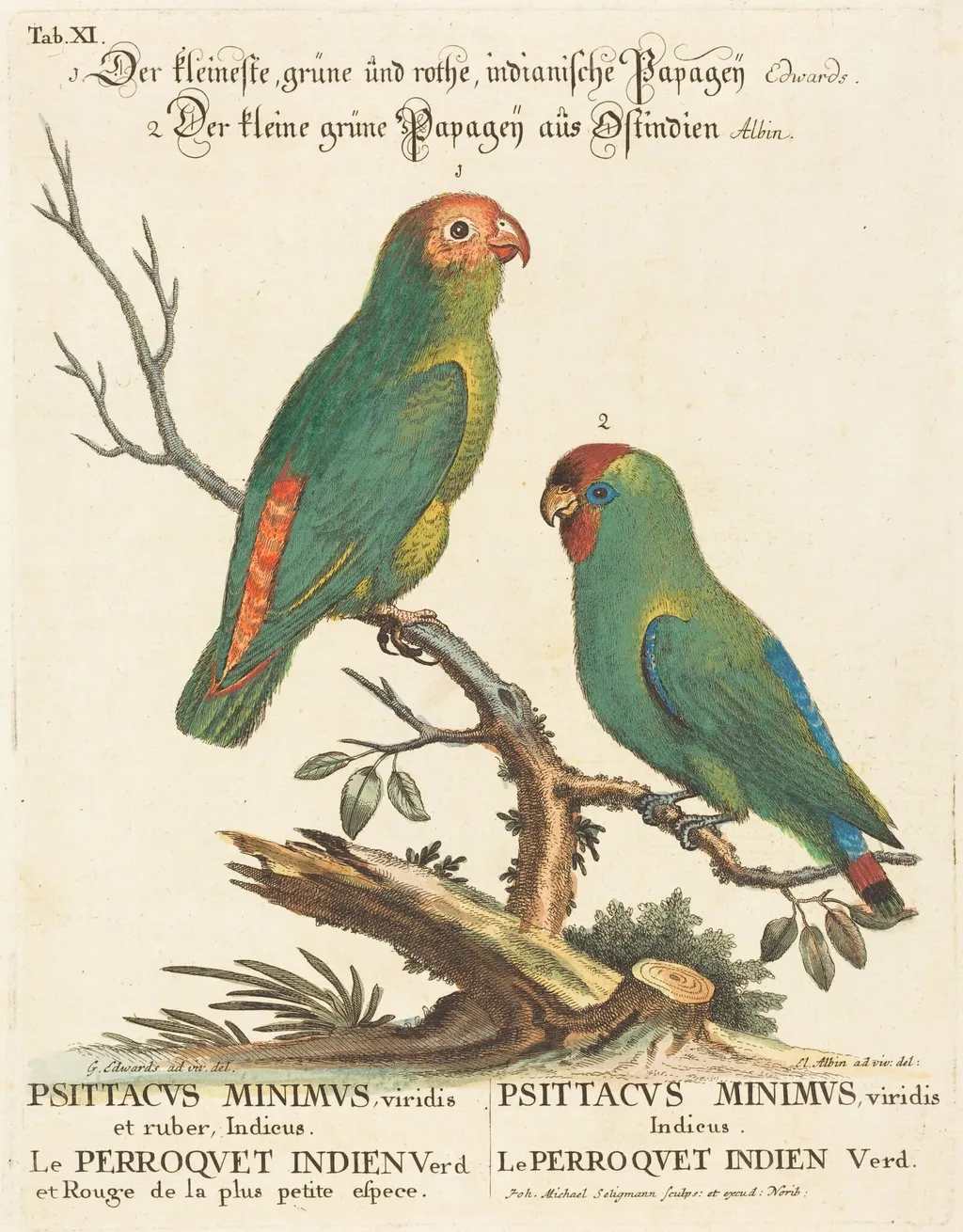
Parrot (Le Perroquet Indien. Psittacus Minimus) is an ink print by the Baroque artist Johann Michael Seligmann. It dates from 1741 and is held in the collection of the National Gallery of Art.
About this work
Overview
Created in 1741 by Johann Michael Seligmann, this hand-colored etching depicts a small green parrot perched on a slender branch.
Created in 1741 by Johann Michael Seligmann, this hand-colored etching depicts a small green parrot perched on a slender branch. The image is printed in fine black lines on paper, then meticulously painted by hand with natural pigments. Measuring roughly the size of a playing card, it belongs to a series of ornithological studies produced during the mid-18th century, when scientific illustration and artistic precision converged.
Subject & Meaning
The parrot, identified as Psittacus minimus, reflects 18th-century European interest in exotic species brought from the Americas. Rendered with anatomical care, the bird is presented without context—its vibrant plumage and alert posture emphasize its novelty as a specimen. The image serves less as decoration than as a record of biological diversity, aligning with Enlightenment-era efforts to classify and document the natural world.
Technique & Style
Seligmann employed etching to render delicate feather textures and precise anatomical details using fine, controlled lines. The monochrome print was later colored by hand, likely with water-based pigments, to replicate the bird’s natural hues. The plain white background isolates the subject, focusing attention on form and color. This method allowed for multiple copies, though few survive due to the fragility of hand-applied pigments and paper.
History & Provenance
The print originated in Seligmann’s series of animal illustrations, likely intended for scholarly or collector use. Hand-colored prints of this type were produced in limited numbers, and few remain intact today. Its survival suggests it was carefully preserved, possibly within a private natural history collection. The work’s small scale and detailed execution point to its use as a reference object rather than a public display piece.
Context
In the 1740s, European naturalists were actively documenting newly encountered species from colonial territories. Seligmann’s work aligns with contemporaneous efforts by natural historians like Buffon and Brisson, who sought to systematize ornithology. The parrot’s scientific name and precise rendering reflect this trend, where art served as a tool for classification, bridging the gap between curiosity and empirical study.
Legacy
Seligmann’s etchings contributed to the visual lexicon of 18th-century natural history, influencing later illustrators and collectors. While not widely known today, such works represent a critical phase in the transition from artistic representation to scientific documentation. The survival of this print underscores the value placed on accurate visual records before the advent of photography.
Artist & collection


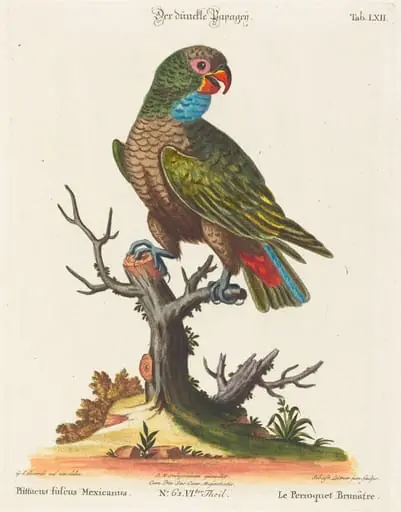 Parrot (Le Perroquet Brunatre. Pfittacus Fulcus Mexicanus)
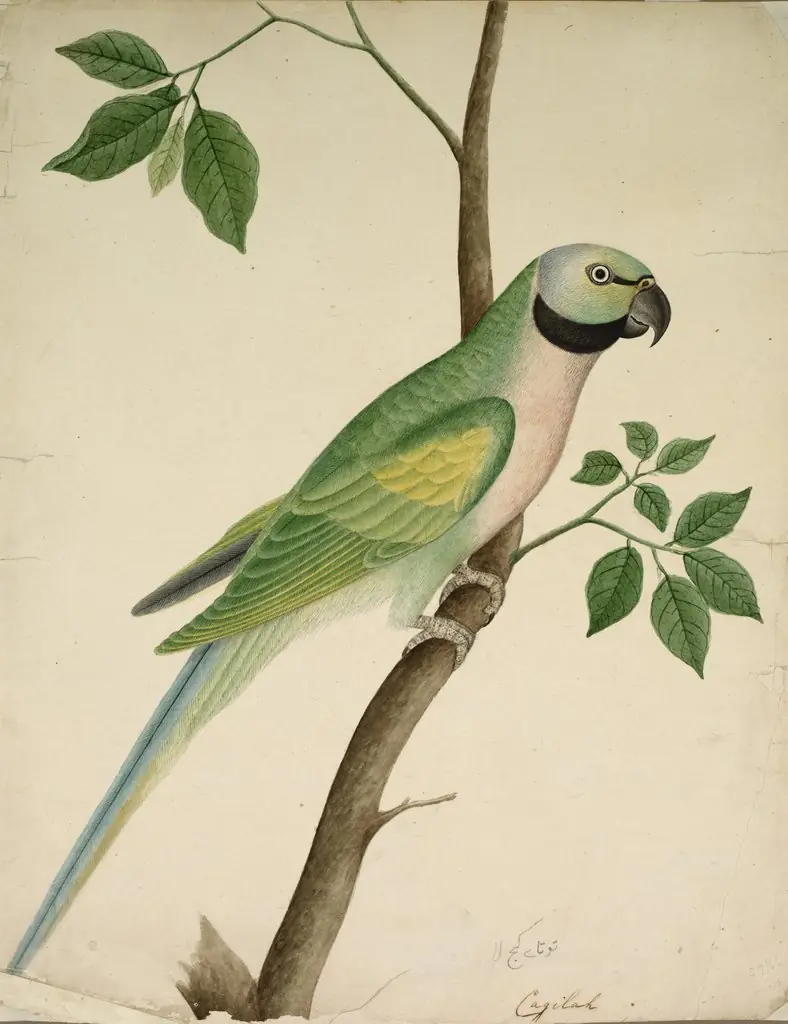 Green Parrot
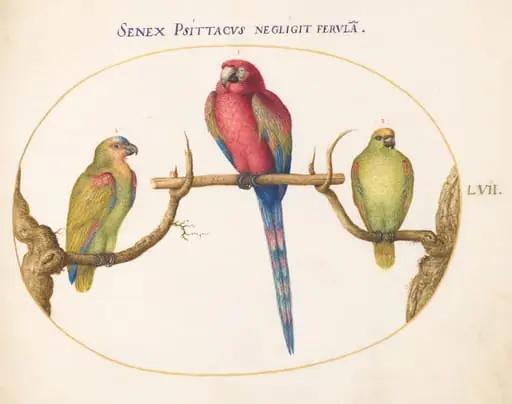 Plate 57: Scarlet Macaw with Two Smaller Green Parrots
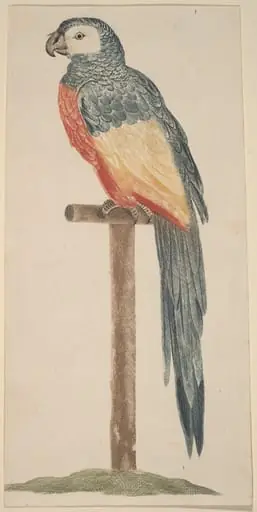 Parrot (Ara)
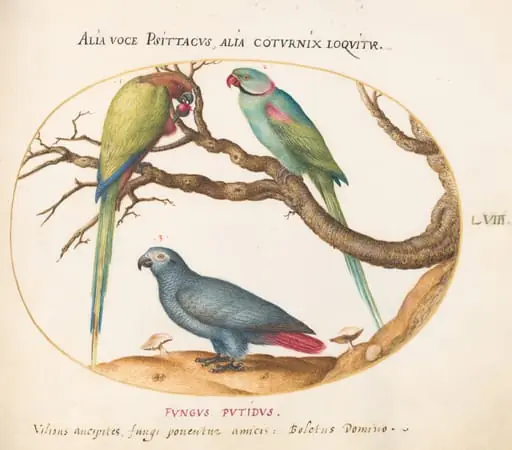 Plate 58: African Gray Parrot, Indian Ring-Necked Parrot, and a Third Parrot
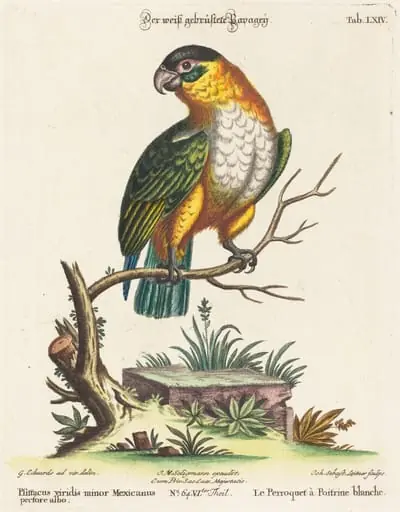 Psittacus viridis minor Mexicanus
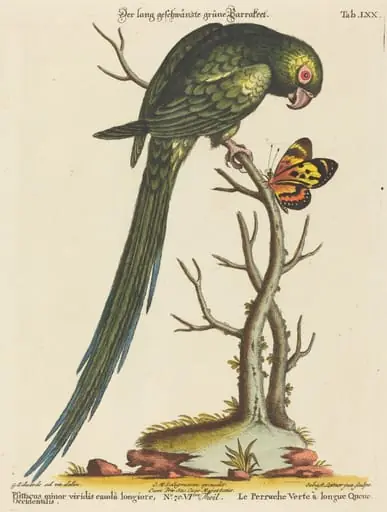 Psittacus minor viridis cauda longiore Occidentalis
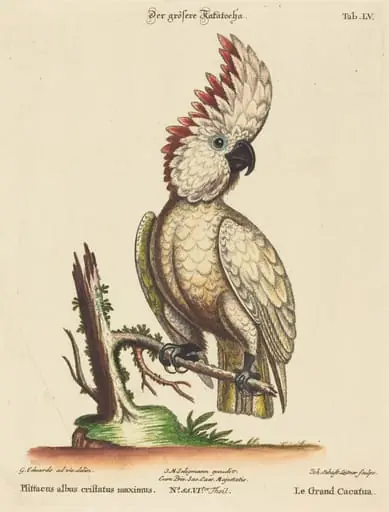 Psittacus albus cristatus maximus
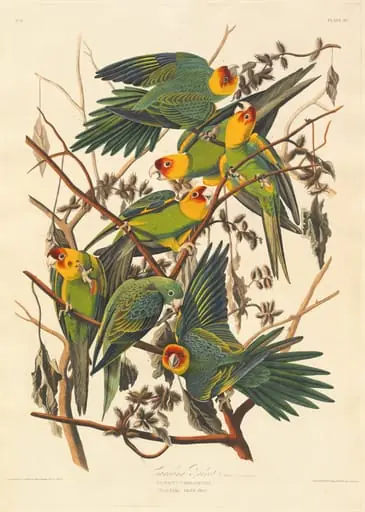 Carolina Parrot
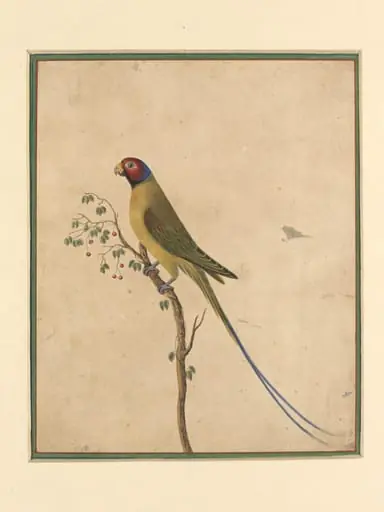 A parakeet
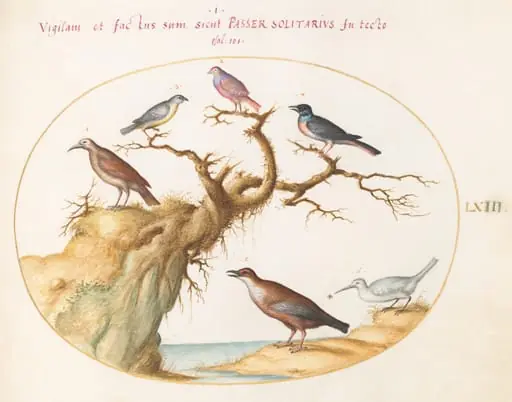 Plate 63: Six Small Birds, Including a Bluethroat and a Cuckoo(?)