Artwork
Venetian Party in a Chateau Garden
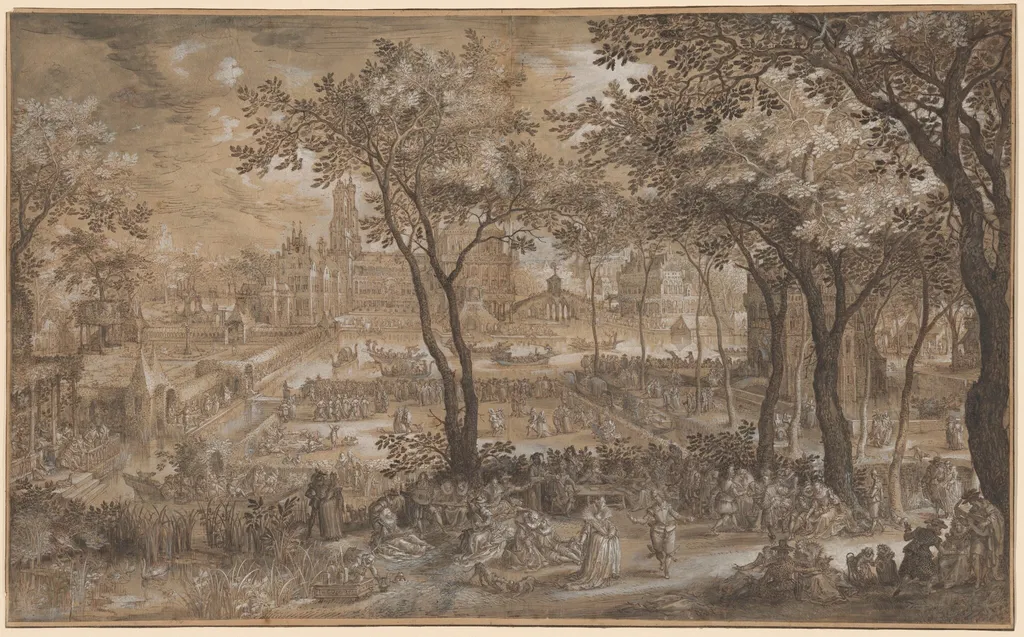
Venetian Party in a Chateau Garden is an ink drawing by the Baroque artist David Vinckboons. It dates from 1602 and is held in the collection of the National Gallery of Art.
About this work
Overview
Executed on two sheets of paper joined vertically, the work depicts a lively outdoor gathering set against a formal garden and a distant chateau.
David Vinckboons’ drawing, titled Venetian Party in a Chateau Garden, dates from around 1602. Executed on two sheets of paper joined vertically, the work depicts a lively outdoor gathering set against a formal garden and a distant chateau. Figures are shown strolling, conversing, and dancing, while musicians provide accompaniment. The composition is rendered primarily in brown ink and wash, with selective white highlights that give the scene a sense of depth.
Subject & Meaning
The drawing records an elaborate social occasion, likely inspired by the fashionable Venetian festivities that were popular among the Dutch elite in the early seventeenth century. Participants are dressed in contemporary attire, arranged in small groups that suggest conversation, courtship, and performance. The inclusion of a grand house in the background underscores the connection between aristocratic leisure and the cultivated landscape.
Technique & Style
Vinckboons employed pen work combined with brown and gray washes, building tonal variation through cross‑hatching and incised lines that were later transferred onto the paper. White pigment is applied sparingly to accent highlights on clothing and foliage, enhancing the illusion of three‑dimensional space. The careful rendering of facial expressions and fabric folds demonstrates the artist’s skill in rendering detail within a monochrome palette.
History & Provenance
Created circa 1602, the drawing is an early example of Vinckboons’ interest in genre scenes that blend landscape and social narrative. It has survived as a single sheet, joined vertically, suggesting it may have been intended for display as a decorative panel. The work is documented in several European collections, though its precise ownership trail before the nineteenth century remains unclear.
Artist & collection


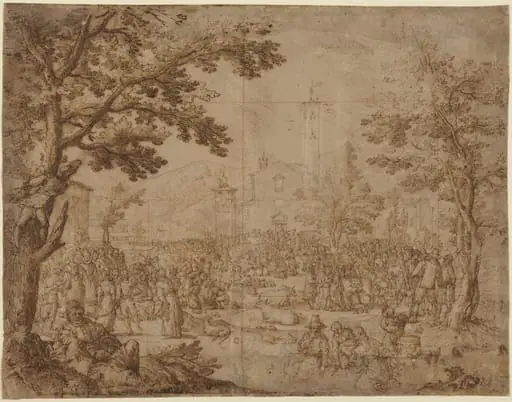 The Fair at Impruneta
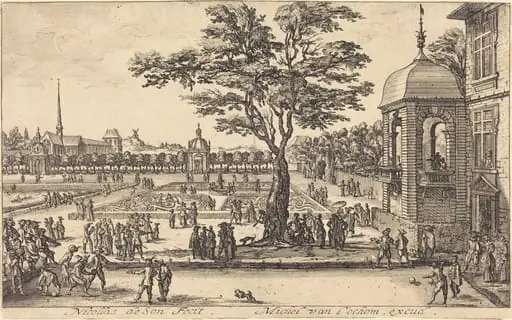 View of a Garden
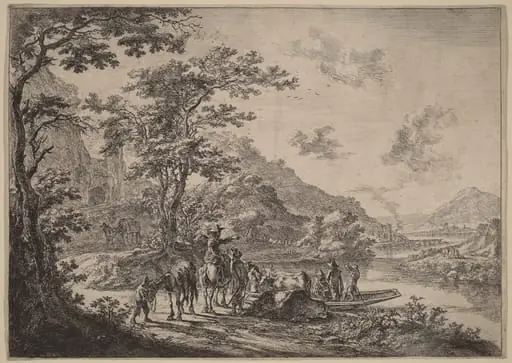 View of the Tiber in the Campagna
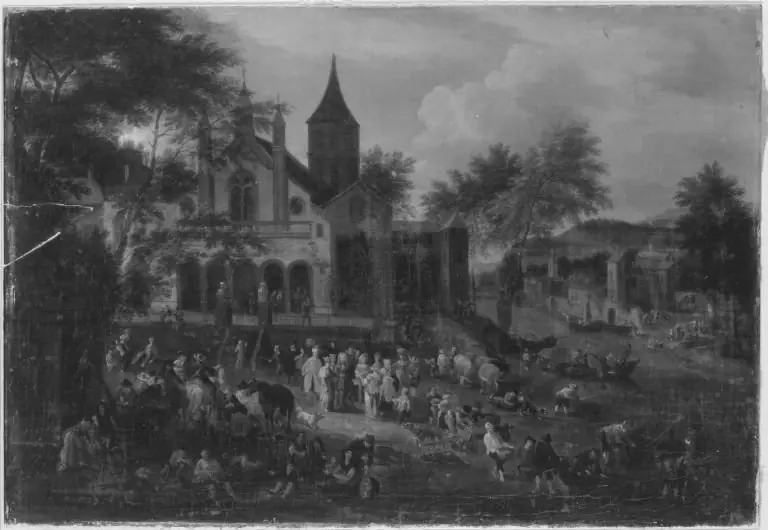 Der Kirchplatz
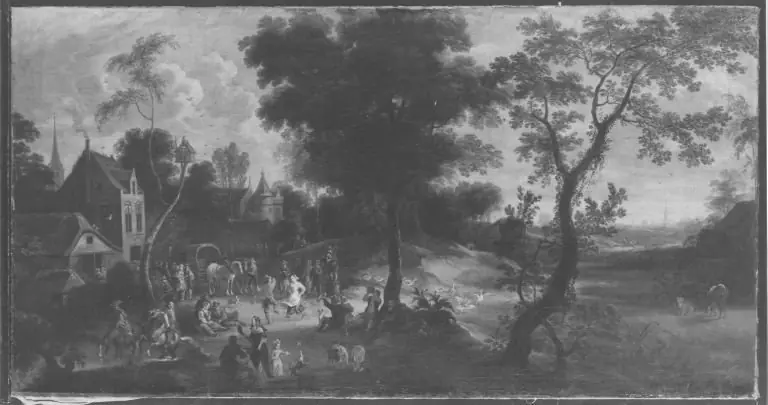 Dorfbelustigung
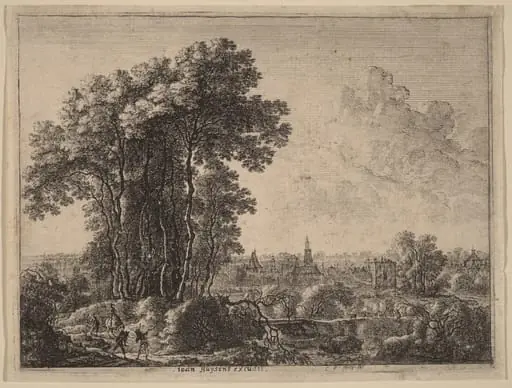 Landscape with Horseman and Three Travelers
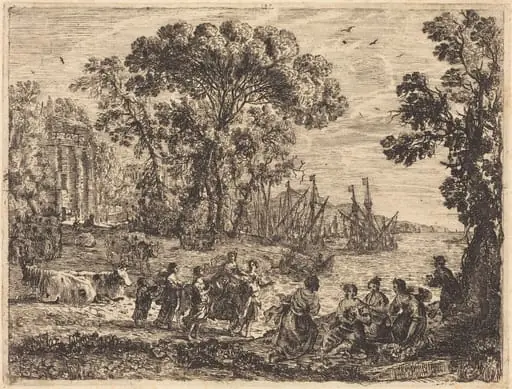 Europa and the Bull (L'enlèvement d'Europe)
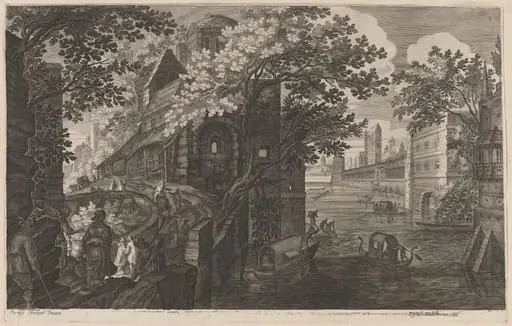 Gondolas on a River by a Palace
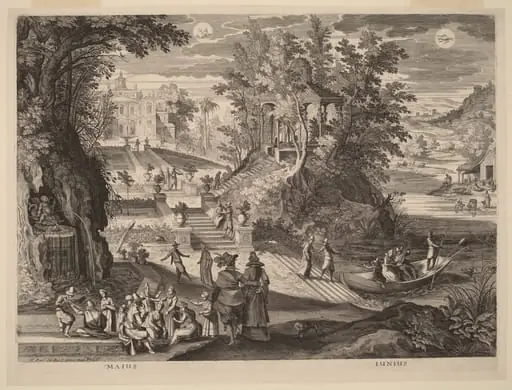 May and June
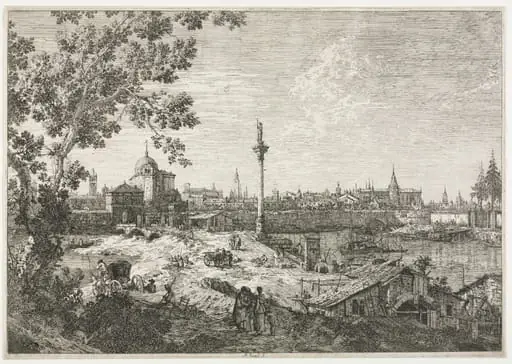 Panorama of a City on a River
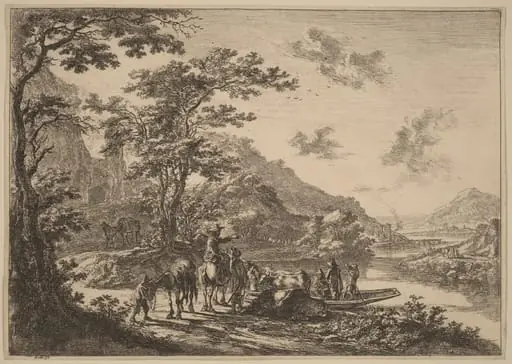 View of the Tiber in the Campagna
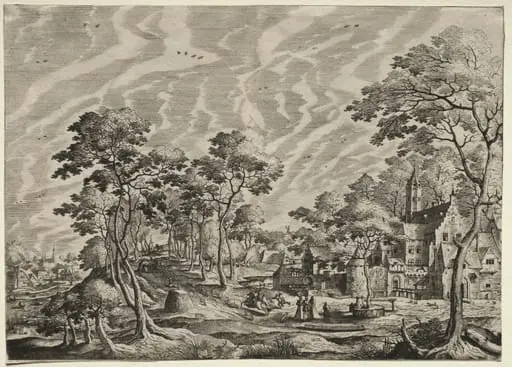 Landscape with a Chateau at the right