Artwork
View of the Tiber in the Campagna
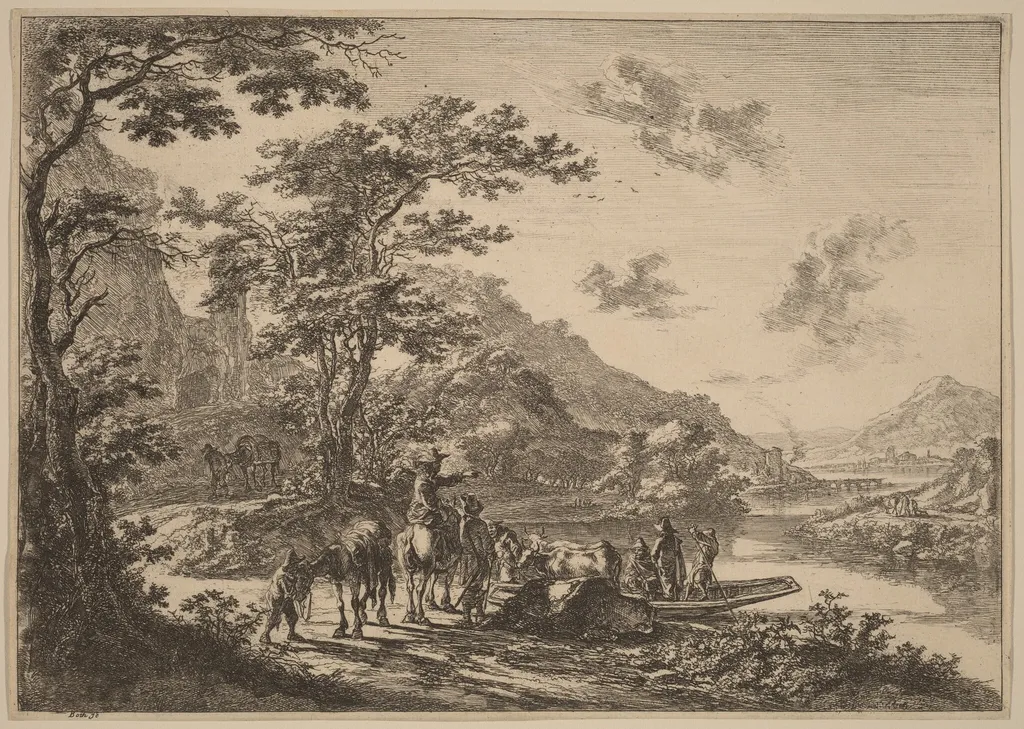
View of the Tiber in the Campagna is an ink print by the Baroque artist Jan Both. It is held in the collection of the National Gallery of Art. Jan Dirksz Both created this etching around 1640, not 1700, as part of a broader Dutch interest in Italian landscapes.
About this work
Overview
Though based in the Netherlands, Both traveled to Italy and absorbed its light and topography, translating them into finely detailed prints.
Jan Dirksz Both created this etching around 1640, not 1700, as part of a broader Dutch interest in Italian landscapes. Though based in the Netherlands, Both traveled to Italy and absorbed its light and topography, translating them into finely detailed prints. This work belongs to a genre where Northern European precision met the atmospheric qualities of the Roman countryside, offering viewers a quiet, observed moment rather than a grand spectacle.
Subject & Meaning
The scene portrays a tranquil stretch of the Tiber River in the Campagna, with figures and animals gathered near the water’s edge. A small boat rests on the bank, while a distant bridge and buildings suggest the proximity of Rome without dominating the composition. The focus lies in the harmony of rural life and natural form, emphasizing stillness and observation rather than narrative or symbolism. It reflects a contemplative engagement with the Italian landscape as experienced by Northern travelers.
Technique & Style
Executed in etching, the image relies on incised lines on a metal plate to render texture and depth. Both used delicate, controlled strokes to suggest the foliage of tall trees, the folds of clothing, and the soft contours of clouds. The river’s curve and the recession of the background are achieved through varying line density and tone, not wash or color. The medium’s precision allowed for intricate detail while preserving a sense of atmospheric light, characteristic of Dutch Italianate printmaking.
History & Provenance
Both produced this print during his time in Rome, likely in the 1630s or early 1640s, after returning from Italy. His works circulated among collectors in the Netherlands and beyond, valued for their faithful rendering of Italian scenery. While the specific early ownership of this impression is undocumented, similar etchings by Both appear in major European collections, indicating its place within the broader market for topographical prints of the period.
Context
In the mid-17th century, Dutch artists increasingly turned to Italy as a subject, drawn by its classical ruins and luminous landscapes. Both was part of a generation that adapted Italian motifs to Northern aesthetic values—detail-oriented, restrained, and grounded in direct observation. This etching aligns with contemporaneous works by artists like Cornelis van Poelenburch and Herman van Swanevelt, who similarly fused Italian scenery with Dutch technical discipline.
Legacy
Both’s etchings contributed to the enduring European fascination with the Italian landscape as a subject for printmaking. His careful rendering of light and space influenced later topographical artists, though his name faded from public memory after the 17th century. Today, his works are studied for their role in bridging Northern and Southern European visual traditions, offering insight into how travelers interpreted and transmitted the Italian environment through print.
Own this work as a print
Artist & collection

Artist
Jan Dirksz Both was a Dutch painter, draughtsman, and etcher, who made an important contribution to the development of Dutch Italianate landscape painting.

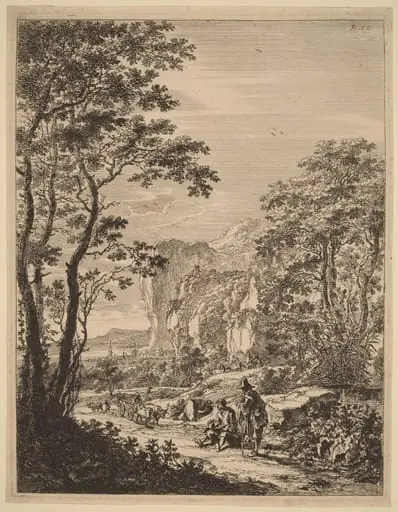 The Ox-Cart: View between Ancona and Sinigaglia
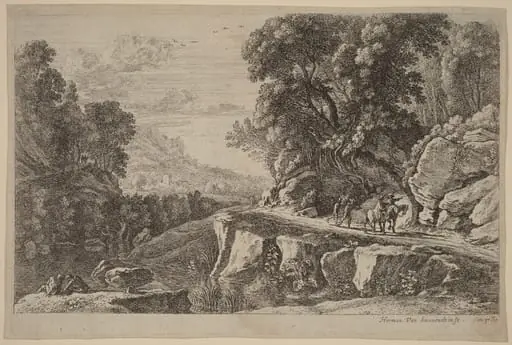 The Two Horsemen
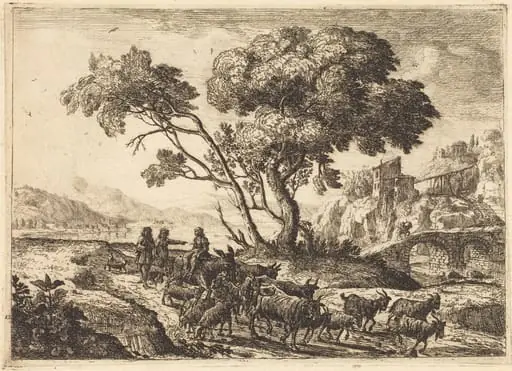 Departure for the Fields
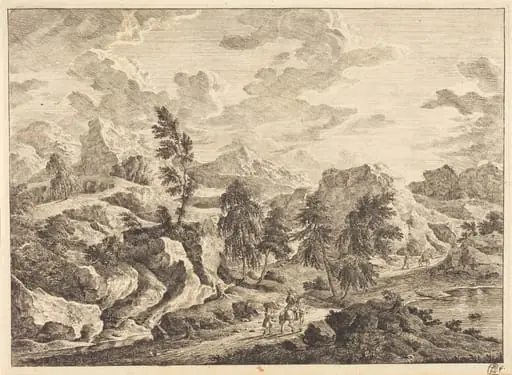 Landscape with the Rising Sun and a Rider with Attendant
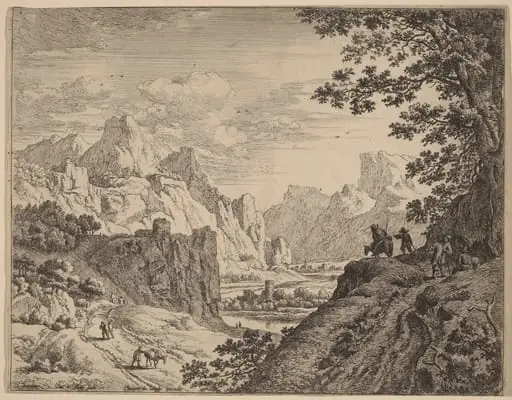 View of the River Rhine
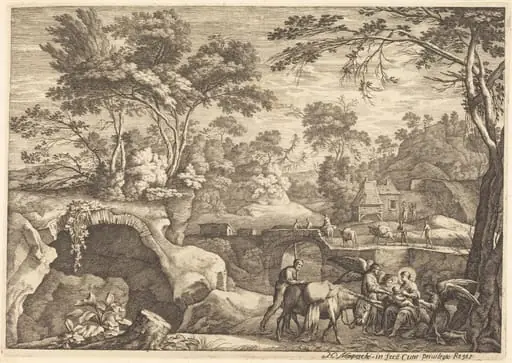 The Flight into Egypt
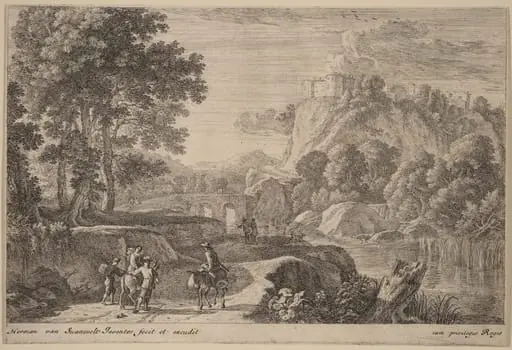 Travelers on Road to Left of a Stream
 The Large Tree and the Cascade
 Hut with the Remains of a Hedge
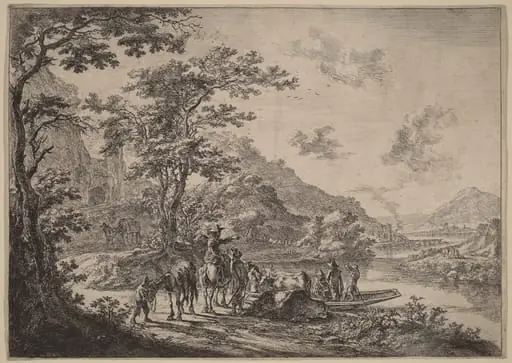 View of the Tiber in the Campagna