Artwork
La moși
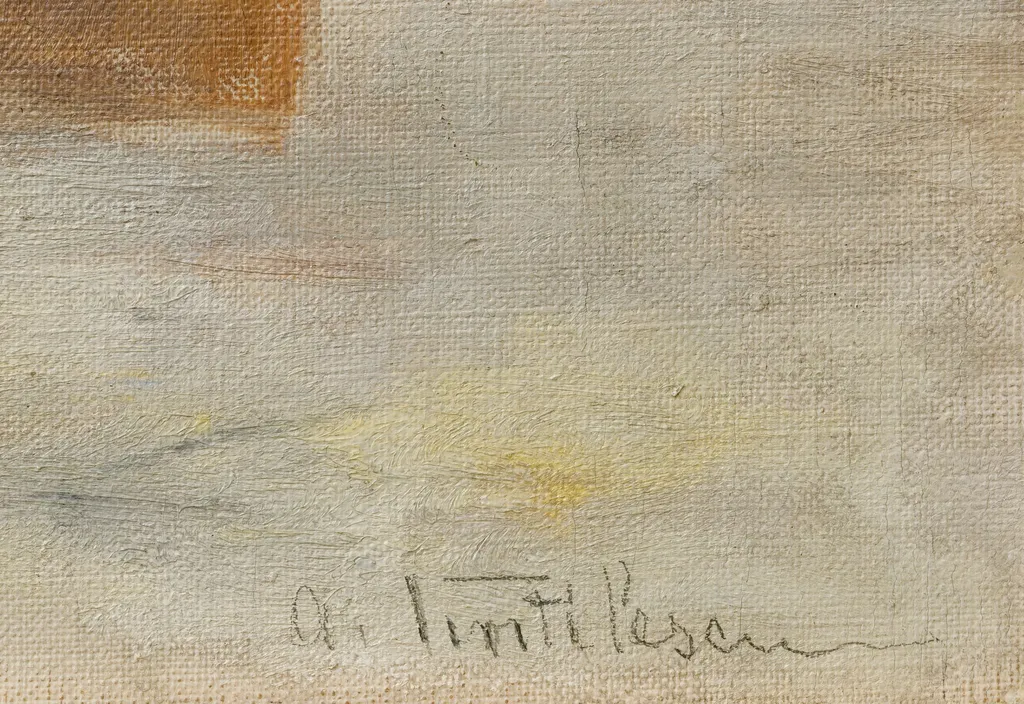
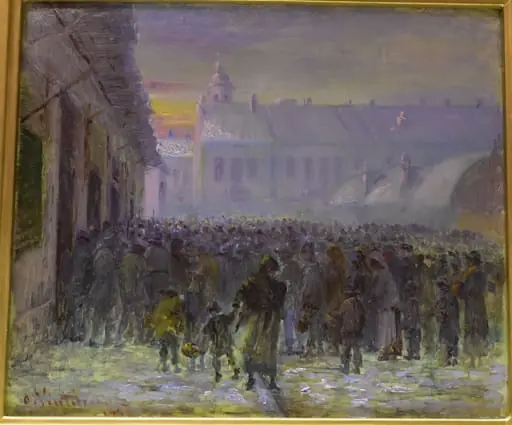
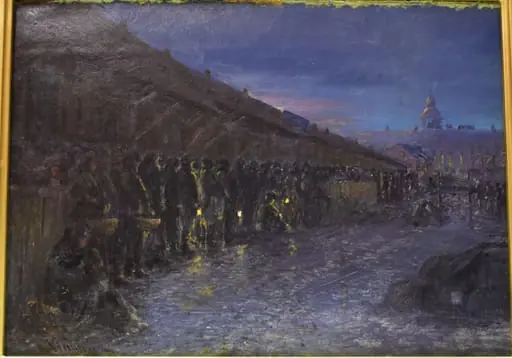
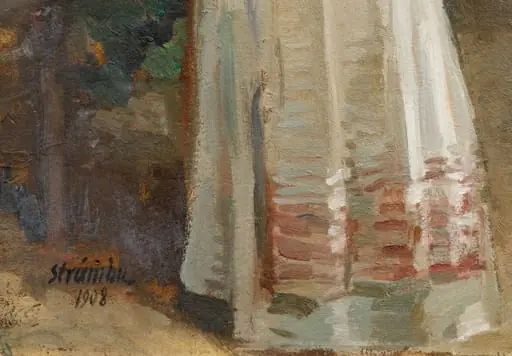
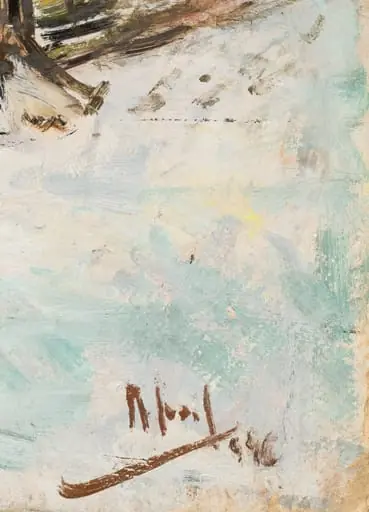
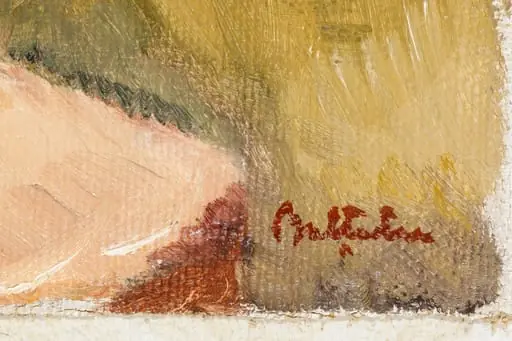
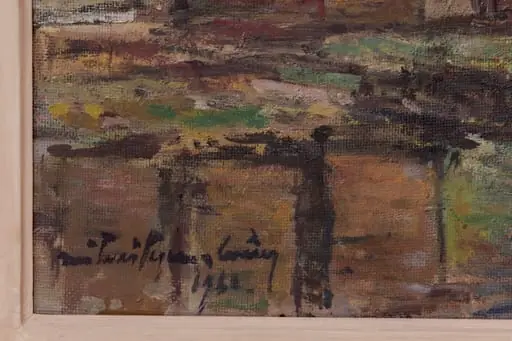
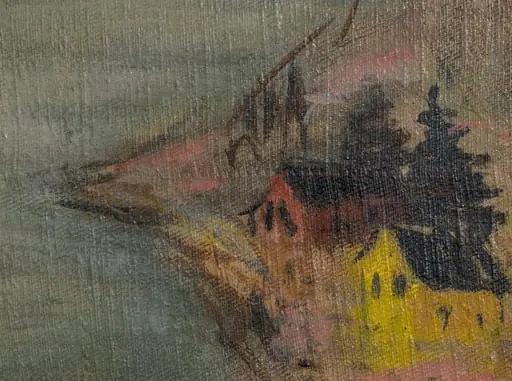
La moși is an unspecified painting by Aurel Vintilescu. It is held in the collection of the National Museum of Art of Romania. This fragmentary image captures a portion of a faded painted surface, where the original composition is no longer legible.
About this work
Overview
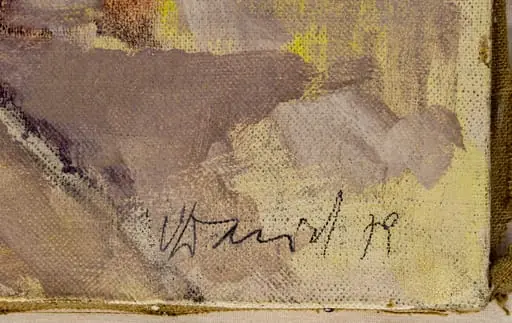
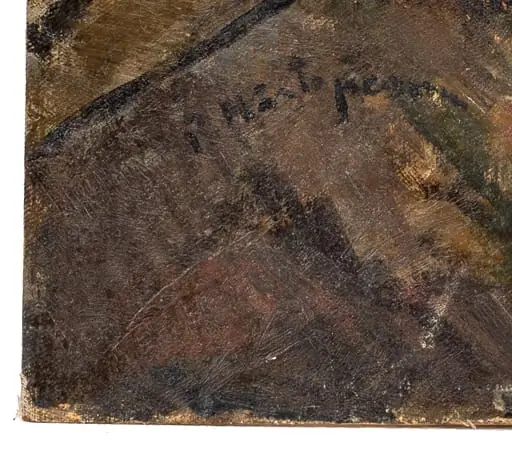
This fragmentary image captures a portion of a faded painted surface, where the original composition is no longer legible.
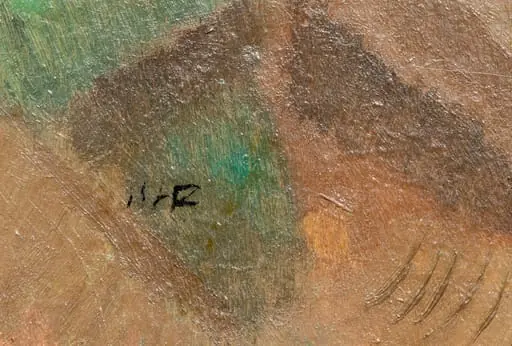
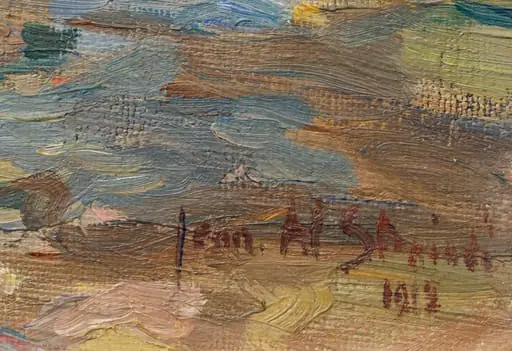
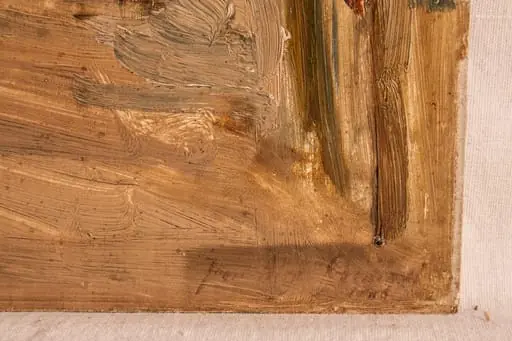
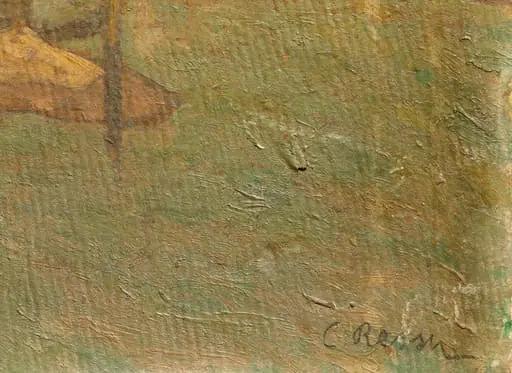
This fragmentary image captures a portion of a faded painted surface, where the original composition is no longer legible. The work emphasizes materiality over imagery, with thick, uneven layers of pigment creating a tactile surface. Muted tones of yellow and brown dominate, suggesting aged pigments or deliberate tonal restraint. Dark, irregular marks near the lower edge hint at inscription or artist’s notation, though their meaning remains unclear.
Subject & Meaning
The subject of the full work is unidentifiable from this fragment. What remains focuses attention on the physical presence of paint rather than narrative or representation. The obscured imagery invites interpretation centered on process and decay, possibly reflecting an intention to prioritize texture over clarity. The dark marks may be a signature, annotation, or later addition, but their role in the work’s intent is uncertain.
Technique & Style
The surface exhibits pronounced impasto, with paint applied in thick, textured strokes that catch light unevenly. Brushwork is soft and blended in places, contrasting with areas where pigment has built up into raised ridges. The muted palette and worn condition suggest either intentional tonal limitation or prolonged exposure to environmental factors. The technique prioritizes physical presence over fine detail, drawing focus to the hand of the maker.
History & Provenance
No documented history or origin is available for this fragment. Its condition indicates age and possible exposure to moisture, light, or handling. The presence of dark linear marks may imply an artist’s signature or later inscription, but no attribution or archival record confirms its maker or early ownership. Its survival as a fragment suggests it was once part of a larger, now-lost work.
Context
This work aligns with late 19th- or early 20th-century practices that valued material expression over representational fidelity. Similar approaches appear in post-Impressionist and early modernist circles, where texture and surface became vehicles for emotional or conceptual resonance. The faded palette and fragmented state reflect broader trends in works that endured time, neglect, or deliberate deconstruction.
Legacy
Though the original work is lost, this fragment endures as an example of paint’s autonomy as a medium. Its emphasis on texture and erosion resonates with later movements that celebrated material decay and process over finished form. It serves as a quiet reminder of how artistic intent can persist even when imagery fades, influencing how viewers engage with the physical residue of art.
Artist & collection
Artist
Aurel Vintilescu carried a sketchbook everywhere, even on the back of his motorcycle, scribbling Iași street scenes between deliveries.