Artwork
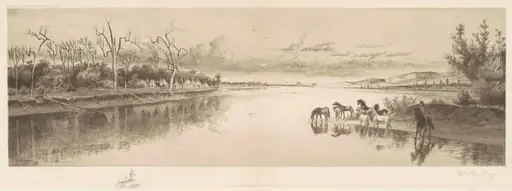
Landscape with Horses Drinking
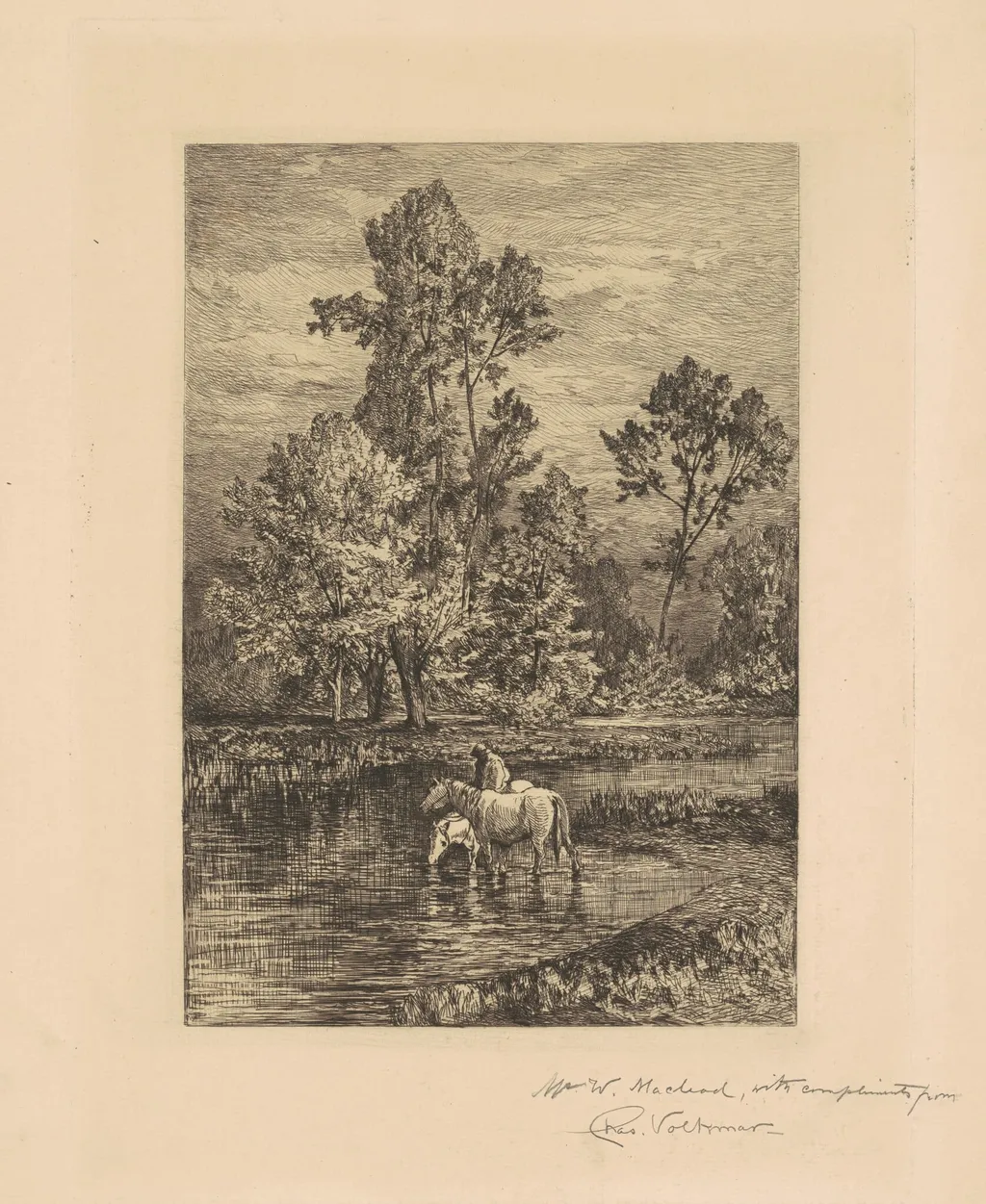
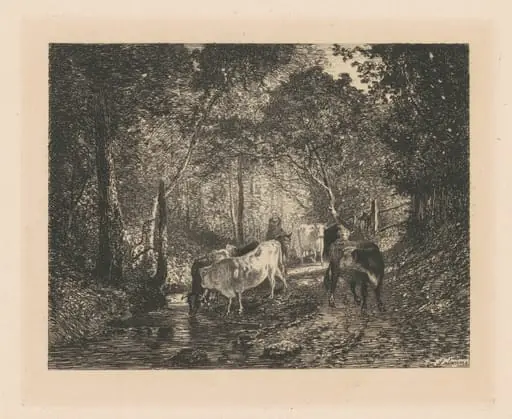
Landscape with Horses Drinking is an ink print by the Impressionist artist Charles Volkmar. It dates from 1876 and is held in the collection of the National Gallery of Art.
About this work
Overview
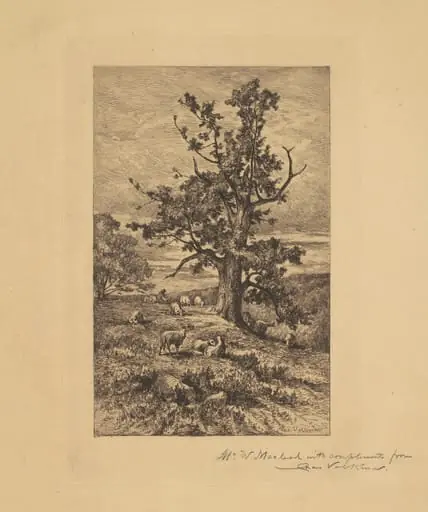
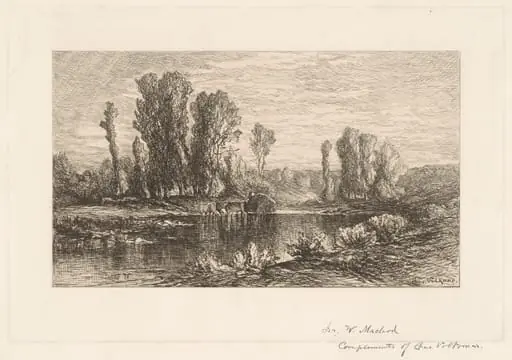
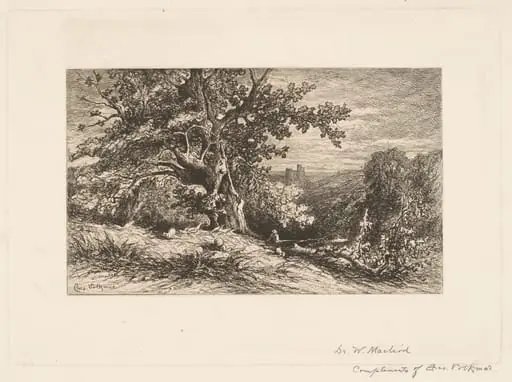
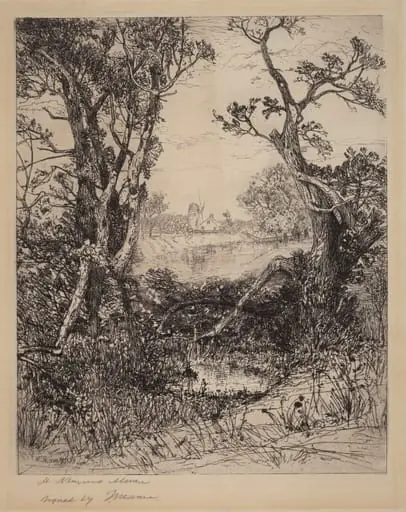
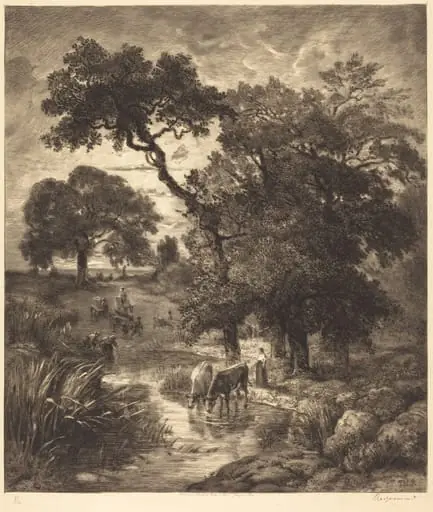
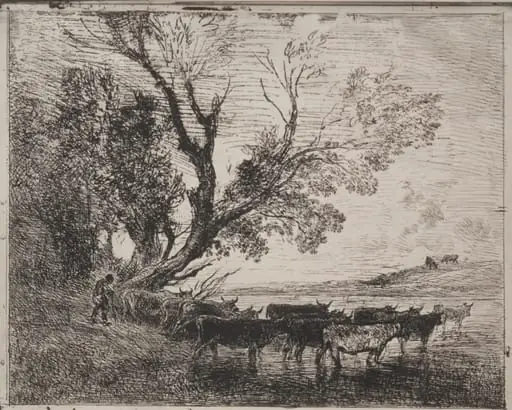
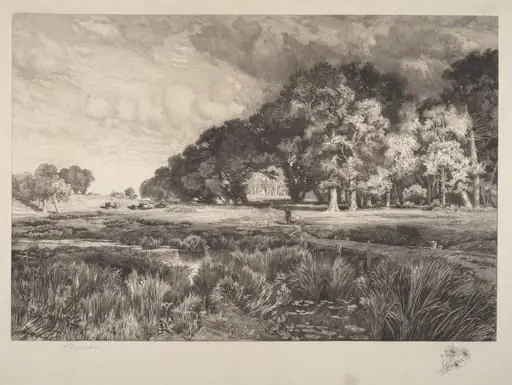
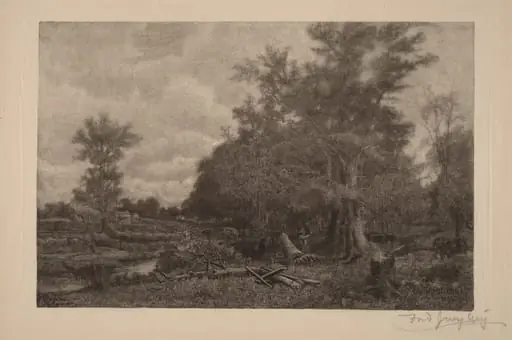
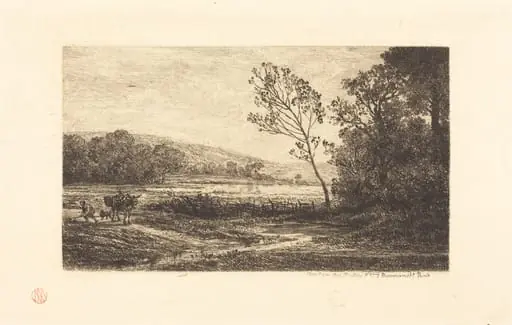
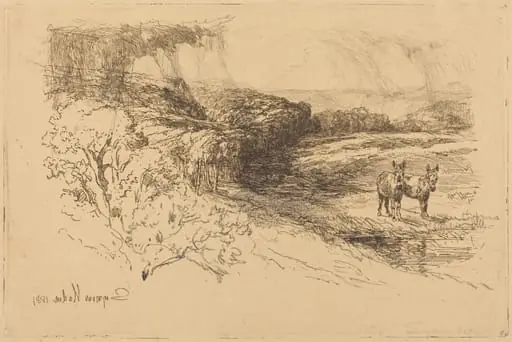
Landscape with Horses Drinking is a black-and-white etching produced around 1876 by Charles Volkmar. The work depicts a tranquil rural scene with two horses bent to drink from a still pond, framed by dense, shadowed trees. Rendered entirely in fine linear strokes, the print captures subtle textures in fur, water, and foliage without color or human presence, emphasizing quiet naturalism.
Subject & Meaning
The composition centers on animals engaged in a routine, solitary act—drinking—set within an undisturbed woodland. The absence of people suggests a focus on nature’s quiet rhythms rather than human interaction. The horses, rendered with care but without anthropomorphism, become symbols of harmony within the landscape, inviting contemplation of the natural world’s stillness.
Technique & Style
Volkmar employed etching, a process involving acid-resistant grounds and incised lines on a metal plate, to achieve fine detail. Delicate, controlled strokes define the horses’ musculature, the ripples of water, and the layered foliage. The tonal range emerges from line density rather than shading, reflecting the precision and restraint typical of 19th-century reproductive printmaking traditions.
History & Provenance
The print dates to the mid-1870s, a period when Volkmar was active in producing landscape etchings, often inspired by European pastoral scenes. While specific early ownership records are not widely documented, the work aligns with the broader 19th-century interest in nature studies through print. It likely circulated among collectors of fine prints rather than as mass-produced imagery.
Context
Created during a time when landscape etching was gaining renewed attention among artists seeking intimate, detailed depictions of nature, Volkmar’s work reflects influences from both Romantic tradition and emerging realist sensibilities. Unlike grand panoramas, this piece focuses on a modest, uneventful moment, aligning with a growing appreciation for quiet, everyday naturalism in art.
Legacy
Though not widely exhibited today, Landscape with Horses Drinking remains an example of skilled 19th-century printmaking that prioritizes observation over drama. It contributes to the understated legacy of artists who used etching to capture subtle natural phenomena, preserving a quiet aesthetic that contrasts with the more theatrical trends of the era.
Own this work as a print
Artist & collection