Artwork
Gilet avec personnages traversant la rivière, projets de broderies de gilet, XVIIIème siècle
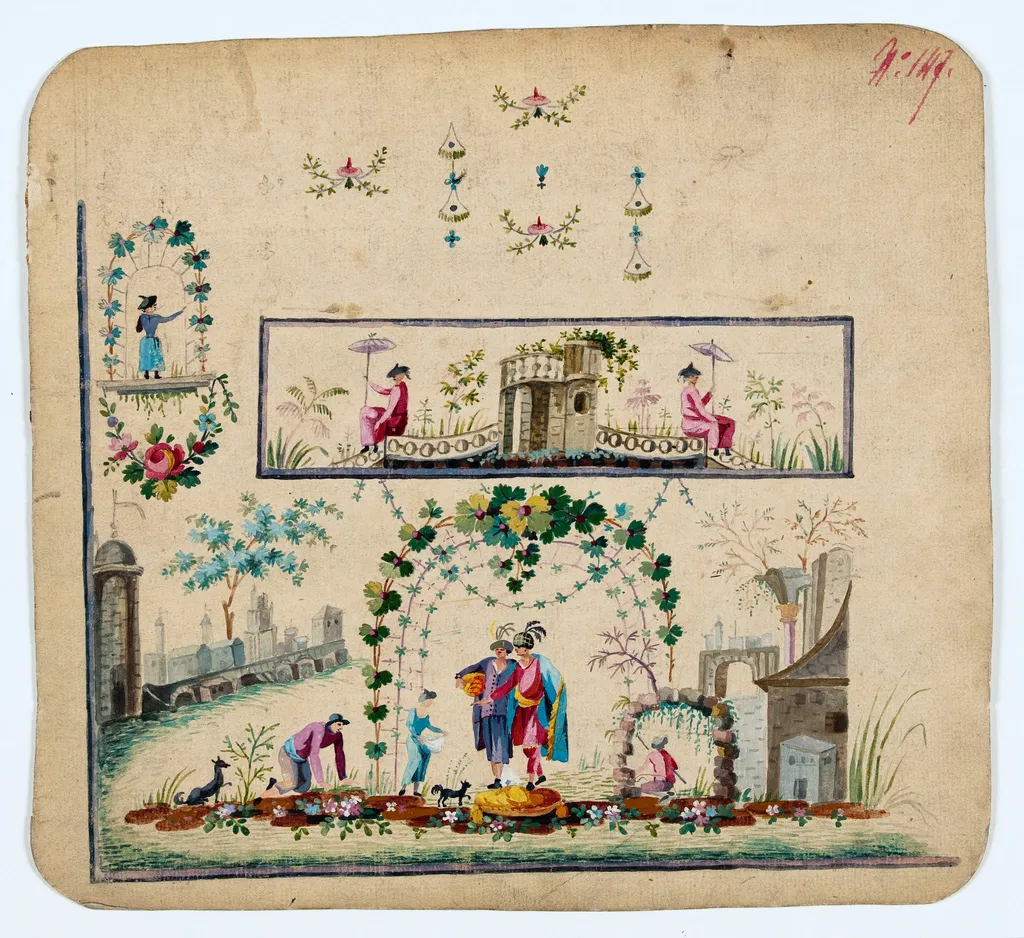
Gilet avec personnages traversant la rivière, projets de broderies de gilet, XVIIIème siècle is a drawing by the Romanticist artist Anonyme. It dates from 1785 and is held in the collection of the Palais Galliera - Musée de la Mode de la Ville de Paris. This 18th-century design, dated to around 1785, is a preparatory drawing for embroidered garments, likely a waistcoat.
About this work
Overview
This 18th-century design, dated to around 1785, is a preparatory drawing for embroidered garments, likely a waistcoat.
This 18th-century design, dated to around 1785, is a preparatory drawing for embroidered garments, likely a waistcoat. Created by an unknown artist, it combines a detailed garden scene with ornamental borders suggesting textile patterns. The work resides in the Museum of Ethnography and reflects the intersection of domestic life and artisanal craft in pre-industrial Europe, where fashion design often began as hand-drawn concepts before being translated into needlework.
Subject & Meaning
The scene depicts a leisurely garden with figures engaged in everyday activities: walking, sitting, and tending to surroundings. Two women observe from a shaded balcony, while a pair strolls near a bridge and fountain. Dogs and blooming flora enhance the sense of quiet domesticity. The imagery evokes ideals of refined leisure among the urban elite, yet its function as a textile template suggests it was meant to translate such scenes into wearable art, blurring the line between observation and decoration.
Technique & Style
Rendered in ink and wash with vivid pigments—pink garments, blue headwear, and lush greens—the drawing mimics the chromatic richness intended for embroidery. The central composition is naturalistic, while the upper border features stylized floral and geometric motifs typical of textile patterns. The contrast between the lively scene and the structured border reveals a deliberate duality: the drawing serves both as a visual narrative and a technical guide for needleworkers translating two-dimensional design into three-dimensional fabric.
History & Provenance
The drawing was likely produced in France or a neighboring region during the late 1700s, a period when embroidered garments were prized among the middle and upper classes. Its survival in the Museum of Ethnography indicates it was collected as an example of vernacular craftsmanship rather than fine art. No record of its original owner or maker exists, but its detailed execution suggests it was made for a skilled artisan or a wealthy patron commissioning custom attire.
Context
In the 18th century, embroidery was a highly skilled domestic and professional craft, often taught to women of means. Design drawings like this one were used to plan intricate patterns before stitching, especially for garments worn at court or in fashionable society. The garden motif reflects broader cultural trends in Rococo and early Neoclassical aesthetics, where nature was idealized as a backdrop to polite life, and textile arts were a key medium for personal expression.
Legacy
This drawing preserves a rare glimpse into the process behind embroidered garments, a craft largely undocumented in written records. It illustrates how artistic vision and manual labor converged in everyday fashion. Today, it serves as a material witness to the labor of anonymous artisans and the social rituals embedded in dress, offering insight into how beauty was constructed, one stitch at a time, in pre-industrial Europe.
Artist & collection
Artist
A French designer from the 1700s made delicate flower drawings meant to decorate vests.
Museum
Palais Galliera - Musée de la Mode de la Ville de Paris
Continue through works from the same source collection.
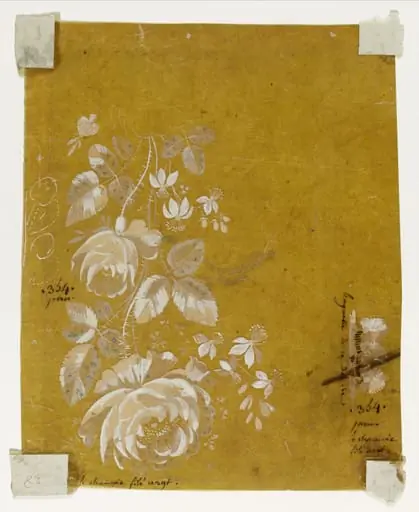 Bouquet de roses blanches pour étoffe, projets de broderies de gilet, XVIIIème siècle
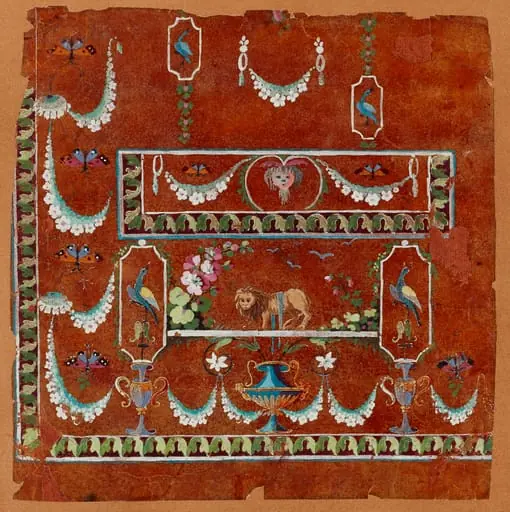 Gilet décor à grotesques, projets de broderies de gilet, XVIIIeme siècle
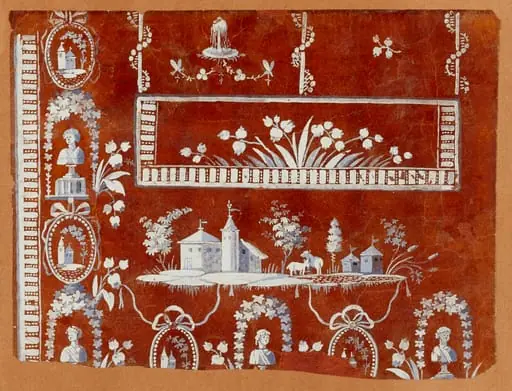 Gilet décor architectures rurales, projets de broderies de gilet, XVIIIème siècle
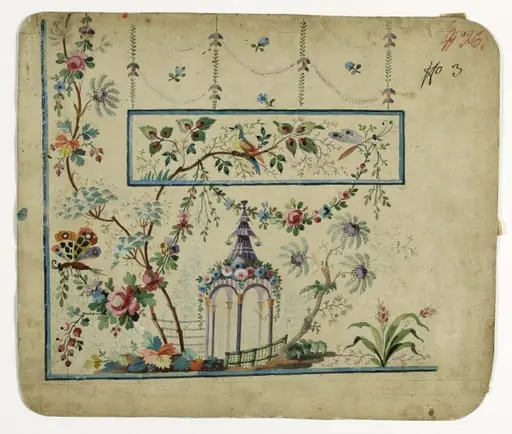 Gilet décor pagode, projets de broderies de gilet, XVIIIème siècle
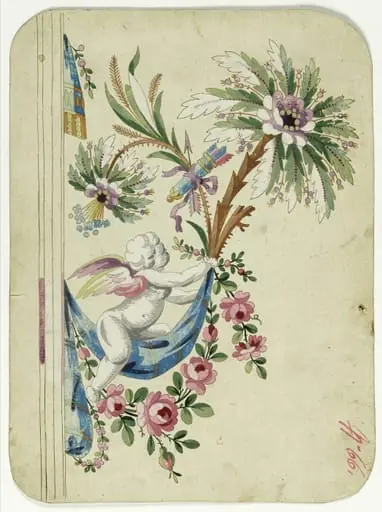 Décor de putti sur palmier, projets de broderies de gilet, XVIIIème siècle
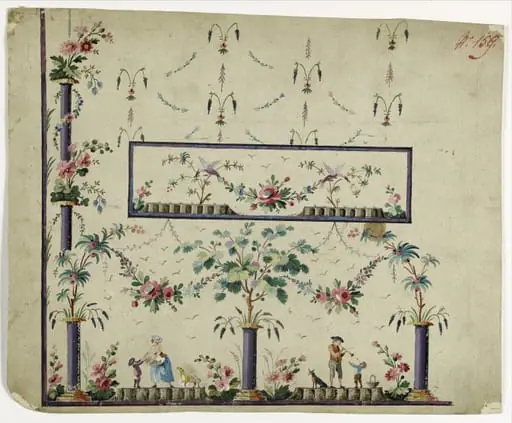 Gilet décor couple avec enfants, projets de broderies de gilet, XVIIIème siècle
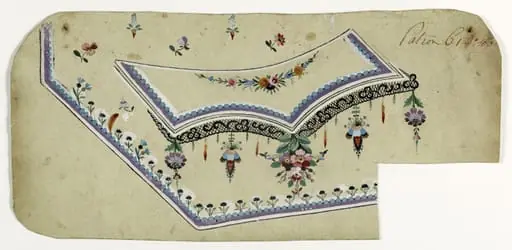 Gilet à la dentelle noire, projets de broderies de gilet, XVIIIème siècle
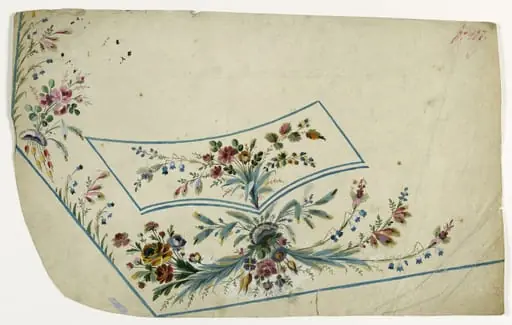 Gilet aux feuilles bleu-gris, projets de broderies de gilet, XVIIIème siècle
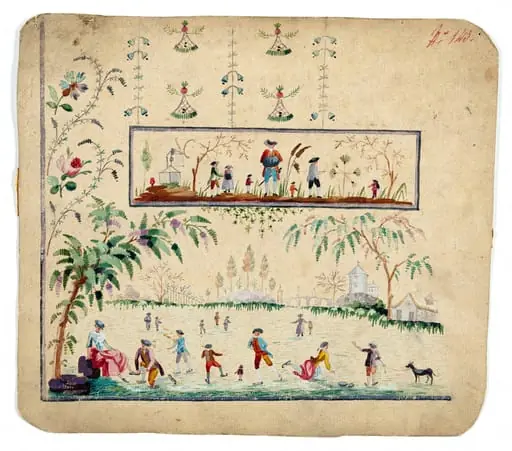 Gilet à patineurs, projets de broderies de gilet, XVIIIème siècle
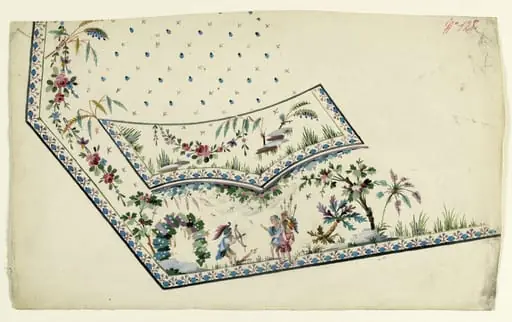 Gilet décor de paysage avec guerriers, projets de broderies de gilet, XVIIIème siècle
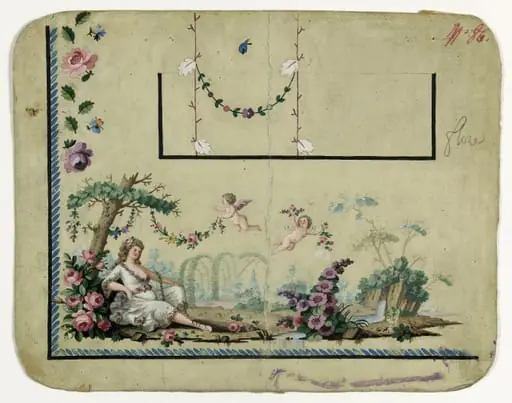 Gilet décor la déesse Flore dans un paysage, projets de broderies de gilet, XVIIIème siècle
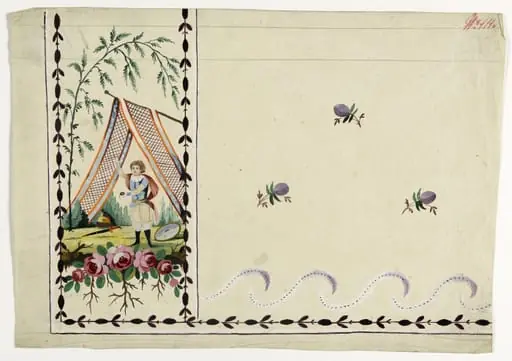 Gilet guerrier dans un paysage, projets de broderies de gilet, XVIIIème siècle
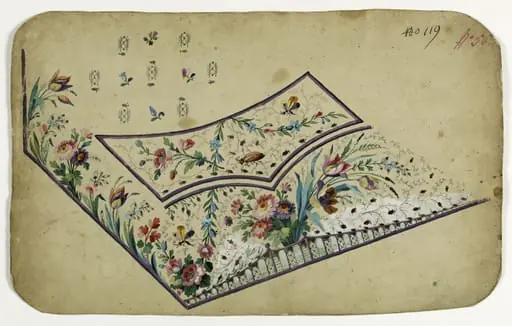 Gilet fleurs, papillons et scarabée, projets de broderies de gilet, XVIIIème siècle
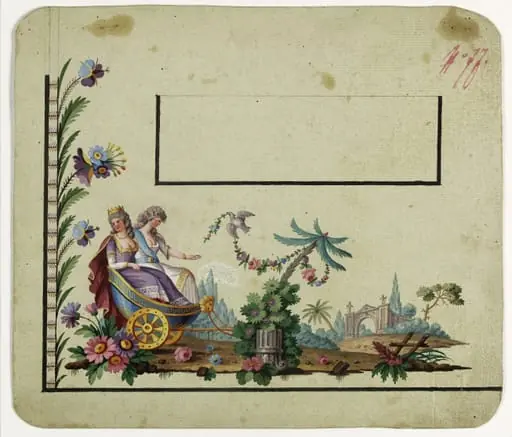 Gilet décor Didon en promenade sur un char, projets de broderies de gilet, XVIIIème siècle
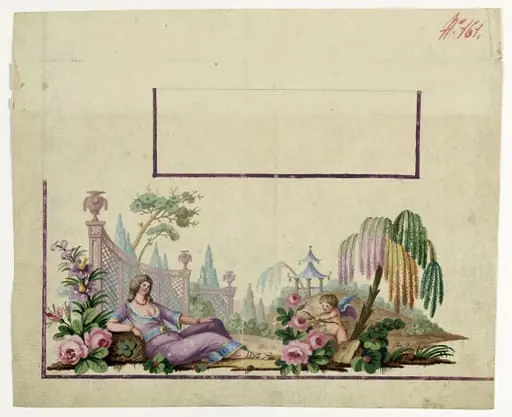 Gilet décor la déesse Flore dans un paysage de treillage, projets de broderies de gilet, XVIIIème siècle
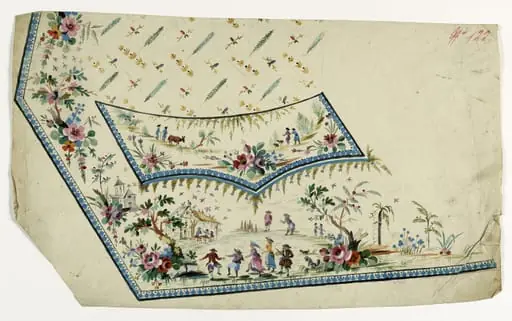 Gilet décor fête paysanne, projets de broderies de gilet, XVIIIème siècle
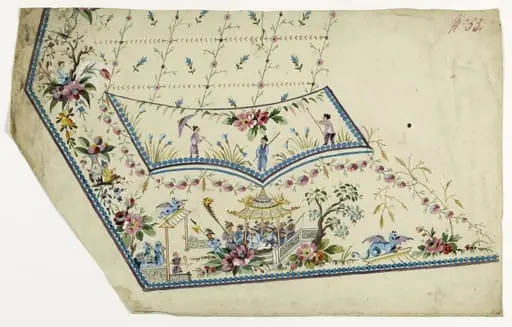 Gilet décor chinois sous une pagode, projets de broderies de gilet, XVIIIème siècle
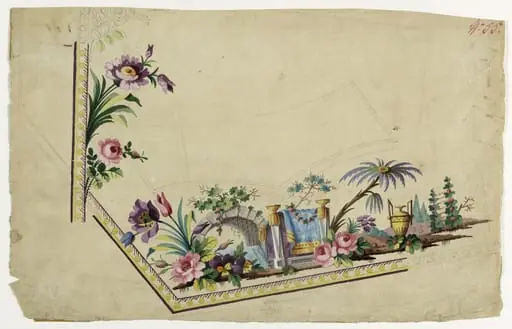 Paysage à pont en pierre, projets de broderies de gilet, XVIIIème siècle