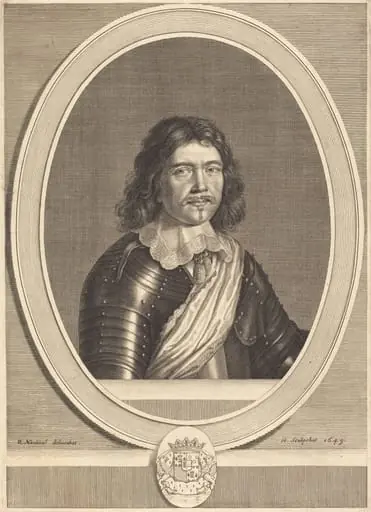
Artwork
Sir Hugh Cartwright
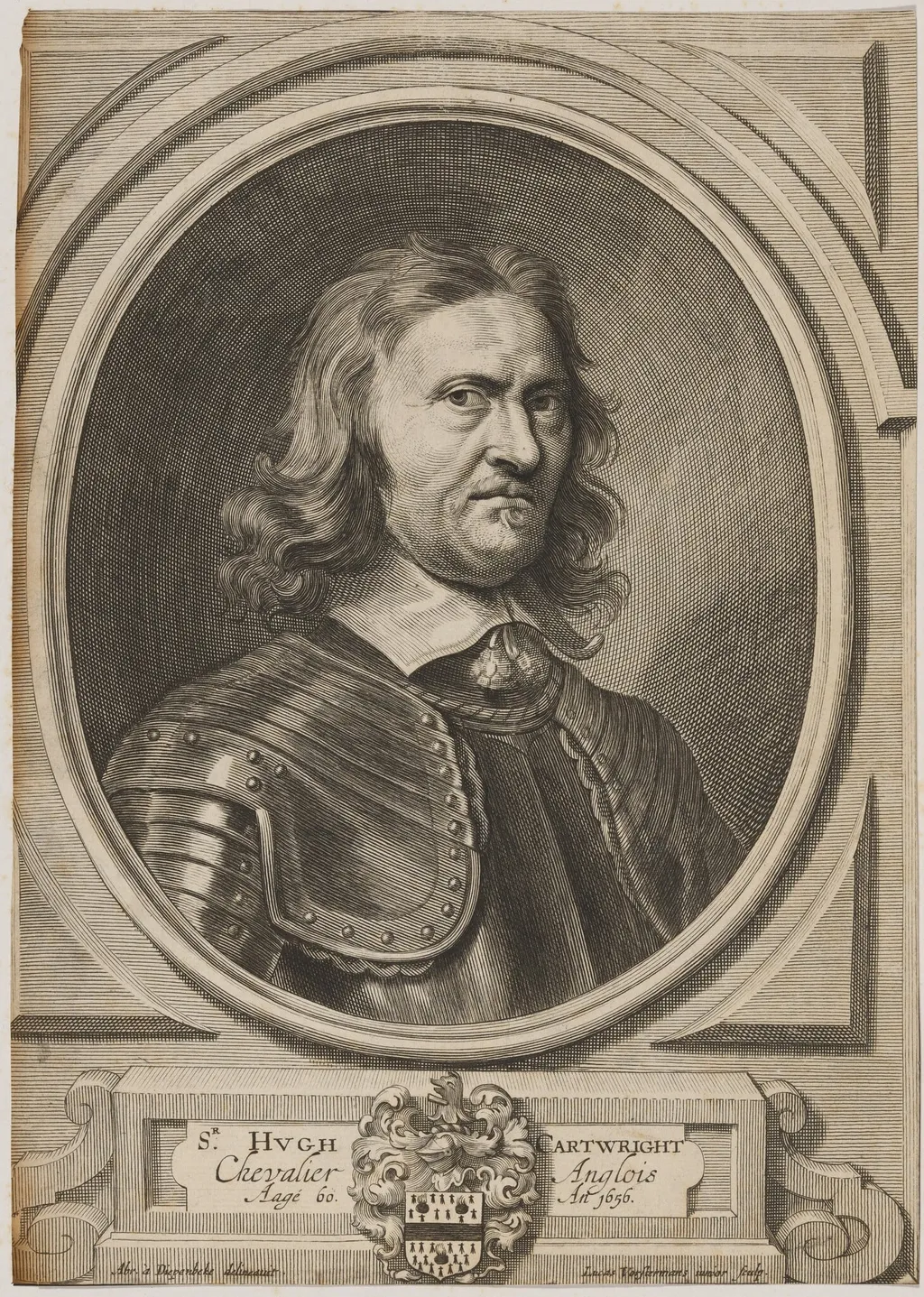
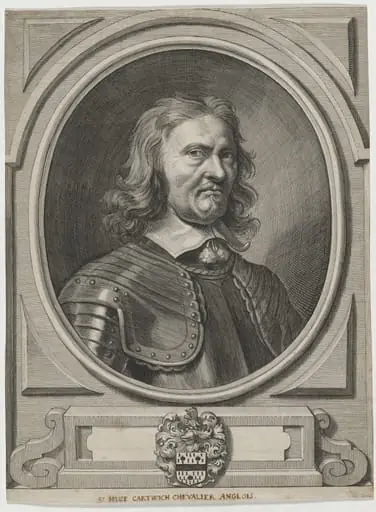
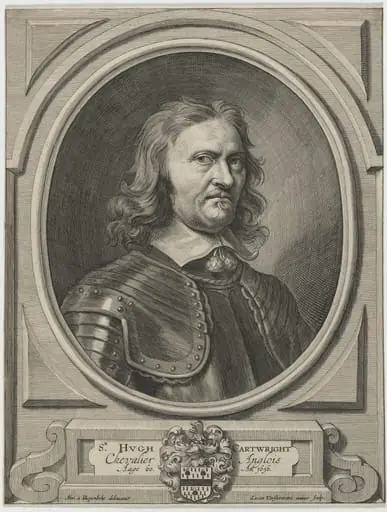
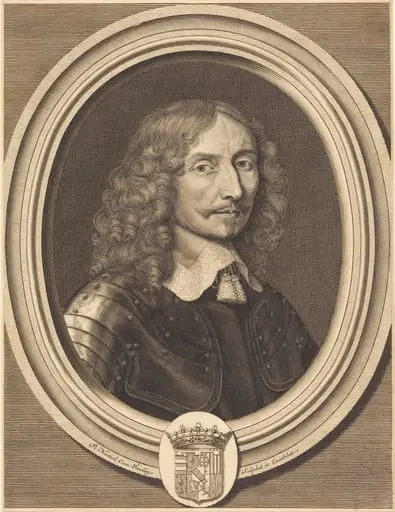
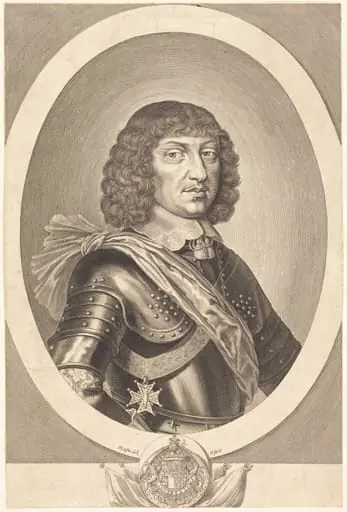
Sir Hugh Cartwright is an ink print by the Baroque artist Lucas Vorsterman II. It dates from 1664 and is held in the collection of the National Gallery of Art.
About this work
Overview
This 1664 engraving by Lucas Vorsterman II portrays Sir Hugh Cartwright, a figure of standing in 17th-century England. Executed in fine linear detail, the work belongs to the tradition of portrait prints used to convey status and solemnity. The composition is tightly framed within an oval border, emphasizing the subject’s presence against a dark, neutral ground.
Subject & Meaning
Sir Hugh Cartwright is depicted with a composed, forward gaze and a restrained posture, suggesting his position in public or aristocratic life. His attire—a high-collared shirt and metallic shoulder ornament—signals rank without overt display. The somber tone and lack of decorative elements reinforce an image of dignified authority, typical of elite portraiture in post-Civil War England.
Technique & Style
Vorsterman employed fine cross-hatching to model form and texture, building depth through layered lines rather than tone. The hair, collar, and metal accoutrements are rendered with meticulous precision, showcasing the engraver’s control over the burin. The dark oval background isolates the figure, focusing attention on facial expression and costume, a hallmark of Baroque portrait engraving.
History & Provenance
Created in 1664, the engraving likely served as a personal or familial keepsake, or perhaps a gift among peers.
Created in 1664, the engraving likely served as a personal or familial keepsake, or perhaps a gift among peers. Vorsterman, trained in Antwerp and active in England, was known for reproducing portraits of notable figures. While the original commissioning context is unrecorded, the print’s survival suggests it was valued within Cartwright’s social circle or among collectors of engraved portraiture.
Context
In mid-17th-century England, engraved portraits circulated among the gentry as affordable alternatives to painted likenesses. Following the Restoration, there was renewed interest in visual representations of authority. Vorsterman’s work reflects this trend, aligning with continental practices while adapting to English tastes for understated elegance and restrained symbolism.
Legacy
Though not widely reproduced in modern collections, this engraving exemplifies the skill of post-Renaissance printmakers in capturing individual character through line alone. It contributes to the broader understanding of how status was visually negotiated in print culture, bridging Flemish technique and English portraiture traditions of the era.
Artist & collection