Artwork
Holy Family
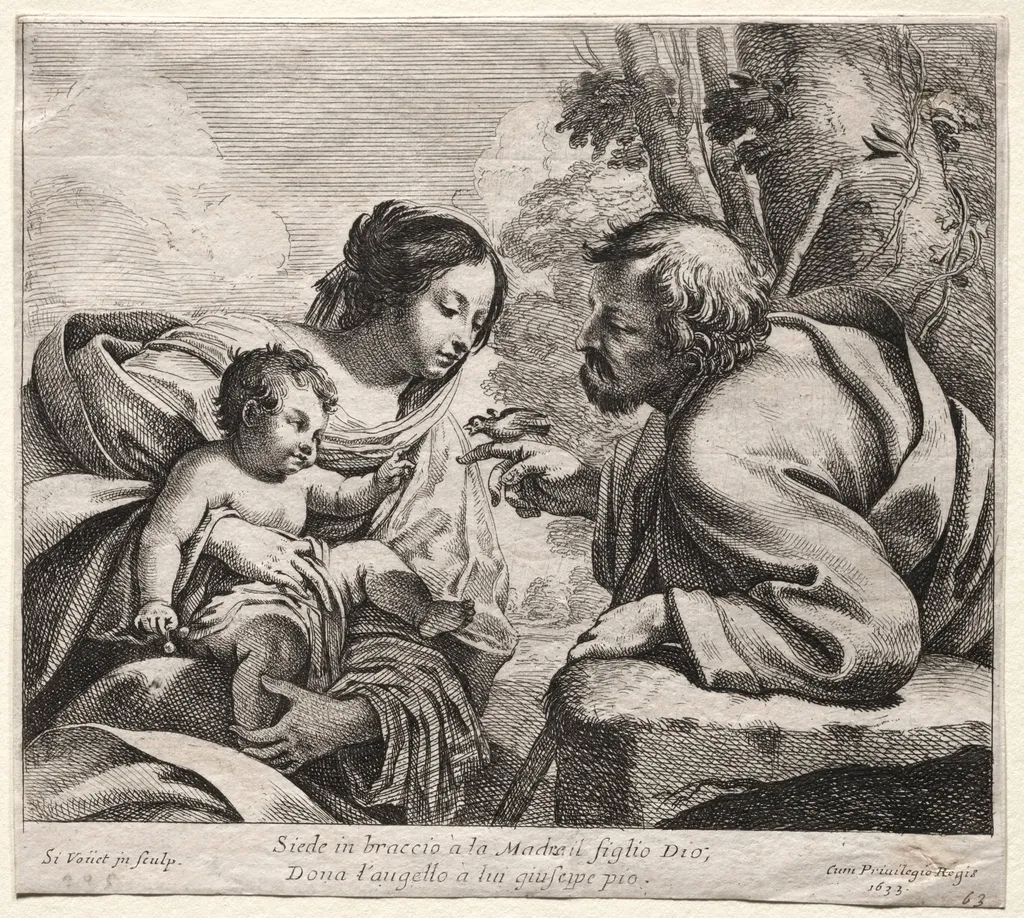
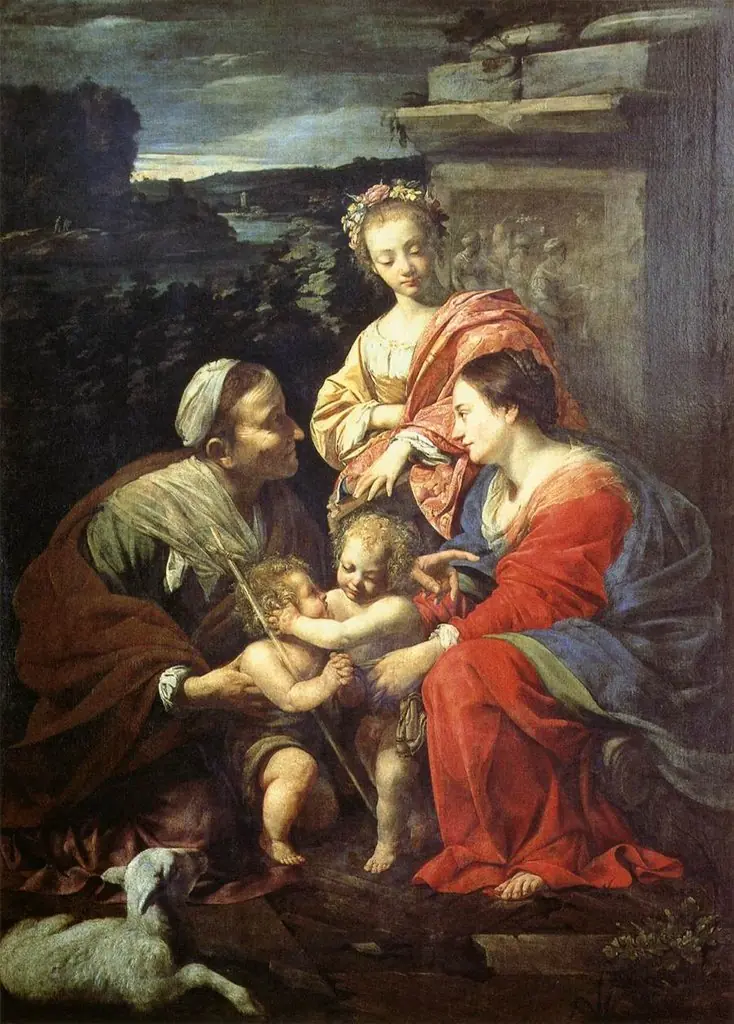
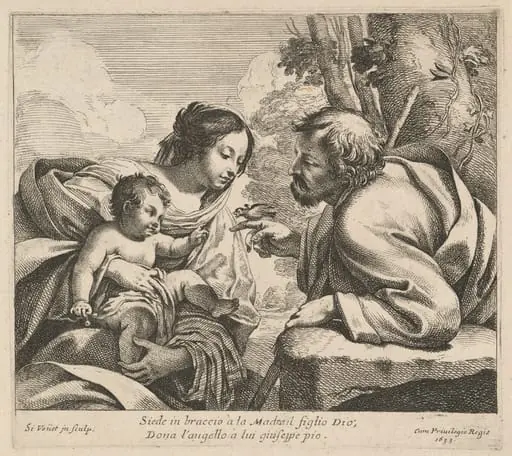
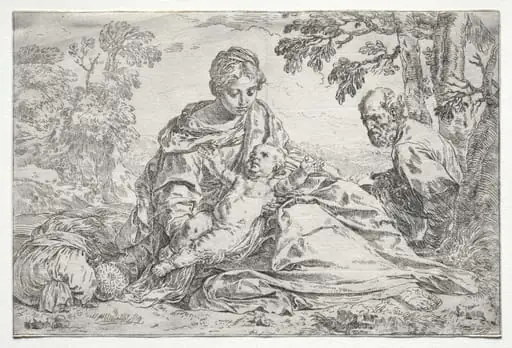
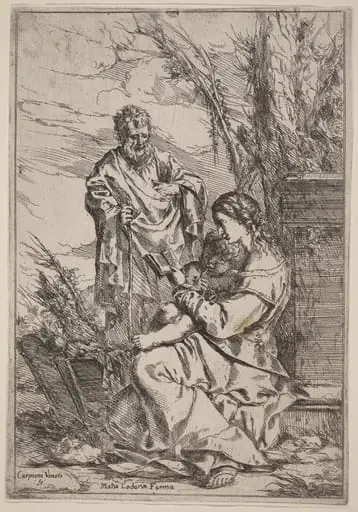
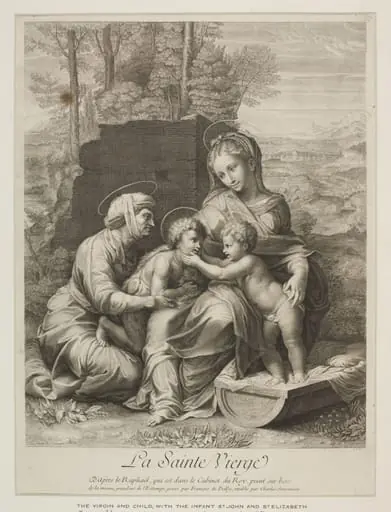
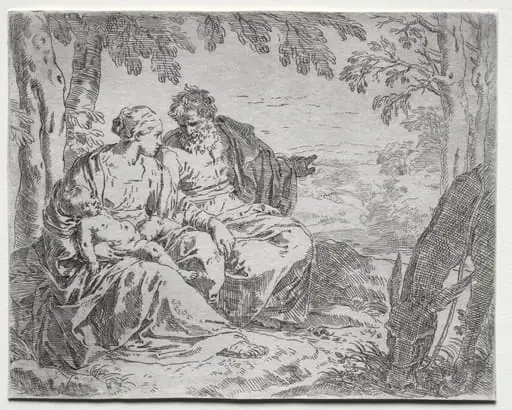
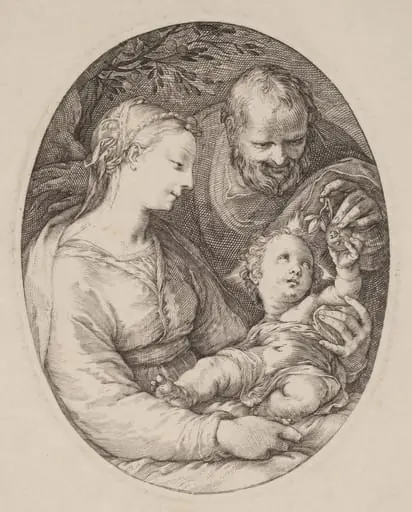
Holy Family is a print by the Baroque artist Simon Vouet. It dates from 1633 and is held in the collection of the Cleveland Museum of Art.
About this work
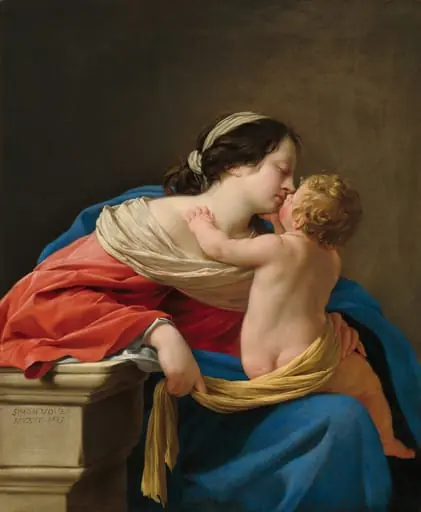
The painting shows a family scene with Mary, Joseph, and the baby Jesus.
It's a quiet moment with the family together.
The artist used warm colors to make the scene feel cozy, and the way the light falls on the family is interesting because it creates deep shadows.
Check out the work of artist Simon Vouet (French, 1590–1649) for more like this.
Overview
The work resides in the collection of the Cleveland Museum of Art as part of its broader representation of early 17th-century religious imagery.
Simon Vouet completed the print known as *Holy Family* in 1633, following his return to France after years of artistic development in Italy. By this period, he held the position of court painter to Louis XIII and was instrumental in shaping the visual language of French art through the adaptation of Italian Baroque principles. The work resides in the collection of the Cleveland Museum of Art as part of its broader representation of early 17th-century religious imagery.
Subject & Meaning
The composition depicts the Virgin Mary, Saint Joseph, and the infant Jesus in an intimate domestic setting. Rather than emphasizing divine grandeur, Vouet focuses on quiet familial tenderness, presenting the sacred figures with human warmth. This approach reflects a broader Counter-Reformation emphasis on accessible, emotionally resonant religious imagery, inviting contemplation through familiarity rather than spectacle.
Technique & Style
Vouet employs chiaroscuro to model forms with soft, directional light that casts deep, naturalistic shadows, enhancing the three-dimensionality of the figures. Warm tones in the garments and surroundings create a sense of enclosure and comfort. His draftsmanship, rooted in Italian Mannerist training, is tempered by a restrained Baroque naturalism, balancing idealized forms with grounded, tactile detail.
History & Provenance
Created during Vouet’s tenure at the French court, the work emerged from a period of active artistic exchange between Rome and Paris. Though originally painted, the version in Cleveland is a print, likely made to disseminate his compositions more widely. Its presence in the museum’s collection reflects early 20th-century American interest in European Old Master prints and the institutional effort to document the transmission of Baroque styles beyond Italy.
Context
In 1630s France, the monarchy sought to align visual culture with Catholic orthodoxy and royal authority. Vouet’s synthesis of Italian Baroque elements with French sensibilities offered a model for religious art that was both spiritually reverent and aesthetically refined. His influence helped shift French painting away from late Mannerist conventions toward a more dynamic, emotionally grounded style.
Legacy
Vouet’s *Holy Family* exemplifies his role as a cultural bridge between Italy and France. While his own reputation waned after his death, his stylistic innovations laid groundwork for later French artists, including Poussin and Le Brun. The print’s survival and preservation underscore its function as a vehicle for disseminating Baroque ideals in a period of evolving artistic identity in northern Europe.
Artist & collection
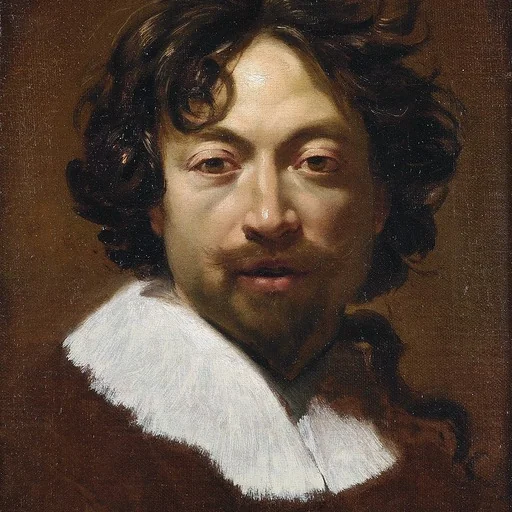
Artist
Simon Vouet (French pronunciation: ; 9 January 1590 – 30 June 1649) was a French painter who studied and rose to prominence in Italy before being summoned by Louis XIII to serve as Premier peintre du Roi in France.