Artwork
Un Ennemi du peuple
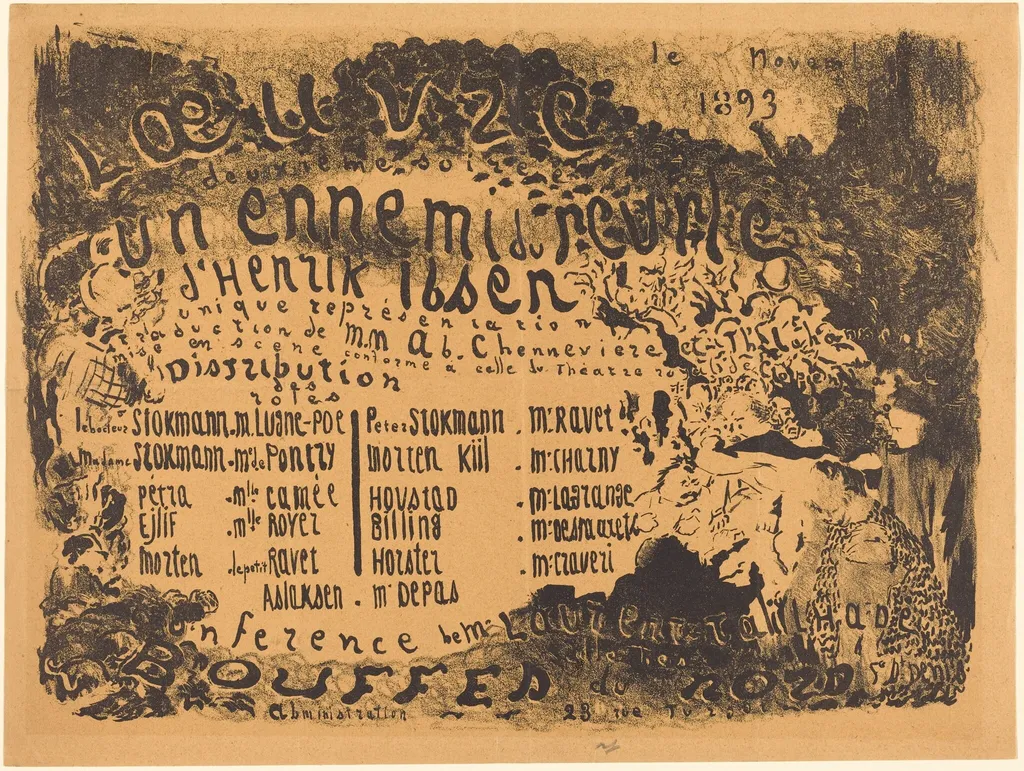
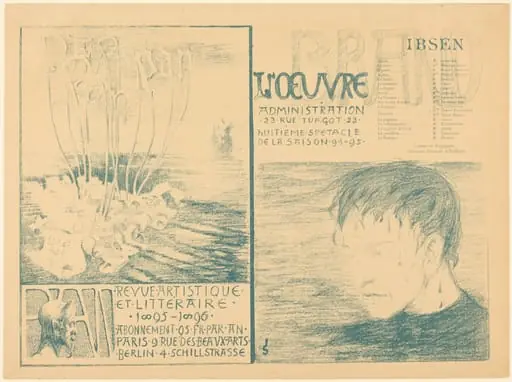
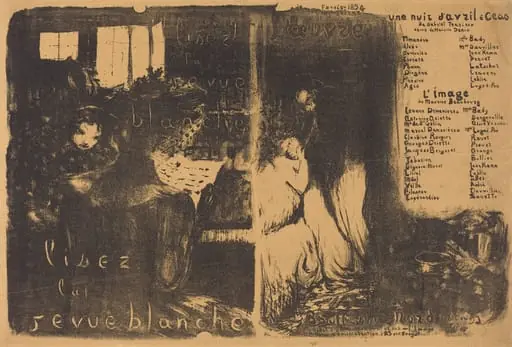
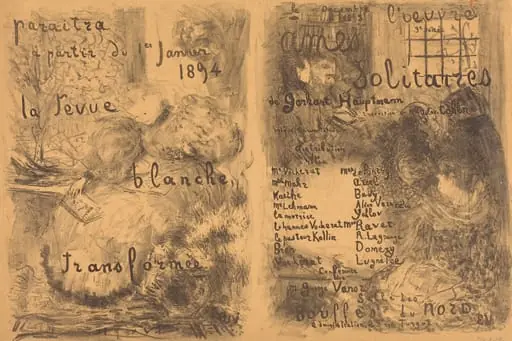
Un Ennemi du peuple is an ink print by the Impressionist artist Édouard Vuillard. It dates from 1893 and is held in the collection of the National Gallery of Art.
About this work
Overview
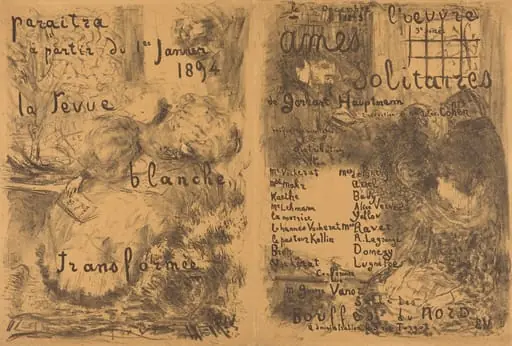
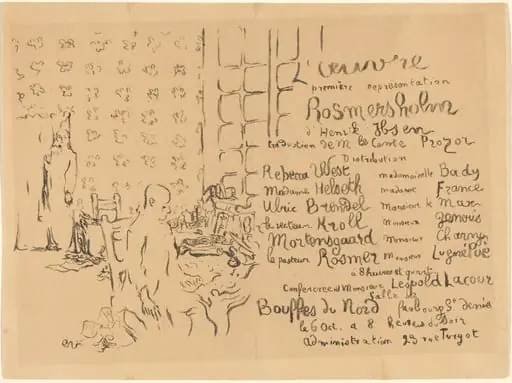
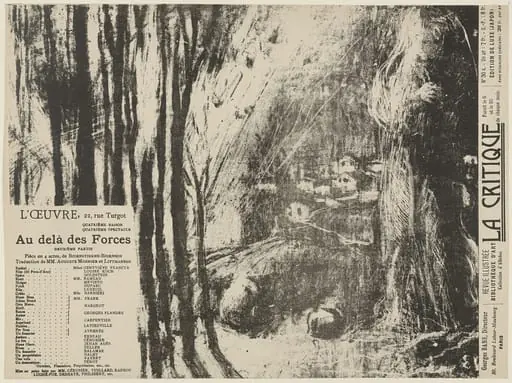
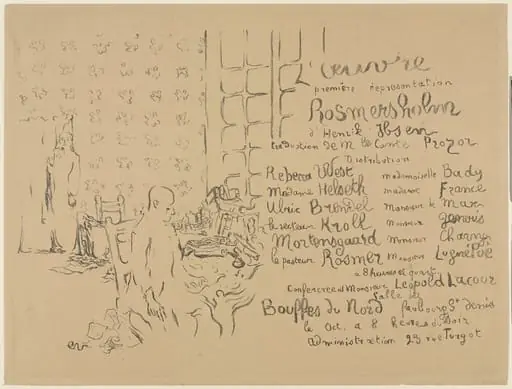
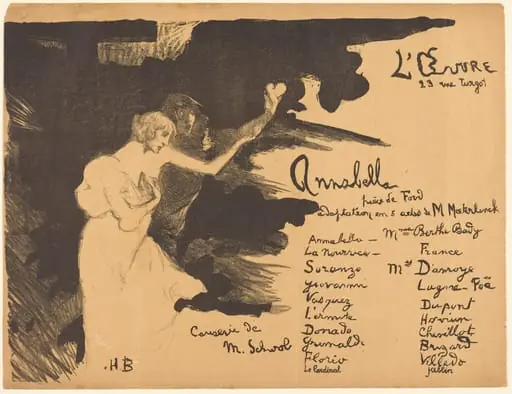
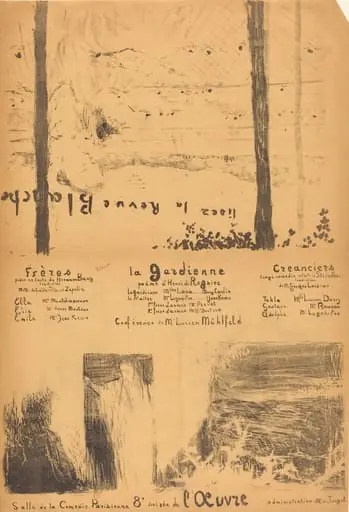
Created in 1893, this lithograph by Jean-Édouard Vuillard is a typographic composition printed in black ink on brown wove paper.
Created in 1893, this lithograph by Jean-Édouard Vuillard is a typographic composition printed in black ink on brown wove paper. It belongs to a phase in his career when he experimented with decorative, flattened forms and non-narrative design, moving away from traditional illustration toward abstracted visual rhythm. The work was produced during his association with Les Nabis, a group interested in integrating art into everyday life.
Subject & Meaning
The title, “Un Ennemi du peuple” (An Enemy of the People), references Henrik Ibsen’s 1882 play about social dissent and moral isolation. Vuillard does not depict a scene from the drama but instead evokes its tension through chaotic typography. The fragmented, overlapping text suggests public outcry, confusion, or the erosion of clear communication — a visual metaphor for societal conflict.
Technique & Style
Vuillard employed lithography to create a dense, hand-drawn texture, using irregular lines and uneven letterforms that mimic spontaneous handwriting. The black ink contrasts with the warm brown paper, enhancing the sense of urgency. Flat, unmodulated areas of tone and the absence of perspective reflect influences from Japanese woodcuts and the Nabis’ emphasis on surface pattern over illusionistic depth.
History & Provenance
Made in 1893, the print was likely intended as a poster or program for a theatrical performance, though no record of an actual staging exists. It remained within Vuillard’s personal circle until later acquisition by institutions. Its rarity and experimental nature distinguish it from his more familiar interior scenes, marking a brief but significant departure into graphic design.
Context
During the early 1890s, Parisian artists increasingly explored the boundaries between fine art and commercial graphics. Vuillard, alongside other Nabis, treated posters and prints as legitimate artistic expressions. This work aligns with contemporaneous efforts by Toulouse-Lautrec and Steinlen to transform typography into emotional and structural elements, rejecting academic conventions in favor of expressive immediacy.
Legacy
Though not widely reproduced during Vuillard’s lifetime, this lithograph is now recognized as an early example of modernist graphic experimentation. Its rejection of legibility in favor of visual rhythm anticipated later avant-garde movements, including Dada and Expressionist typography. It remains a key document of how fine artists reimagined print media as a space for aesthetic innovation.
Artist & collection

Artist
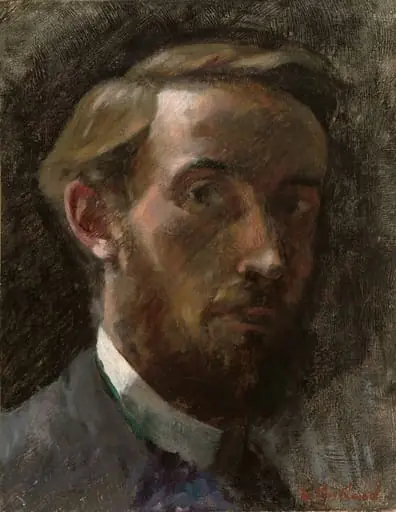
Jean-Édouard Vuillard (French: ; 11 November 1868 – 21 June 1940) was a French painter, decorative artist, and printmaker.