Artwork
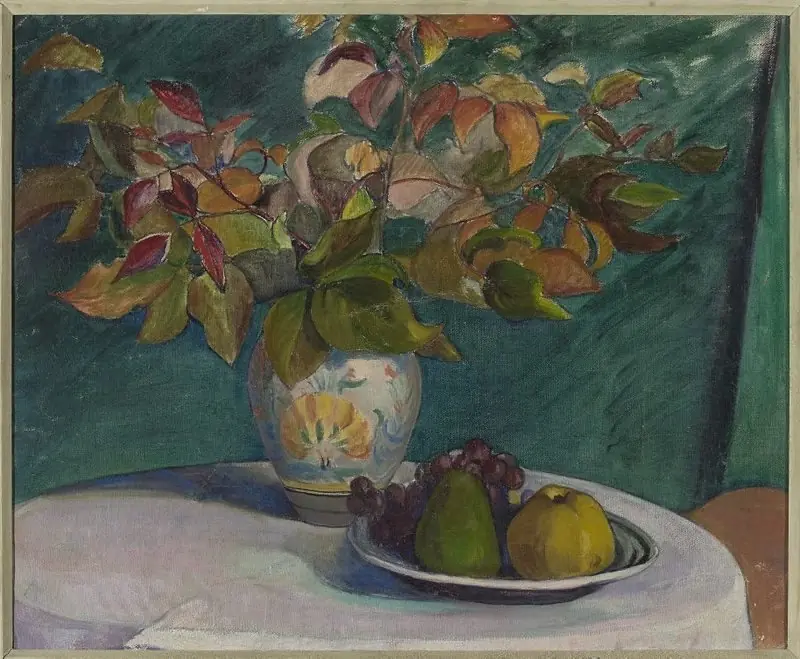
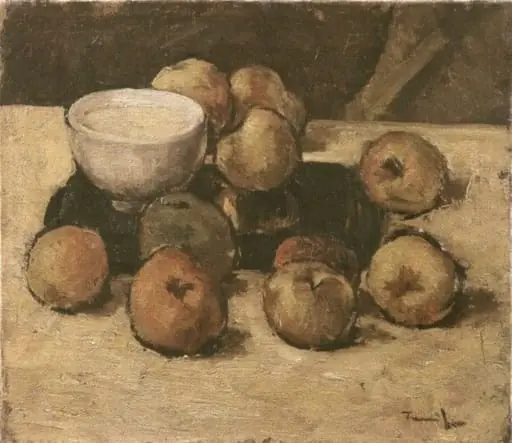
Fruits and bowl
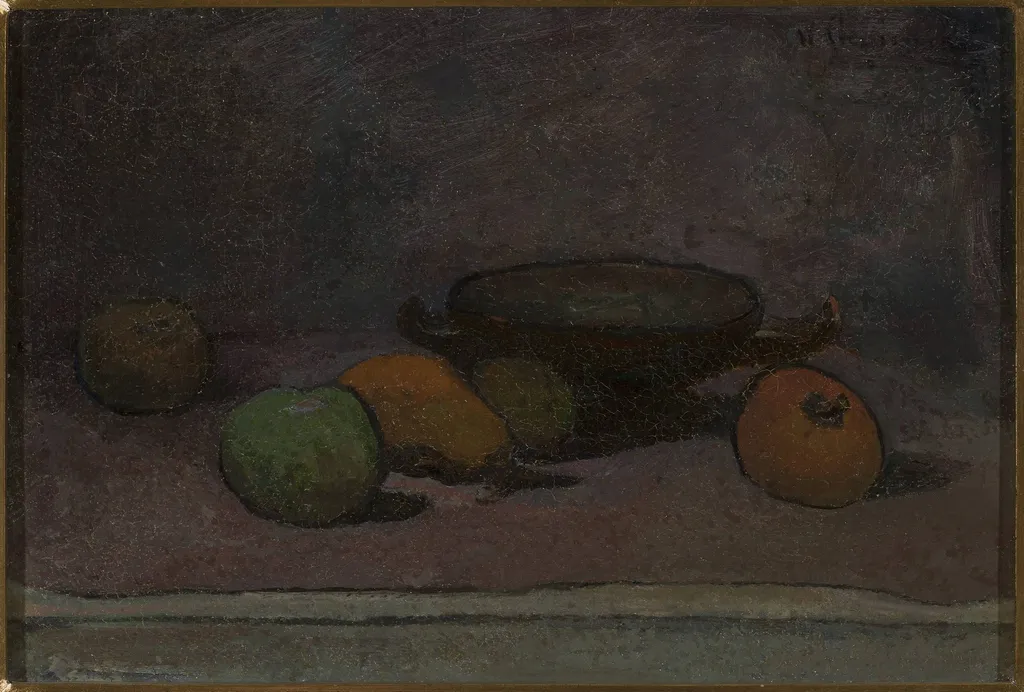
Fruits and bowl is an oil painting by the Post-Impressionist artist Władysław Ślewiński. It dates from 1895 and is held in the collection of the National Museum in Warsaw.
About this work
Overview
Painted in 1895 by Polish artist Władysław Ślewiński, this oil on canvas still life presents a modest arrangement of fruit and a ceramic bowl.
Painted in 1895 by Polish artist Władysław Ślewiński, this oil on canvas still life presents a modest arrangement of fruit and a ceramic bowl. Ślewiński, trained under Paul Gauguin and active in the Young Poland movement, infused the composition with the quiet intensity characteristic of Post-Impressionist still lifes. The work is part of the National Museum in Warsaw’s permanent collection, reflecting its significance in early modern Polish art.
Subject & Meaning
The painting features a dark, unadorned bowl holding a few loosely arranged fruits—an apple, a pear, and a rounded citrus or stone fruit. The objects are presented without ornament or narrative, emphasizing their physical presence over symbolic meaning. The casual placement suggests a momentary pause, inviting contemplation of ordinary things rather than grand themes.
Technique & Style
Ślewiński employed thick, deliberate brushwork and strong contrasts of light and shadow to model the forms. The dark background recedes sharply, enhancing the volume of the bowl and fruit through chiaroscuro. Color is restrained—earthy tones dominate—with subtle variations in hue and value to suggest texture and surface. The style reflects Gauguin’s influence, favoring simplified shapes and emotional resonance over naturalistic detail.
History & Provenance
Created during Ślewiński’s mature period, the painting emerged from his time in Brittany and Poland, where he synthesized Post-Impressionist principles with local artistic concerns. It entered the National Museum in Warsaw’s collection in the early 20th century, likely through direct acquisition or donation, securing its place in Poland’s national art heritage.
Context
In late 19th-century Poland, artists like Ślewiński sought to define a modern national aesthetic amid foreign domination. While influenced by French Post-Impressionism, he adapted its forms to express introspective, rural sensibilities. This still life, devoid of political symbolism, aligns with Young Poland’s broader turn toward personal, spiritual, and aesthetic renewal.
Legacy
Though not widely exhibited internationally, the painting remains a key example of Polish Post-Impressionism. It illustrates how Ślewiński translated Gauguin’s lessons into a quieter, more contemplative idiom suited to his cultural context. Its enduring presence in the National Museum underscores its role in shaping the trajectory of modern Polish painting.
Artist & collection
Artist
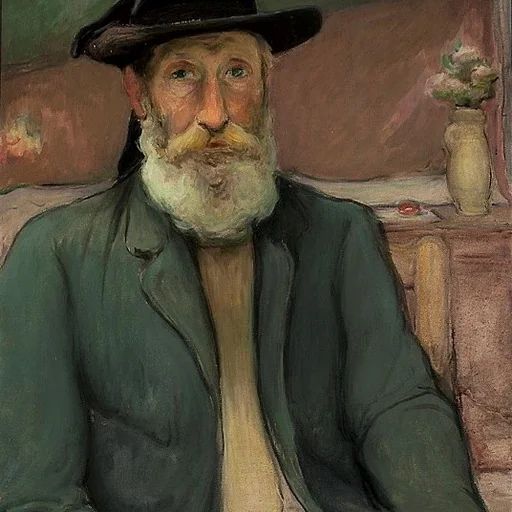
Władysław Ślewiński (1 June 1856 – 24 March 1918) was a Polish painter. He was one of Gauguin's students and a leading artist of the Young Poland movement.

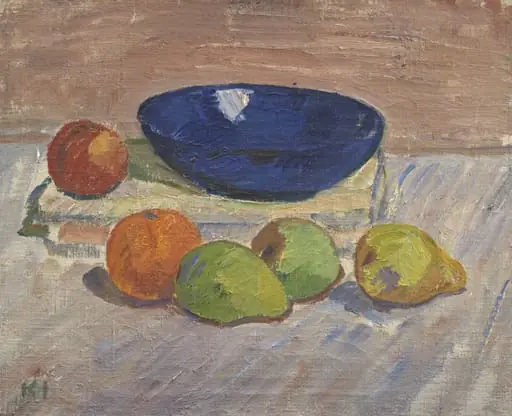 Still Life with Blue Bowl and Fruits
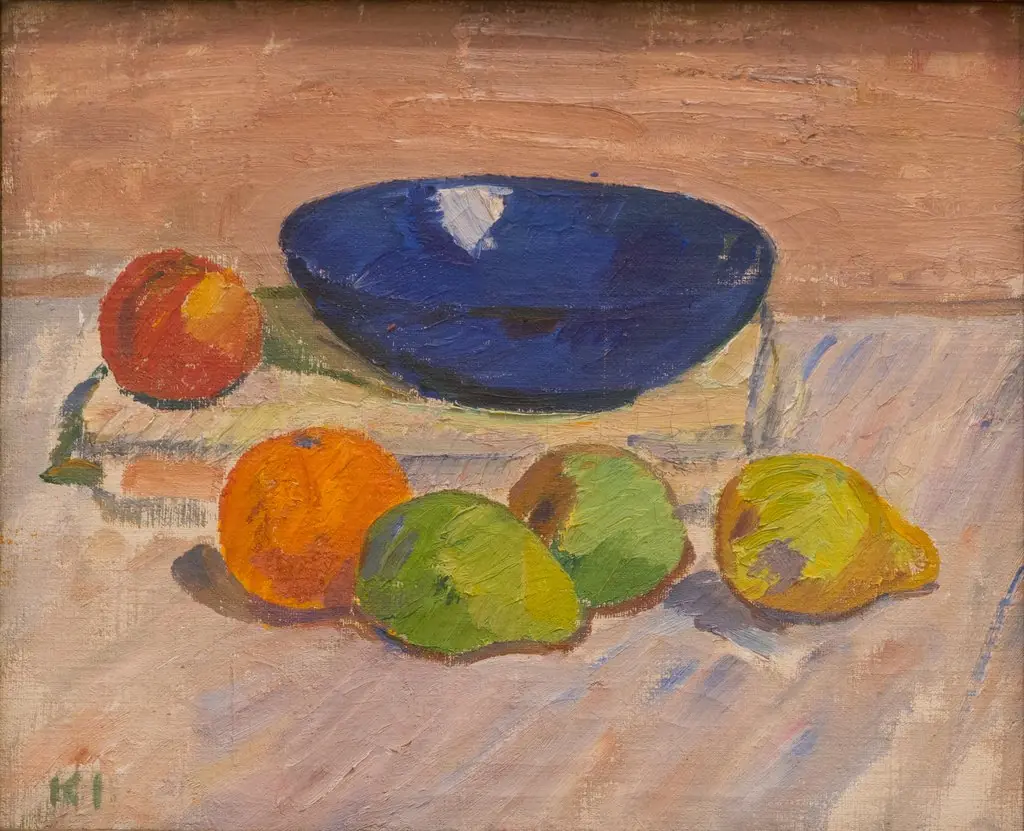 Still Life with Blue Bowl and Fruits
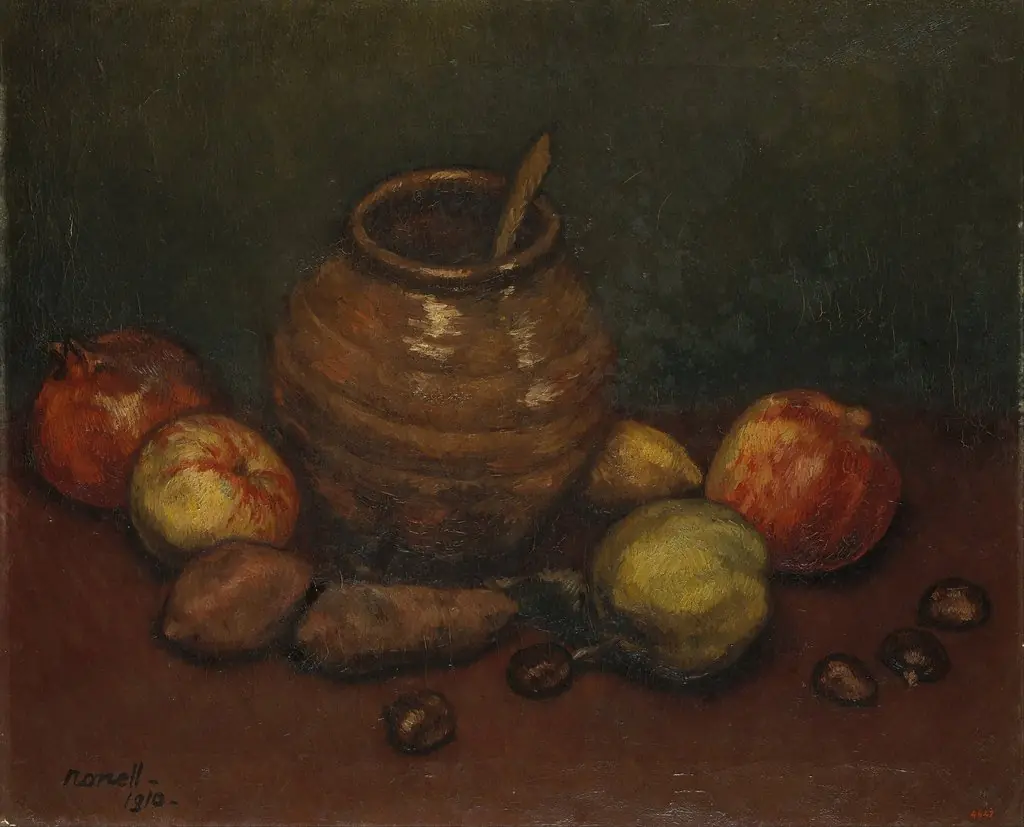 Still Life
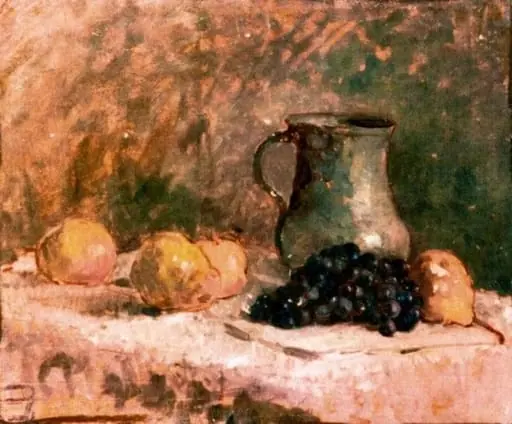 Natură statică cu fructe
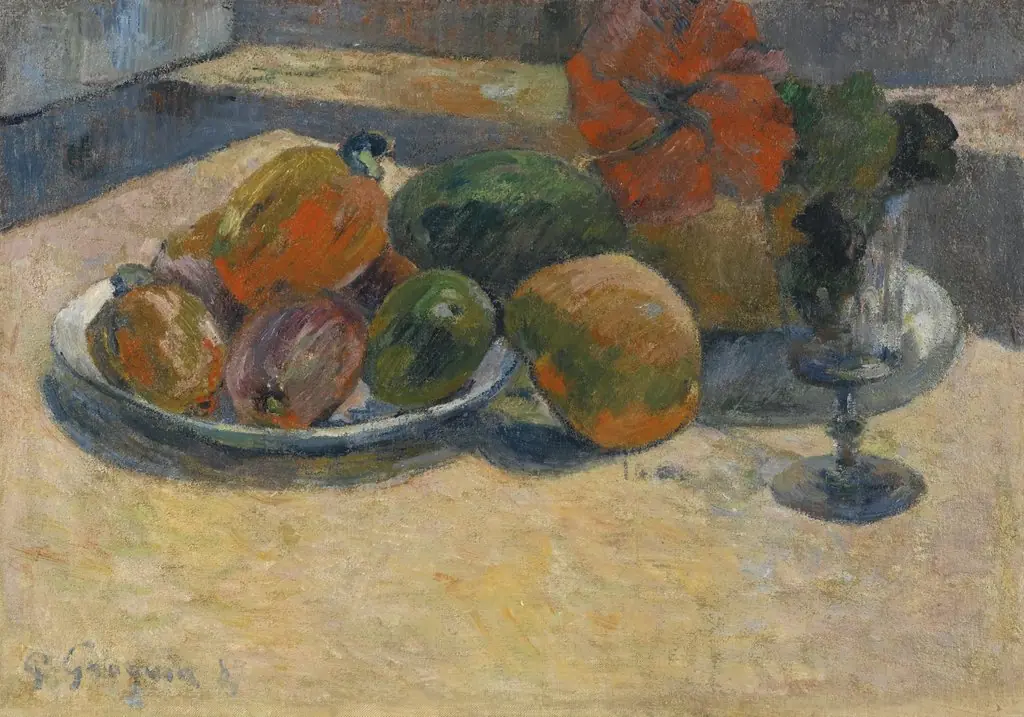 Still Life with Mangoes and a Hibiscus Flower
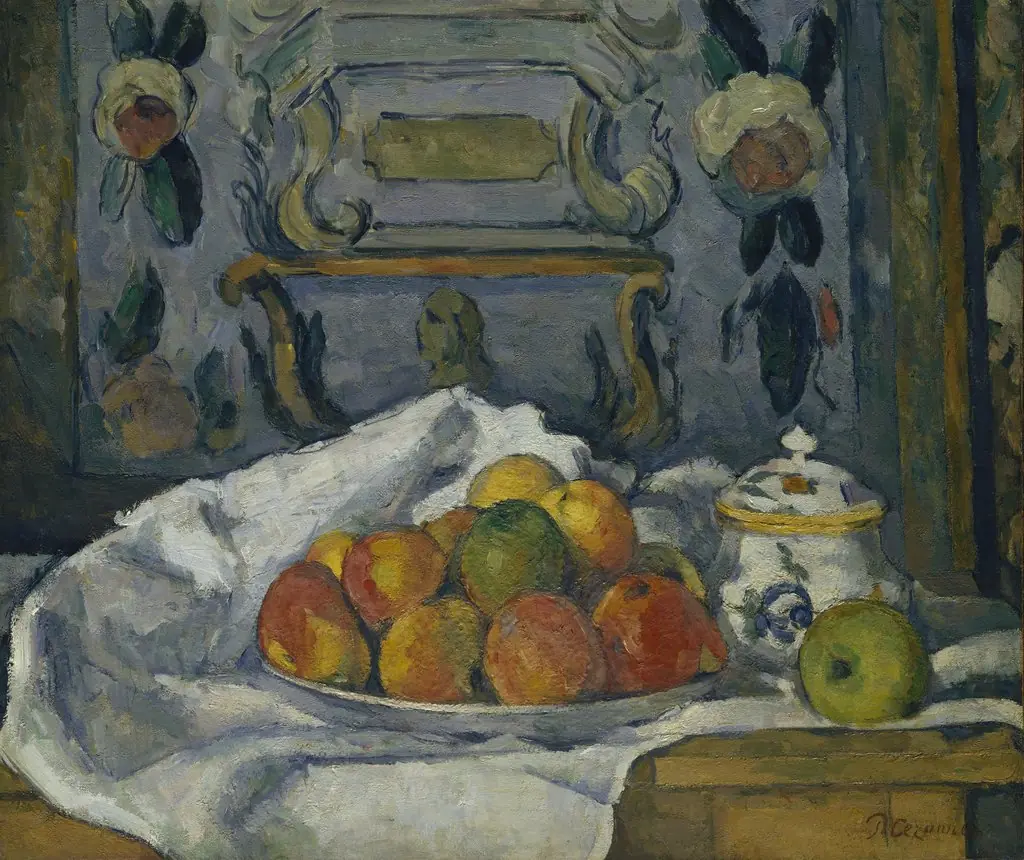 Dish of Apples
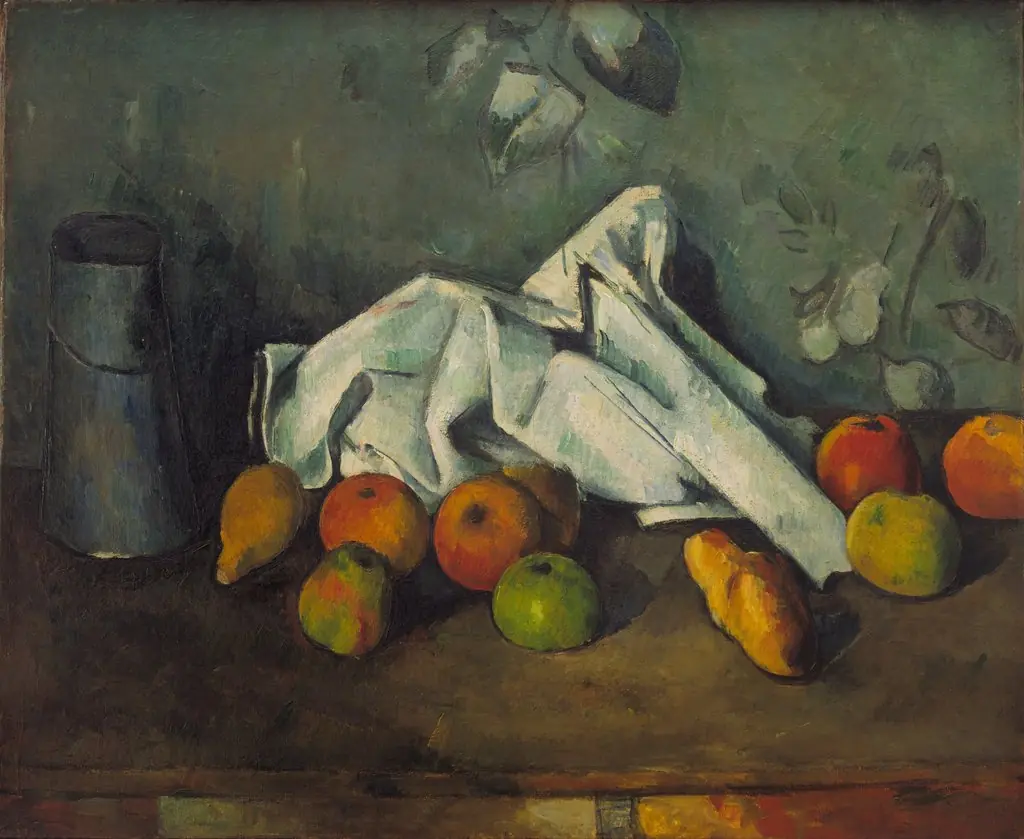 Milk Can and Apples
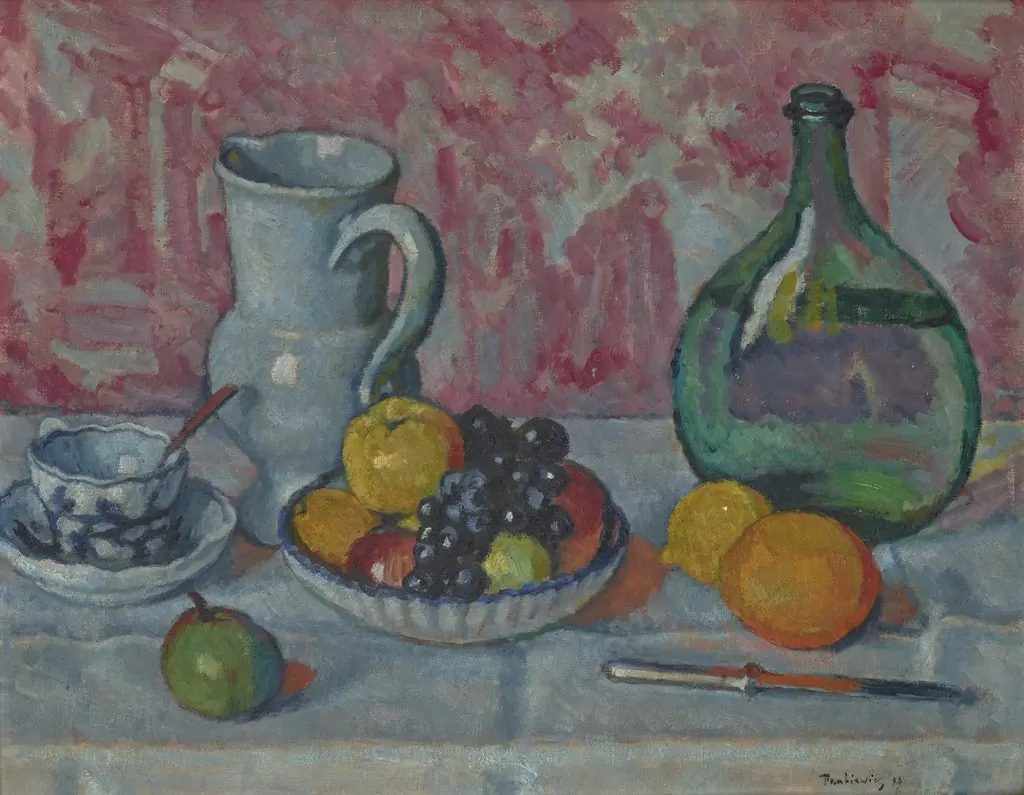 Still Life with a Knife
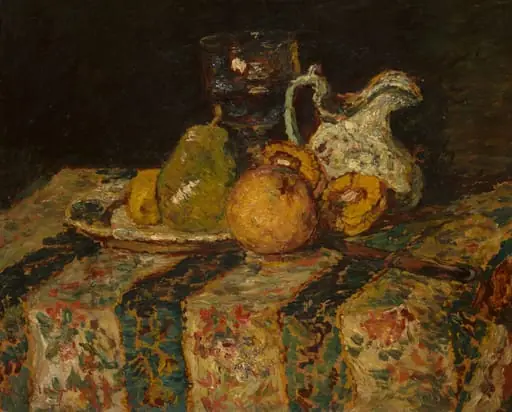 Still Life with Fruit and Wine Jug
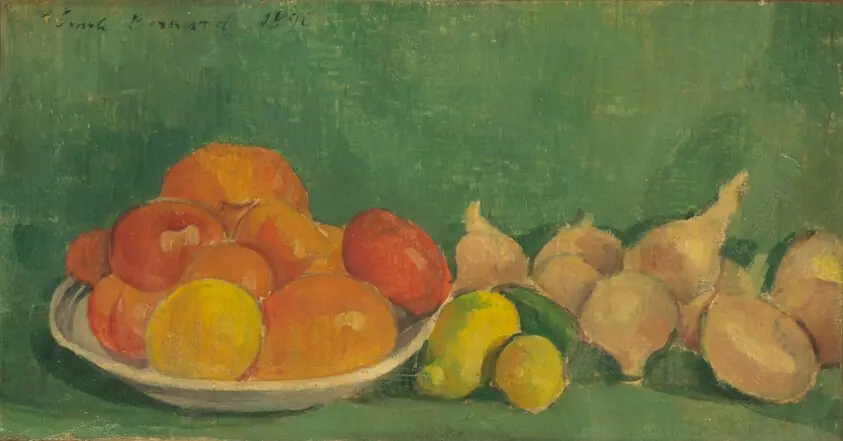 Still Life with Fruit
 Still Life with Fruit
 Portret de muncitoare