Artwork
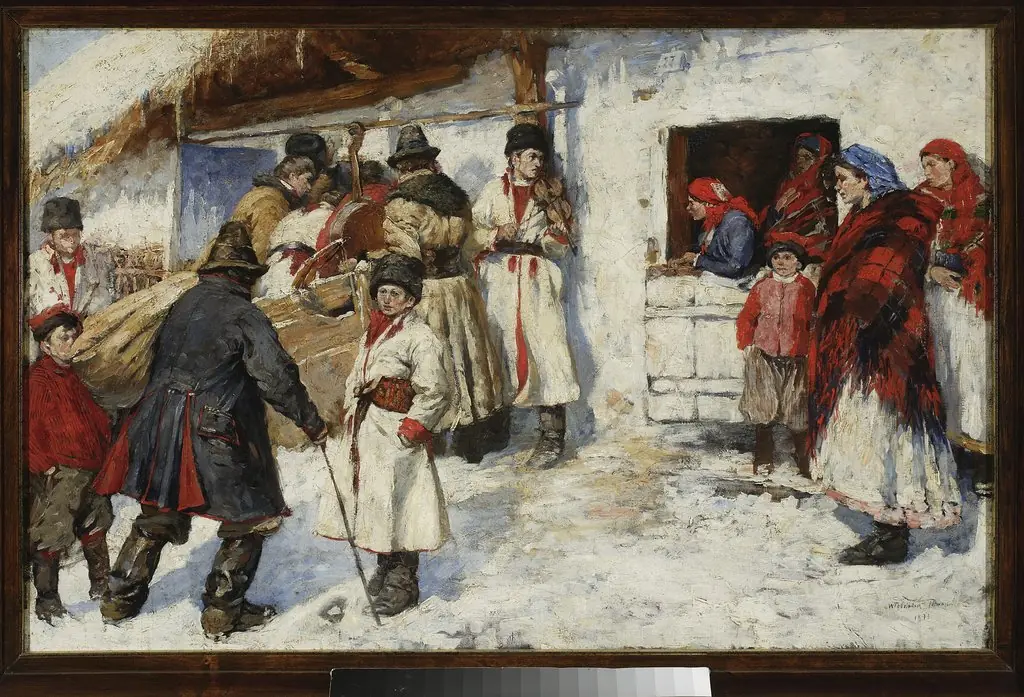
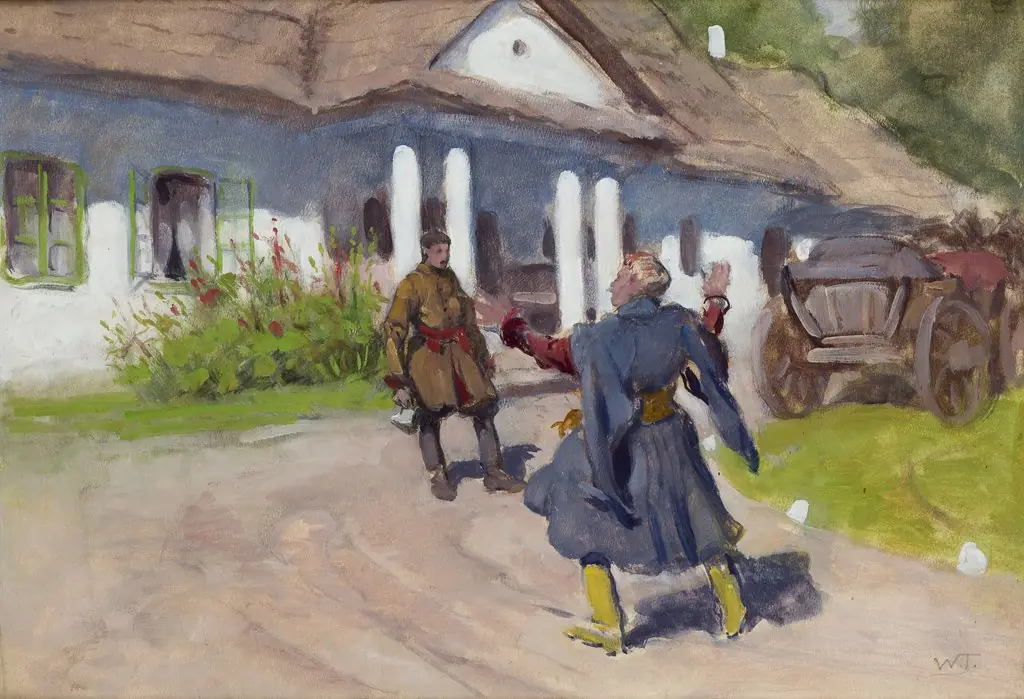
Folk scene – king among peasants
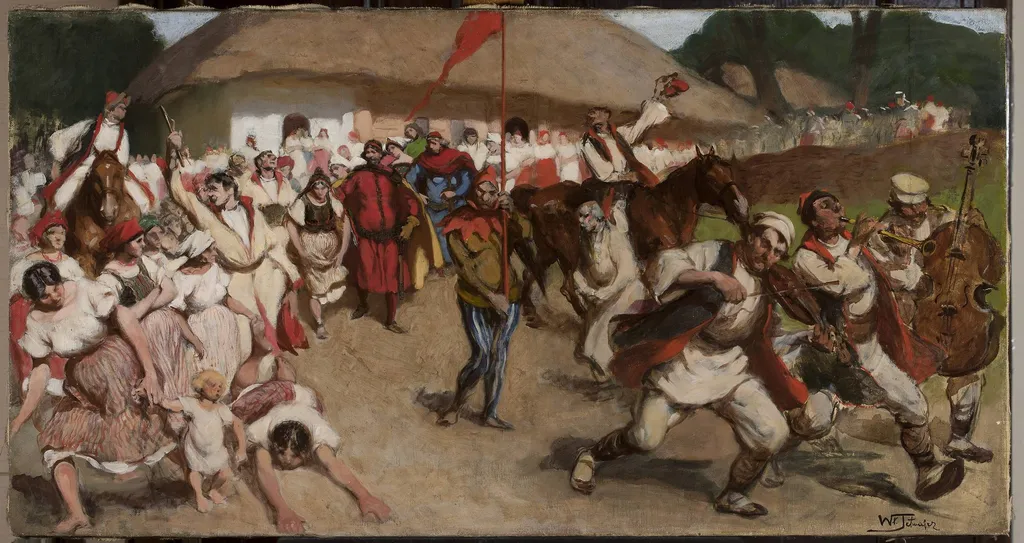
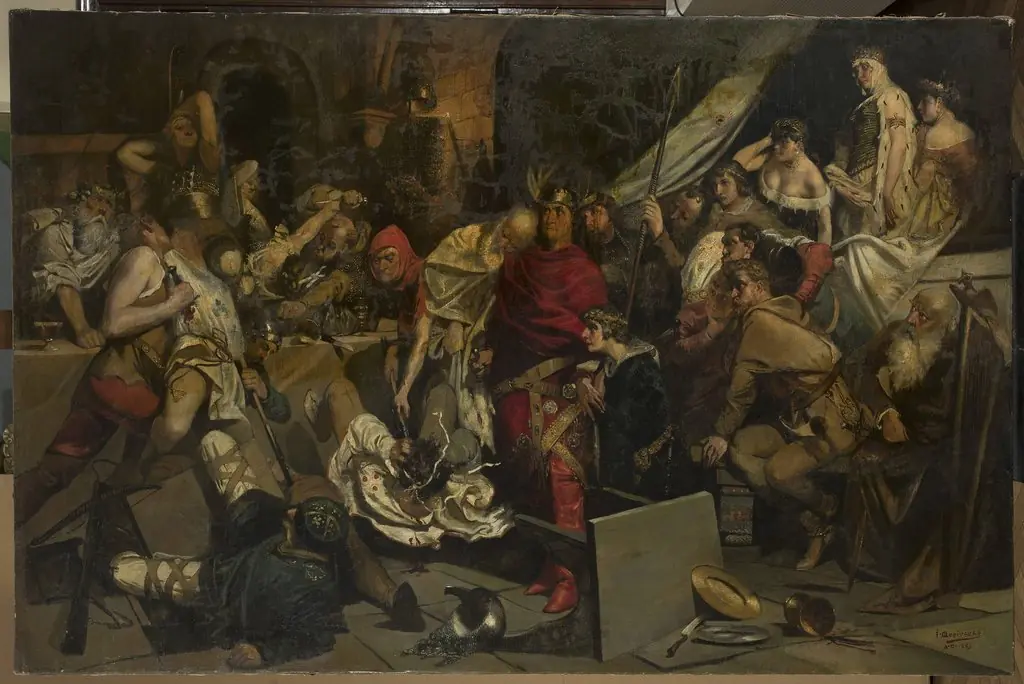
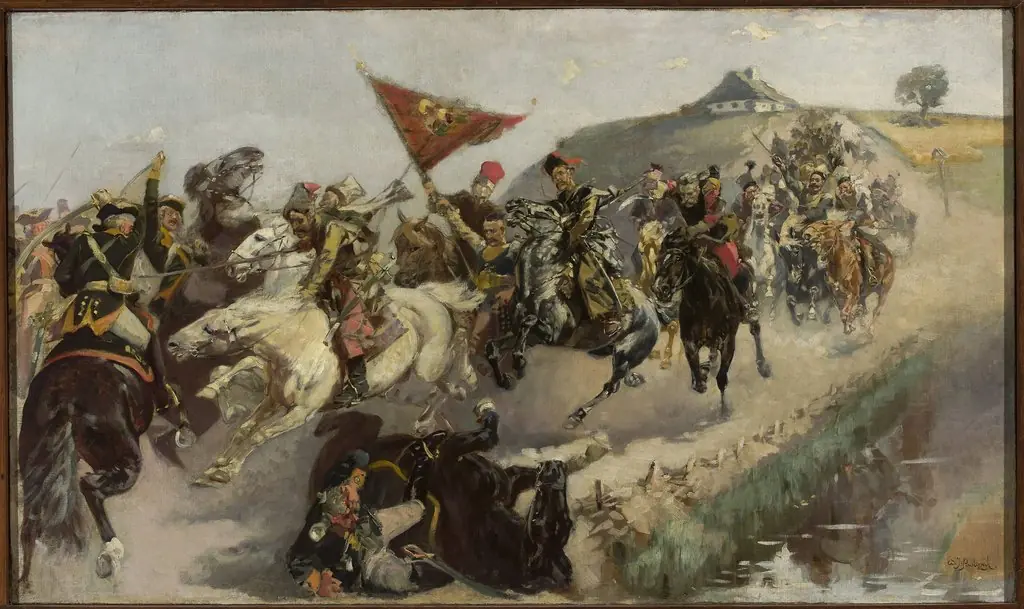
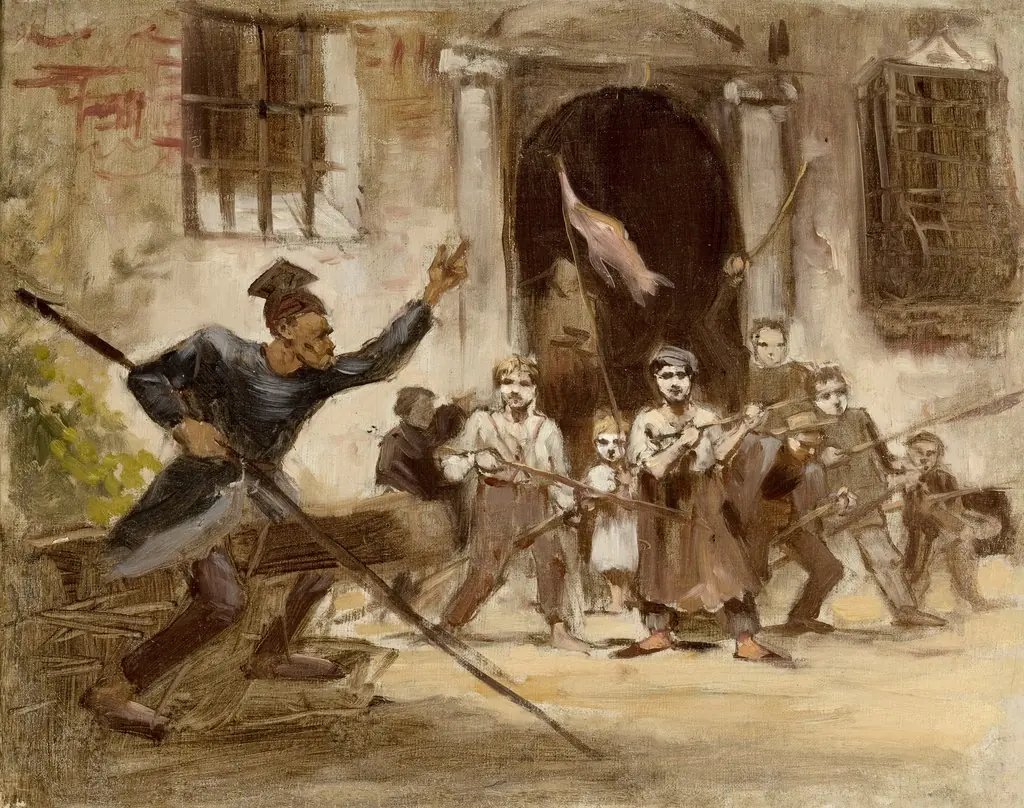
Folk scene – king among peasants is an oil painting by the Post-Impressionist artist Włodzimierz Tetmajer. It dates from 1900 and is held in the collection of the National Museum in Warsaw.
About this work
Overview
Tetmajer, a Kraków-based artist born in 1861, was part of a broader cultural movement seeking to document regional traditions.
Painted in 1900 by Włodzimierz Tetmajer, this oil-on-canvas work captures a moment in rural Polish life. Tetmajer, a Kraków-based artist born in 1861, was part of a broader cultural movement seeking to document regional traditions. The painting belongs to collections held by Poland’s National Museums in Warsaw and Kraków, reflecting its recognized place in late 19th- to early 20th-century Polish art.
Subject & Meaning
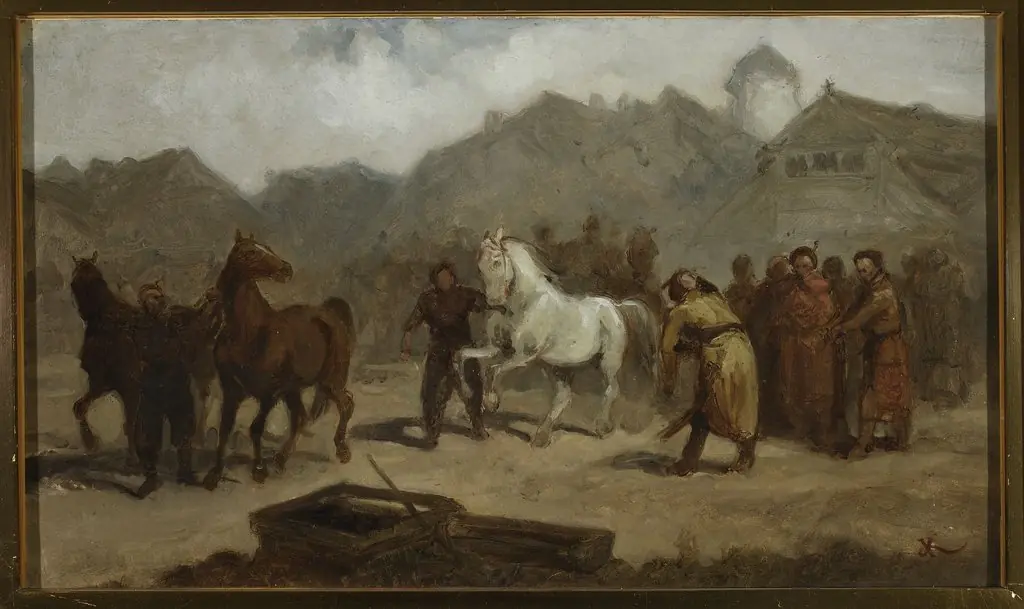
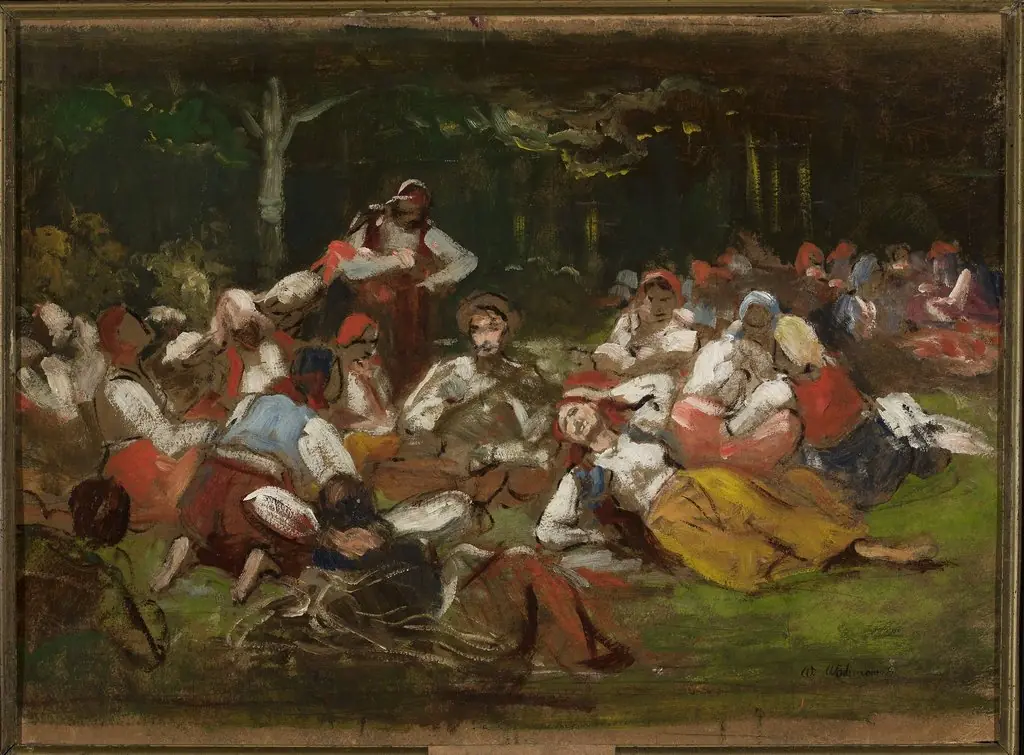
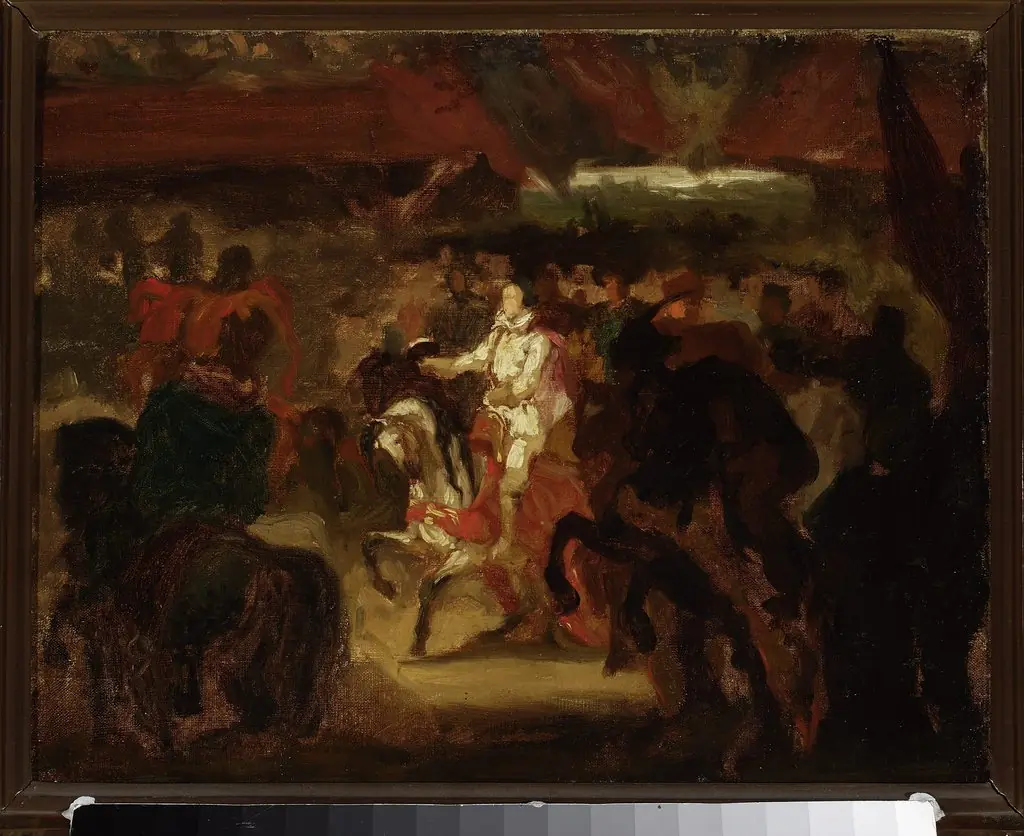
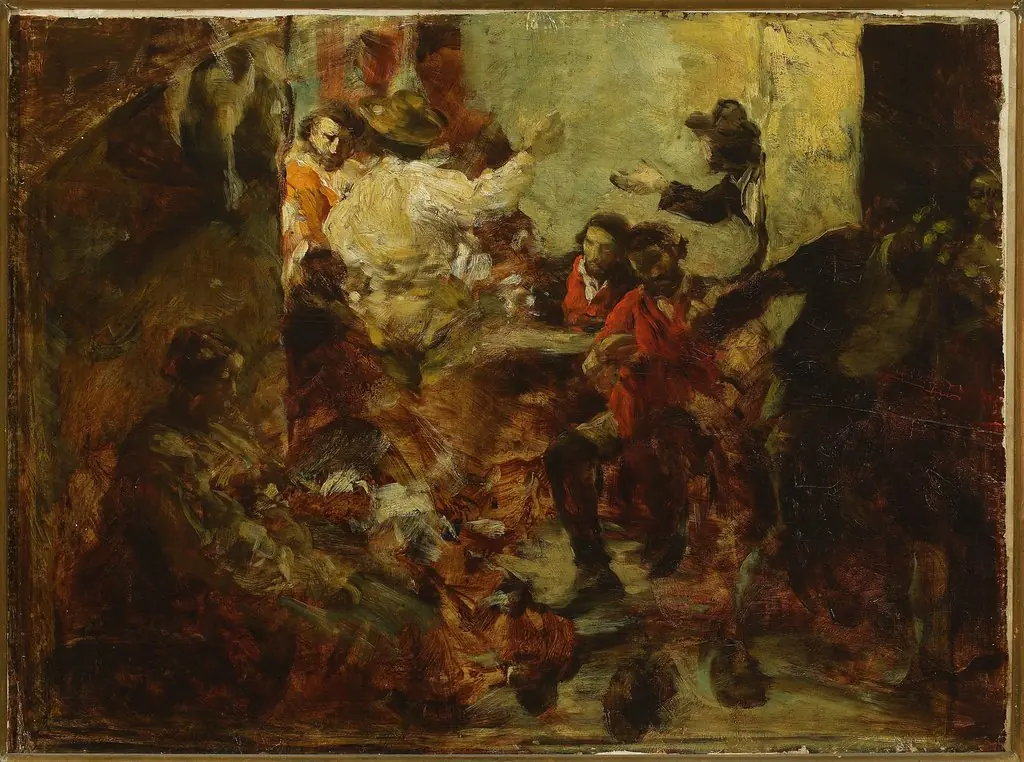
The scene portrays a peasant gathering, centered on a figure dressed in ornate clothing, possibly a local ceremonial leader or mock king. The composition avoids idealization, presenting figures in ordinary postures amid modest surroundings. The title suggests a folkloric hierarchy, highlighting how rural communities preserved symbolic roles through seasonal or communal rituals, grounded in local custom rather than political authority.
Technique & Style
Tetmajer employed thick, deliberate brushwork and muted earth tones, aligning with Post-Impressionist tendencies to prioritize emotional texture over optical realism. Forms are simplified, with attention to the weight of fabric and the solidity of figures. Light falls evenly, avoiding dramatic contrasts, reinforcing the quiet dignity of the moment rather than theatricality.
History & Provenance
Created during a period of heightened interest in Polish folk identity under foreign partition, the painting was acquired early by state institutions. It entered the National Museum in Warsaw and later the Kraków branch, where it remained in public view. Its preservation reflects institutional efforts to safeguard cultural heritage amid political instability.
Context
Tetmajer worked alongside writers and artists who sought to elevate peasant life as a source of national character. This painting emerged alongside ethnographic studies and folk revivals across Central Europe, responding to urbanization and cultural erosion. It does not romanticize poverty but presents rural customs as lived, enduring practices.
Legacy
The work remains a reference point in Polish art history for its unembellished portrayal of rural society. While not widely exhibited abroad, it is studied for its role in shaping national visual identity during a time of cultural redefinition. Later artists drew from its restrained tone and focus on everyday ritual.
Artist & collection
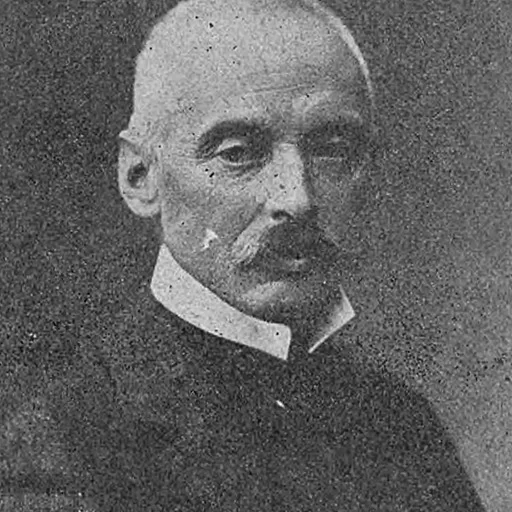
Artist
Włodzimierz Tetmajer (December 31, 1861 in Harklowa – December 26, 1923 in Kraków) was a Polish painter with works in collections of the National Museum in Warsaw and Kraków.