Artwork
Scene from the Spanish Inquisition
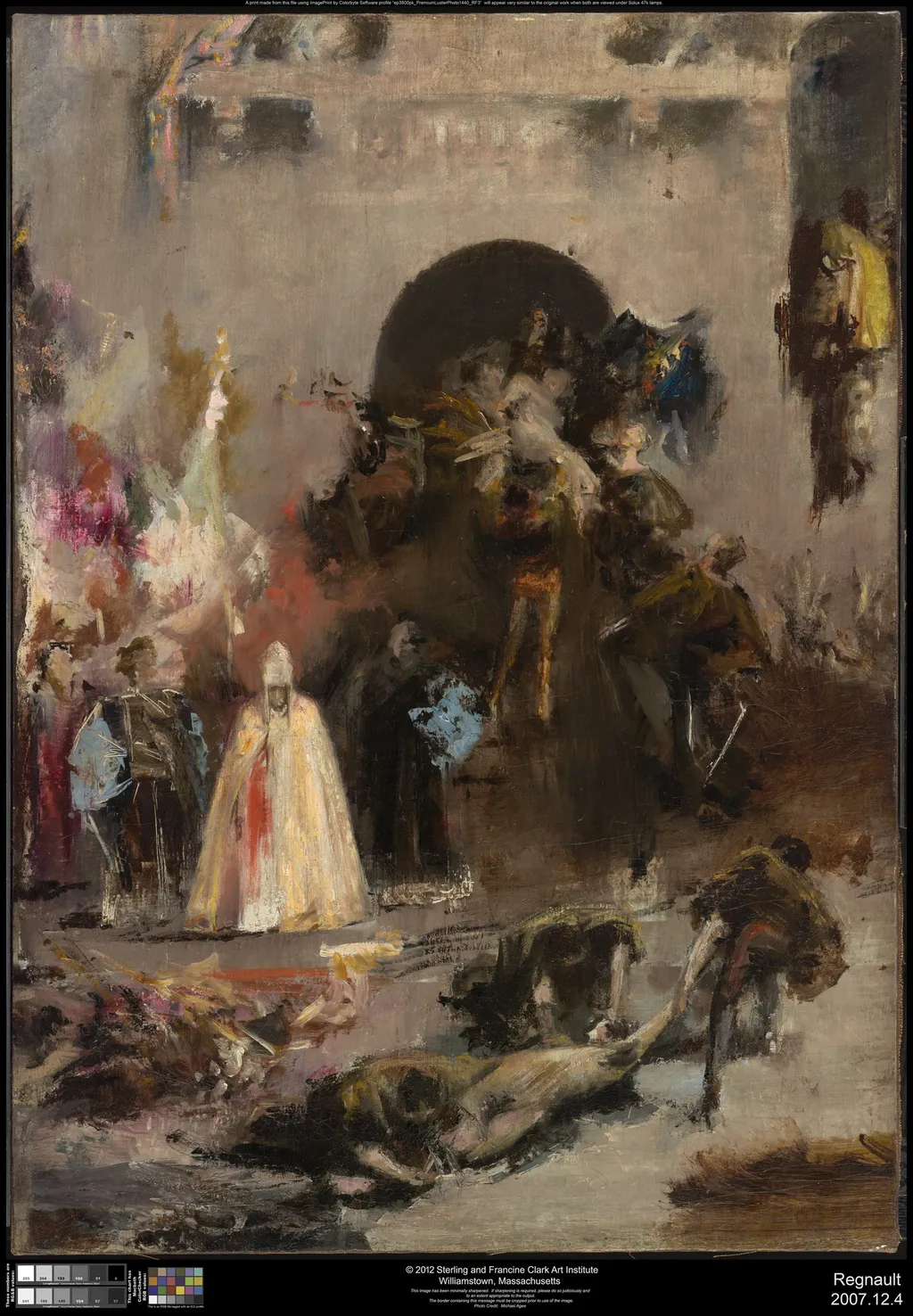
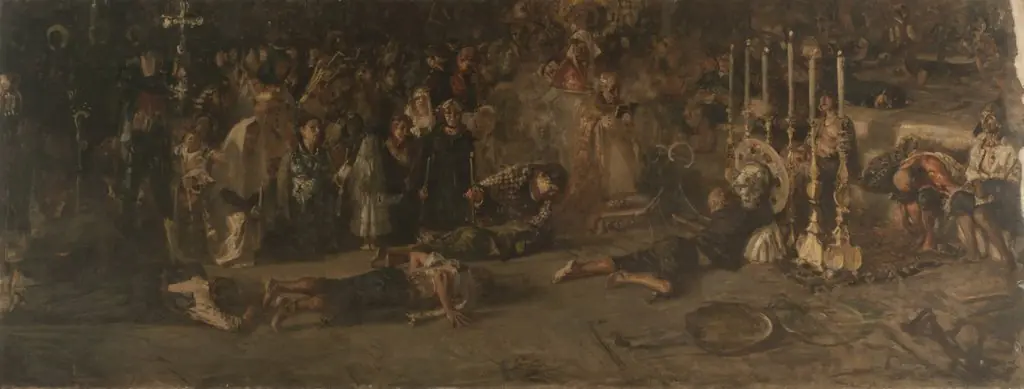
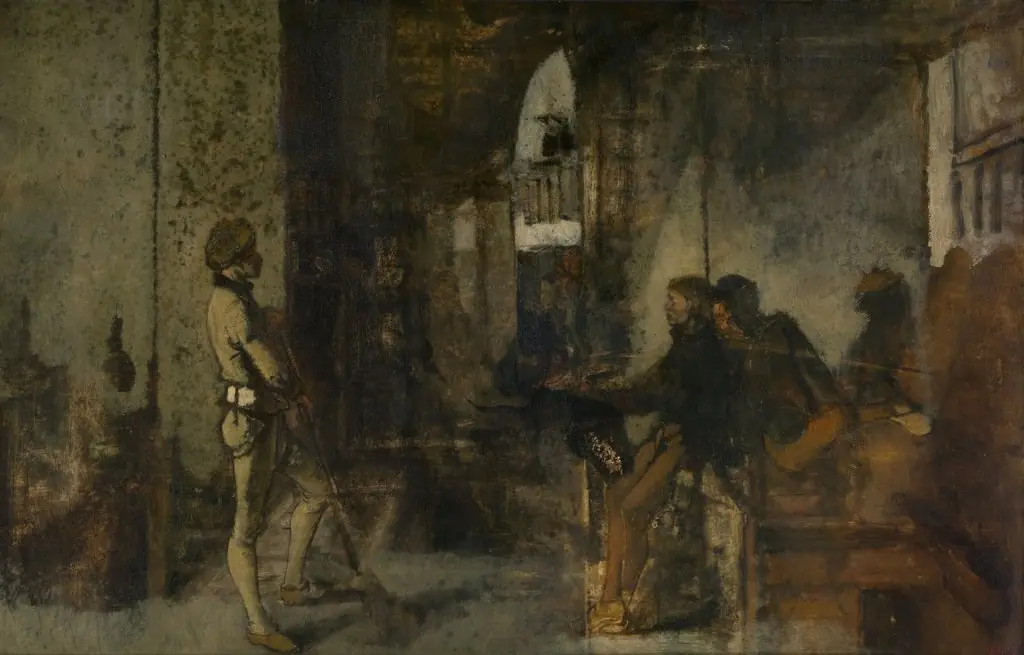
Scene from the Spanish Inquisition is an oil painting by the Orientalist artist Henri Regnault. It dates from 1869 and is held in the collection of the Clark Art Institute.
About this work
Overview
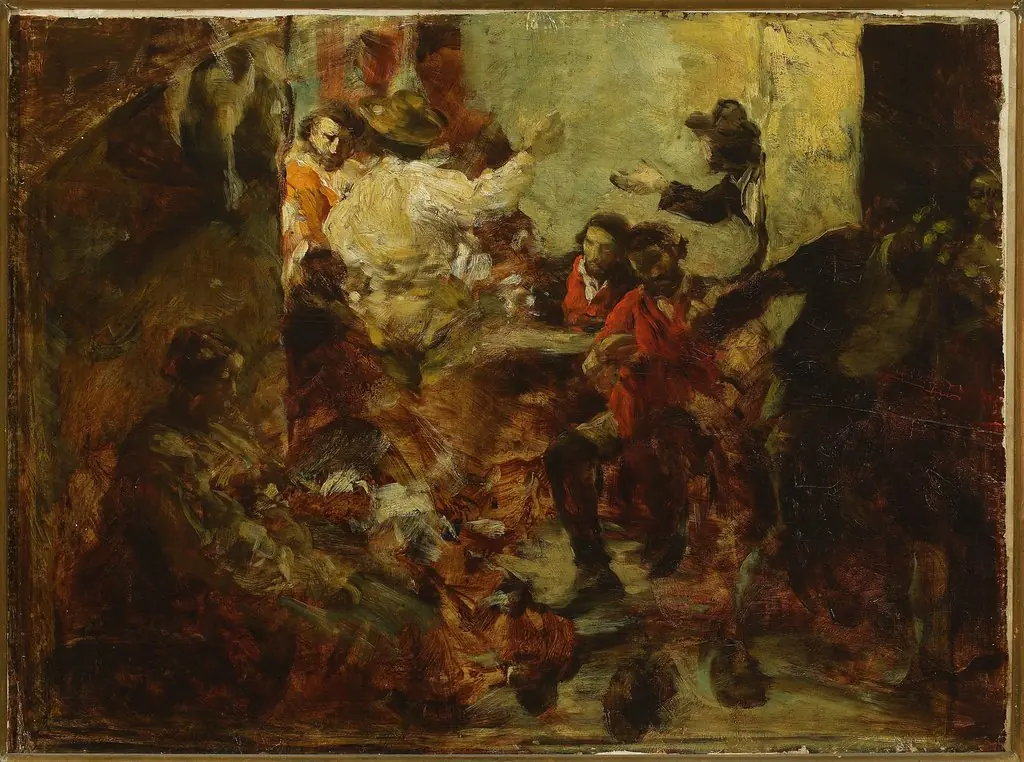
Scene from the Spanish Inquisition, painted by Henri Regnault in 1869, is an oil painting housed at the Clark Art Institute. The work depicts a tumultuous scene of distress.
Subject & Meaning
The painting portrays a chaotic moment within the Spanish Inquisition, emphasizing the suffering and turmoil of the figures involved. A central figure in white attire contrasts with others in darker clothing, potentially symbolizing the opposition between accused and inquisitors.
Technique & Style
Regnault employed a muted color palette dominated by browns and grays, setting the somber tone. The strategic use of chiaroscuro intensifies the dramatic and tense atmosphere, drawing focus to key elements within the dimly lit, stone-walled space.
History & Provenance
Created in 1869, the painting is part of the Clark Art Institute's collection. Specific details about its creation context or previous ownership are not provided.
Context
While the exact historical event depicted is unspecified, the work reflects 19th-century artistic interest in dramatizing historical and religious conflicts, using the Spanish Inquisition as a subject for exploring themes of oppression and suffering.
Legacy
The painting's impact and influence on subsequent art or historical discourse are not detailed in the available information, focusing instead on its descriptive and technical aspects.
Artist & collection
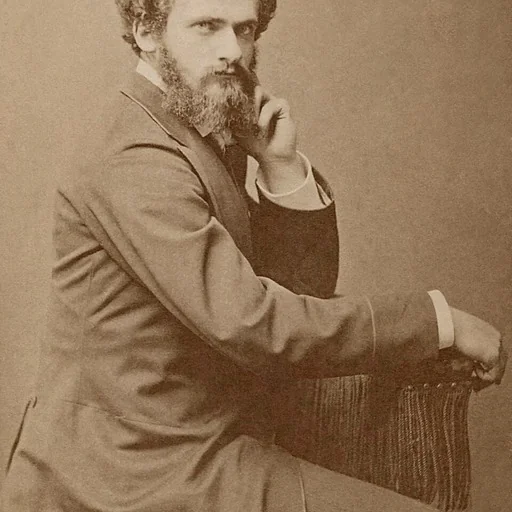
Artist
Born in Paris on October 31, 1843, Henri-Georges-Alexandre Regnault was the son of Henri Victor Regnault, the celebrated chemist and professor at the Collège de France.