Artwork
Bloody feast of Count Gero
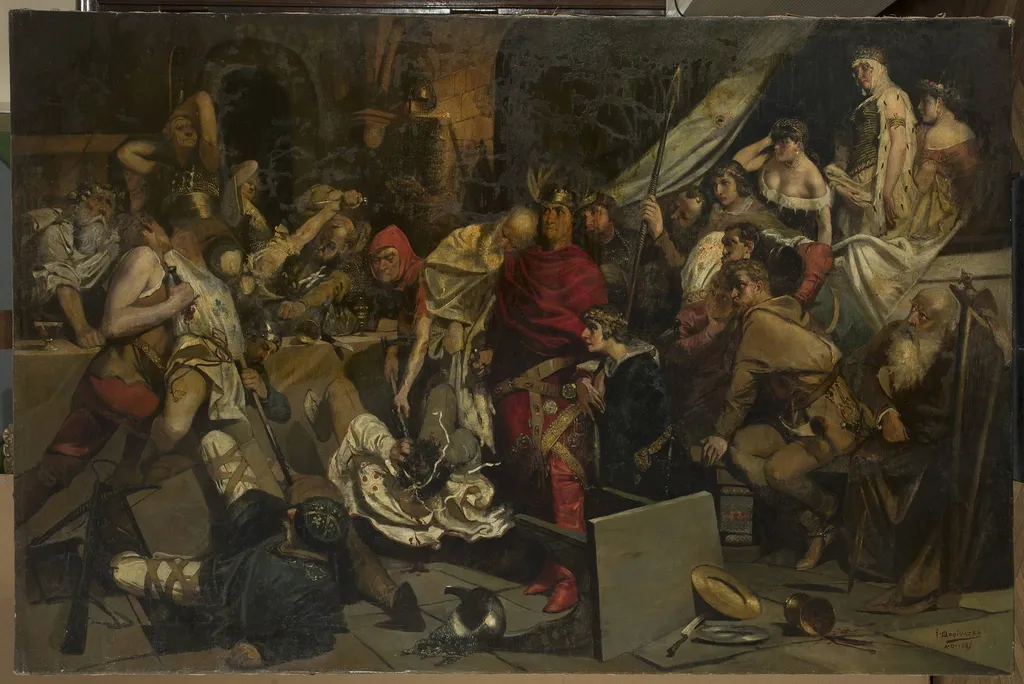
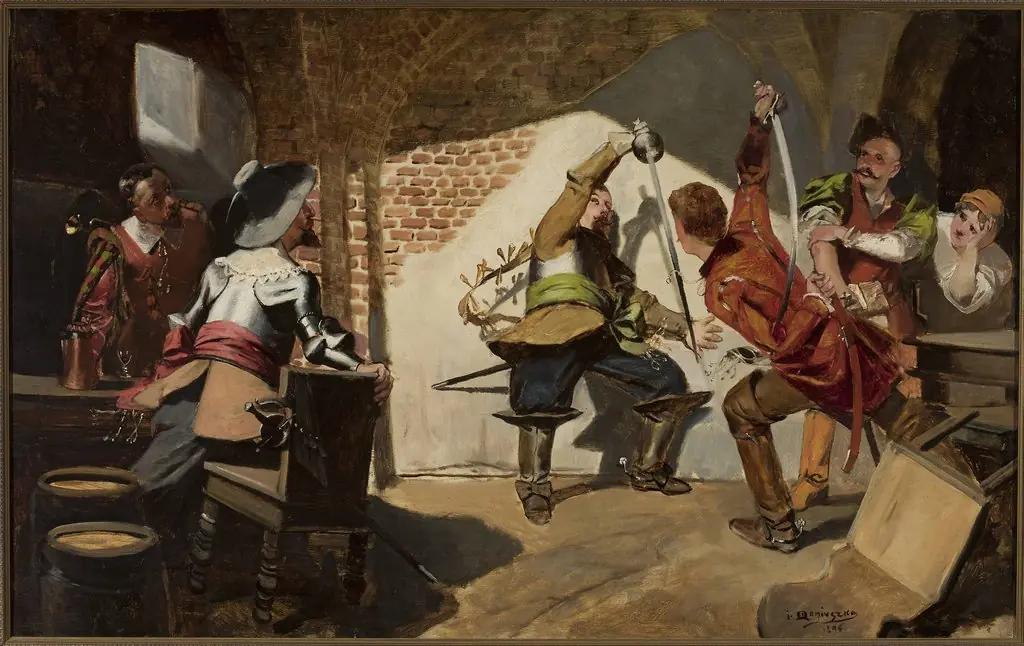
Bloody feast of Count Gero is an oil painting by the Post-Impressionist artist Jan Czesław Moniuszko. It dates from 1894 and is held in the collection of the National Museum in Warsaw.
About this work
The image depicts a scene of a feast with people dressed in medieval attire, with some holding weapons and others looking on in shock or horror.
This painting, "Bloody feast of Count Gero", is an oil painting created by Jan Czesław Moniuszko in 1887. It is held at the National Museum in Warsaw. The image depicts a scene of a feast with people dressed in medieval attire, with some holding weapons and others looking on in shock or horror. The atmosphere appears to be one of violence and chaos.
In the foreground, a figure lies on the ground, possibly injured or dead, while others gather around, some with blood on their hands or clothes. The background is dark and shadowy, with hints of a castle or fortress in the distance.
The use of chiaroscuro, a technique that uses strong contrasts between light and dark, adds to the dramatic and intense mood of the painting.
Overview
The Bloody Feast of Count Gero is an oil painting created by Jan Czesław Moniuszko in 1887, held at the National Museum in Warsaw.
Subject & Meaning
The painting depicts a chaotic medieval scene where figures in attire of the period gather around a fallen individual, some displaying signs of violence. The atmosphere is tense, with onlookers showing shock or horror, suggesting a violent or brutal event.
Technique & Style
Moniuszko employs chiaroscuro, utilizing strong contrasts between light and dark to heighten the dramatic effect of the scene, with a dark background hinting at a castle or fortress.
Own this work as a print
Artist & collection

 Saint Francis of Paola
 Imperial Coronation
 Het sterfbed van Epaminondas
 Mucius Scaevola Confronting King Porsenna
 Sketch for "The Revolt at Cairo"
 Leonora Christina being Examined in Prison
 Martelaren in het circus
 Leonora Christina being Examined in Prison
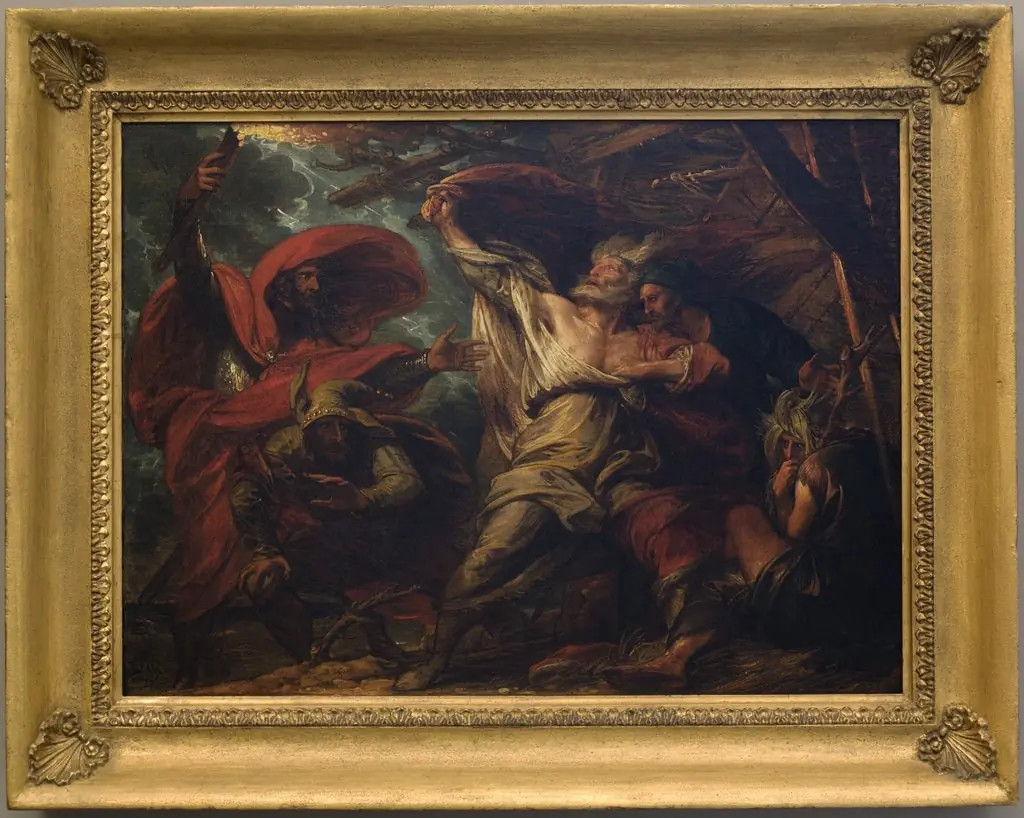 King Lear
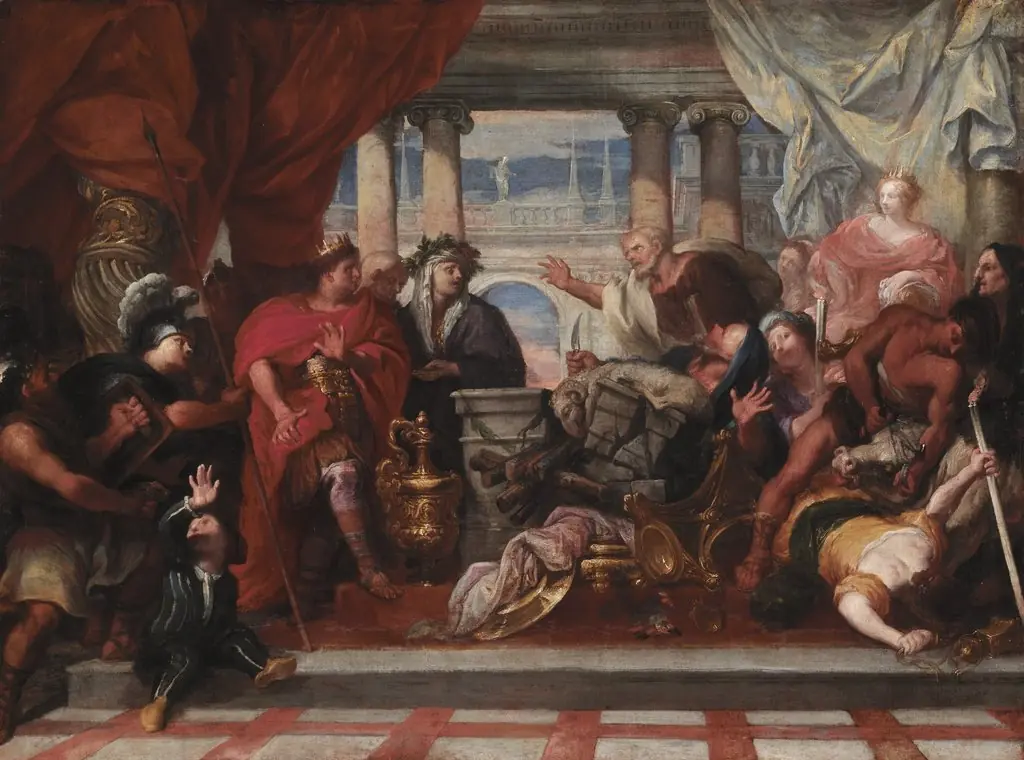 Scene of Sacrifice
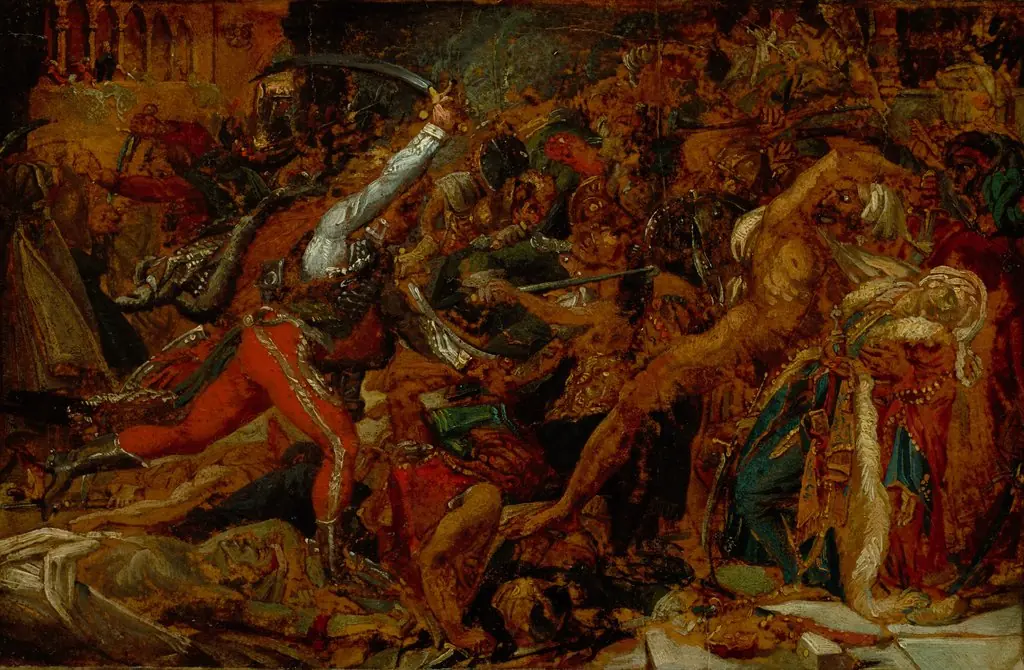 Sketch for "The Revolt at Cairo"
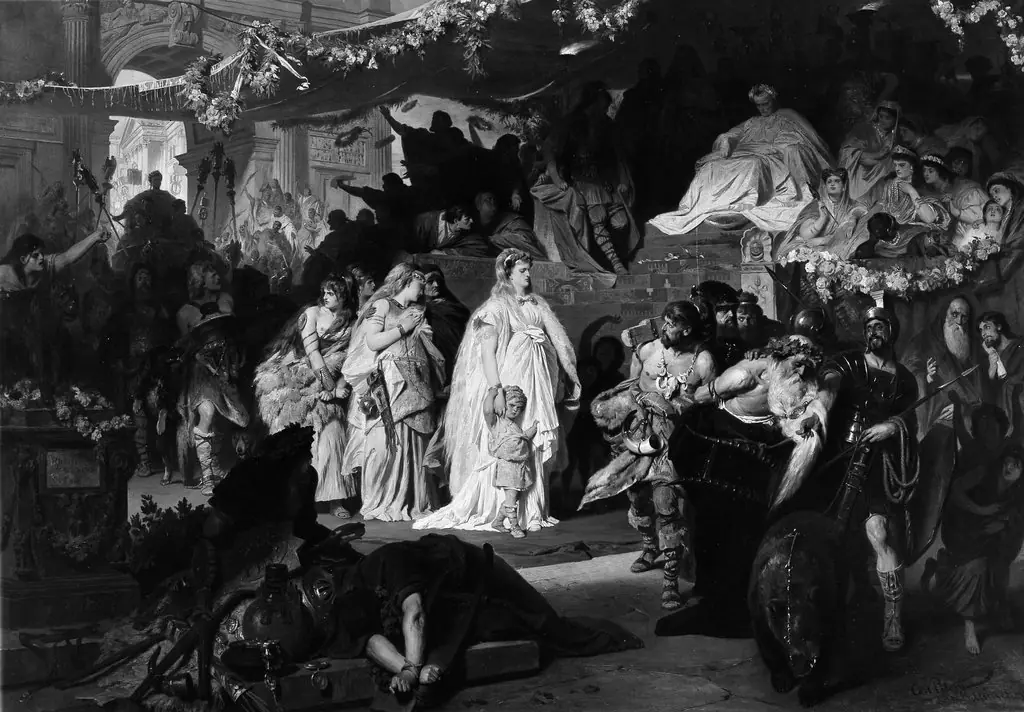 Thusnelda at the Triumphal Entry of Germanicus into Rome