Artwork
Harvesting
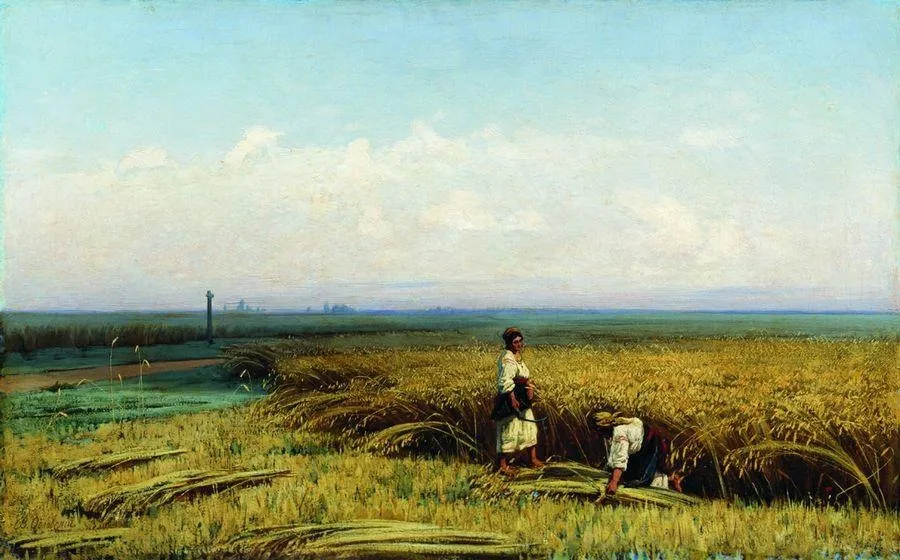
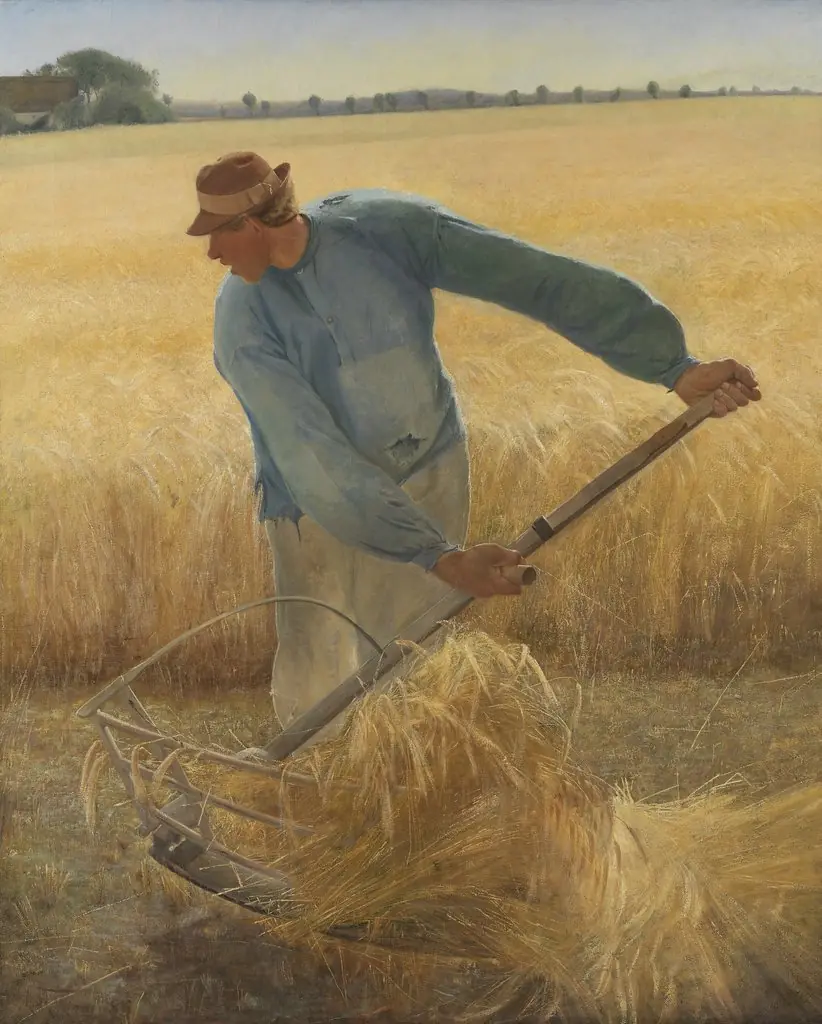
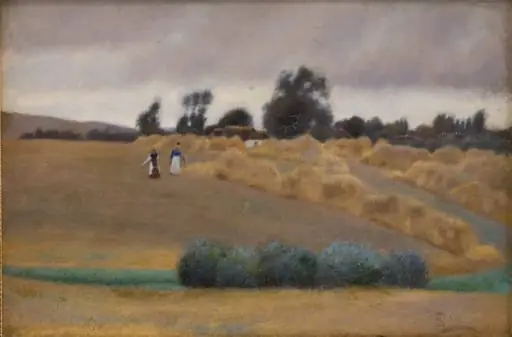
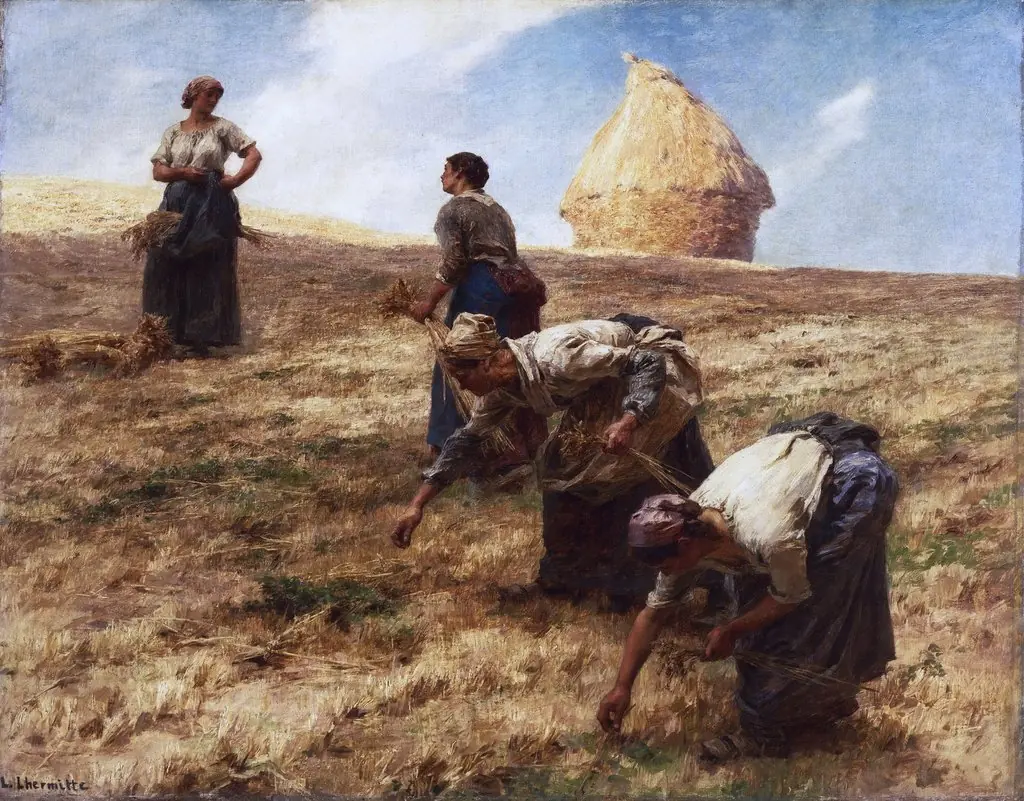
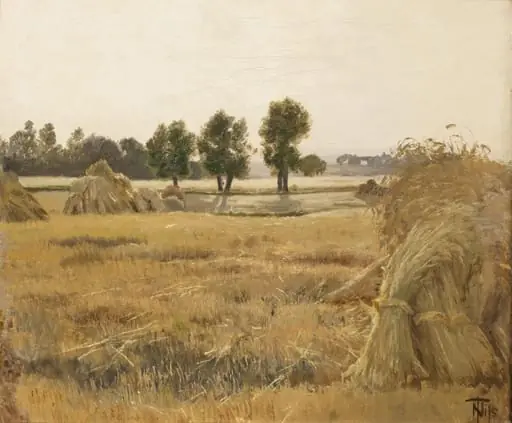
Harvesting is an oil painting by the Impressionist artist Vladimir Orlovsky. It dates from 1892 and is held in the collection of the National Art Museum of Ukraine.
About this work
Overview
The painting reflects his engagement with peasant life, a subject often commissioned by Russian patrons, including members of the imperial family.
Vladimir Orlovsky’s *Harvesting* (1892) is an oil-on-canvas work depicting rural labor in the Ukrainian countryside. Though trained in the academic tradition of the Saint Petersburg Academy of Arts, Orlovsky infused this scene with a quiet naturalism that aligns with broader 19th-century realist tendencies. The painting reflects his engagement with peasant life, a subject often commissioned by Russian patrons, including members of the imperial family.
Subject & Meaning
The painting portrays two peasants engaged in the labor of harvesting wheat, one standing, the other kneeling, their movements subdued and rhythmic. Their simple attire and unidealized postures emphasize dignity in everyday toil. The expansive field and soft sky frame their work not as hardship, but as an integral part of the land’s cycles. The scene avoids sentimentality, instead offering a contemplative view of agrarian existence.
Technique & Style
Orlovsky employed oil paint with a restrained palette dominated by golden yellows, earthy browns, and pale blues. Brushwork is loose yet deliberate, capturing the texture of ripened grain and the play of light across the field. While not strictly Impressionist, the painting shows sensitivity to atmospheric effects and natural illumination, using subtle gradations to suggest depth and time of day without dramatic chiaroscuro.
History & Provenance
Commissioned during a period when Russian aristocrats collected depictions of peasant life, the painting entered the collection of the National Art Museum of Ukraine, where it remains today. Its acquisition by imperial patrons underscores its cultural resonance, though Orlovsky’s focus on authentic rural scenes distinguished his work from idealized portrayals common in official art of the era.
Context
In late 19th-century Russia, depictions of peasant labor gained renewed attention amid social reform movements and rising national consciousness. Orlovsky, of Ukrainian descent, contributed to this discourse by portraying the Ukrainian steppe with observational accuracy. His work bridged academic training and regional identity, reflecting a broader trend among artists to ground their practice in local landscapes and labor.
Legacy
Though less widely known than his contemporaries, Orlovsky’s *Harvesting* exemplifies a quiet realism that influenced later Ukrainian artists seeking to depict rural life without romanticization. The painting’s endurance in a major national collection signals its role as a document of cultural memory, preserving the visual language of agrarian labor at a time of rapid social change.
Artist & collection
Artist
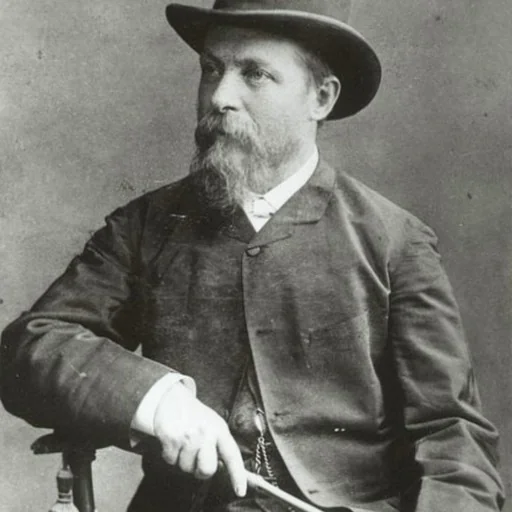
Vladimir or Volodymyr Donatovich Orlovsky (Russian: Владимир Донатович Орловский; Ukrainian: Володимир Донатович Орловський, romanized: Volodymyr Donatovych Orlovskyi; 1842 – 1914) was a Russian realist painter of…