Artwork
Poverty (Armut)
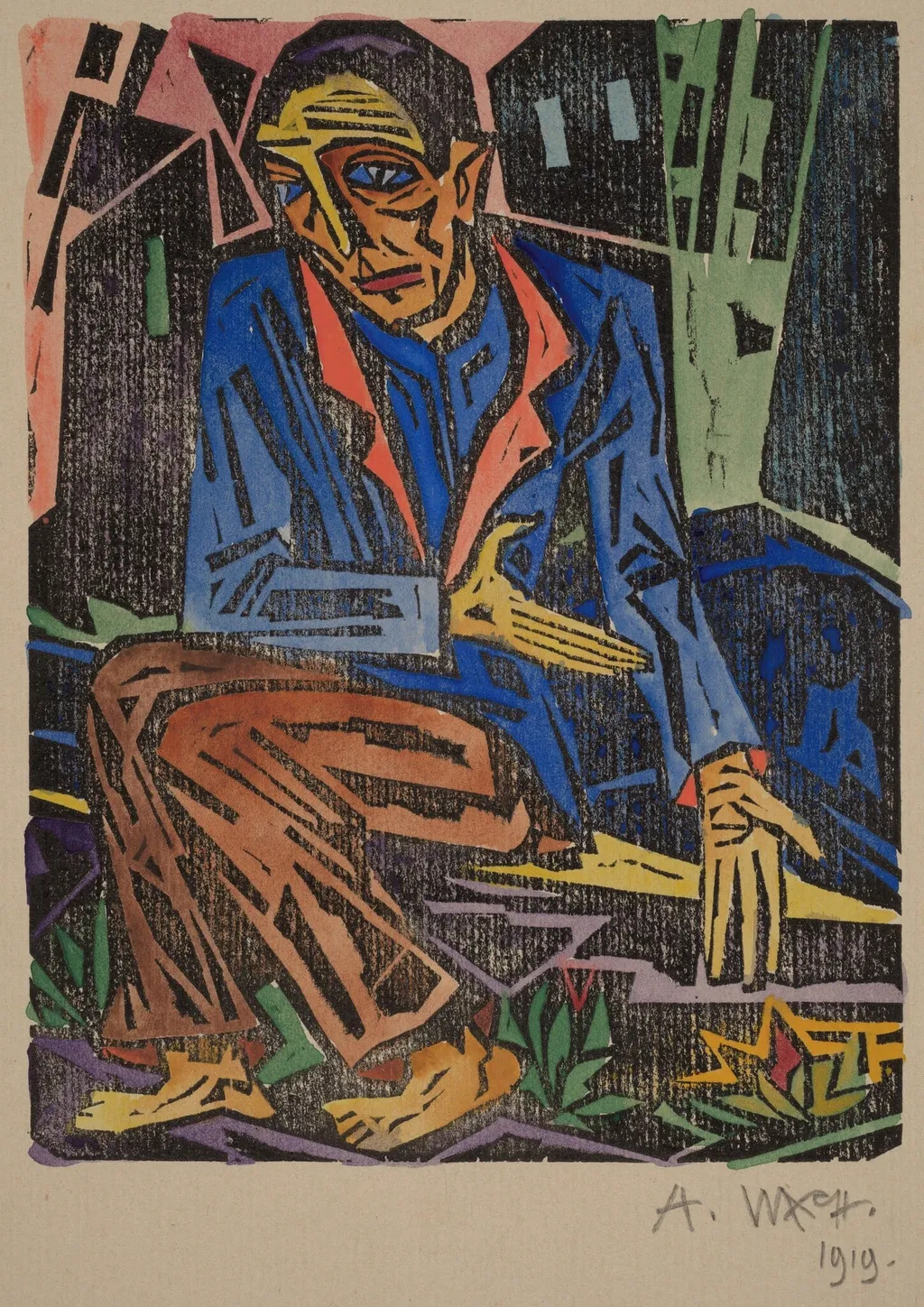
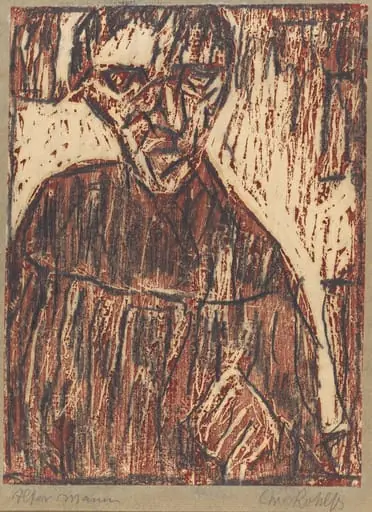
Poverty (Armut) is an ink print by Aloys Wach. It dates from 1919 and is held in the collection of the National Gallery of Art.
About this work
Overview
The work belongs to a series of prints produced in the immediate aftermath of World War I, reflecting the social and economic strain felt across Central Europe.
Poverty (Armut), created by Aloys Wach in 1919, is a hand-colored woodcut that captures a solitary figure in a state of quiet desolation. The work belongs to a series of prints produced in the immediate aftermath of World War I, reflecting the social and economic strain felt across Central Europe. Its stark composition and expressive use of color distinguish it as a potent visual statement on human hardship during a period of widespread instability.
Subject & Meaning
The figure is a man seated on the ground, head bowed, hands resting on his knees, dressed in muted blues and browns with a yellow hat. His posture suggests exhaustion and resignation rather than active suffering. The absence of context—no home, tools, or companions—emphasizes isolation. The somber expression and stillness convey an internalized despair, aligning the image with broader postwar anxieties about displacement and economic collapse.
Technique & Style
Wach employed the woodcut medium, carving bold, angular lines that define the figure’s form and clothing. Hand-coloring with vivid hues—yellow, pink, green—contrasts sharply with the dark background, heightening emotional tension. The flat planes of color and simplified contours reflect Expressionist tendencies, prioritizing psychological intensity over naturalism. The technique amplifies the figure’s vulnerability through stark visual oppositions.
History & Provenance
Created in 1919, the print emerged from Wach’s engagement with Vienna’s avant-garde circles during the collapse of the Austro-Hungarian Empire. It was likely produced as part of a limited run intended for distribution among progressive audiences. While its early ownership is undocumented, it entered institutional collections by the mid-20th century, recognized for its concise commentary on postwar social conditions.
Context
In the wake of World War I, Austria faced hyperinflation, food shortages, and mass unemployment. Artists like Wach turned to printmaking for its accessibility and political immediacy. Poverty reflects the influence of German Expressionism and the Neue Sachlichkeit movement, which sought to depict societal decay with unflinching clarity. The work stands as a quiet indictment of systemic neglect during a time of national unraveling.
Legacy
Though Wach is less widely known than his contemporaries, Poverty remains a significant example of early 20th-century German-language printmaking. Its emotional restraint and formal clarity have influenced later artists exploring themes of marginalization. The work is held in several European collections, where it continues to serve as a reference for the intersection of social critique and graphic art in the interwar period.
Own this work as a print
Artist & collection


 The Gull Hunter
 Untitled
 Woman in Green
 Untitled
 Dr. Ludwig Binswanger (Kopf Dr. Ludwig Binswanger)
 Peter Schlemihls wundersame Geschichte: Kämpfe. Qualen der Liebe (Peter Schlemihl's Wondrous Story: Battles. The Agonies of Love)
 Head of a Fisherman
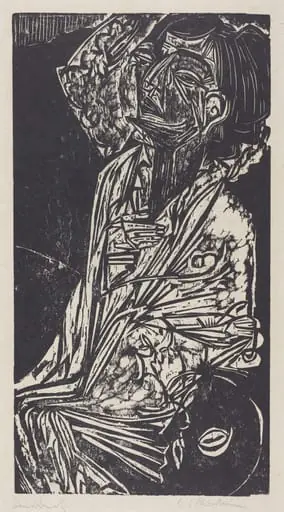 The Wife of Professor Goldstein
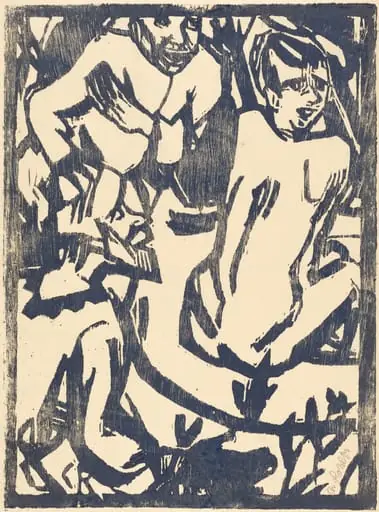 Susanna and the Elders
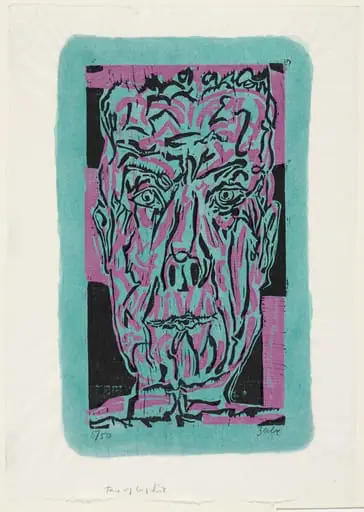 Untitled
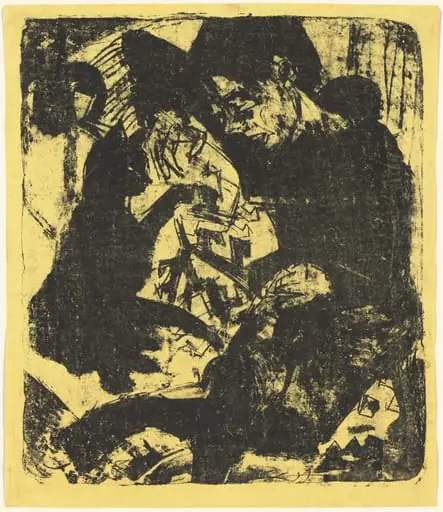 Boy with Cat (Knabe mit Katze)
 Old Man