Artwork
Untitled
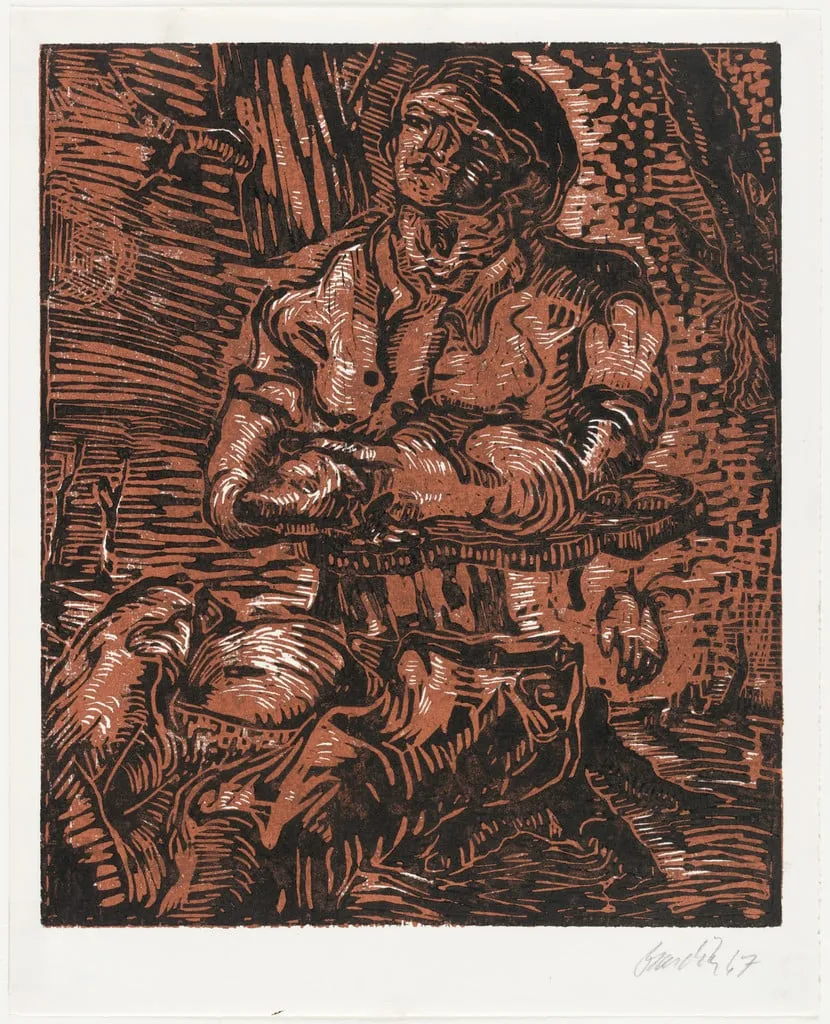
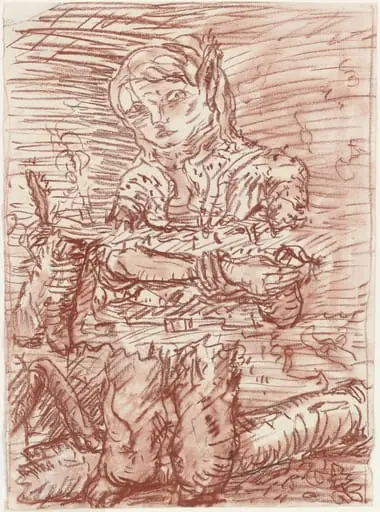
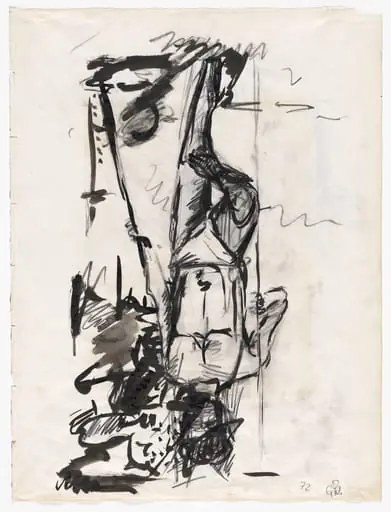
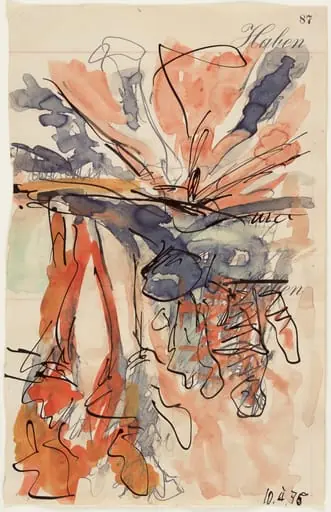
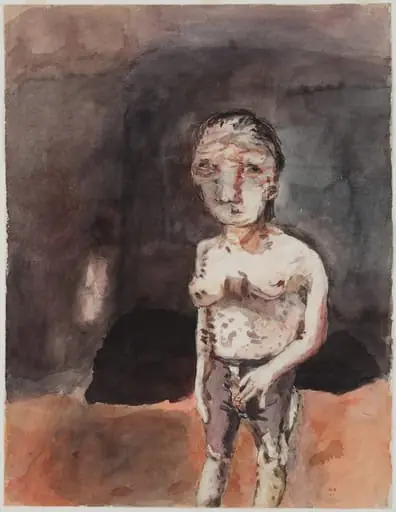
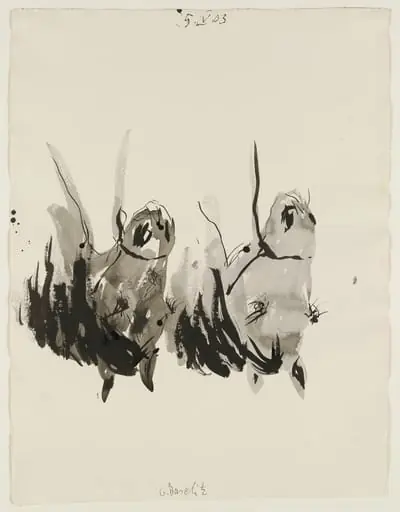
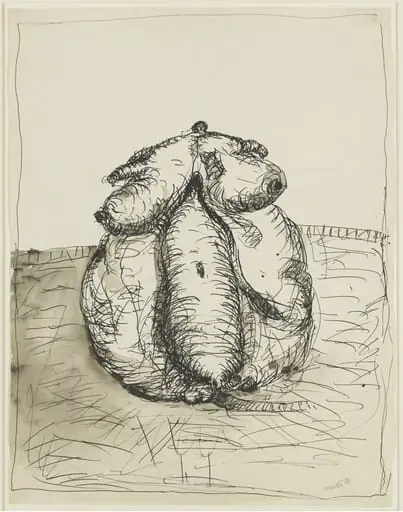
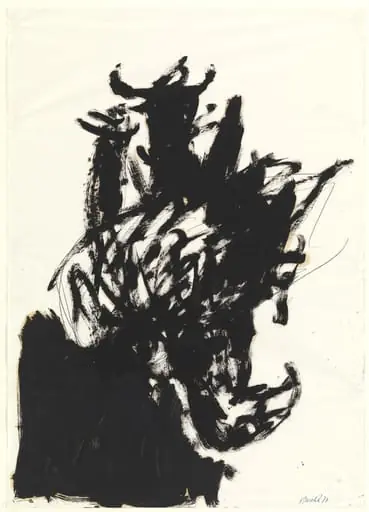
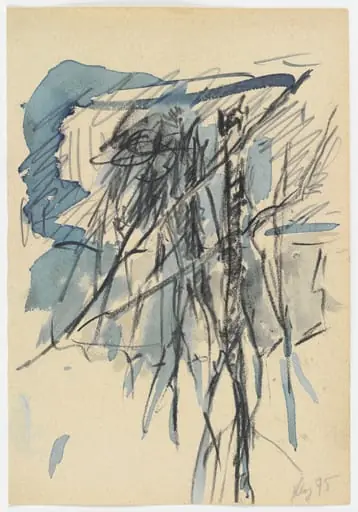
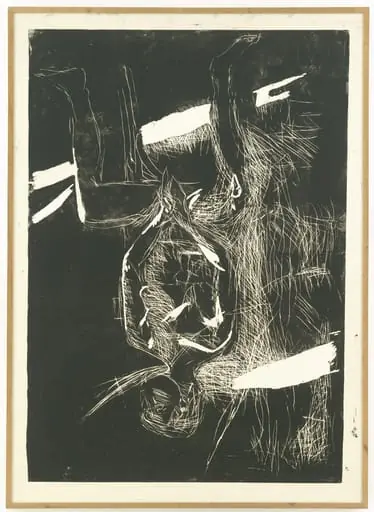
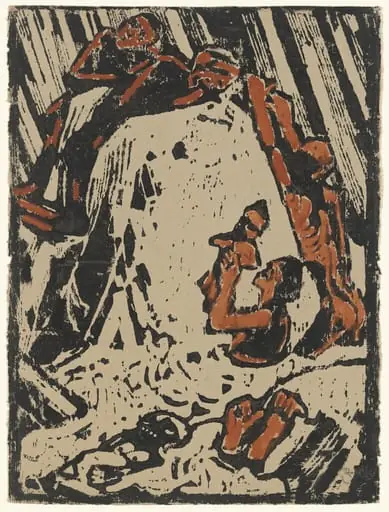
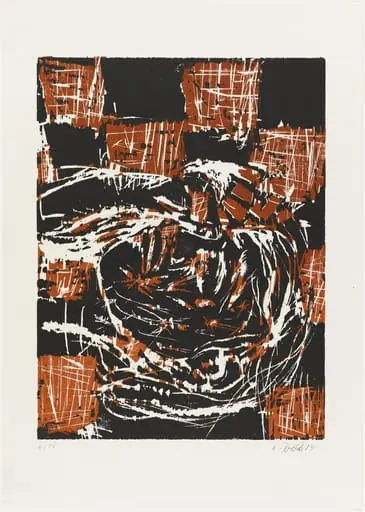
Untitled is an ink print by Georg Baselitz. It dates from 1967 and is held in the collection of the Museum of Modern Art.
About this work
Overview
The technique emphasizes tactile roughness, with no smooth transitions or refined contours, reinforcing a sense of physical and emotional tension.
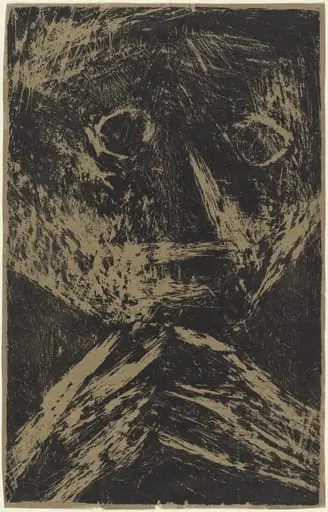
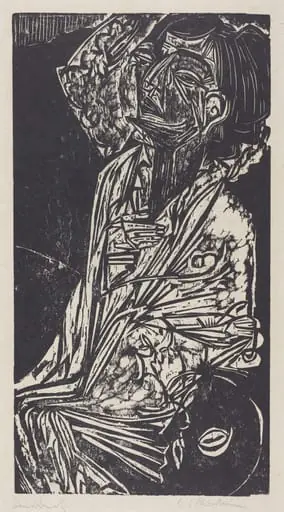
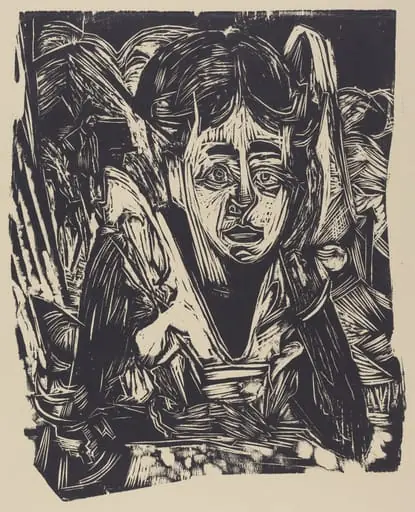
Created in 1967, this woodcut by Georg Baselitz is part of The Museum of Modern Art’s collection. Executed in brown ink on paper, the print emerges from a carved wooden block, where only the raised surfaces received ink. The composition presents a recumbent human form amid chaotic, darkly carved backgrounds. The technique emphasizes tactile roughness, with no smooth transitions or refined contours, reinforcing a sense of physical and emotional tension.
Subject & Meaning
A figure lies on their back, legs drawn upward, cradling a small, indistinct form—possibly a child or animal. The face is indistinct, erased by the carving’s abrasiveness, denying individual identity. The posture suggests vulnerability or exhaustion, while the ambiguous object held close introduces emotional ambiguity. The scene resists narrative clarity, instead evoking a primal, almost archetypal moment of contact and isolation.
Technique & Style
Baselitz employed traditional woodcut methods but pushed them toward expressive distortion. Deep, jagged grooves carve out dense shadows, while the raised wood grain creates a coarse, uneven surface. The brown ink saturates the paper unevenly, enhancing the texture’s rawness. Lines are not descriptive but gestural, suggesting movement and weight rather than anatomical accuracy. The method prioritizes physicality over precision.
History & Provenance
Produced in 1967, the work belongs to Baselitz’s early period, when he was developing his signature style of inverted figures and emotionally charged prints. It entered The Museum of Modern Art’s collection through established acquisition channels, likely as part of a broader interest in postwar German printmaking. Its preservation reflects its significance within the artist’s evolving exploration of form and trauma.
Context
Made during a time of cultural reckoning in West Germany, the print aligns with a generation of artists rejecting idealized aesthetics. Baselitz’s work responded to the lingering psychological weight of war and the search for new modes of expression. This woodcut’s visceral quality echoes contemporaneous movements in Expressionism and Informel, emphasizing inner states over external reality.
Legacy
The print exemplifies Baselitz’s commitment to disrupting conventional representation through material intensity. Its influence can be seen in later artists who embraced printmaking as a vehicle for emotional rawness rather than technical polish. The work remains a touchstone for discussions on how medium and subject interact to convey psychological depth without narrative resolution.
Artist & collection

Artist
Georg Baselitz was a German-Austrian painter, sculptor and graphic artist. In the 1960s he became well known for his figurative, expressive paintings. In 1969 he began painting his subjects upside down in an effort to…