Artwork
What's O'clock?
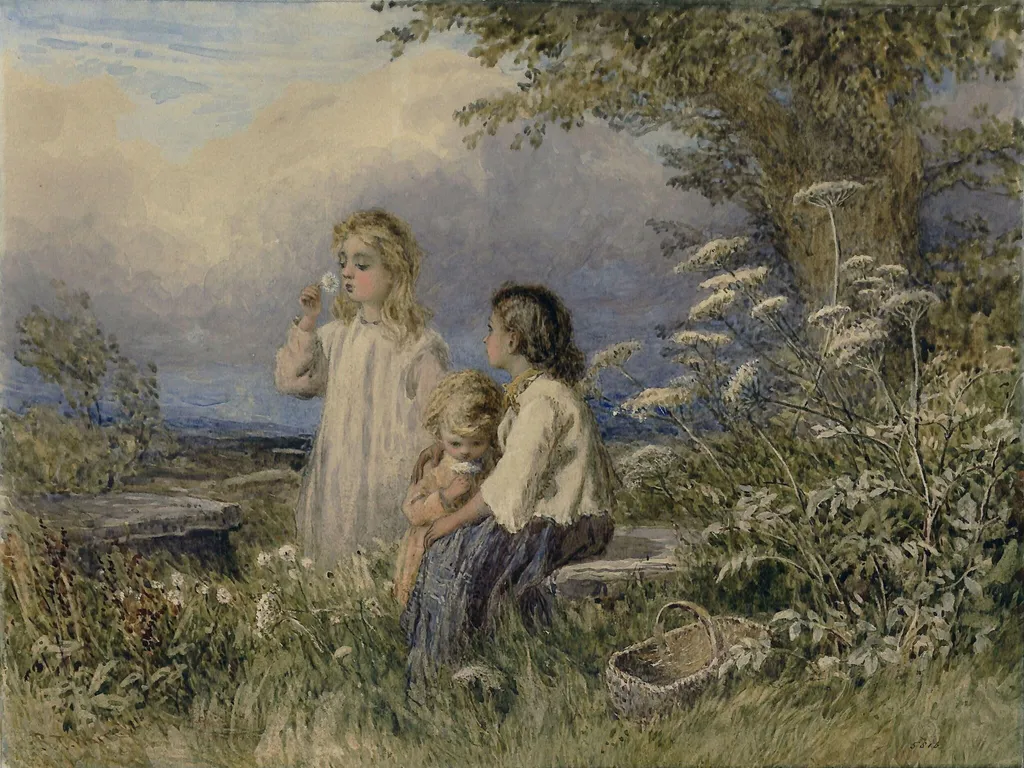
What's O'clock? is a watercolor work on paper by the Impressionist artist Robert Thorne Waite. It dates from 1864 and is held in the collection of the Victoria and Albert Museum.
About this work
Overview
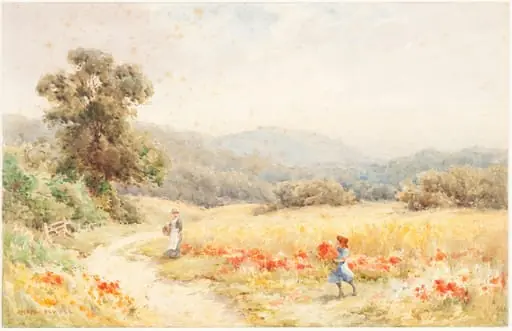
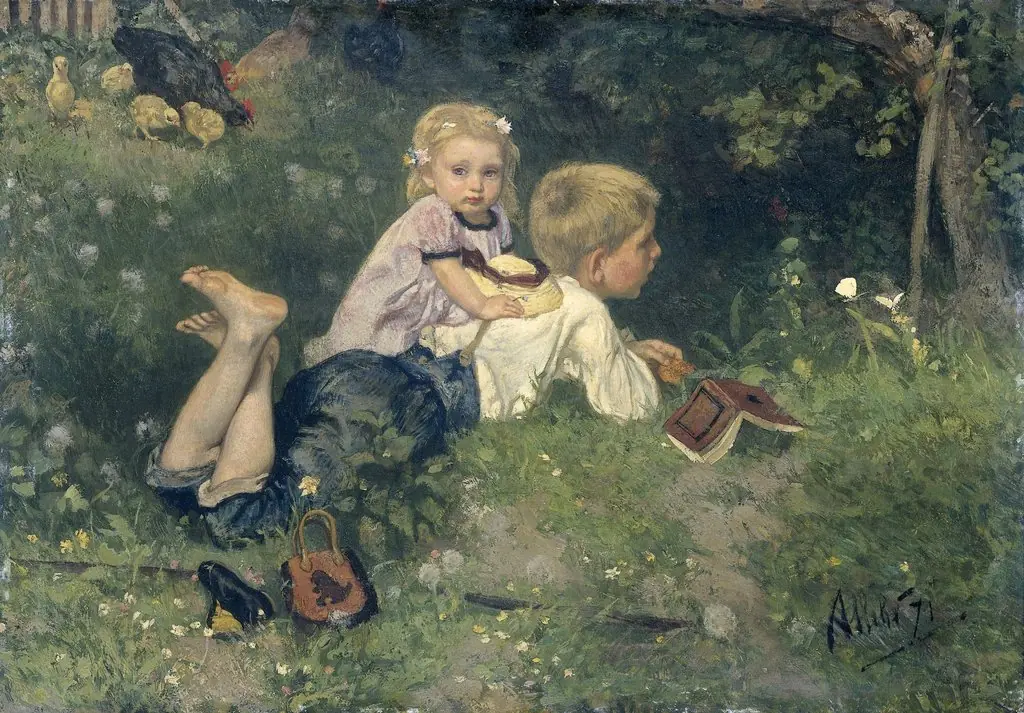
Robert Thorne Waite’s watercolour presents a tranquil churchyard meadow where three children engage with their surroundings. The composition centers on a girl holding a white blossom to her nose, while a kneeling boy and a seated girl complete the small group. The scene is framed by a pale sky and surrounding foliage, creating a gentle, enclosed space.
Subject & Meaning
The work captures a moment of innocent play amid nature, emphasizing the simple pleasures of childhood. The white flower and the children’s relaxed postures suggest a quiet contemplation of the natural world, inviting viewers to reflect on the fleeting serenity of youthful exploration.
Technique & Style
Waite employs loose, sketch‑like brushwork that allows pigments to merge, producing soft edges and a sense of immediacy. The watercolour’s translucent layers convey the fleeting quality of light, while the limited palette of greens, whites, and muted sky tones reinforces the work’s gentle atmosphere.
History & Provenance
Created by Robert Thorne Waite, the piece is titled “What’s O’clock?” and remains catalogued as a watercolour. Details of its exhibition history or ownership are not recorded in the available documentation.
Context
The painting aligns with late‑19th‑ to early‑20th‑century interests in rural leisure and the pastoral genre. Its emphasis on light and atmosphere parallels contemporary developments in Impressionism, though Waite’s approach retains a more intimate, narrative focus.
Artist & collection
Artist
Robert Thorne Waite painted lively watercolours in the 1860s. His *What's O'clock?* shows a bustling Victorian street scene, all hats and umbrellas, with sharp light and quick brushwork. Waite’s work sits in that…