Artwork
H Beard Print Collection
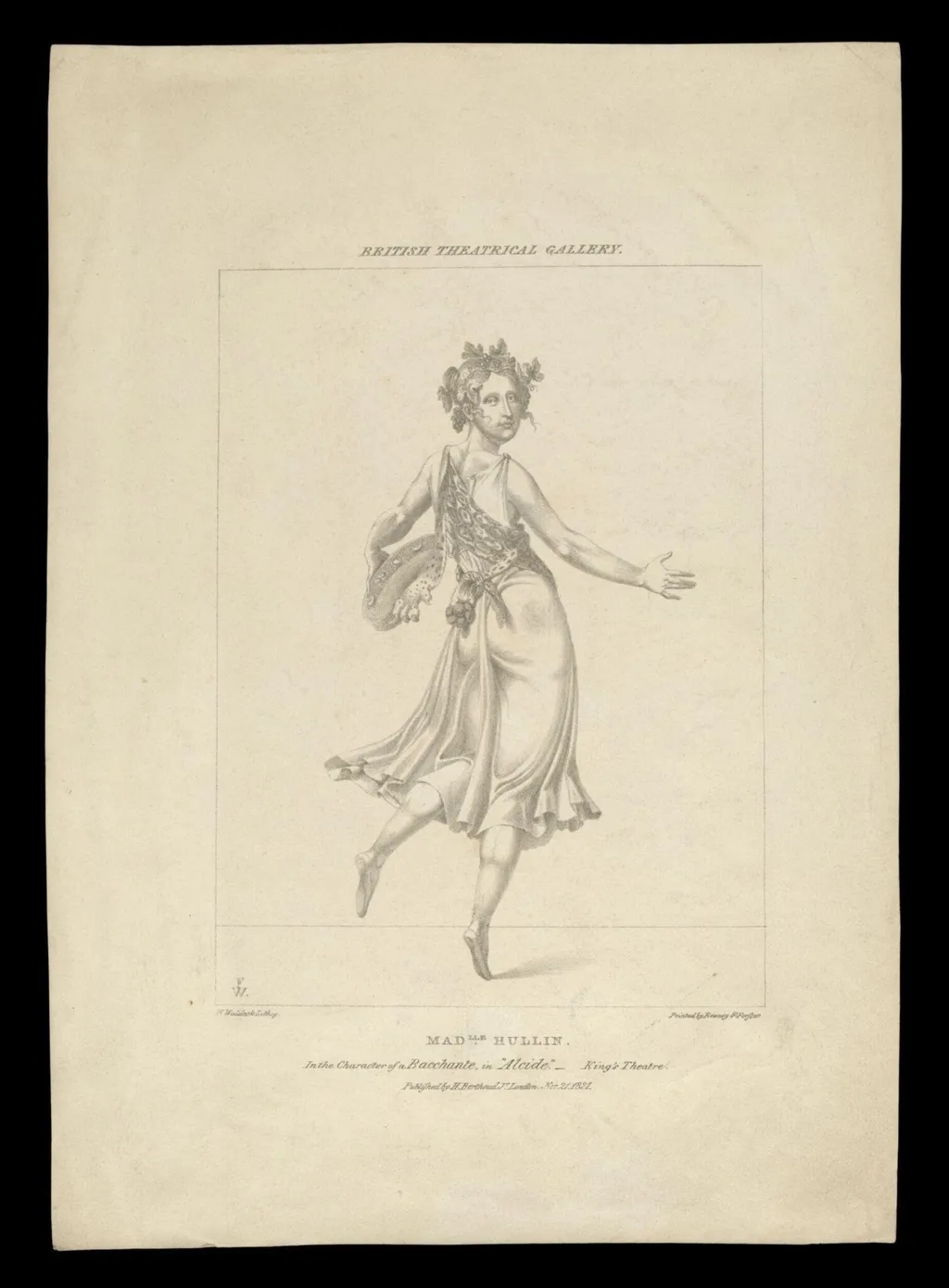
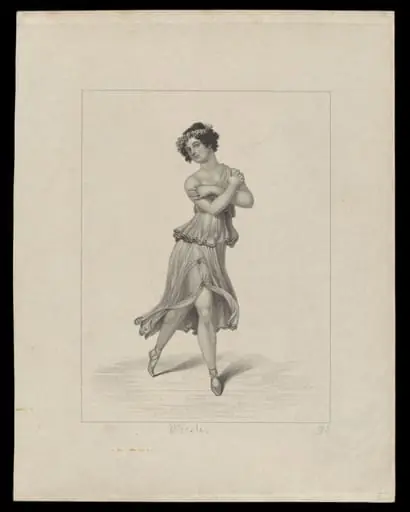
H Beard Print Collection is a print by the Romanticist artist F. Waldeck. It dates from 1821 and is held in the collection of the Victoria and Albert Museum. This stipple engraving, dated circa 1821, depicts Madame Hullin in the role of a Bacchante from the stage production of Alcide.
About this work
This print shows a dancer on stage. The artist used fine dots to make the image, a style called stipple engraving. It’s from around 1821.
The dancer wears a loose Greek tunic with a leopard skin sash and holds a tambourine. Her hair has ivy leaves in it.
She performed at the King’s Theatre in a play called Alcide.
Look up Waldeck, F.
Overview
This stipple engraving, dated circa 1821, depicts Madame Hullin in the role of a Bacchante from the stage production of Alcide. The full‑length figure is shown onstage at the King’s Theatre, dressed in a flowing Greek‑style tunic with a leopard‑skin sash, holding a large tambourine, and crowned with a wreath of ivy leaves.
Subject & Meaning
The image presents the actress as a Bacchante, a follower of the god Dionysus, emphasizing themes of revelry and classical myth. The costume’s Greek references and the presence of the tambourine reinforce the character’s association with music, dance, and ecstatic celebration within the theatrical narrative of Alcide.
Technique & Style
Executed in stipple engraving, the print relies on a dense field of fine dots to render tonal variation and delicate detail. This method, popular in the early nineteenth century, allows subtle modeling of fabric, skin, and background, creating a soft, almost painterly effect while preserving the precision of line work.
History & Provenance
The print is part of the Harry Beard collection, a private assemblage of theatrical prints. Its caption identifies the performance venue as the King’s Theatre, confirming its origin as a contemporary record of a specific production. The work has been catalogued under the name of the artist F. Waldeck.
Context
Alcide, staged at the King’s Theatre in the early 1820s, was part of a broader revival of classical subjects in London’s operatic and ballet repertoire. Madame Hullin’s portrayal of a Bacchante reflects the period’s fascination with antiquity, where costume and choreography were designed to evoke ancient Greek aesthetics for modern audiences.
Artist & collection
Artist
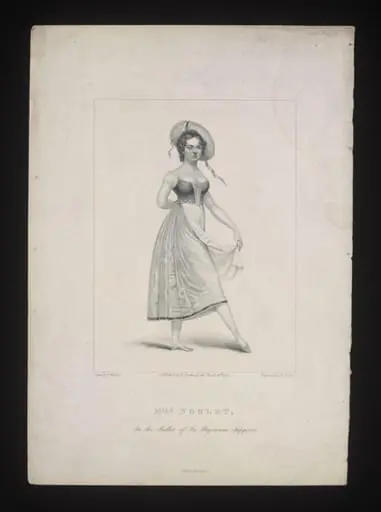
French lithographer who made theatrical prints in the 1820s. Two prints in this set show dancers on stage: Mlle Noblet, In the Ballet of La Paysanne Supposée (14 March 1822) and another from the same season, both crisp…