Artwork
Mme Rosati,
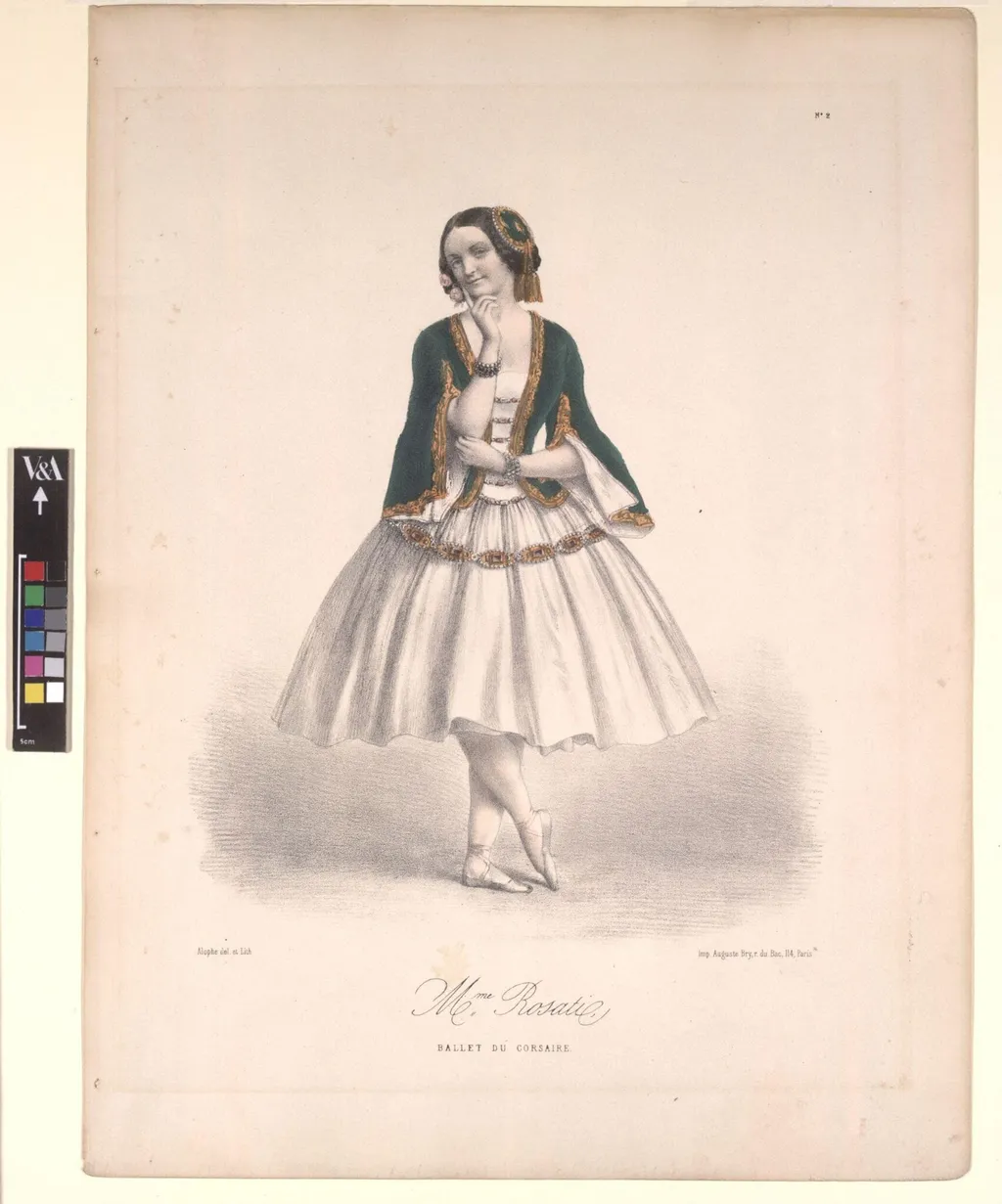
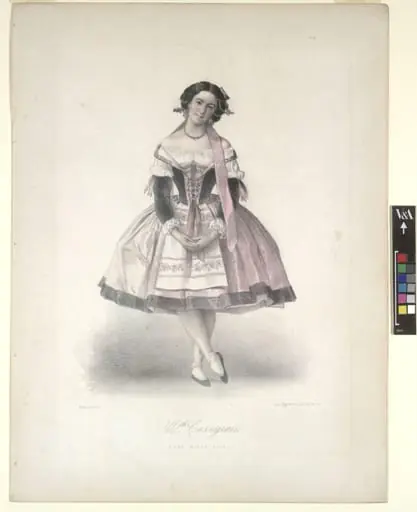
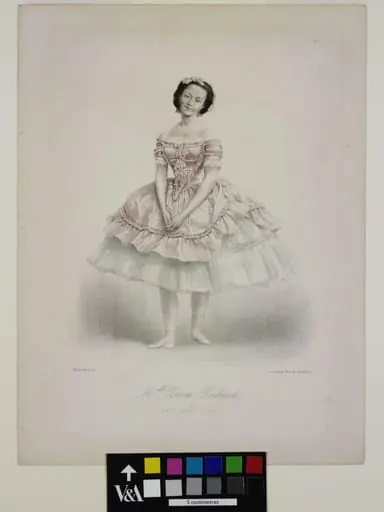
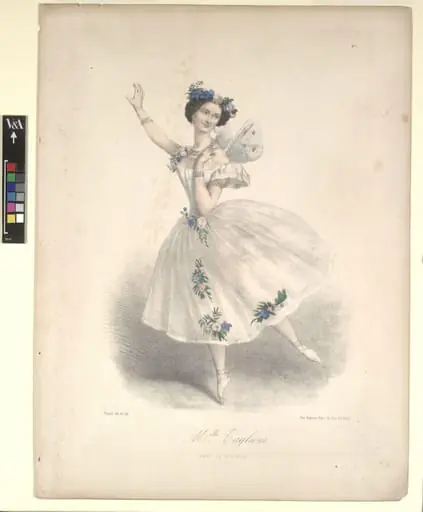
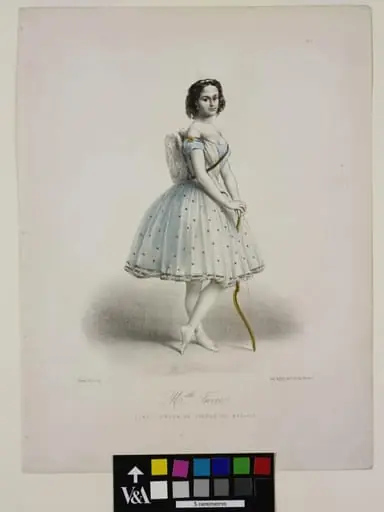
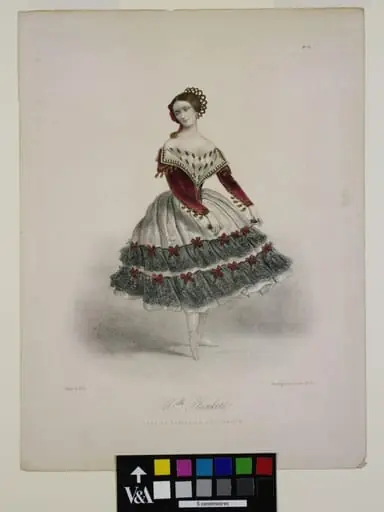
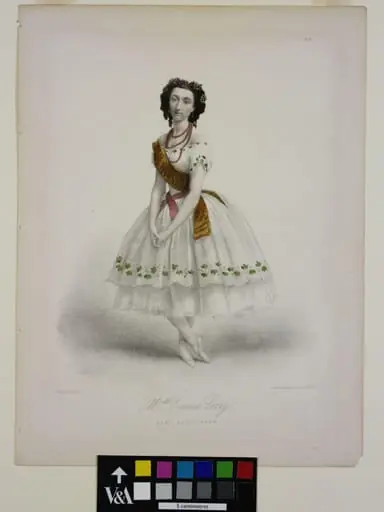
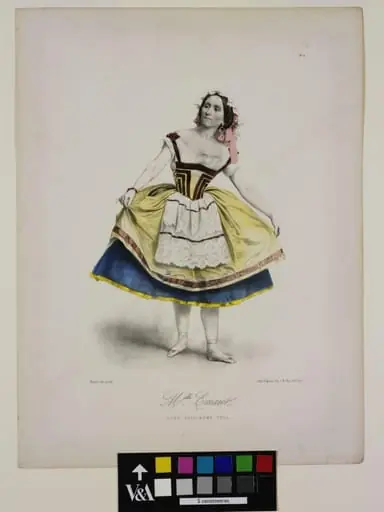
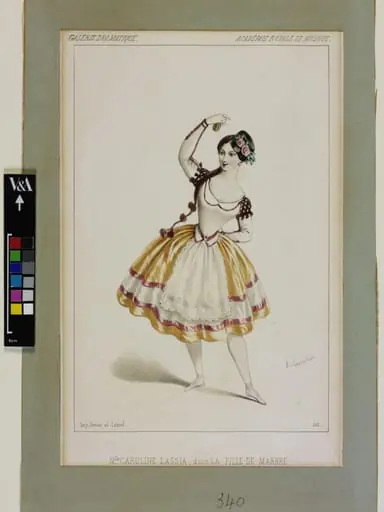
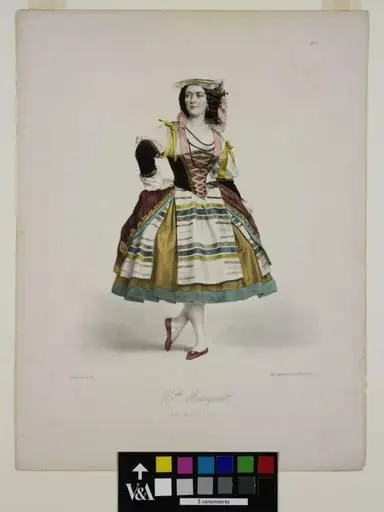
Mme Rosati, is a print by the Impressionist artist Marie-Alexandre Alophe. It dates from 1860 and is held in the collection of the Victoria and Albert Museum. This print, created around 1860 by Alophe, depicts Carolina Rosati in the role of Médora from the ballet Le Corsaire.
About this work
This print shows a famous dancer from the 1850s in a ballet scene. Alophe made it around 1860 using printmaking. It’s tied to Impressionism and Realism art movements.
Carolina Rosati was the highest paid dancer at the Paris Opera when ballet was losing popularity. Yet her prints still show her sharp movements and lively style.
Look up the Victoria and Albert Museum for this print.
Overview
Executed in printmaking techniques, it captures a moment from a popular theatrical production of the mid-19th century.
This print, created around 1860 by Alophe, depicts Carolina Rosati in the role of Médora from the ballet Le Corsaire. Executed in printmaking techniques, it captures a moment from a popular theatrical production of the mid-19th century. Though ballet’s cultural prominence was waning, Rosati’s technical command and stage presence made her a standout performer, earning her the highest salary ever paid to a dancer at the Paris Opera at the time.
Subject & Meaning
Rosati portrays Médora, the beloved of the pirate Conrad, in a narrative drawn from Lord Byron’s poem. The character’s costume—adorned with gold tassels and a jeweled belt—evokes the exoticism and adventure of the sea-bound tale. The image conveys not just costume and pose, but the dancer’s reputation for vitality and precision, translating the ephemeral energy of live performance into a static medium for public memory.
Technique & Style
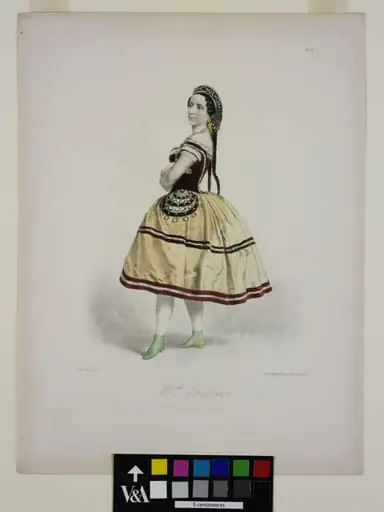
Alophe employed lithographic methods to render Rosati’s form with clarity and dynamism. The lines emphasize her poised stance and the fluidity of her costume, suggesting motion despite the stillness of the medium. The composition avoids theatrical excess, favoring a restrained elegance that aligns with emerging Realist sensibilities, capturing the dancer’s presence without romantic idealization.
History & Provenance
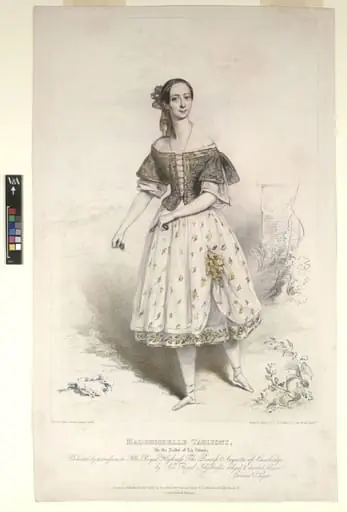
Created shortly after Rosati’s peak years, the print was produced during a period when her fame was beginning to fade from public consciousness. While contemporaries like Taglioni and Grisi were memorialized in widely circulated images, Rosati’s legacy was less preserved. This print survives as a rare visual record of her artistry, likely commissioned to document a celebrated performance at the Paris Opera.
Context
In the 1850s, ballet in Paris was transitioning from its Romantic golden age. Audiences shifted toward newer forms of entertainment, and dancers like Rosati, despite their skill, lacked the cultural cachet of earlier stars. Her high salary reflects her professional standing, yet the scarcity of surviving imagery of her underscores how quickly artistic reputations could diminish without sustained public or institutional commemoration.
Legacy
Though largely forgotten today, this print preserves a trace of Rosati’s influence on 19th-century dance. It stands as evidence of the challenges faced by performers who excelled in a declining art form. As a document of both theatrical practice and print culture, it offers insight into how dance was recorded—and often lost—before the era of photography and film.
Artist & collection
Artist
French lithographer who printed theater stars on silky paper in the 1860s. His prints capture ballerinas in *La Sylphide* and *Marco Spada*, Mademoiselle Fiocre in a Florentine drama, and Mademoiselle Plunkett twirling…