Artwork
P. Robertus Personius, Priest
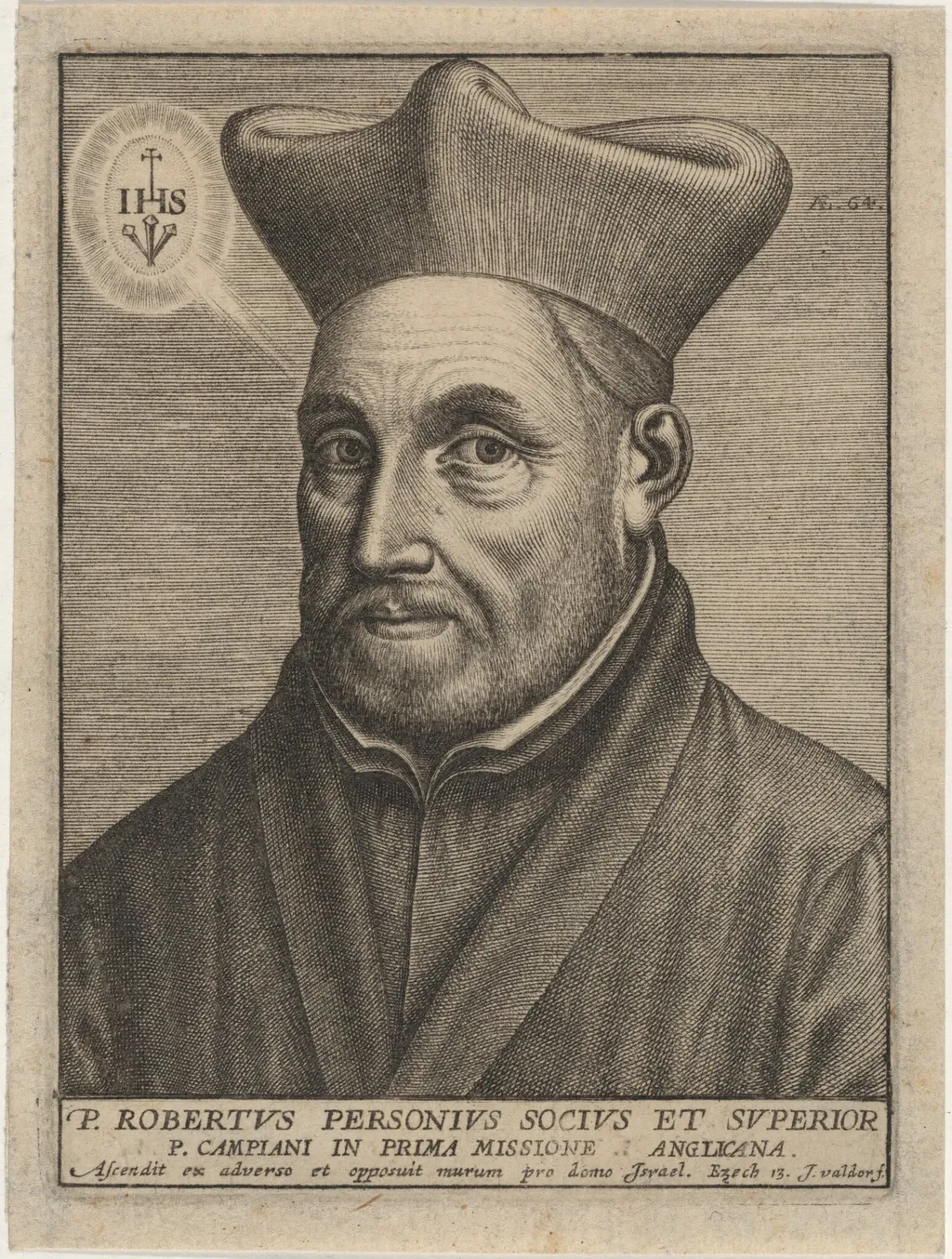
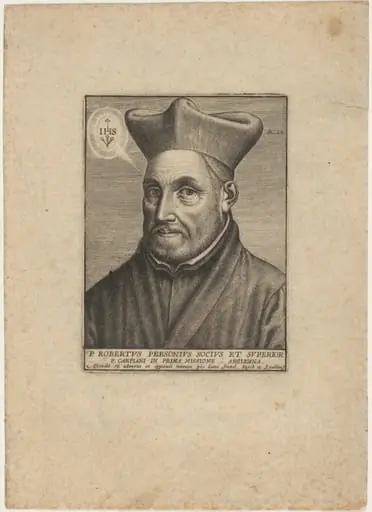
P. Robertus Personius, Priest is an ink print by the Renaissance artist Jean Waldor. It dates from 1610 and is held in the collection of the National Gallery of Art.
About this work
Overview
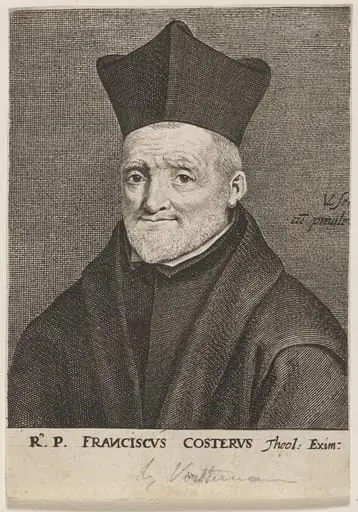
A distinctive tall, pointed hat and dark robe frame the figure, while a small circular emblem bearing the letters IHS within a sunburst hovers above his head.
Jean Waldor’s 1610 engraving presents P. Robertus Personius, a priest identified as part of a mission to England. Rendered in stark black‑and‑white, the print captures the cleric in a solemn pose, his features marked by a short beard and pronounced lines around the eyes. A distinctive tall, pointed hat and dark robe frame the figure, while a small circular emblem bearing the letters IHS within a sunburst hovers above his head.
Subject & Meaning
The portrait emphasizes Personius’s religious authority and missionary purpose. The inclusion of the IHS monogram—a Christogram commonly associated with the Jesuit order—underscores his ecclesiastical identity, while the solemn expression and austere attire convey the gravity of his evangelical undertaking in England during a period of religious tension.
Technique & Style
Waldor employed traditional copperplate engraving, incising fine lines to achieve delicate shading and texture. The contrast between deep black areas and lighter washes creates a three‑dimensional sense, particularly in the folds of the robe and the intricate detailing of the hat’s brim. The crisp lettering of the signature in the upper right demonstrates the artist’s control over both image and text.
History & Provenance
Created in 1610, the print likely circulated among Catholic networks to document and promote the English mission. The faint artist’s signature in the corner confirms Waldor’s authorship, while the accompanying inscription below the portrait provides contextual information about Personius’s role, suggesting the work functioned as both portraiture and propaganda.
Context
The early seventeenth century saw heightened Catholic efforts to re‑establish a presence in Protestant England. Portraits of missionaries such as Personius served to humanize and legitimize these endeavors, offering visual testimony of clerical dedication amid political and religious conflict.
Artist & collection