Artwork
Robert Parsons, Jesuit Missionary
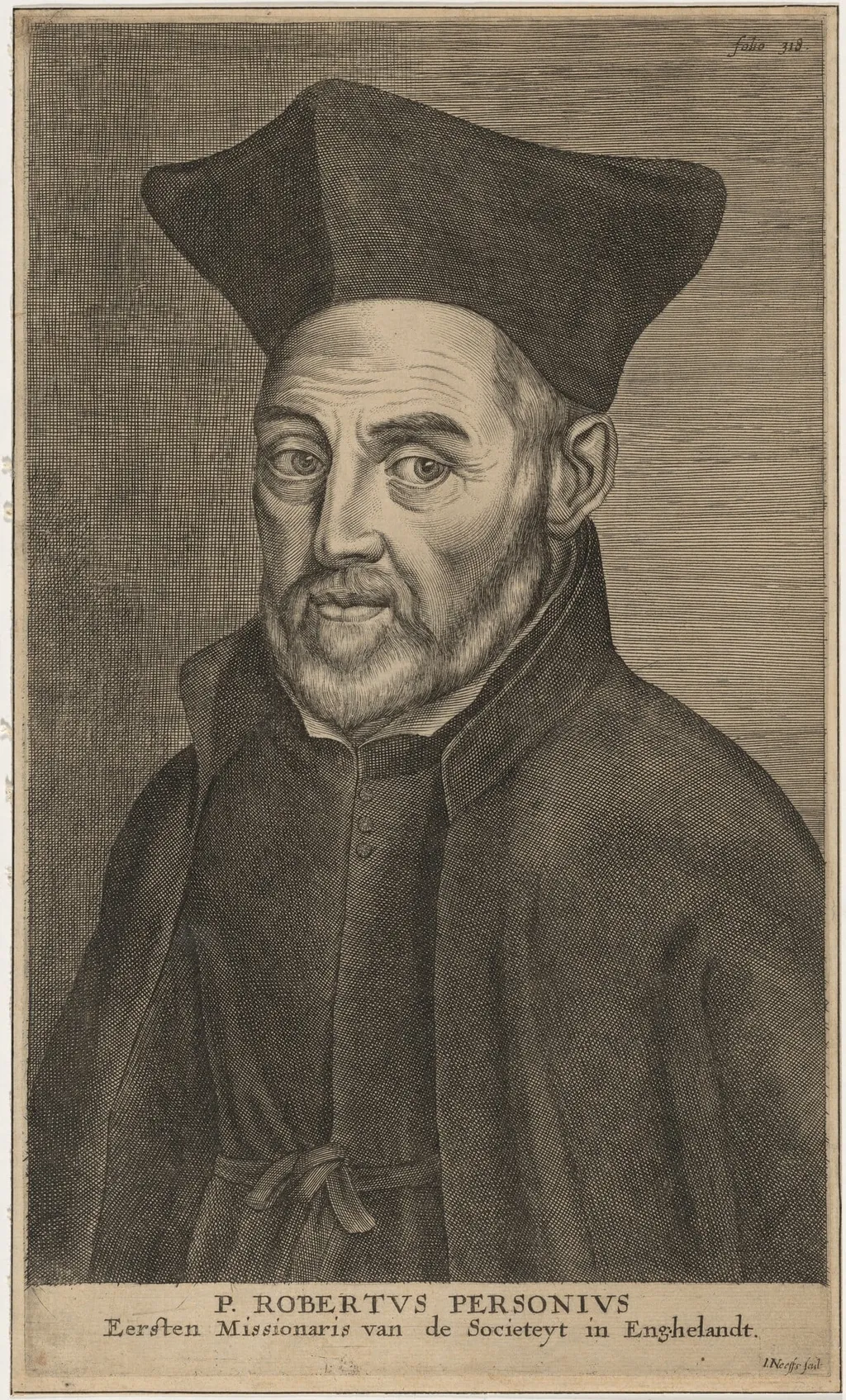
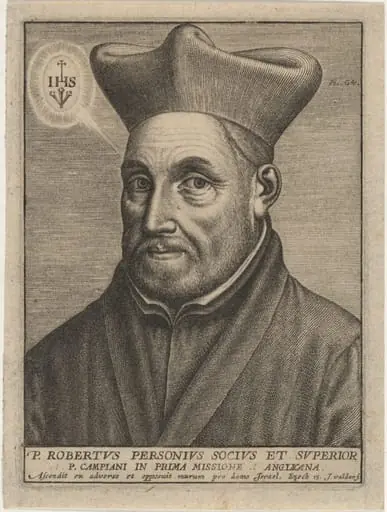
Robert Parsons, Jesuit Missionary is an ink print by the Baroque artist Jacobus Neeffs. It is held in the collection of the National Gallery of Art.
About this work
Overview
Rendered in monochrome, the image captures him with precise, controlled lines typical of copperplate engraving.
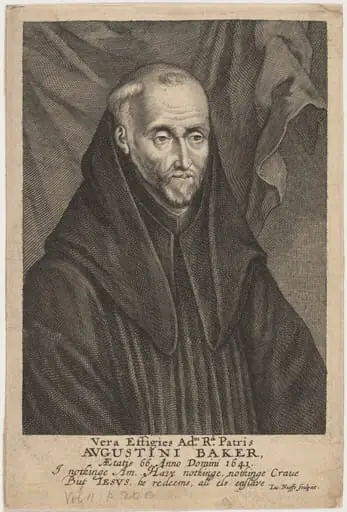
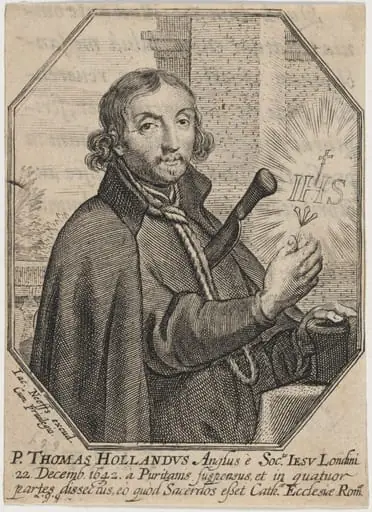
This 1669 engraving by Jacobus Neeffs depicts Robert Parsons, a Jesuit missionary, in a formal portrait. Rendered in monochrome, the image captures him with precise, controlled lines typical of copperplate engraving. The composition is centered and static, emphasizing his role and identity rather than narrative action. The medium’s fine detail allows for subtle modeling of light and shadow across his features.
Subject & Meaning
Robert Parsons is portrayed as a solemn, elderly figure, his thick beard and high-collared robe suggesting religious devotion and authority. The pointed hat, common in clerical dress of the period, reinforces his institutional affiliation. His calm, direct gaze conveys quiet resolve, aligning with the Jesuit ideal of disciplined piety. The inscription confirms his identity and mission, framing him as a figure of spiritual commitment rather than personal drama.
Technique & Style
Neeffs employed fine, incised lines to build volume and texture, using cross-hatching to define the folds of fabric and the contours of the face. The engraving’s sharp contrasts between light and dark enhance the three-dimensionality of the features without relying on tone or wash. The method reflects the precision demanded by printmaking of the era, where each line was carefully carved into a metal plate to ensure clarity in reproduction.
History & Provenance
Created in 1669, the engraving likely served as a devotional or propagandistic image within Catholic circles, circulating among Jesuit communities or sympathizers. Though no early ownership records are widely documented, its production aligns with the broader trend of printing religious figures to reinforce doctrinal identity after the Reformation. The work survives as a rare visual record of Parsons, who died over half a century earlier.
Context
In the late 17th century, printed portraits of religious figures were used to sustain Catholic identity in Protestant-dominated regions. Parsons, a key English Jesuit of the 16th century, remained a symbolic figure for missionaries working underground. Neeffs’ portrait reflects this legacy, presenting him not as a historical actor but as an enduring emblem of faith, suited for private veneration or institutional display.
Legacy
The engraving remains one of the few contemporary visual representations of Robert Parsons. While not widely reproduced today, it contributes to the visual archive of early modern Catholicism and the Jesuit mission in England. Its restrained aesthetic and factual presentation distinguish it from later romanticized depictions, offering a sober, period-appropriate image of a controversial religious figure.
Artist & collection