Artwork
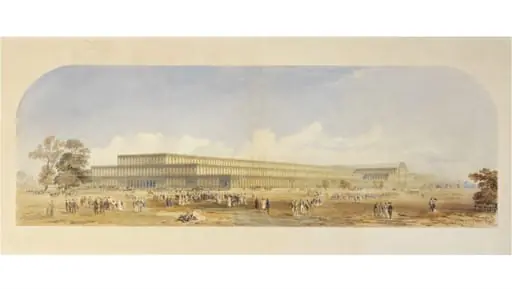
Exterior of the International Exhibition of 1862.
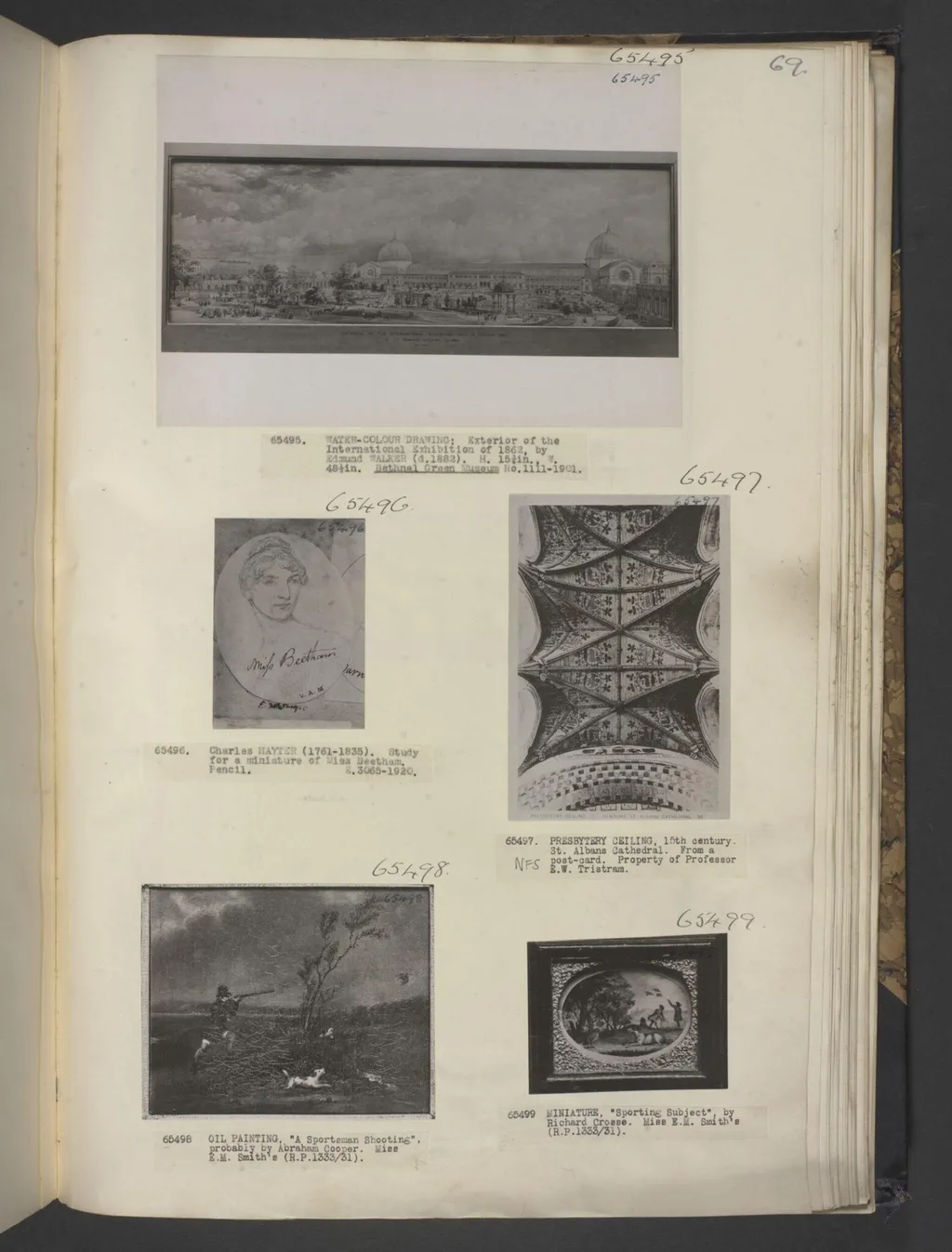
Exterior of the International Exhibition of 1862. is a watercolor work on paper by the Impressionist artist Edmund Walker. It dates from 1872 and is held in the collection of the Victoria and Albert Museum.
About this work
The artist focused on everyday details—like the neat rows of trees and the quiet water—to make the whole scene feel real.
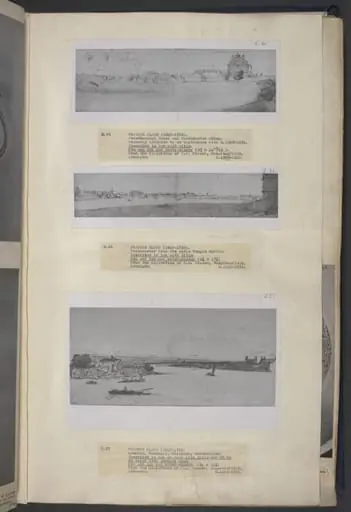
This watercolor shows a long, grand building with domes and towers in the distance. Trees line a wide path leading up to it, and the sky above is soft and cloudy. The scene looks calm, with light bouncing off the water in the foreground.
The artist focused on everyday details—like the neat rows of trees and the quiet water—to make the whole scene feel real. This was part of a big event in 1862, where people showed off new ideas and inventions.
If you like this style, check out the Victoria and Albert Museum for more works like it.
Overview
Edmund Walker’s 1872 watercolor depicts the exterior of the International Exhibition building in London, constructed for the 1862 global showcase. Rendered in delicate washes, the painting captures the structure’s expansive form with domes and towers receding into the distance. The composition emphasizes quiet observation rather than spectacle, focusing on the surrounding landscape and atmospheric conditions that frame the architecture.
Subject & Meaning
The painting presents the exhibition hall not as a monument to industrial triumph, but as a serene presence within a cultivated natural setting. Trees line a path leading toward the building, while calm water reflects the soft sky, suggesting contemplation over celebration. Walker’s choice to highlight everyday elements—shaded walkways, still pools, and cloud-dappled light—conveys a sense of peaceful coexistence between human achievement and the natural world.
Technique & Style
Walker employed transparent watercolor washes to achieve subtle gradations of light and atmosphere. The architecture is rendered with restrained precision, while the foreground foliage and water are suggested through loose, fluid brushwork. The absence of figures enhances the stillness of the scene, allowing the interplay of light, texture, and spatial depth to dominate. His technique reflects a quiet, observational approach characteristic of mid-Victorian topographical watercolor.
History & Provenance
Created a decade after the exhibition closed, the painting was likely made from sketches or memory, not on-site. It entered the Victoria and Albert Museum’s collection as part of its broader effort to document design and public exhibitions of the era. The work’s date of creation, 1872, indicates a reflective, retrospective intent, positioning the building as a remembered landmark rather than a contemporary spectacle.
Context
The 1862 International Exhibition was London’s second major world’s fair, showcasing global industry and design. While the event drew millions, Walker’s painting avoids its commercial and technological spectacle. Instead, it aligns with a growing Victorian interest in landscape as a medium for recording cultural memory, reflecting a shift from documenting events to preserving their quiet, enduring presence in the environment.
Legacy
Walker’s watercolor contributes to a body of 19th-century British topographical art that valued subtlety over grandeur. Its inclusion in the Victoria and Albert Museum underscores its role in preserving the visual culture of public exhibitions. Though not widely known, it exemplifies how artists of the period interpreted monumental architecture through intimate, atmospheric means, influencing later approaches to documenting urban and institutional spaces.
Artist & collection

Artist
Sir Byron Edmund Walker, CVO was a Canadian banker. He was the president of the Canadian Bank of Commerce from 1907 to 1924, and a generous patron of the arts, helping to found and nurture many of Canada's cultural and…