Artwork
Queen Summer, or the Tourney of the Lily and the Rose
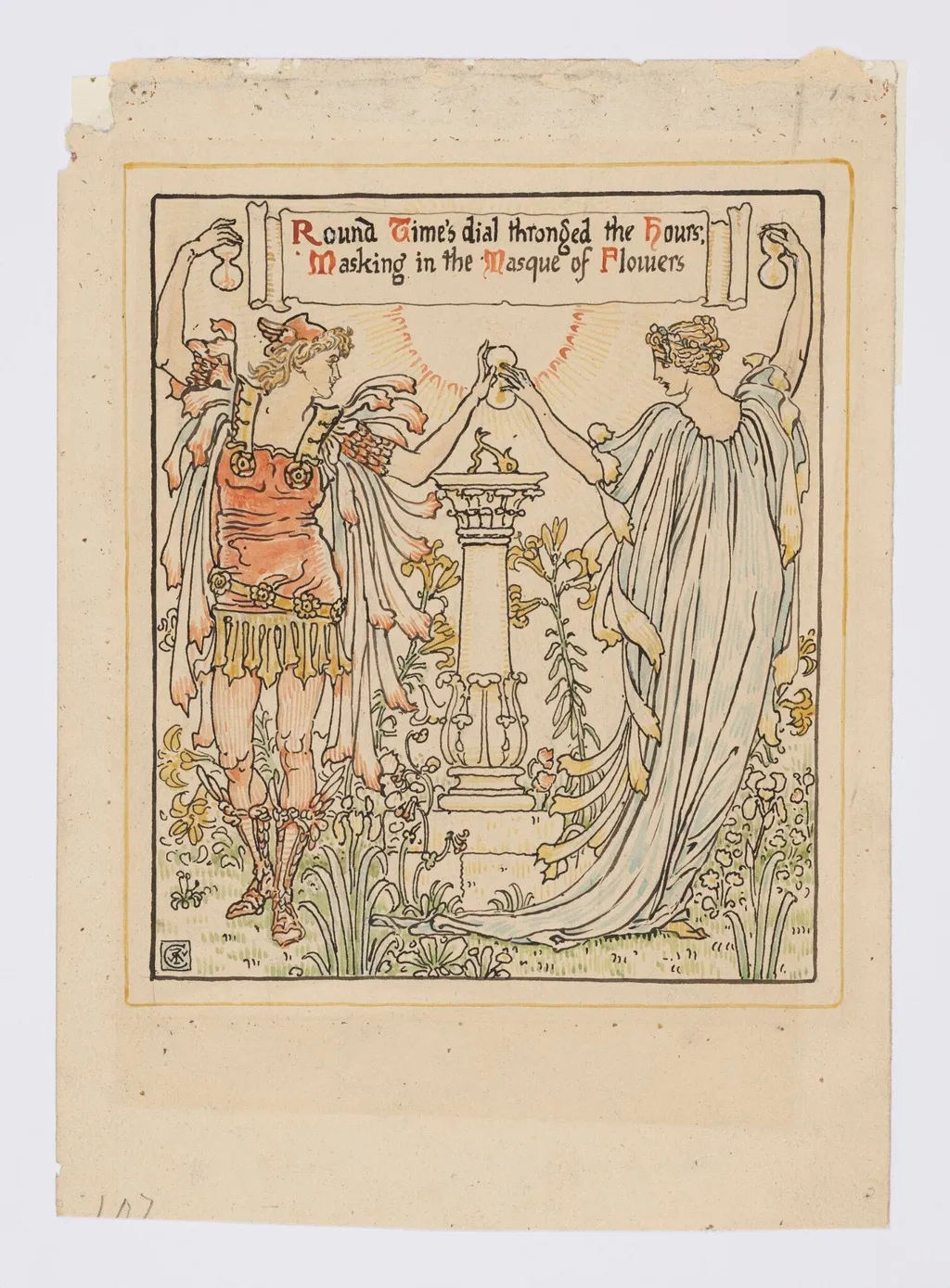
Queen Summer, or the Tourney of the Lily and the Rose is a drawing by the Impressionist artist Walter Crane. It dates from 1891 and is held in the collection of the Victoria and Albert Museum.
About this work
Overview
The composition reflects Crane’s interest in integrating poetic text with visual design, characteristic of his work in the Arts and Crafts movement.
Created in 1891, this watercolor drawing by Walter Crane serves as a preparatory study for his larger work, *Queen Summer, or the Tourney of the Lily and the Rose*. It depicts three ethereal figures in a lush, stylized garden, each associated with symbolic elements tied to time, season, and natural cycles. The composition reflects Crane’s interest in integrating poetic text with visual design, characteristic of his work in the Arts and Crafts movement.
Subject & Meaning
The three figures represent allegorical personifications linked to time and seasonal change. The left figure, in red with a floral staff, may symbolize summer’s vitality; the central figure, holding an hourglass, embodies the passage of time; the right figure, in pale blue with a sunburst staff, suggests dawn or the sun’s dominion. The surrounding vines and flowers reinforce a mythic, cyclical view of nature, while the quoted verse evokes a floral masquerade governed by temporal rhythms.
Technique & Style
Crane employed delicate watercolor washes and fine ink linework to create a luminous, flat decorative surface. Forms are simplified into graceful contours, with botanical details rendered in rhythmic, almost textile-like patterns. The absence of perspective and the emphasis on ornamental harmony reflect influences from medieval illumination and Japanese prints, aligning with his broader aesthetic of integrating art with poetic and symbolic narrative.
History & Provenance
This drawing was produced as part of Crane’s preparatory process for a major illustrated work commissioned in the early 1890s. It remained in the artist’s possession until his death in 1915, after which it entered private collections. Its survival as a standalone study offers insight into Crane’s methodical approach to composition, revealing how textual and visual elements were refined before final execution.
Context
Crane worked during a period when artists sought to revive handcrafted art in reaction to industrial mass production. His illustrations often drew from medieval romances, classical mythology, and socialist ideals, blending them into harmonious, symbolic imagery. This drawing reflects the broader Arts and Crafts ethos, where beauty, craftsmanship, and moral purpose were intertwined in visual storytelling.
Legacy
Crane’s integration of poetry, symbolism, and natural forms influenced later illustrators and designers in the early 20th century. Though less widely known today than his children’s book illustrations, this study exemplifies his unique ability to elevate decorative art into contemplative allegory. His approach to combining text and image continues to inform contemporary discussions on the relationship between illustration and literary narrative.
Artist & collection
Artist
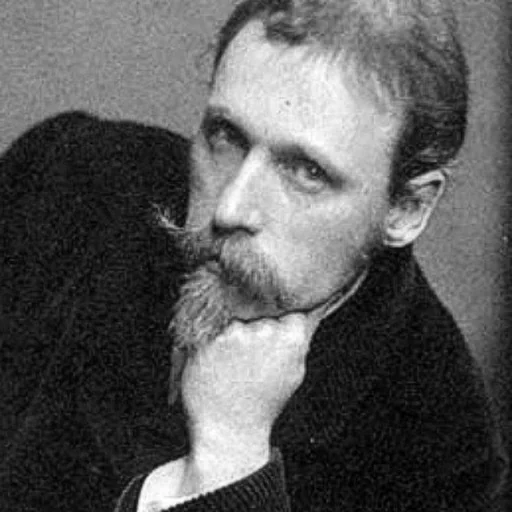
Walter Crane (15 August 1845 – 14 March 1915) was an English artist and book illustrator.

![Sketch of a Couple Seated with Cloud Studies [verso], by Walter Crane](https://artifactworldgallery.com/img/walter-crane--sketch-of-a-couple-seated-with-cloud-studies-verso--bd0c5f7cb1d389b6-w320.webp)
![Kensington Gardens [recto], by Walter Crane](https://artifactworldgallery.com/img/walter-crane--kensington-gardens-recto--dc8c93f0e2ebbd57-w320.webp)
 Des Pfarrers Tochter von Taubenhein (The Parson's Daughter from Taubenhain)
 The Passer-By (Le Passant)
 Bacchus
 Lady Picking Flowers
 Young Woman Seated in a Garden
 Lady with Fan, with attendant nymphs
 Girls and Two Babies, illustration to A Day in a Child's Life
 Hasan rejoins his wife
 Withered Spring
 Music
Music Gloria
 The Golden Legend (Legende Dorée)