Artwork
Gray and Silver: A Nocturne
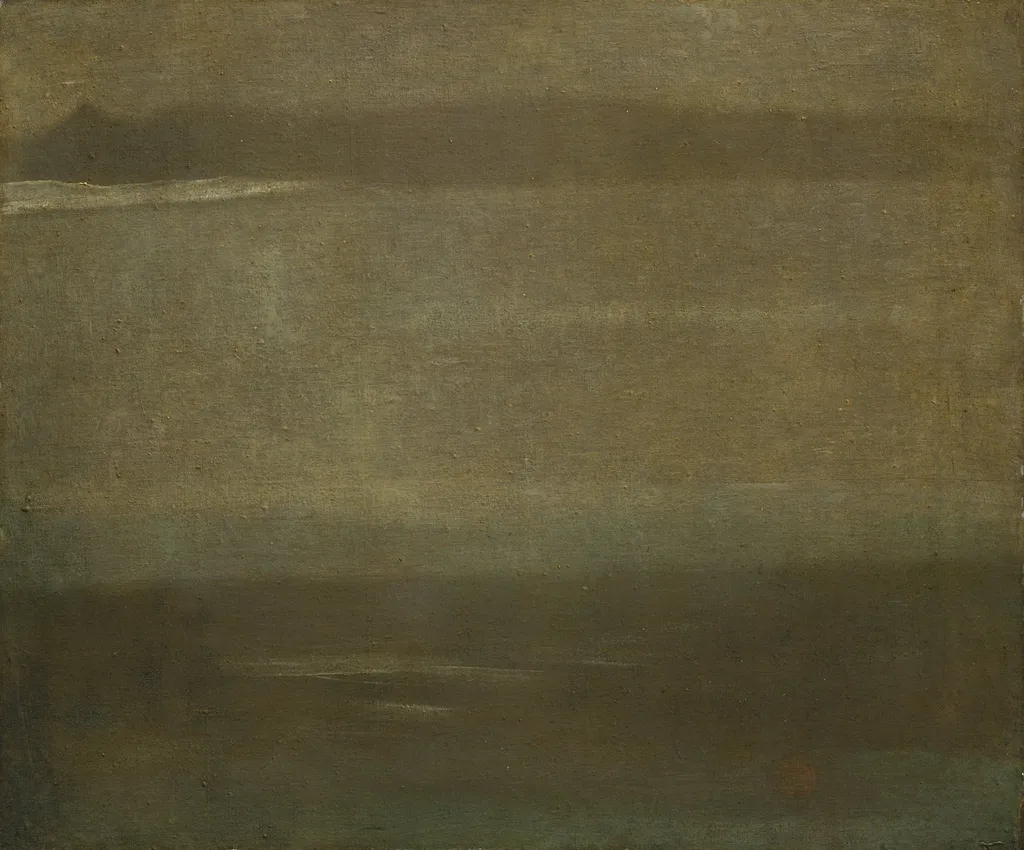
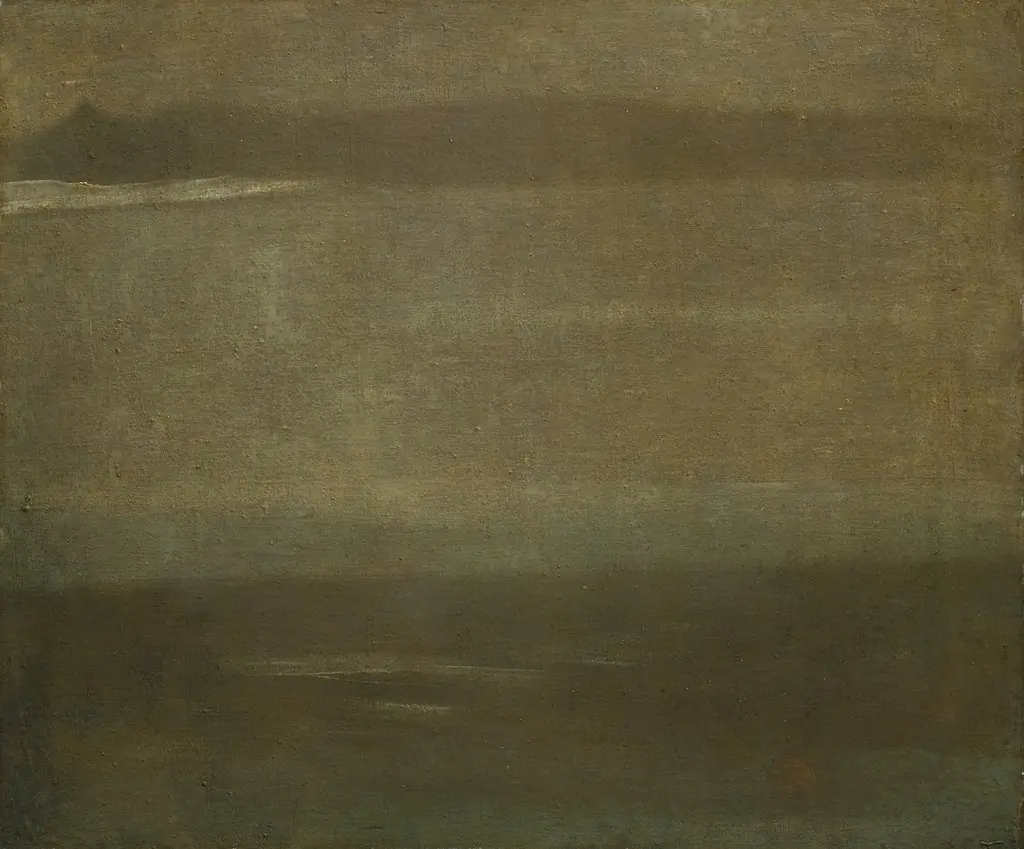
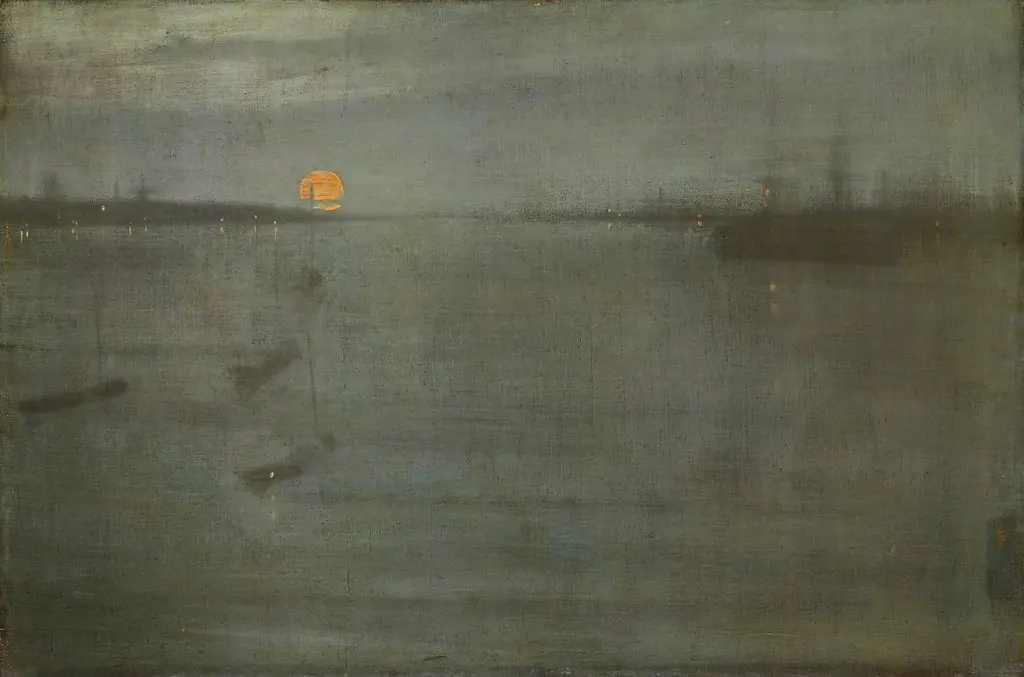
Gray and Silver: A Nocturne is an unspecified painting by the Impressionist artist Walter Greaves. It dates from 1890 and is held in the collection of the Cleveland Museum of Art.
About this work
Overview
Walter Greaves’ landscape Gray and Silver: A Nocturne, dated circa 1890, is part of the collection at the Cleveland Museum of Art. The work presents an ambiguous, night‑time scene rendered in a muted palette of browns, grays and a faint yellowish glow near the upper edge. The overall effect is one of quiet obscurity, as if viewed through a veil of fog.
Subject & Meaning
The title suggests a nocturnal setting, with limited illumination barely penetrating the darkness. The indistinct forms and soft transitions evoke a sense of stillness and contemplation, inviting the viewer to imagine a landscape shrouded in mist rather than to identify specific objects within it.
Technique & Style
Greaves employs delicate, blended brushwork that dissolves hard edges, creating a seamless atmospheric veil. The restrained colour scheme and the subtle modulation of light align the painting with late‑19th‑century approaches to tone and mood, emphasizing overall impression over detailed representation.
History & Provenance
Created around 1890, the canvas entered the Cleveland Museum of Art’s holdings at an unspecified date, where it remains on view. Its acquisition reflects the museum’s interest in works that explore tonal nuance and the evolving landscape tradition of the period.
Context
Produced during a time when artists were increasingly investigating the effects of light and atmosphere, the painting resonates with contemporary experiments in Impressionism and Tonalism. Greaves’ focus on muted hues and softened forms mirrors broader artistic concerns about capturing fleeting visual sensations rather than precise topography.
Artist & collection