Artwork
James McNeill Whistler
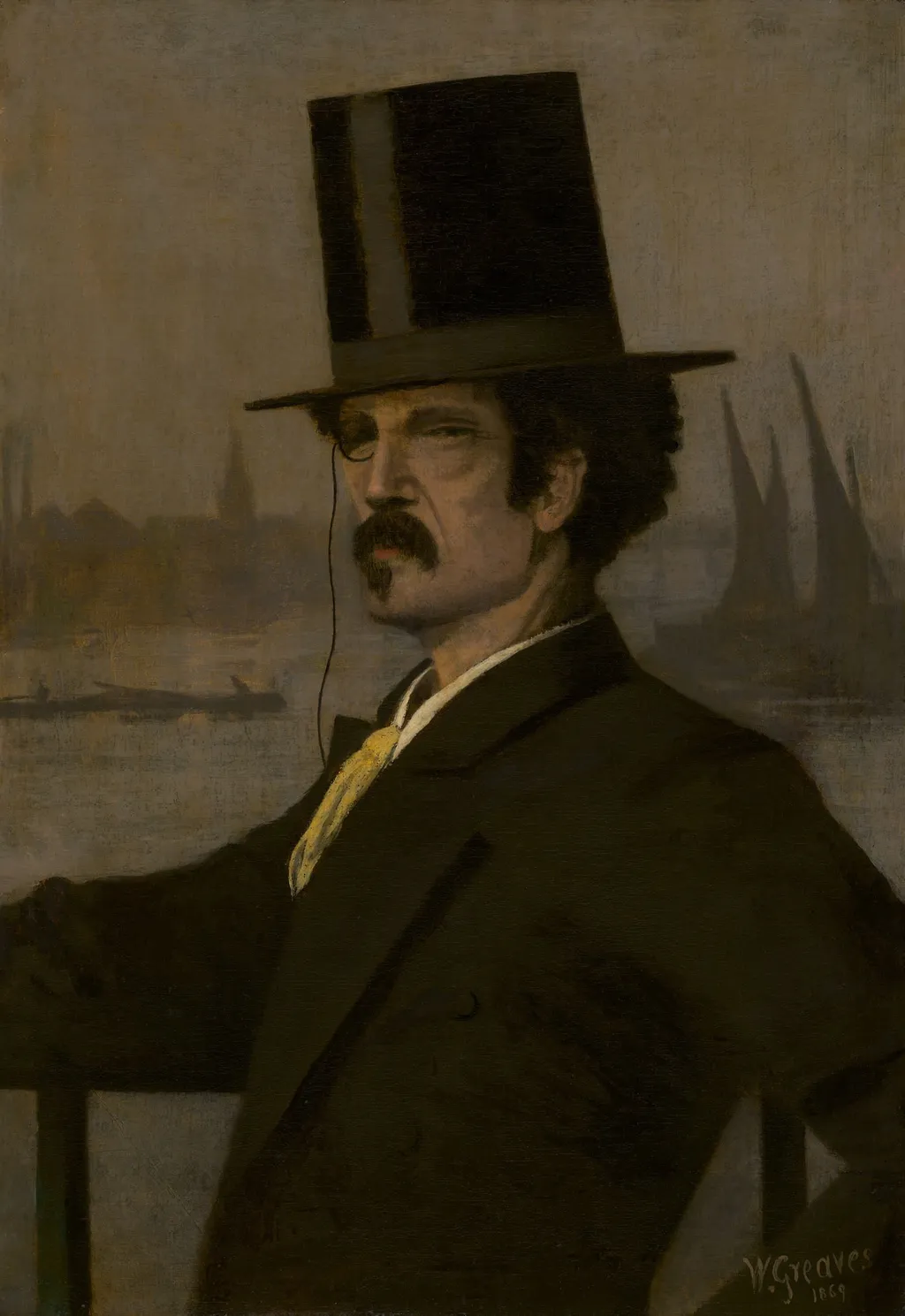
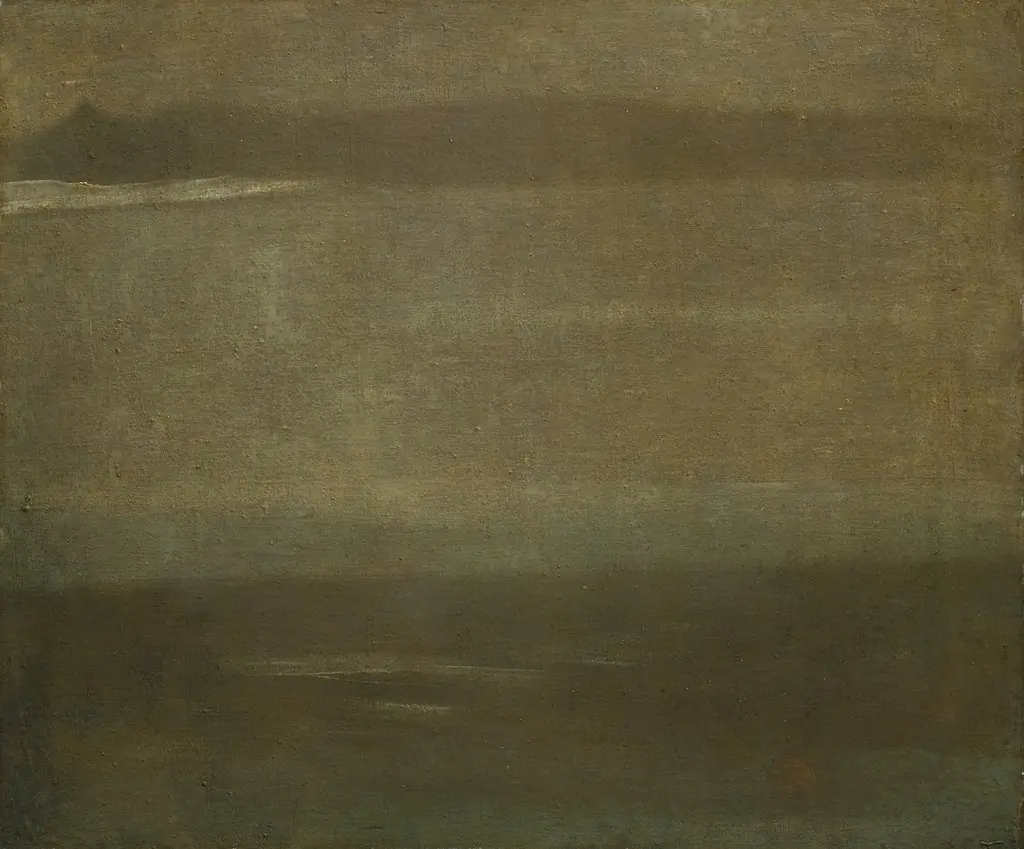
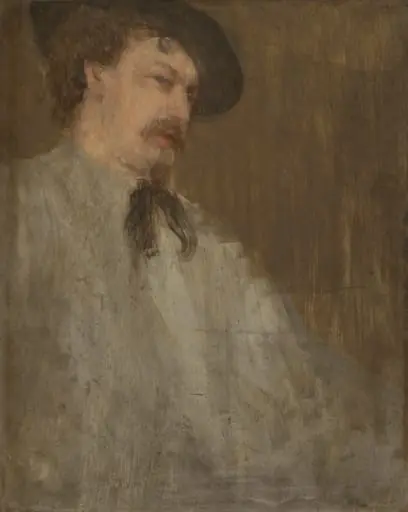
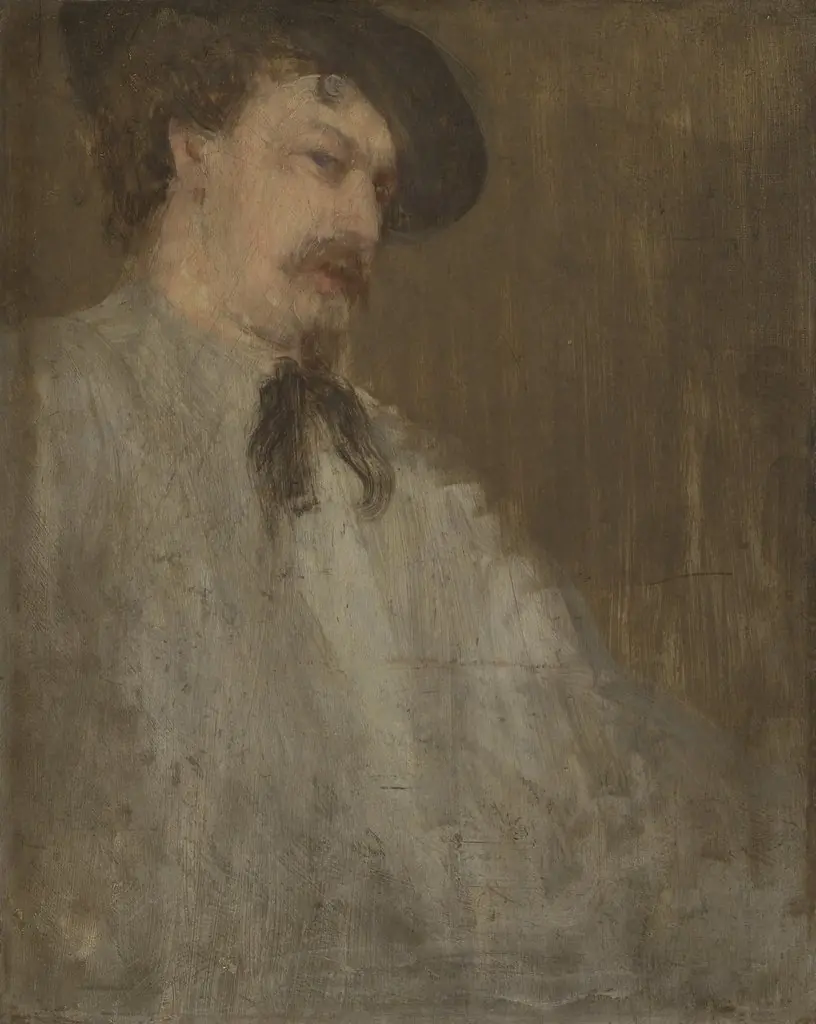
James McNeill Whistler is an oil painting by Walter Greaves. It dates from 1869 and is held in the collection of the Art Institute of Chicago.
About this work
Overview
This 1869 oil painting by Walter Greaves depicts James McNeill Whistler, the American-born artist known for his tonal compositions and aesthetic philosophy.
This 1869 oil painting by Walter Greaves depicts James McNeill Whistler, the American-born artist known for his tonal compositions and aesthetic philosophy. Rendered in a restrained palette, the portrait presents Whistler in formal attire against a muted, ambiguous background. The work is part of the permanent collection at the Art Institute of Chicago, where it serves as a visual record of one of the 19th century’s most influential figures in modern art.
Subject & Meaning
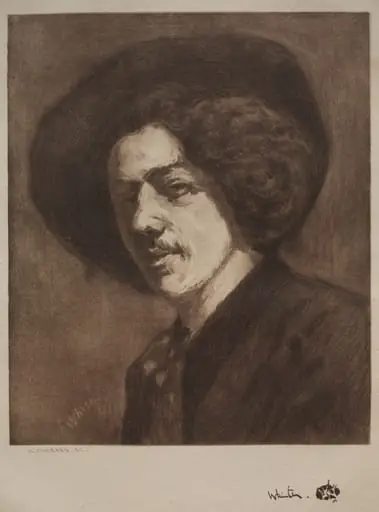
Whistler is portrayed in a contemplative pose, gazing leftward with a reserved expression that suggests introspection rather than confrontation. His black coat and top hat convey the dignity of a professional artist, while the white shirt and yellow tie introduce subtle contrast without flamboyance. The composition avoids narrative elements, focusing instead on presence and character, aligning with Whistler’s own emphasis on harmony and mood over storytelling.
Technique & Style
Greaves employs soft transitions between light and shadow to model the face and fabric, avoiding harsh outlines. The grayish-brown background lacks detail, allowing the figure to emerge through tonal variation rather than defined forms. Brushwork is controlled yet expressive, particularly in the rendering of the tie and the texture of the coat, demonstrating an attention to subtle gradations that reflect the influence of contemporary portrait traditions.
History & Provenance
Painted in 1869, the portrait was created during Whistler’s time in London, where he was establishing his reputation. Walter Greaves, a lesser-known artist and associate of Whistler, produced this likeness likely as a personal or professional tribute. The painting entered the Art Institute of Chicago’s collection in the 20th century, where it has remained as a quiet testament to the artist’s circle and the era’s portraiture practices.
Context
In the late 1860s, Whistler was developing his theories of art as an arrangement of form and color, distancing himself from narrative realism. This portrait, made by a peer, reflects the cultural milieu of London’s artistic community, where personal relationships and aesthetic ideals intersected. Unlike grand official portraits, this work captures a private moment, aligning with the growing interest in psychological depth over ceremonial representation.
Legacy
Though not widely exhibited, the portrait endures as a factual document of Whistler’s appearance and demeanor during a pivotal phase of his career. It offers insight into how contemporaries perceived him—not as a provocateur, but as a composed, thoughtful figure. Its quiet presence in the Art Institute of Chicago continues to support scholarly study of Whistler’s persona and the networks of 19th-century artists.
Own this work as a print
Artist & collection