Artwork
Reproducere după o pictură în ulei cu titlul „8 revoluționari trecând fluviul” realizată de Wang Cheng-lie și datată în 1957. Exemplarul a fost oferit lui Nicolae Ceaușescu, secretar general al Partidului Comunist Român; șeful de stat al Republicii Socialiste România, ca parte a unui album ce conține un catalog quatrolingv (franceză, spaniolă, engleză, chineză) și alte 9 reproduceri după picturi cu semnificație istorică pentru mișcarea comunistă în RP China.
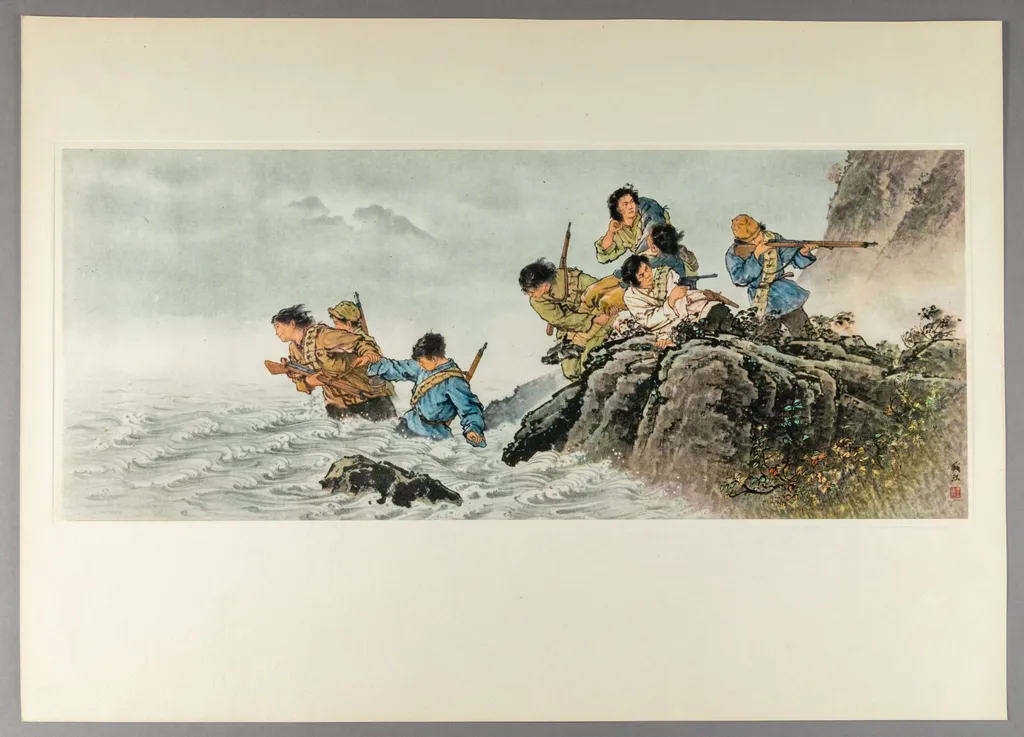
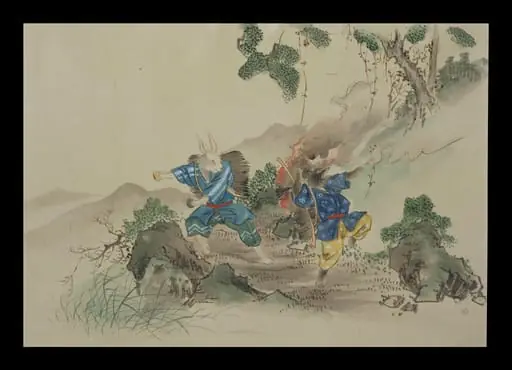
Reproducere după o pictură în ulei cu titlul „8 revoluționari trecând fluviul” realizată de Wang Cheng-lie și datată în 1957. Exemplarul a fost oferit lui Nicolae Ceaușescu, secretar general al Partidului Comunist Român; șeful de stat al Republicii Socialiste România, ca parte a unui album ce conține un catalog quatrolingv (franceză, spaniolă, engleză, chineză) și alte 9 reproduceri după picturi cu semnificație istorică pentru mișcarea comunistă în RP China. is an unspecified painting by Wang Cheng-lie. It is held in the collection of the National Museum of Romanian History. The work is a reproduction of Wang Cheng‑lie’s 1957 oil painting titled “8 Revolutionaries Crossing the River.
About this work
Overview
The work is a reproduction of Wang Cheng‑lie’s 1957 oil painting titled “8 Revolutionaries Crossing the River.” The image depicts a small group of figures navigating a river, some wading while others scramble up a rocky bank, set against distant mountains under a cloudy sky. Traditional attire and assorted equipment—rifles, bags, tools—identify the participants as revolutionary cadres.
Subject & Meaning
The composition celebrates a collective act of struggle, emphasizing the determination of eight revolutionaries as they overcome a natural obstacle. The inclusion of weapons and tools underscores both the militant and constructive aspects of the revolutionary mission, while the rugged landscape symbolizes the hardships faced by the movement.
Technique & Style
Wang employs a muted palette of blues, greens, and earth tones, rendering the water and terrain with layered brushwork. The contrast between light and shadow creates a modest chiaroscuro effect, giving volume to the figures and depth to the surrounding hills. The overall style reflects the socialist realist aesthetic prevalent in mid‑20th‑century Chinese art.
History & Provenance
The reproduction formed part of a multilingual album—French, Spanish, English, Chinese—assembled for Nicolae Ceaușescu, then General Secretary of the Romanian Communist Party and head of state. The album contained nine additional reproductions of paintings deemed historically significant to the Chinese Communist movement.
Context
Created during the early years of the People’s Republic of China, the original painting aligns with state‑sponsored art that glorified revolutionary narratives. Its inclusion in a diplomatic gift to Romania illustrates cultural exchange between socialist states, using visual propaganda to reinforce ideological solidarity.
Legacy
Now housed in the Museum of Ethnography, the piece serves as a visual document of Cold‑War cultural diplomacy and the transnational circulation of socialist realist imagery. It offers scholars insight into how art functioned as a tool of political messaging across communist regimes.
Artist & collection
Artist

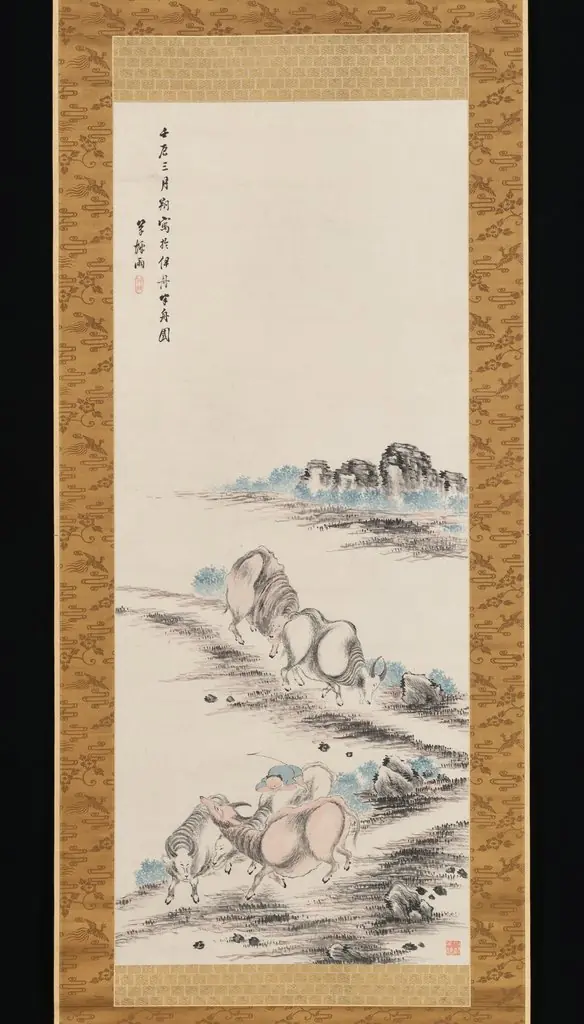 Oxen and Herdboy
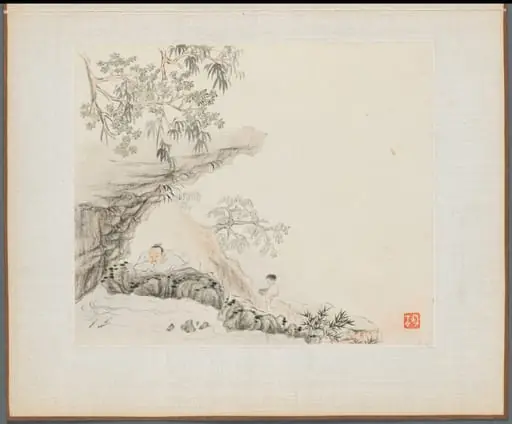 Album of Landscape Paintings Illustrating Old Poems: Scholar watching Fish
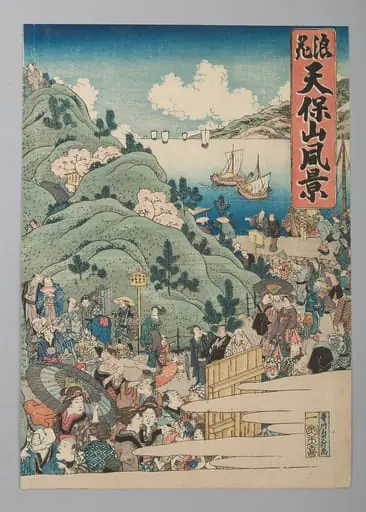 「浪花天保山風景」|“View of Mount Tenpō in Osaka” (Naniwa Tempōzan fukei)
 Landscape with Figures
 Rinsing silk threads in river
 Drinking Festival of the Eight Immortals of the Wine Cup
 清 曹澗 倣名家山水 冊|Landscapes in the Styles of Various Artists
 Untitled
 南宋 馬遠 高士觀瀑圖 冊頁 絹本|Scholar viewing a waterfall
 Reminiscences of Qinhuai River
 Landscapes After Old Masters
 Landscape with Figures