Artwork
「浪花天保山風景」|“View of Mount Tenpō in Osaka” (Naniwa Tempōzan fukei)
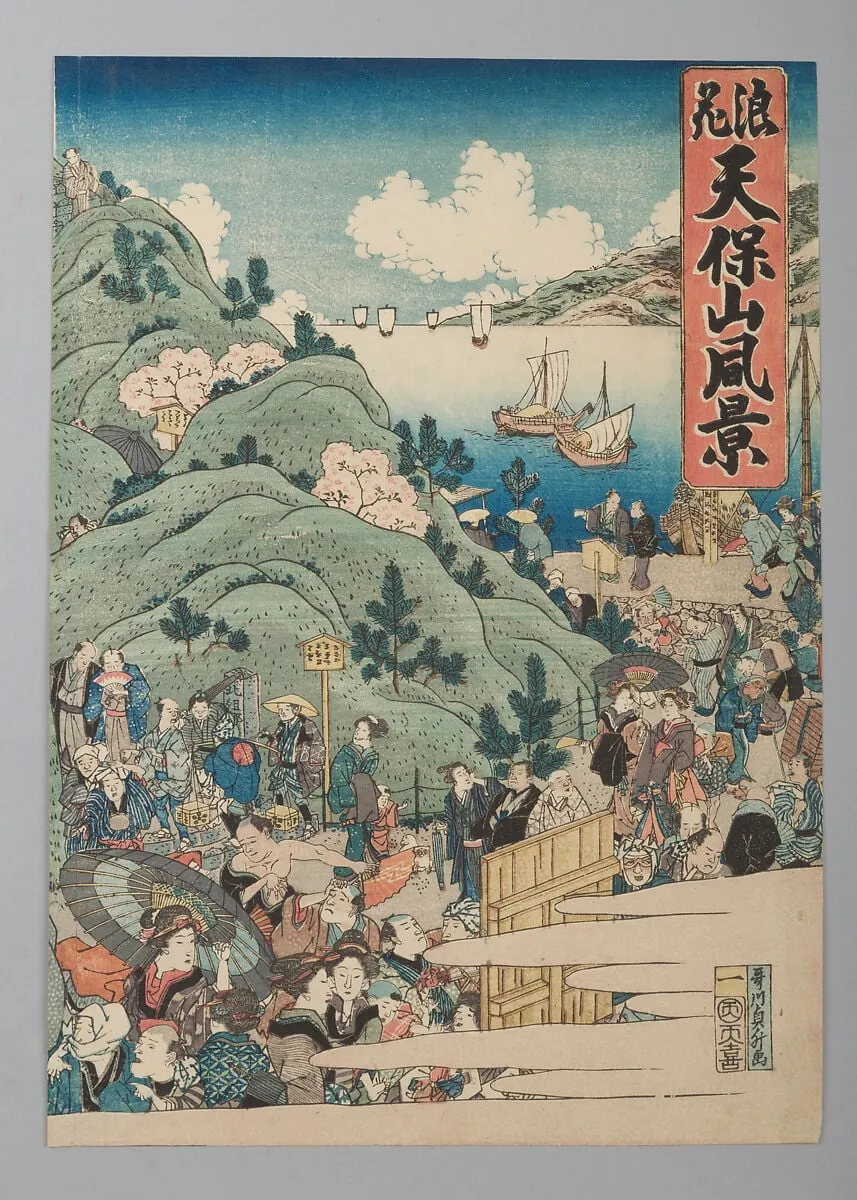
「浪花天保山風景」|“View of Mount Tenpō in Osaka” (Naniwa Tempōzan fukei) is an ink print by the Romanticist artist Hasegawa Sadamasu 長谷川貞升. It dates from 1836 and is held in the collection of the Metropolitan Museum of Art.
About this work
The artist packed in tiny details—look at how the crowd’s faces all feel different, even in the same busy space.
This print shows a crowded riverside scene with cherry blossoms in pink bursts along a hillside. People in colorful robes gather near a bridge, some holding parasols or leaning on walking sticks. In the background, a ship sails on calm water, while a mountain looms under a partly cloudy sky.
The artist packed in tiny details—look at how the crowd’s faces all feel different, even in the same busy space. This was made in 1836, a time when artists in Japan were mixing everyday life with dramatic landscapes.
Next, check out The Metropolitan Museum of Art to see this print in person.
Overview
Naniwa Tempōzan fukei (View of Mount Tenpō in Osaka) is a tetraptych of nishiki-e woodblock prints on vertical ōban, created by Hasegawa Sadamasu in 1836. The work is part of The Metropolitan Museum of Art's collection.
Subject & Meaning
The print depicts a vibrant, crowded riverside scene in Osaka, juxtaposing everyday life with a dramatic landscape. Cherry blossoms bloom on a hillside, while people in diverse attire gather near a bridge, engaging in various activities. A ship sails calmly in the background, set against the looming Mount Tenpō under a partly cloudy sky.
Technique & Style
Hasegawa Sadamasu demonstrated meticulous attention to detail in this work, as evidenced by the distinct facial expressions of the crowd amidst the bustling scene. The use of pink bursts for cherry blossoms and the blend of vibrant, colorful robes against the serene natural backdrop exemplify the nishiki-e technique's capacity for intricate, multicolored designs.
History & Provenance
Created in 1836, during a period when Japanese artists often combined quotidian scenes with majestic landscapes, Naniwa Tempōzan fukei reflects this artistic trend. The print is currently housed at The Metropolitan Museum of Art.
Artist & collection

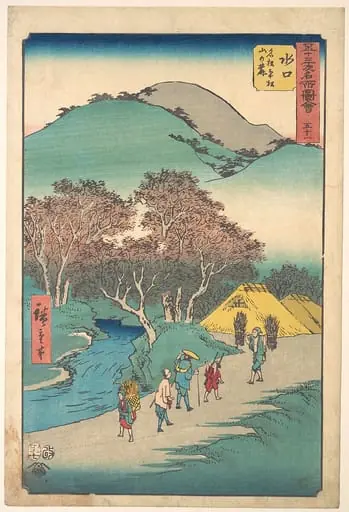 五十三次名所図会 水口|Mizukuchi
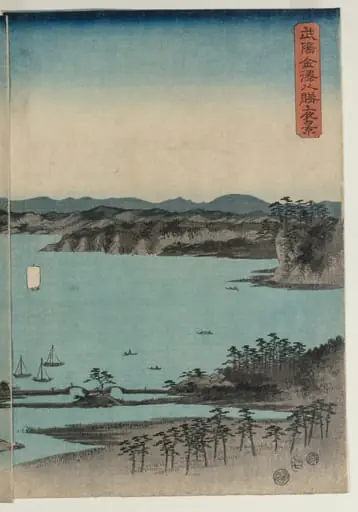 Full Moon on Kanazawa, Musashi
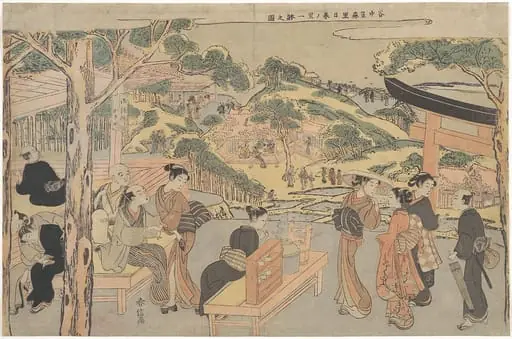 Untitled
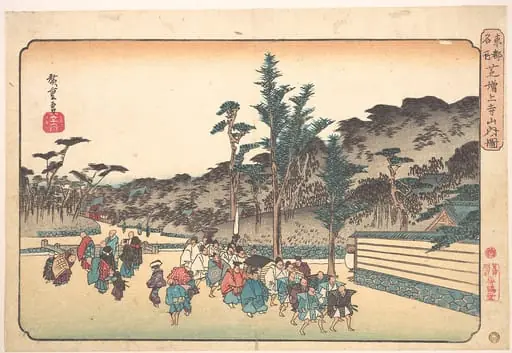 東都名所 芝増上寺山内の図|Shiba Zōjōji Sannai no Zu
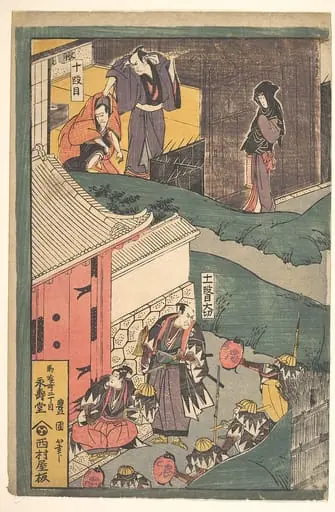 Untitled
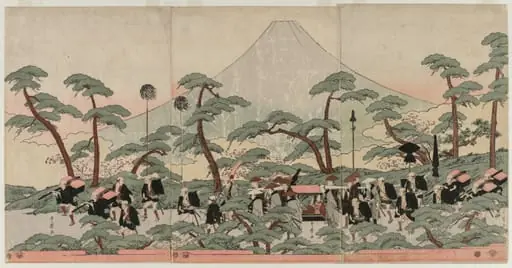 Procession at the Foot of Mount Fuji
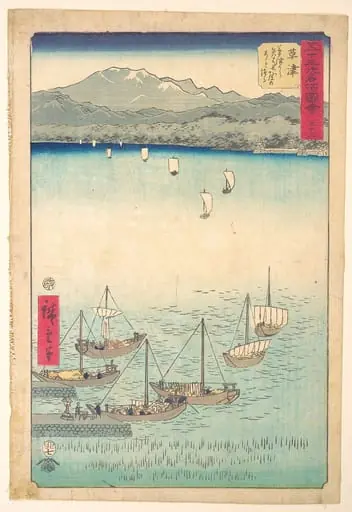 五十三次名所図会 草津|Kusatsu
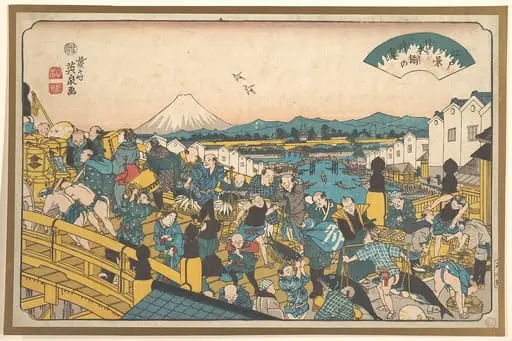 Untitled
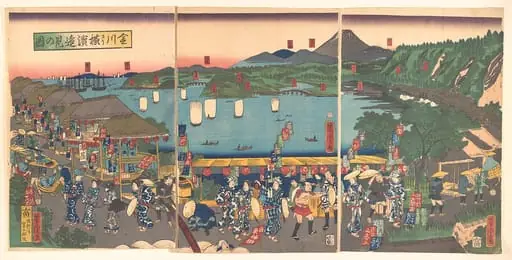 Kanagawa yōri Yokohama...ken no zu|A Distant View of Yokohama from Kanagawa
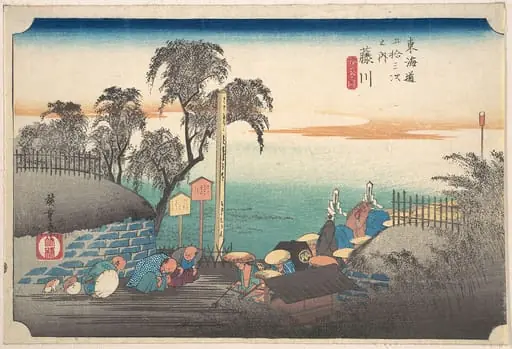 東海道五十三次之内 藤川 棒鼻の図|Fujikawa, Bo Bana
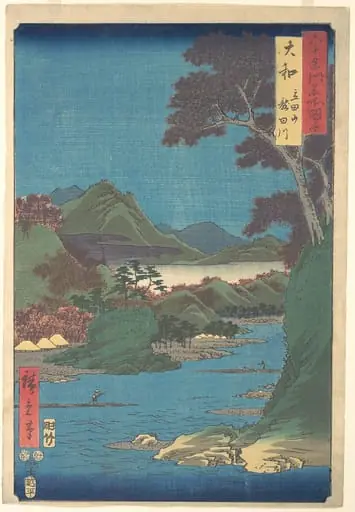 六十余州名所図会 大和 立田山 龍田川|Yamato, Tatsutayama, Tatsutagawa
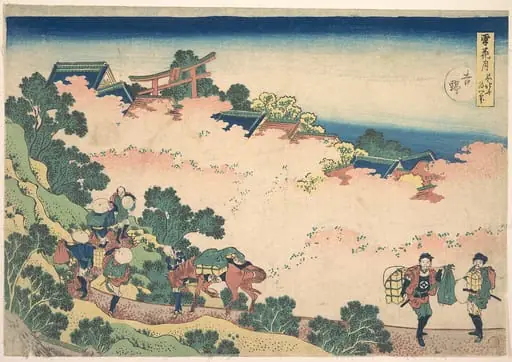 雪月花 吉野|Cherry Blossoms at Yoshino (Yoshino), from the series Snow, Moon, and Flowers (Setsugekka)