Artwork
清 王槩 設計,李漁出版 芥子園畫傳 版本|Landscape after Xia Gui (active ca. 1195–1230), from the Mustard Seed Garden Manual of Painting
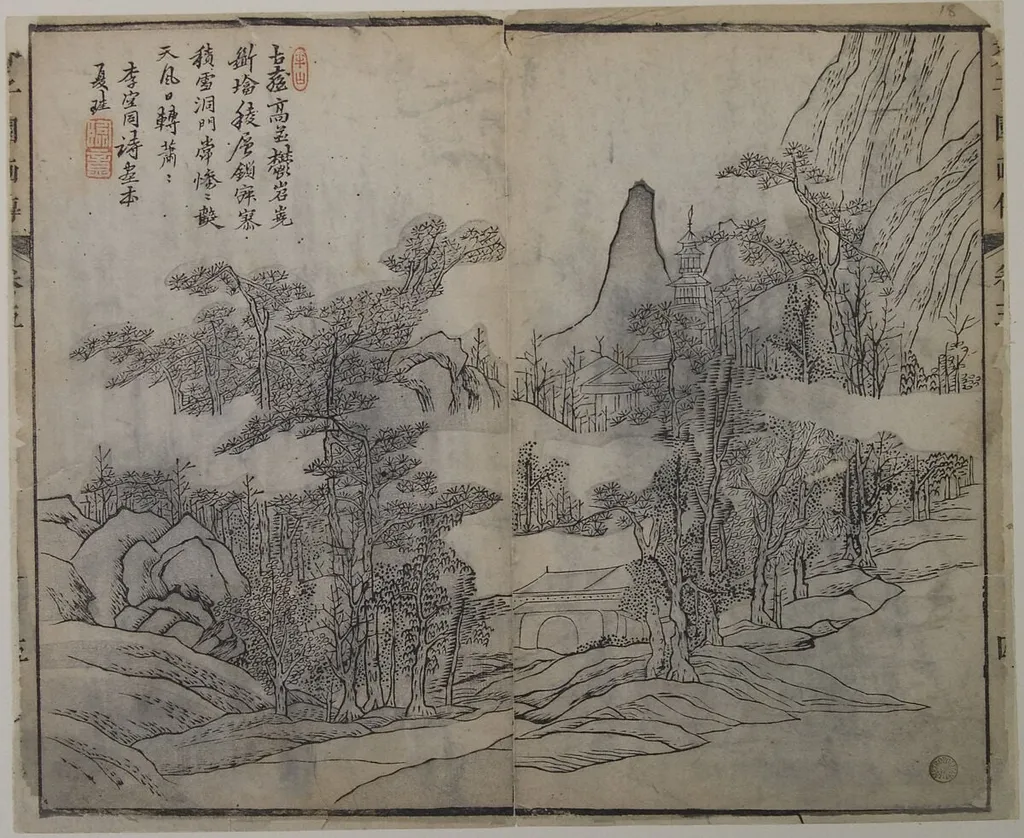
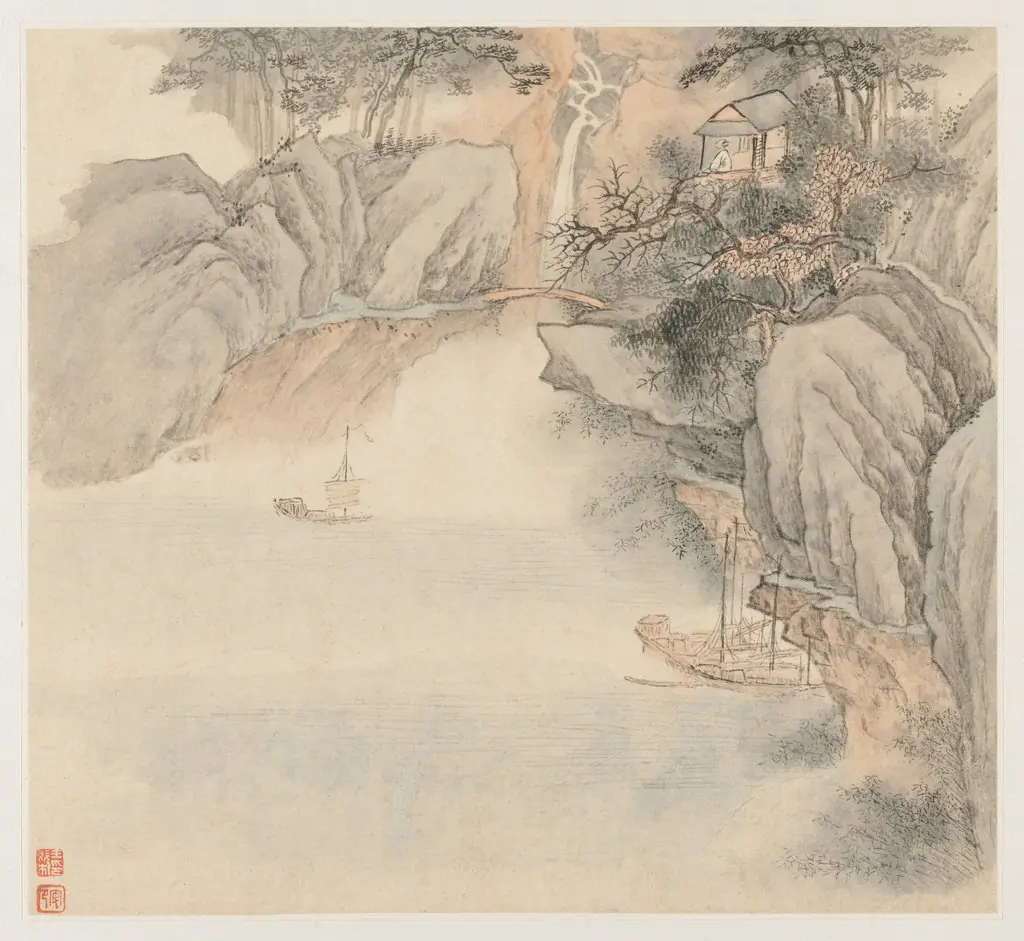
清 王槩 設計,李漁出版 芥子園畫傳 版本|Landscape after Xia Gui (active ca. 1195–1230), from the Mustard Seed Garden Manual of Painting is an ink print by the Baroque artist Wang Gai. It dates from 1679 and is held in the collection of the Metropolitan Museum of Art. This woodblock print, executed in 1679, presents a tranquil mountainous landscape rendered in ink and subtle colour on paper.
About this work
Overview
This woodblock print, executed in 1679, presents a tranquil mountainous landscape rendered in ink and subtle colour on paper. The composition features winding pathways, a modest pavilion, a towering pagoda perched on a hill, and a graceful bridge spanning a stream, all enveloped in a misty atmosphere that suggests depth and distance.
Subject & Meaning
The scene illustrates an idealized natural setting, typical of Chinese literati painting, where human structures harmonize with the surrounding terrain. The pavilion and bridge imply a contemplative retreat, inviting viewers to imagine a scholarly walk through nature, reflecting the philosophical appreciation of landscape as a conduit for inner reflection.
Technique & Style
Executed with fine, precise ink lines and delicate colour washes, the print employs layered strokes to model shadow and texture, a method characteristic of Qing-era woodblock reproduction. The use of cross‑hatching and subtle gradations creates a sense of atmospheric perspective, echoing the brushwork of the earlier Southern Song master Xia Gui, whose style the image deliberately follows.
History & Provenance
Designed by the Qing court artist Wang Gai and published by the printer Li Yu, the work appears in the influential Mustard Seed Garden Manual of Painting, a 17th‑century guide for artists. It entered the collection of The Metropolitan Museum of Art, where it is catalogued as a representative example of Chinese print culture.
Context
The Mustard Seed Garden Manual compiled exemplary paintings to instruct aspiring artists, and this print serves as a didactic model of landscape composition. By reproducing Xia Gui’s aesthetic, the manual linked contemporary Qing practitioners to the revered Southern Song tradition, reinforcing continuity within Chinese visual arts.
Artist & collection

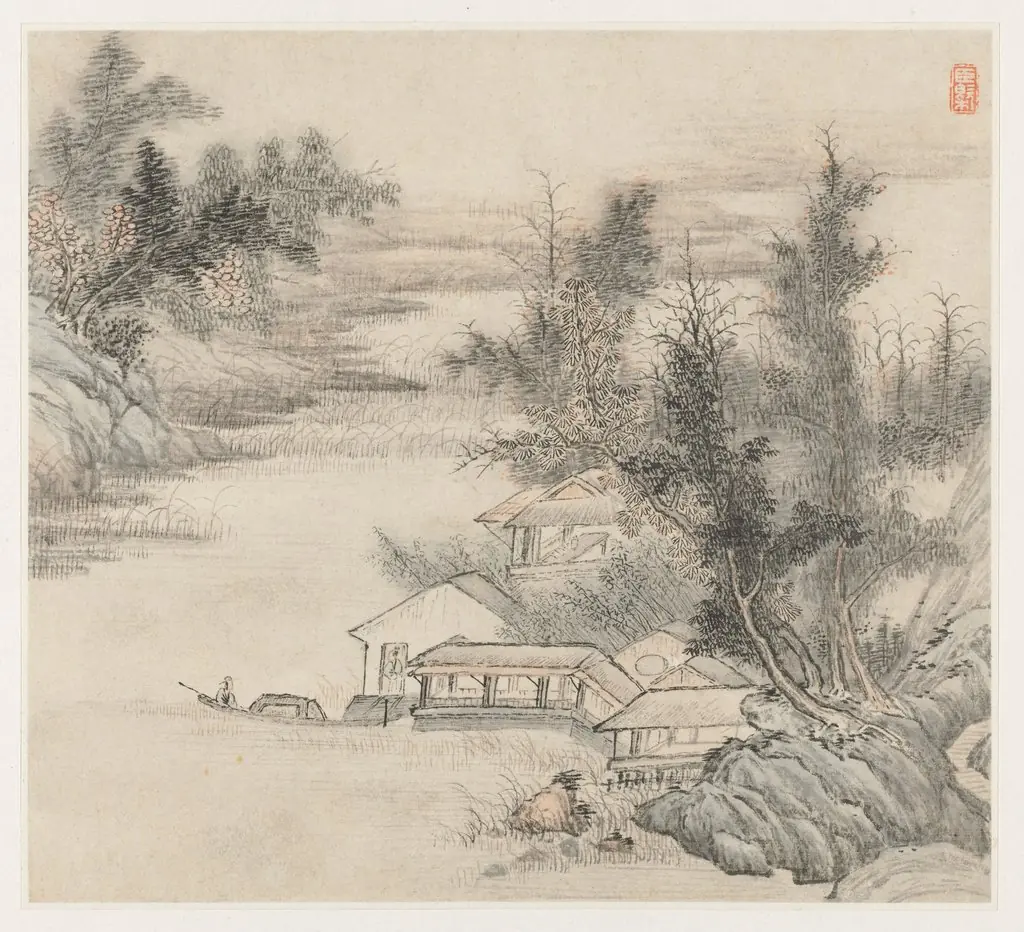
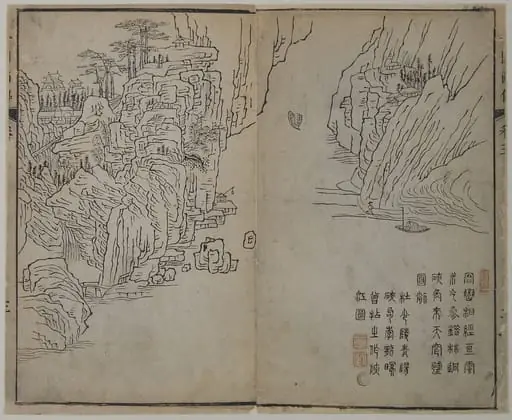 清 王槩 芥子園畫傳|Leaf from the Mustard Seed Garden Manual of Painting (Jieziyuan huazhuan)
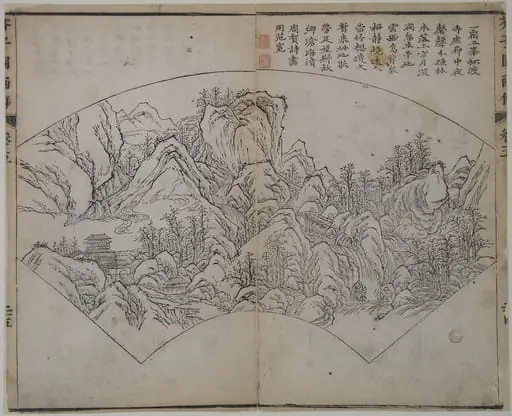 清 王槩 設計,李漁出版 芥子園畫傳 版本|Landscape after Fan Kuan (active ca. 990–1030), from the Mustard Seed Garden Manual of Painting
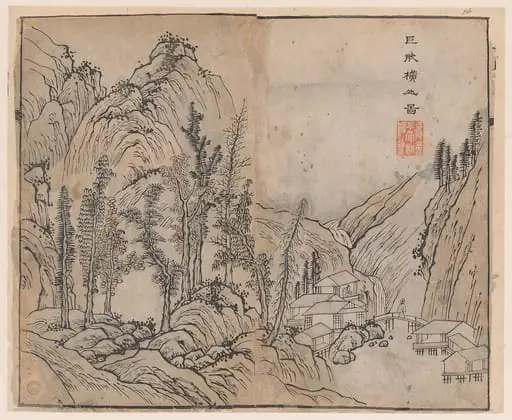 清 王槩 設計,李漁出版 芥子園畫傳 版本|Mt. Heng, after Juran (active ca. 960–965), from the Mustard Seed Garden Manual of Painting
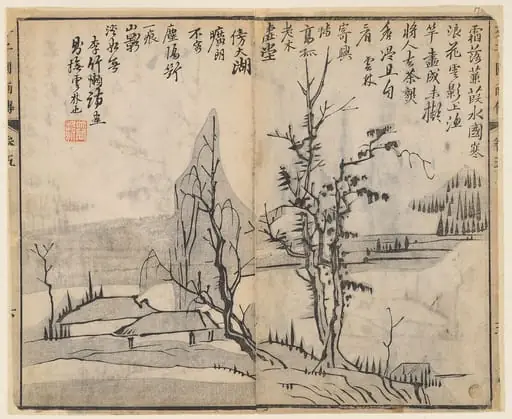 清 王槩 畫圖、李漁出版 《芥子園畫傳》 木版畫|Page from the Mustard Seed Garden Manual of Painting
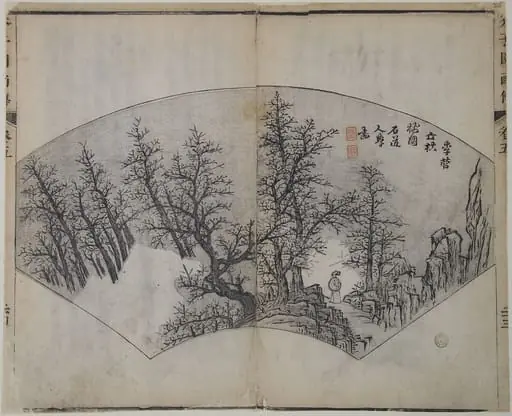 清 王槩 設計,李漁出版 芥子園畫傳 版本|Old Trees by Li Cheng (919–967), as interpreted by Kuncan (1612–1673), from the Mustard Seed Garden Manual of Painting
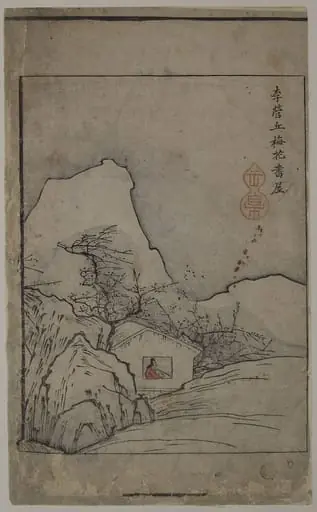 芥子園畫傳|Study Pavilion and Plum Trees: Page from The Mustard Seed Garden Manual of Painting