Artwork
Marengo
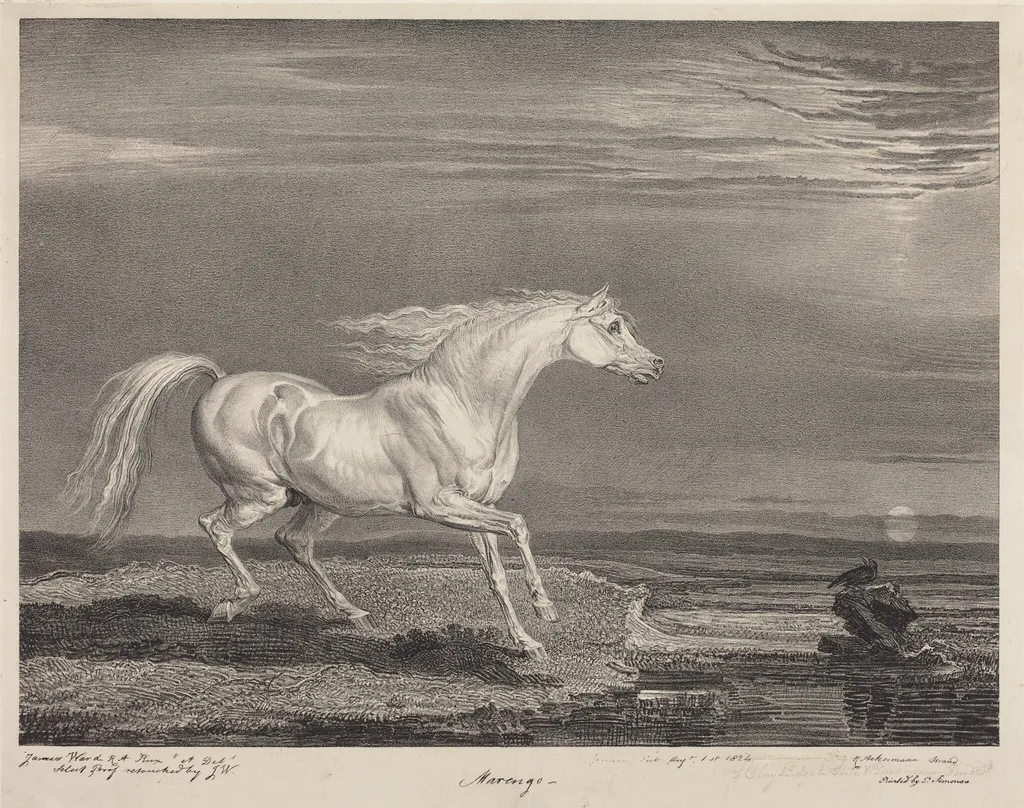
Marengo is an ink print by the Romanticist artist James Ward. It dates from 1824 and is held in the collection of the National Gallery of Art.
About this work
Overview
James Ward’s 1824 lithograph titled Marengo presents a solitary white horse in full gallop along a coastal shoreline. The animal’s muscular form and billowing mane convey a moment of swift motion, while a muted seascape recedes into the horizon, punctuated by distant rocks. The composition balances the luminous figure against a tonal palette of grays, creating a striking visual contrast.
Subject & Meaning
The work captures the dynamism of a horse in motion, a motif often associated with freedom and vitality in early nineteenth‑century art. By placing the animal against an expansive watery backdrop, Ward emphasizes both the creature’s power and its isolation, inviting viewers to contemplate the tension between natural vigor and the vast, indifferent landscape.
Technique & Style
Executed as a lithograph on chine appliqué, the image benefits from the medium’s capacity for fine tonal gradations. Ward’s handling of the stone‑based lithographic surface yields a textured, slightly grainy quality that enhances the sense of depth. The limited grayscale range accentuates the white horse, while the subtle shading of sea and sky suggests atmospheric perspective.
History & Provenance
Created in 1824, Marengo belongs to the period when lithography was gaining prominence as a reproducible fine‑art medium. The work is attributed to James Ward, an English artist known for his animal studies. Its provenance traces through private collections before entering a museum holding, where it is displayed as an example of early nineteenth‑century printmaking.
Own this work as a print
Artist & collection

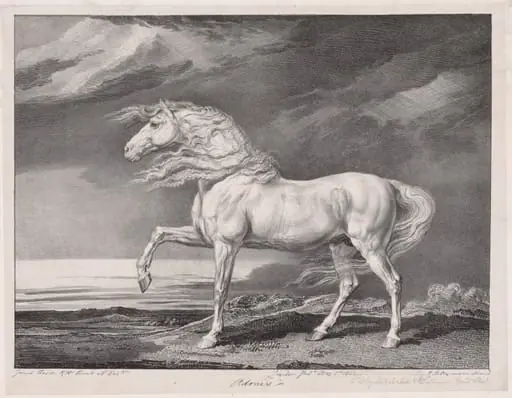 Fourteen Celebrated Horses: Adonis
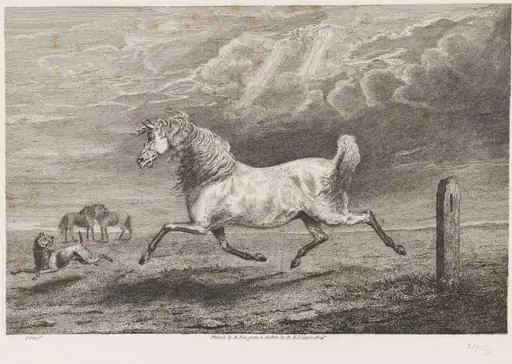 Untitled
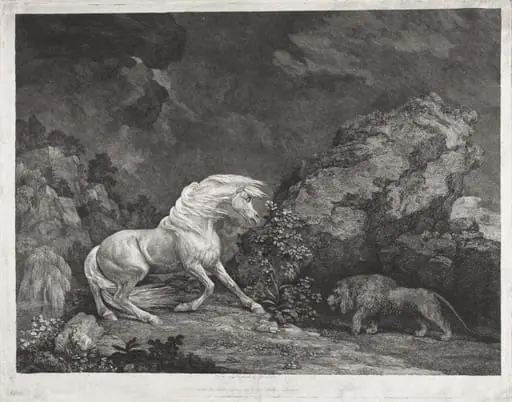 A Horse Frightened by a Lion
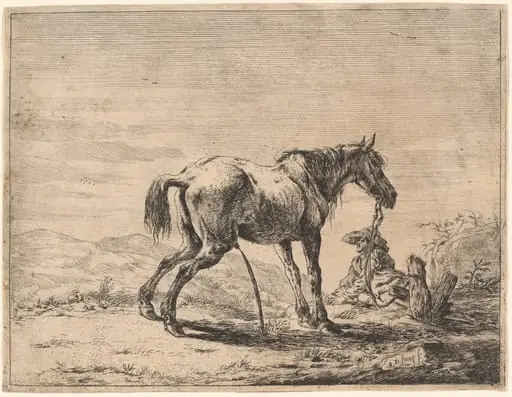 A Pissing Horse Bound to a Post
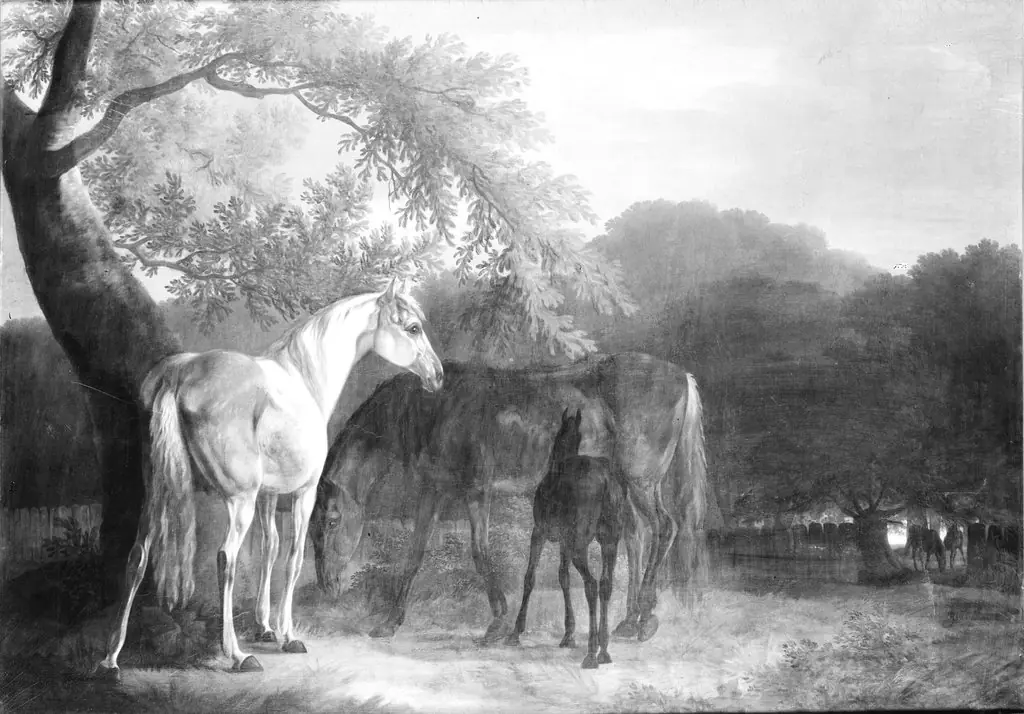 Heste i skovegn
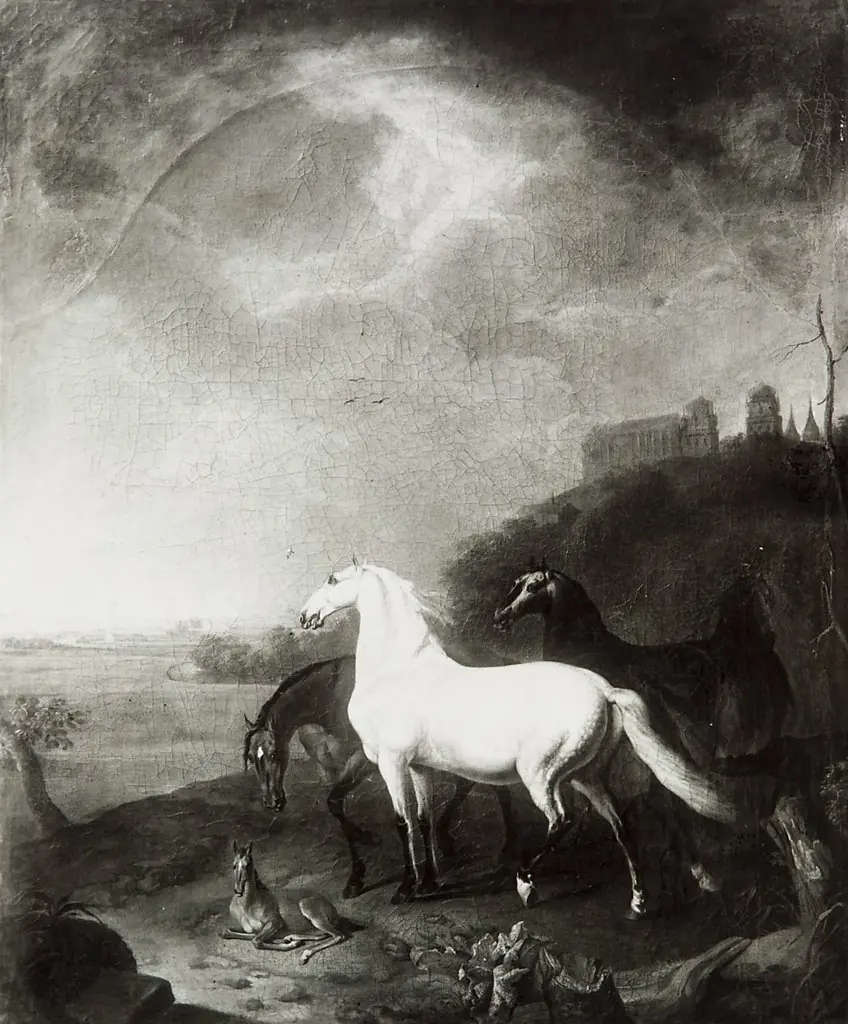 Pferde auf der Weide
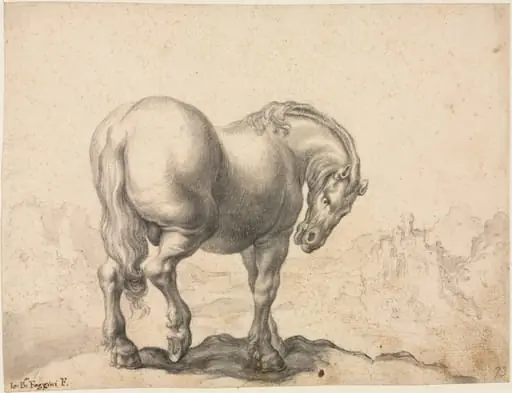 Study of a Stallion
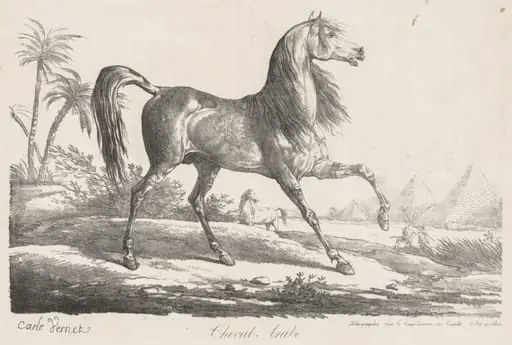 Suite de Chevaux: Cheval Arabe
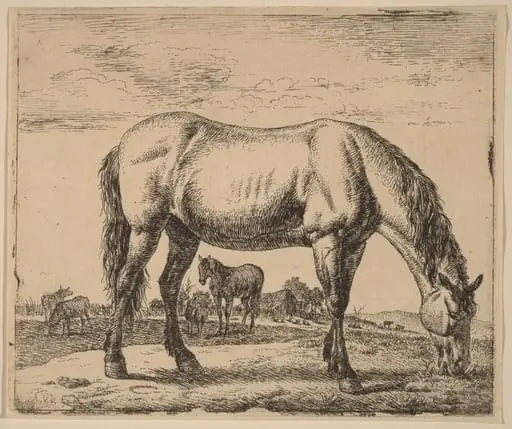 Grazing Horse
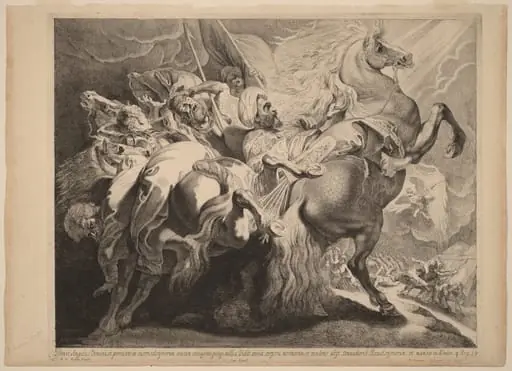 The Defeat of Sennacherib
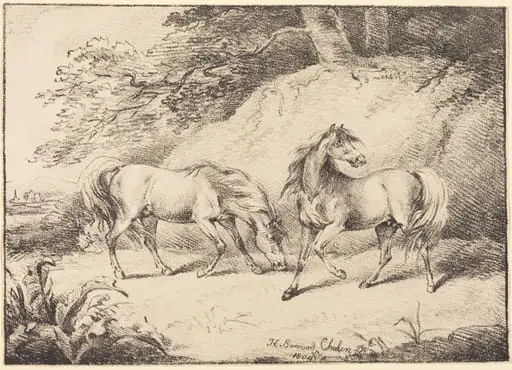 Wild Horses
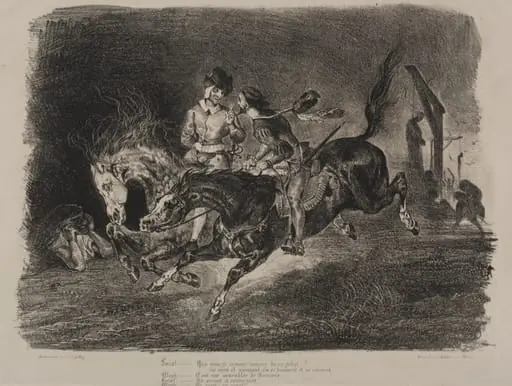 Illustrations for Faust: Faust and Méphistophélés horse riding on the Sabbath