Artwork
A Kettledrum in Mayfair
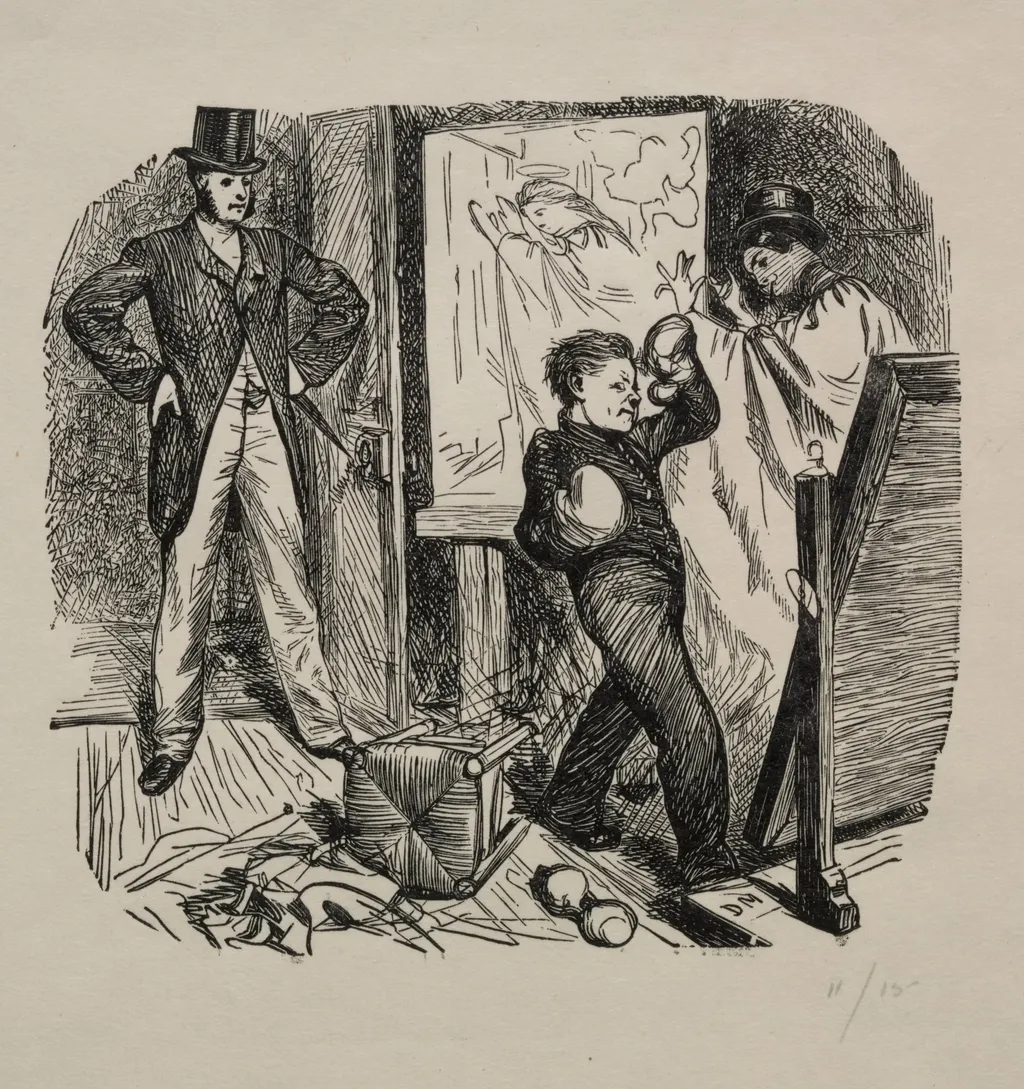
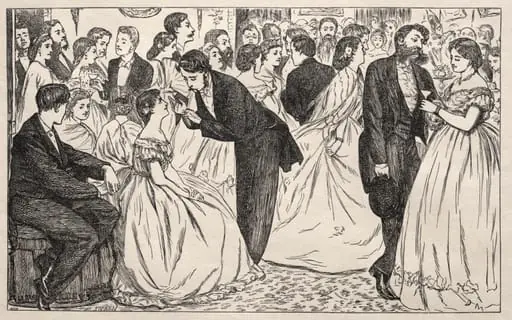
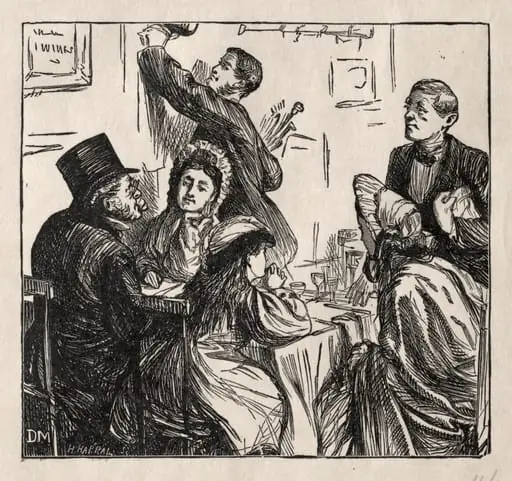
A Kettledrum in Mayfair is a print by the Impressionist artist George Louis Palmella Busson Du Maurier. It dates from 1862 and is held in the collection of the Cleveland Museum of Art.
About this work
Overview
Created in 1862, *A Kettledrum in Mayfair* is a print by George Louis Palmella Busson du Maurier, a French‑British illustrator who later contributed to *Punch* and authored novels such as *Trilby*. The work captures a fleeting domestic scene set in the fashionable Mayfair district of London, focusing on everyday interaction rather than staged drama.
Subject & Meaning
The image presents three figures inside a cramped interior: a woman bent over a kettledrum, adjusting it, while two top‑hat‑clad men stand near a doorway, observing her. The composition suggests a moment of informal domestic activity, hinting at the mingling of leisure and household duties within an upper‑class setting.
Technique & Style
Du Maurier employs rapid, sketch‑like lines that convey motion and immediacy. The drawing’s loose handling and unfinished quality give the scene a sense of spontaneity, aligning it with realist tendencies that favor ordinary moments over polished, idealised representation.
History & Provenance
Although primarily known for his later literary work, du Maurier produced this print during his early career as an illustrator. It reflects his involvement in the Victorian visual culture of the 1860s, a period when print media were widely circulated among the middle and upper classes.
Context
Mayfair, a prestigious London neighborhood, serves as the backdrop, underscoring the social milieu of the figures. The inclusion of a musical instrument—a kettledrum—links the domestic sphere to the era’s growing interest in amateur music-making among the affluent.
Legacy
The work exemplifies du Maurier’s transition from visual to literary arts, illustrating his capacity to capture everyday life with a light, observational hand. It remains a modest yet informative example of mid‑Victorian printmaking that bridges illustration and fine art.
Artist & collection
Artist
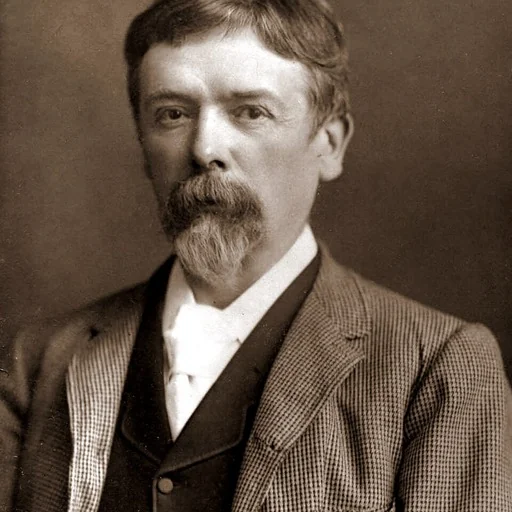
George Louis Palmella Busson Du Maurier
George Louis Palmella Busson du Maurier (French: ; 6 March 1834 – 8 October 1896) was a French-British cartoonist, illustrator, and novelist.

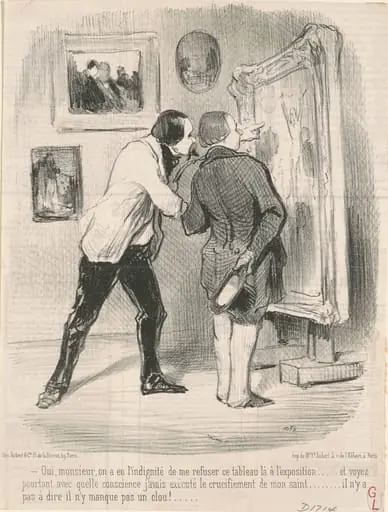 Oui ... on a eu l'indignité de me refuser ce tableau ...
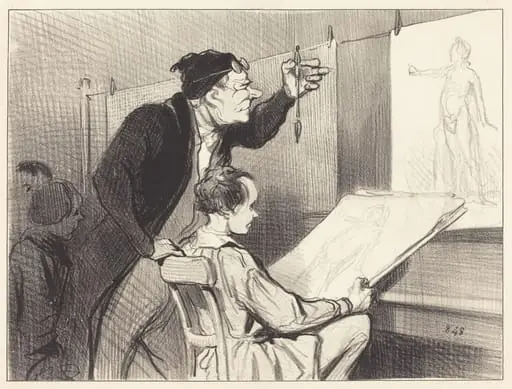 Mission pénible et délicate du professeur de dessin...
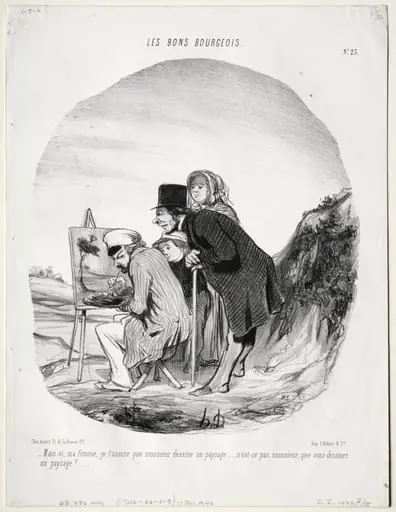 But yes, my dear, I assure you that this gentleman is drawing a landscape...
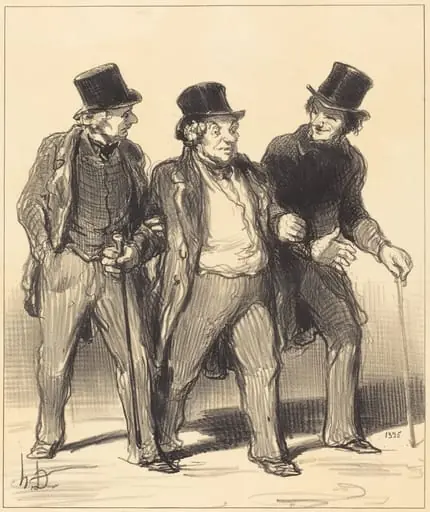 Il me semble que j'aperçois... un... chien... pas muselé!...
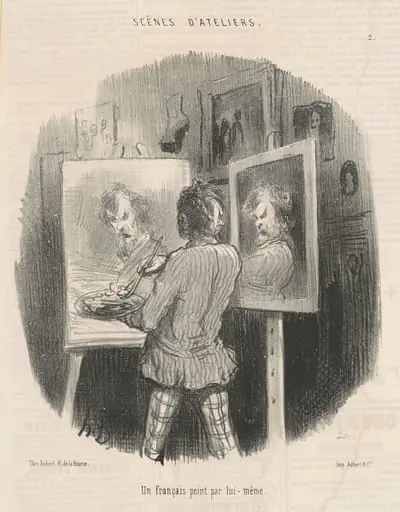 Un français peint par lui-même
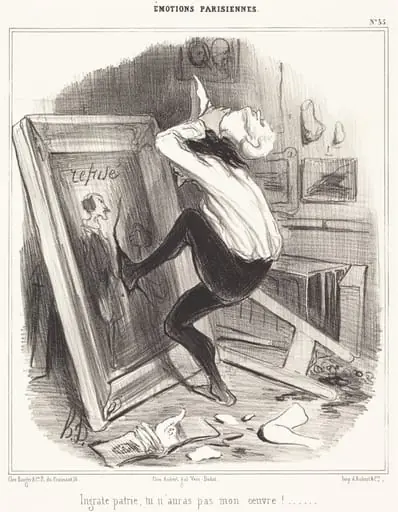 Ingrate patrie, tu n'auras pas mon oeuvre!...
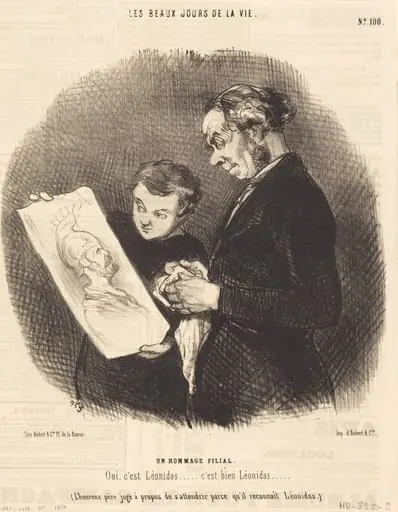 Un Hommage filial
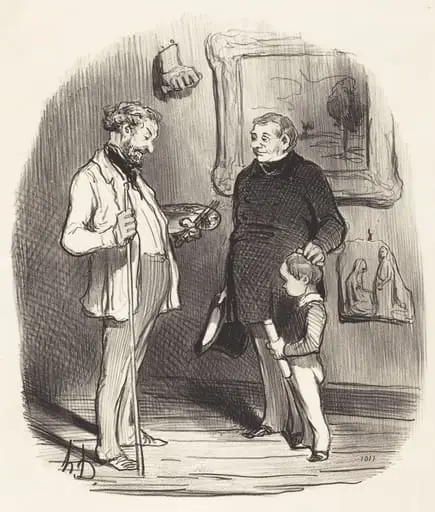 V'la mon petit... s'il n'a pas assez de moyens...
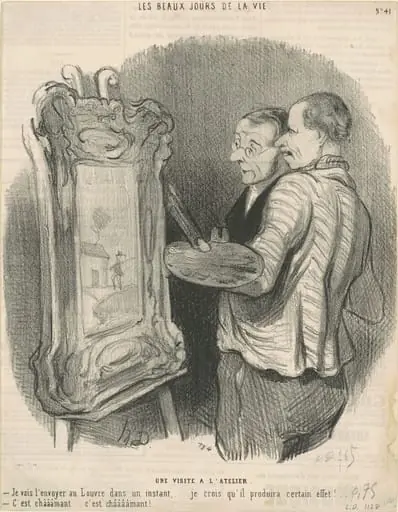 Une visite a l'atelier
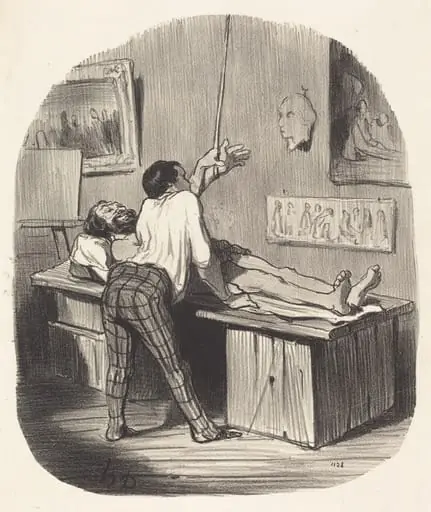 Comment, Saint-Gervais a pris cette...
 Madame, j'ai bien l'honneur!
 Around the Studios