Artwork
Untitled
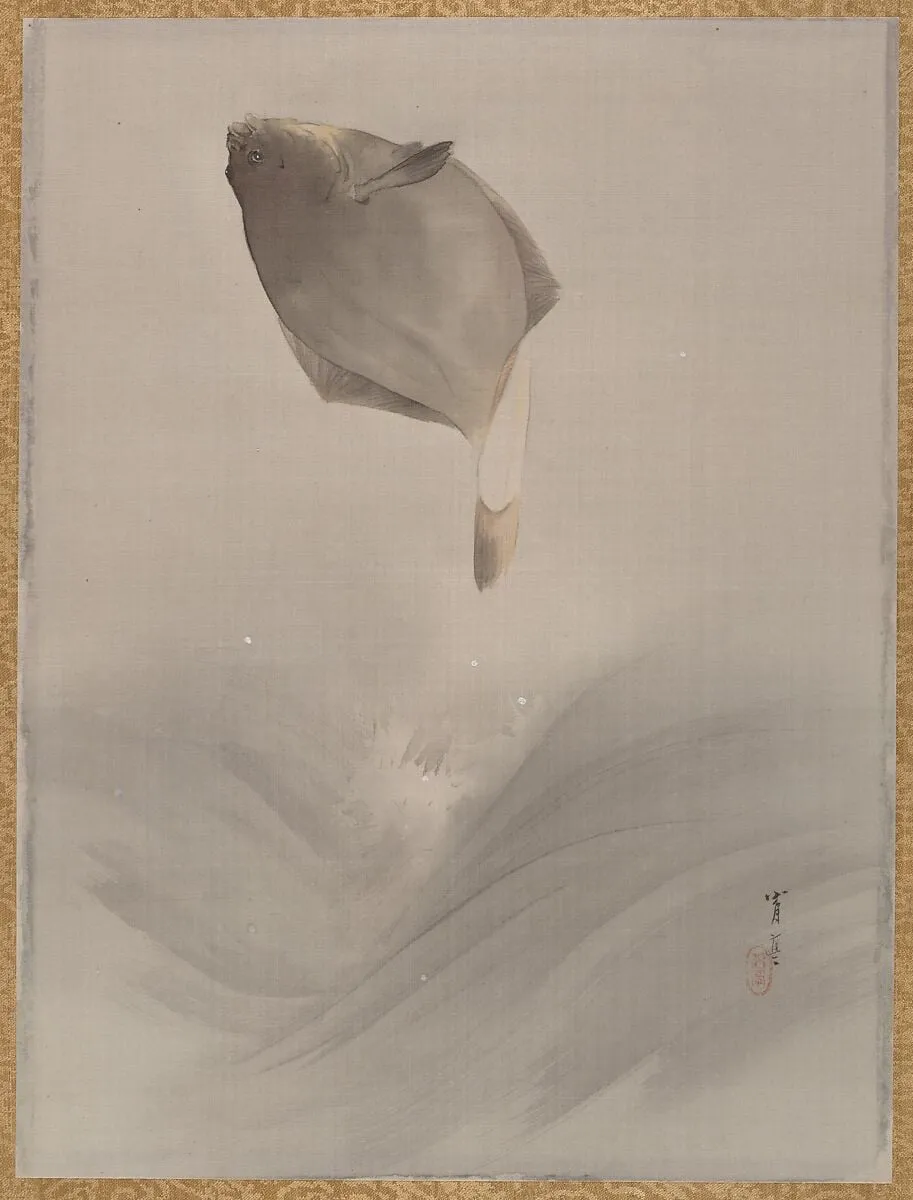
Untitled is an ink painting by the Impressionist artist Watanabe Seitei. It dates from 1887 and is held in the collection of the Metropolitan Museum of Art.
About this work
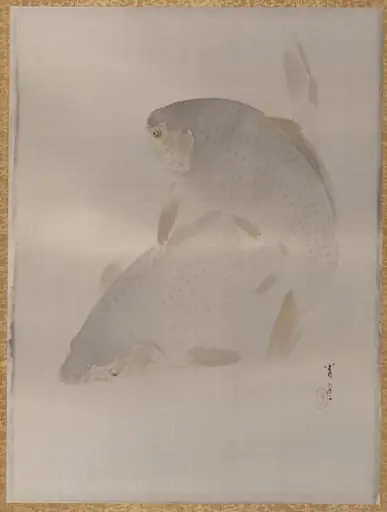
The carp’s whiskers and fins are drawn with quick, sure strokes, while the water stays almost blank, letting the fish stand out.
A single carp glides through dark water, its golden scales catching the light. The fish fills most of the small silk sheet, its body curved in gentle motion.
Watanabe Seitei painted this around 1887, when Japan was opening to Western art. He blended traditional ink techniques with soft color washes—something new for the time. The carp’s whiskers and fins are drawn with quick, sure strokes, while the water stays almost blank, letting the fish stand out.
If you like this quiet focus on nature, look up the subject *fish, japan* for more works in the same spirit.
Overview
Created around 1887, this small silk painting by Watanabe Seitei presents a solitary carp swimming in dark water. The fish dominates the composition, its curved body and shimmering golden scales catching the viewer’s eye against a largely unfilled background.
Subject & Meaning
The work focuses on a single carp, a motif often associated with perseverance and vitality in Japanese symbolism. By isolating the fish, the artist invites contemplation of the creature’s graceful movement and the quietude of its aquatic environment.
Technique & Style
Seitei combines traditional ink drawing with delicate color washes, a hybrid approach emerging during Japan’s late‑Meiji encounter with Western art. The carp’s whiskers and fins are rendered in swift, confident brushstrokes, while the surrounding water is suggested with minimal ink, allowing the colored fish to stand out.
History & Provenance
Executed in the early Meiji period, the piece reflects the era’s experimental blending of native and foreign artistic practices. It remains an album leaf, a format used for personal collections, and has been retained within private holdings since its creation.
Context
The painting belongs to a broader movement in late‑19th‑century Japan where artists explored new visual vocabularies while retaining classic subjects. Carp motifs were popular in both decorative arts and fine painting, serving as a bridge between traditional themes and modern aesthetic concerns.
Artist & collection