Artwork
Figure Sketches and a Copy After a Sculpted Head [verso]
![Figure Sketches and a Copy After a Sculpted Head [verso], by Jean Antoine Watteau, chalk, 1716](https://artifactworldgallery.com/img/jean-antoine-watteau--figure-sketches-and-a-copy-after-a-sculpted-head-verso--bf3e3653635a87ed-w1024.webp)
Figure Sketches and a Copy After a Sculpted Head [verso] is a chalk drawing by the Baroque artist Jean Antoine Watteau. It dates from 1716 and is held in the collection of the National Gallery of Art. Created around 1716, this red‑chalk drawing on brown laid paper presents a brief, gestural study of a head and shoulders.
About this work
Overview
Created around 1716, this red‑chalk drawing on brown laid paper presents a brief, gestural study of a head and shoulders. The work consists of a loose, uneven line rendering that captures the suggestion of hair and facial features, accompanied by a barely discernible background shape that may hint at architecture or furniture.
Subject & Meaning
The figure appears to be a single, unidentified individual, rendered in a manner that emphasizes the immediacy of observation rather than finished detail. The faint background element serves only to situate the sitter within a vague interior space, underscoring the drawing’s function as a visual note rather than a narrative composition.
Technique & Style
Executed in red chalk, the medium is applied thinly enough to allow the paper’s texture to show through, creating a translucent effect. The strokes are quick and irregular, characteristic of a preparatory sketch. The brown laid paper provides a warm ground that moderates the chalk’s brightness, enhancing the sketchy quality.
History & Provenance
Although traditionally attributed to Antoine Watteau, scholarship suggests that the sculpted head reproduced on the verso was likely not created by him. The drawing’s provenance traces back to early 18th‑century collections, where it was catalogued as a study by Watteau, reflecting the period’s practice of copying three‑dimensional models for compositional planning.
Context
The piece belongs to a broader tradition of artists using rapid chalk studies to explore form and light before committing to a painting or larger work. In the early 1700s, such sketches were common tools for mastering anatomy and for recording observations of sculptural models, aligning with the era’s emphasis on drawing as the foundation of artistic training.
Artist & collection
Artist
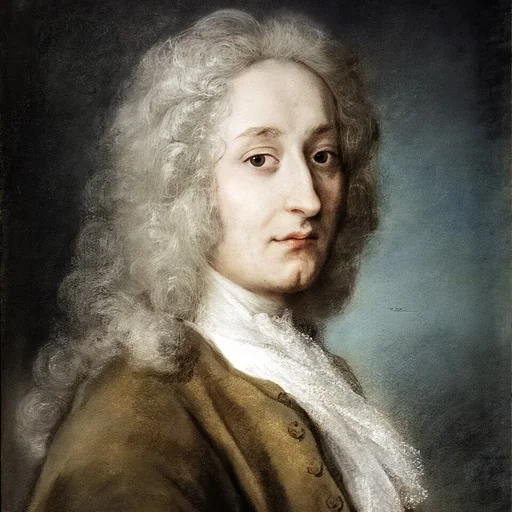
Jean-Antoine Watteau was a French painter and draughtsman whose brief career spurred the revival of interest in colour and movement, as seen in the tradition of Correggio and Rubens.

![Female Figure (Penitent Magdalene?) [verso], by Donato Creti](https://artifactworldgallery.com/img/donato-creti--female-figure-penitent-magdalene-verso--b0756d00ad6853a6-w320.webp) Female Figure (Penitent Magdalene?) [verso]
Female Figure (Penitent Magdalene?) [verso]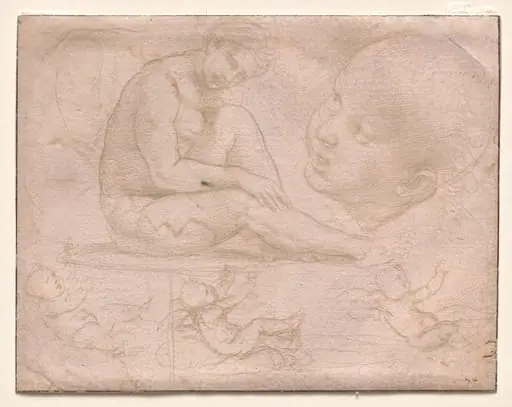 Studies of a Seated Female, Child's Head, and Three Studies of a Baby
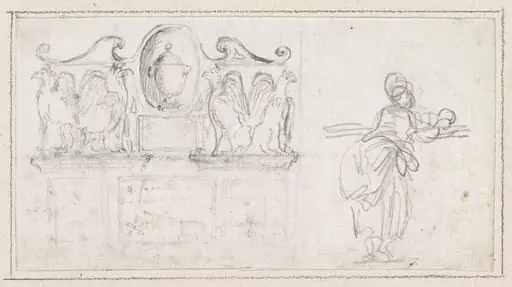 A Decorative Sculpture with a Woman Seen from Behind
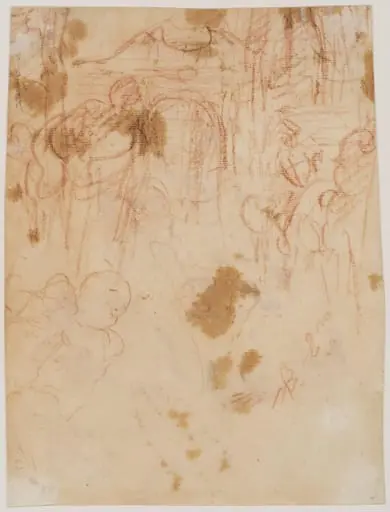 Recto: Rinaldo and Armida; verso: Study for a gateway
 The Gardens of the Villa Medici
 The Madonna and Child Seated on a Dais with Tobias and the Angel and a Saint Presenting Two Children
 Studies by Alfred Stevens
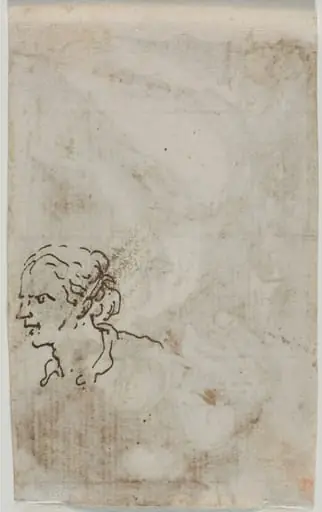 Figure Studies (verso)