Artwork
Fête Champêtre
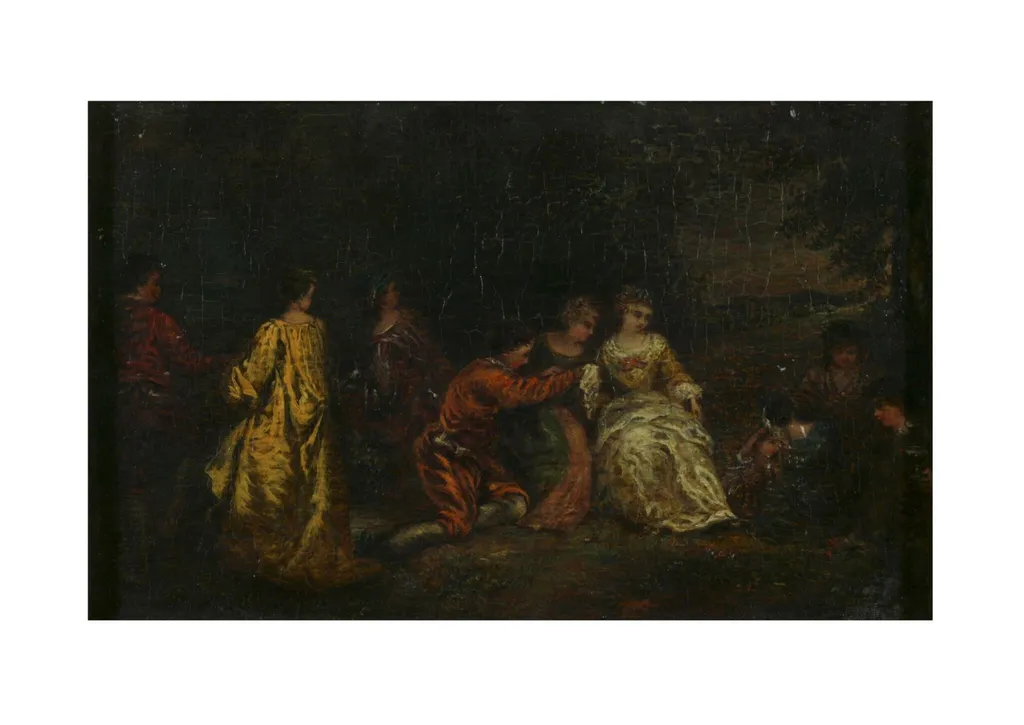
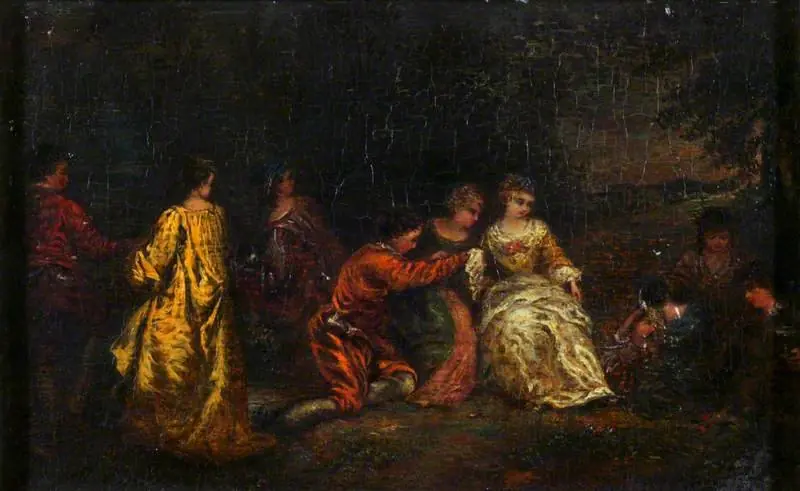
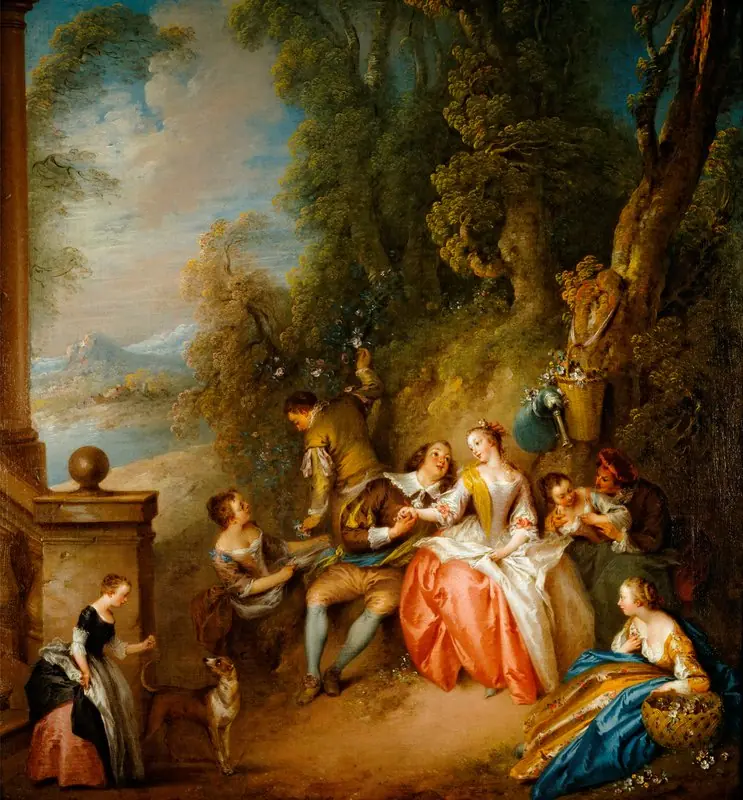
Fête Champêtre is an oil painting by the Rococo painting artist Jean-Antoine Watteau. It is held in the collection of the Victoria and Albert Museum. This oil painting is an 18th-century work attributed to a follower of Antoine Watteau, reflecting the aesthetic he pioneered.
About this work
Overview
This oil painting is an 18th-century work attributed to a follower of Antoine Watteau, reflecting the aesthetic he pioneered.
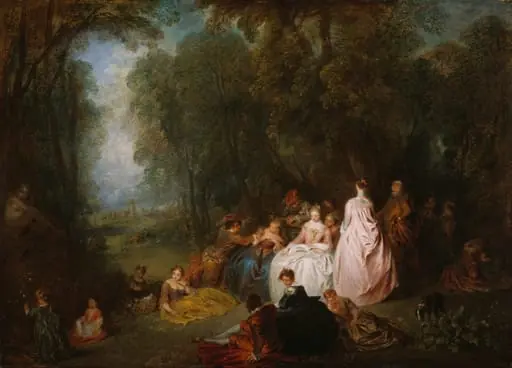
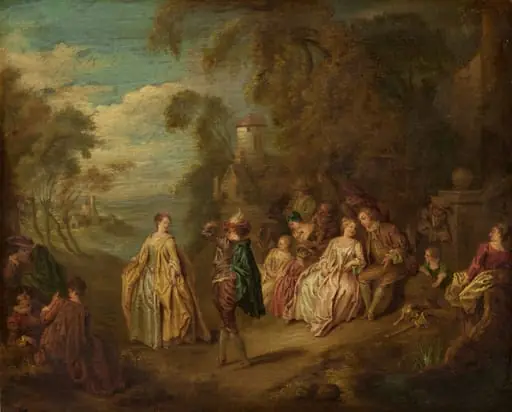
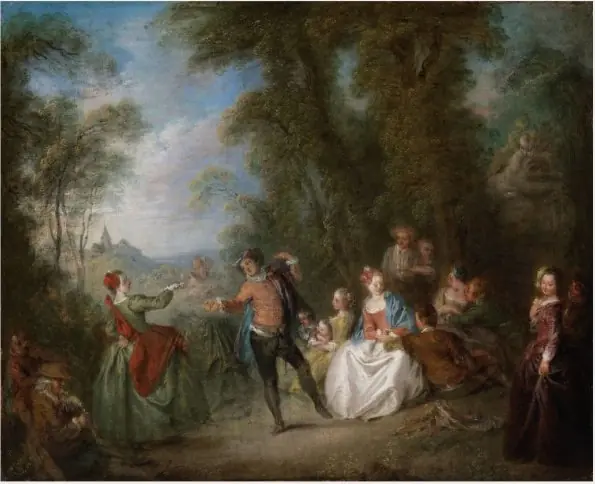
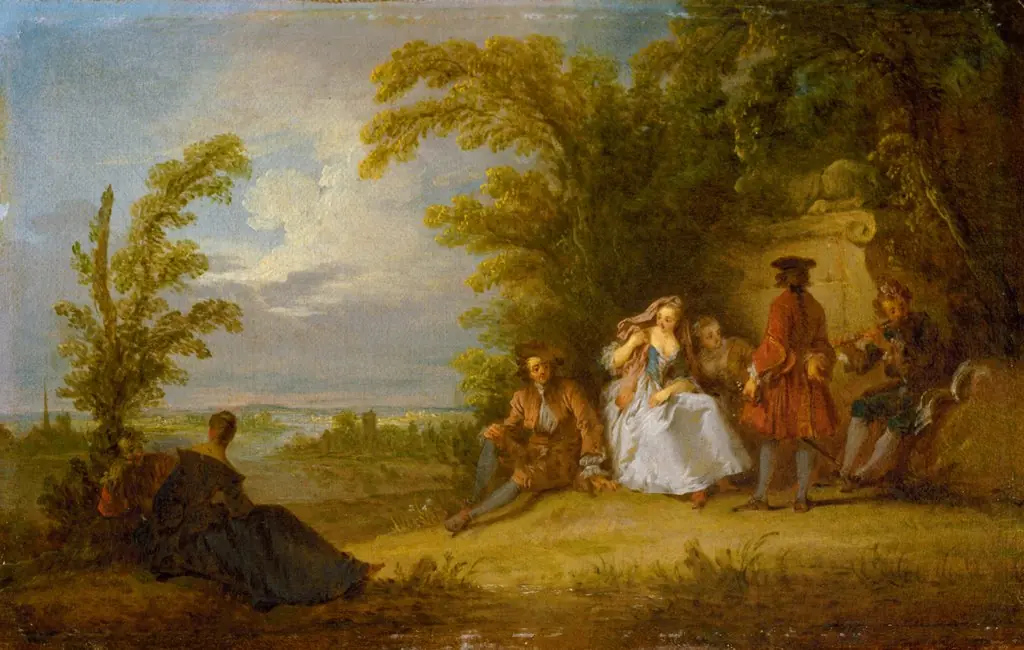
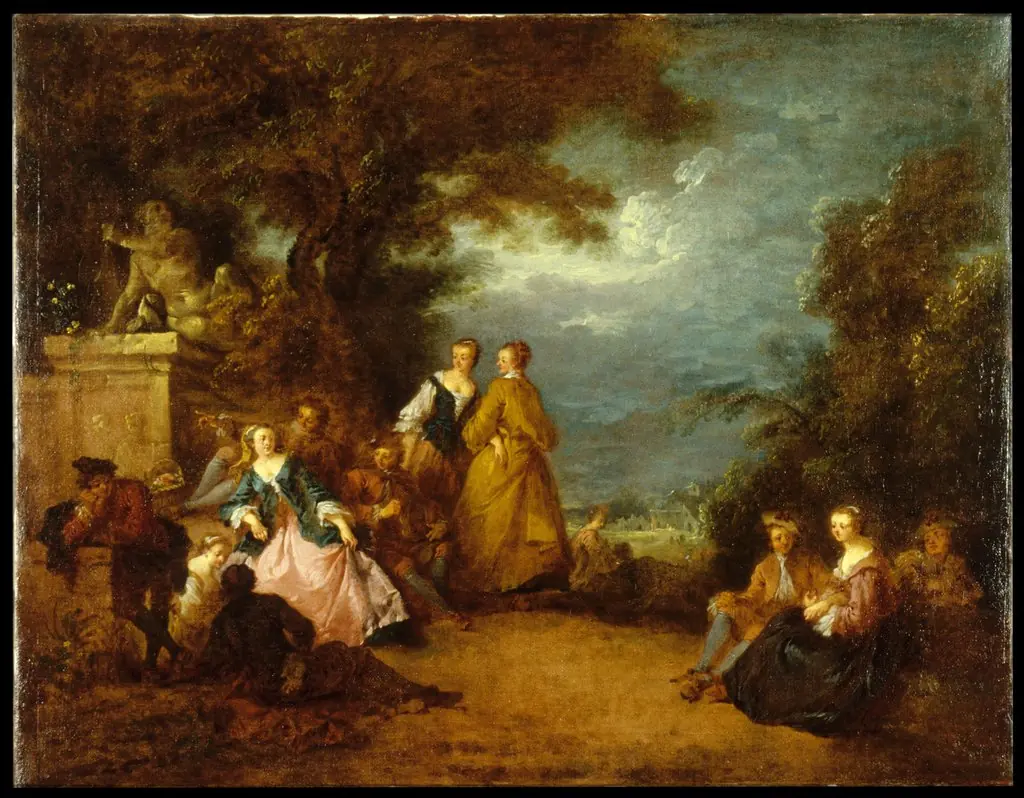
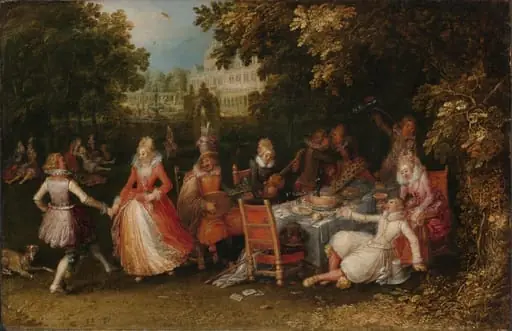
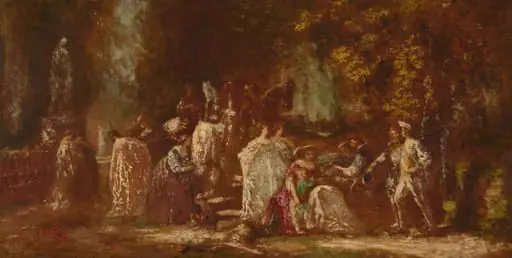
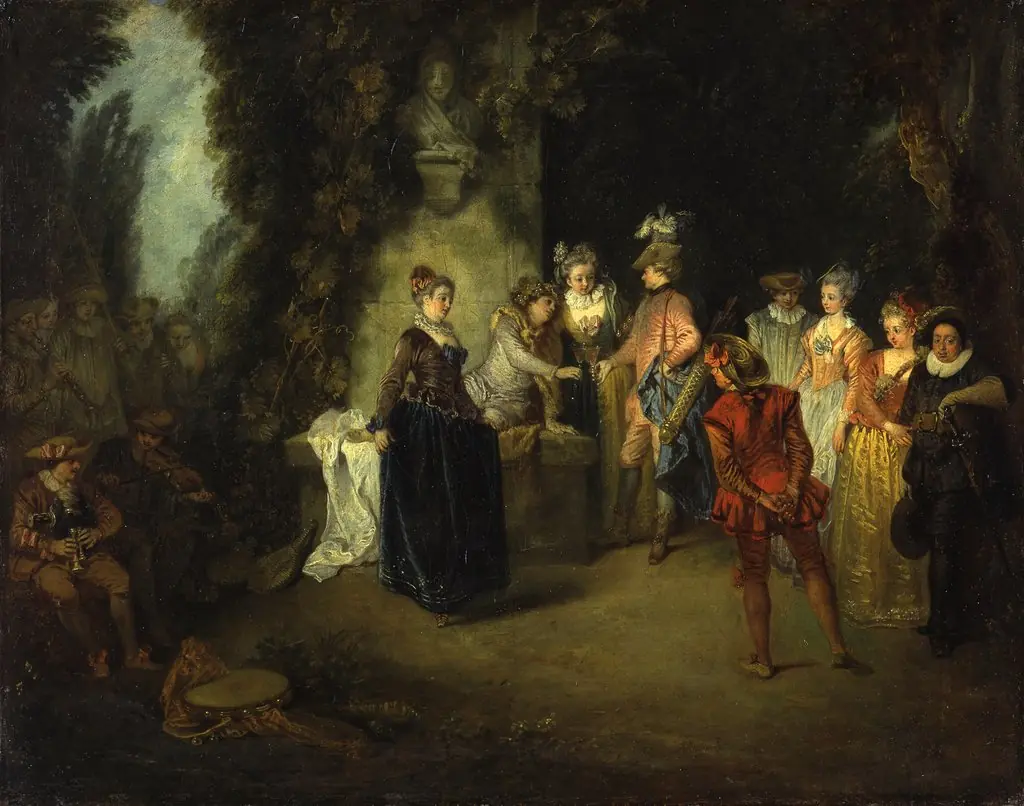
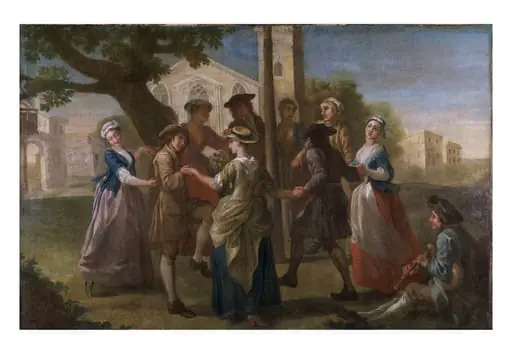
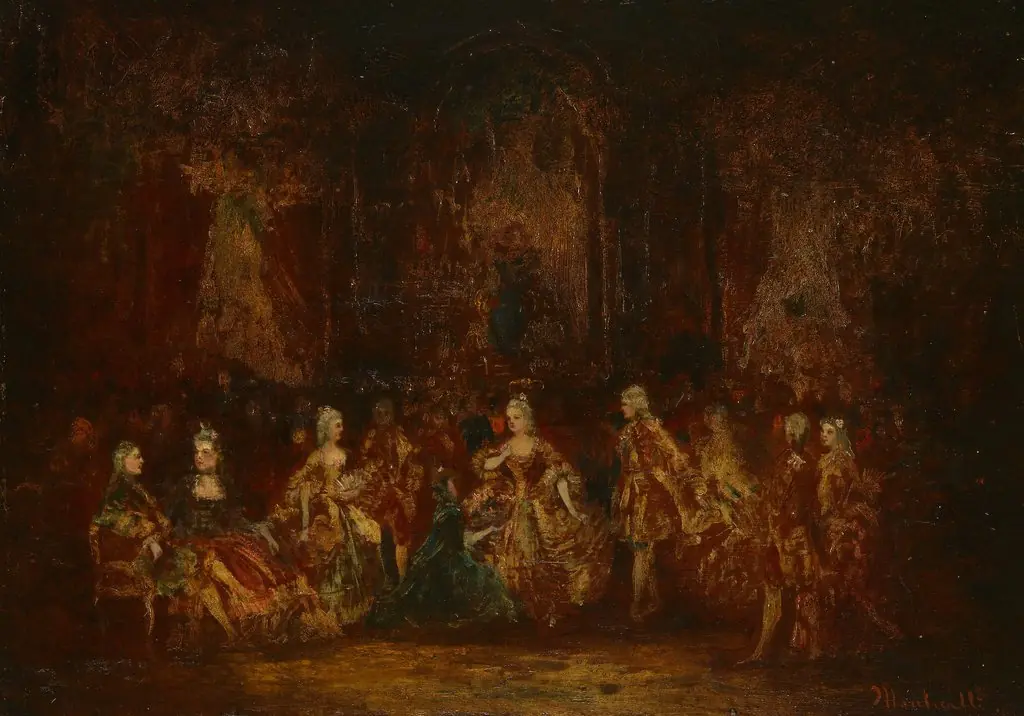
This oil painting is an 18th-century work attributed to a follower of Antoine Watteau, reflecting the aesthetic he pioneered. It presents a pastoral gathering of elegantly dressed figures in a dappled woodland setting, echoing the compositional and tonal qualities of Watteau’s original 'fête galante' scenes. Though not by his hand, it carries forward his distinctive mood and visual language, characteristic of the broader artistic response to his work in France and England.
Subject & Meaning
The scene depicts aristocrats engaged in quiet, leisurely activities outdoors—conversing, resting, or strolling beneath trees. Their refined attire contrasts with the natural setting, suggesting a staged retreat from urban life. The atmosphere is contemplative rather than festive, imbued with a subtle melancholy that reflects the transient nature of pleasure, a recurring theme in Watteau’s circle. The figures seem lost in private thoughts, enhancing the sense of emotional distance.
Technique & Style
The painting employs soft, diffused lighting and delicate brushwork to create a hazy, atmospheric effect. Colors are muted yet harmonious, with pastel tones blending into the wooded background. Figures are rendered with graceful, slightly elongated forms, emphasizing elegance over realism. The composition avoids clear narrative focus, instead inviting the viewer to linger in the mood, a hallmark of Watteau’s influence on his followers.
History & Provenance
Created in the decades following Watteau’s death in 1721, this work belongs to a wave of imitations produced by artists seeking to capitalize on the popularity of his 'fête galante' formula. While its exact origin and early ownership are undocumented, its style aligns with works circulating in French and English collections during the first half of the 18th century, when Watteau’s aesthetic was widely emulated.
Context
Watteau’s invention of the 'fête galante' responded to the cultural shift toward intimate, refined entertainment among the French elite. These scenes replaced grand historical or mythological subjects with subtle portrayals of aristocratic leisure. His followers extended this genre, adapting it to private collections and salons, where its dreamlike quality appealed to tastes favoring sentiment over spectacle.
Legacy
Though overshadowed by Watteau’s originality, works like this helped solidify the 'fête galante' as a recognized genre in 18th-century art. They influenced later painters in both France and England, contributing to the enduring appeal of lyrical, atmospheric outdoor scenes. The painting stands as evidence of how a single artist’s vision could shape a generation’s visual language, even through reinterpretation.
Artist & collection

Artist
Jean-Antoine Watteau was a French painter and draughtsman whose brief career spurred the revival of interest in colour and movement, as seen in the tradition of Correggio and Rubens.